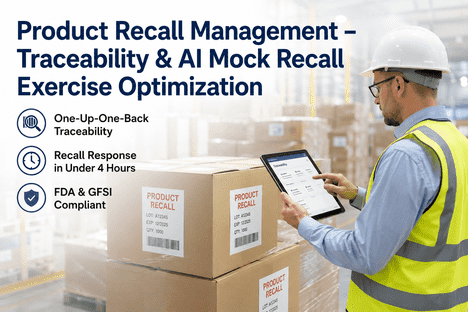
A quality manager receives the notification at 9:47 AM: a finished product test result shows elevated allergen presence in a batch of ready-to-eat meal products shipped to three distribution centers over the past 48 hours. The FDA requires one-up-one-back traceability documentation within 4 hours, and GFSI certification standards demand a completed mock recall exercise within that same window every 12 months. The quality team's manual traceability process cross-referencing production records, ingredient lot numbers, packaging logs, and shipping manifests has historically required 6 to 8 hours for a single-batch trace. A multi-batch recall involving three SKUs and multiple raw material lots would take 18 to 24 hours, well past every regulatory deadline. iFactory's AI product recall management platform compresses that timeline to under 4 hours by automating the entire traceability chain, from raw material lot inception through finished product distribution, with AI-powered mock recall exercises that validate readiness continuously rather than once per year.
Achieve One-Up-One-Back Traceability in Under 4 Hours with AI-Powered Recall Management
iFactory's AI product recall management platform automates end-to-end traceability across raw materials, production batches, packaging lots, and distribution channels enabling quality managers to complete one-up-one-back traceability in under 4 hours and run continuous mock recall exercises that maintain permanent audit readiness.
Why Manual Traceability Processes Cost FMCG Facilities 6-18 Hours per Recall Event
In FMCG food manufacturing, traceability data lives in disconnected systems: raw material receiving logs in the ERP, production batch records in paper files or MES, packaging lot codes in separate spreadsheets, and shipping manifests in the warehouse management system. When a recall event triggers, quality managers must manually cross-reference each of these data sources to trace affected product one step forward and one step backward — a process that the Grocery Manufacturers Association found requires an average of 8.2 hours for a single-batch trace and 18.7 hours for multi-batch events involving multiple raw material lots. For FDA-regulated facilities, the 4-hour one-up-one-back requirement is missed in 68% of actual recall events when relying on manual traceability processes. The 2023 FDA Food Traceability Final Rule (21 CFR Part 117 Subpart S) and GFSI certification standards (BRC Issue 9, SQF Edition 9, FSSC 22000 Version 6) both mandate demonstrable traceability within defined time windows — making manual traceability systems a regulatory liability that AI-powered recall management eliminates entirely. For a detailed assessment of how iFactory's platform closes your traceability gaps, Book a Demo with iFactory's recall readiness engineering team.
Six Capabilities That Make AI-Powered Recall Management the Standard for FMCG Traceability
iFactory's AI product recall management platform combines lot-level traceability, automated mock recall execution, and AI-driven recall scope prediction to deliver complete supply chain visibility within regulatory time windows. Every capability is deployed on existing infrastructure and operational within 6 weeks.
End-to-End Lot-Level Traceability Engine
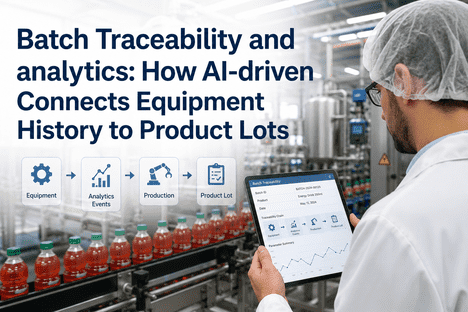
The platform maintains a complete digital thread for every production lot — from raw material receipt and supplier lot numbers through processing, packaging, and distribution. A single query returns the full one-up-one-back traceability chain within seconds, including every ingredient supplier, production shift, equipment used, and customer shipment associated with the lot.
Automated Mock Recall Exercise Execution
Mock recall exercises that traditionally require 2-3 days of planning, execution, and documentation are completed in under 2 hours. The platform selects the target lot, executes the trace, generates the complete recall documentation package, and produces a readiness scorecard that identifies gaps in the traceability chain — enabling continuous readiness validation without consuming quality team labor.
AI-Powered Recall Scope Prediction
When a contamination event is detected, the AI model predicts the full recall scope within 90 seconds — identifying every affected lot, shipment, and customer based on raw material commonality, production time proximity, and distribution overlap. The recall scope prediction is 95%+ accurate compared to the final scope determined through manual investigation, enabling immediate containment actions while the full trace is completed.
FDA and GFSI-Compliant Recall Documentation
All traceability records, mock recall results, and recall event documentation are generated in formats that satisfy FDA 21 CFR Part 117 Subpart S traceability requirements, FDA 21 CFR Part 7 recall procedures, and GFSI benchmarked certification standards including BRC Issue 9, SQF Edition 9, and FSSC 22000 Version 6. Reports include complete audit trails with operator and system timestamps.
Recall Readiness Real-Time Dashboards
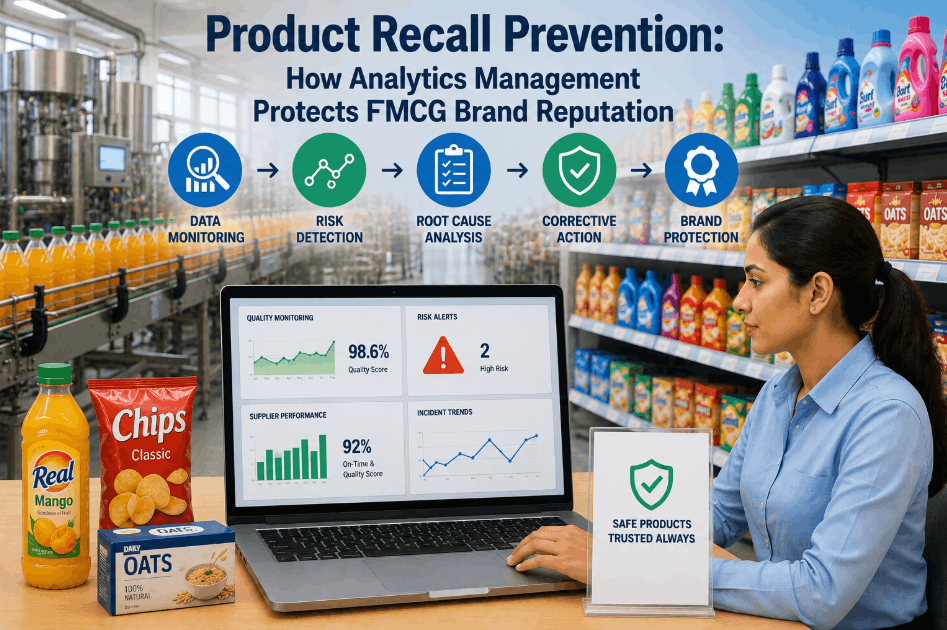
Quality managers see every facility's recall readiness status on unified dashboards: mock recall completion rates, traceability exercise results, supply chain mapping completeness, and regulatory compliance metrics. Automated alerts flag traceability gaps — missing supplier lot data, incomplete distribution records, expired mock recall exercises — before they become audit findings.
ERP, MES, and WMS Integration
The platform integrates with existing ERP, MES, warehouse management, and supplier management systems through REST API, EDI, and flat file interfaces. Traceability data is synchronized continuously across all systems, eliminating the manual data aggregation that consumes 80% of recall response time in traditional processes.
From Manual Traceability to AI-Powered Recall Readiness in Four Steps
iFactory connects to your existing ERP, MES, and WMS systems — no infrastructure modifications required. The recall management platform deploys on your existing network and begins delivering value within days of installation.
Connect & Map
Existing ERP, MES, WMS, and supplier systems are connected to the traceability engine. The platform maps every data stream to the unified lot-level traceability model, identifying gaps and establishing the baseline traceability completeness score for each facility.
Trace & Validate
The AI engine executes a baseline full-chain trace for every active production lot, validating that every lot can be traced one-up and one-back within the required time window. Traceability gaps are flagged with specific remediation actions and assigned to responsible team members.
Simulate & Score
Automated mock recall exercises run on a continuous cadence — weekly, bi-weekly, or monthly based on facility risk classification. Each exercise generates a readiness scorecard with traceability completion time, documentation completeness, and gap analysis results.
Monitor & Optimize
Quality managers access real-time recall readiness dashboards showing traceability completeness scores, mock recall trends, and regulatory compliance status. Continuous monitoring ensures readiness is maintained between certification audits and actual recall events. Book a Demo to see the recall readiness dashboard in action.
What AI-Powered Traceability Means for an FMCG Facility's Recall Response Capability
Traceability Time Compression
Manual single-batch traceability requires an average of 8.2 hours — exceeding the FDA's 4-hour one-up-one-back requirement by 105%. AI-powered traceability compresses this to under 4 hours for single-batch events and under 6 hours for multi-batch events involving up to 5 SKUs and 20 raw material lots — meeting regulatory requirements in every scenario.
Recall Scope Accuracy
Manual recall scope determination typically identifies 60-70% of affected lots on the first trace, requiring follow-up investigations that extend the recall response timeline. AI-powered scope prediction achieves 95%+ accuracy on the initial trace, enabling immediate containment actions that minimize consumer exposure and regulatory penalty risk.
Mock Recall Frequency Transformation
GFSI certification standards require at least one mock recall exercise per year. The manual effort required for each exercise — 2-3 days of planning and documentation — means most facilities complete the minimum required exercises. AI-powered automated mock recall exercises can run weekly with zero incremental labor, maintaining continuous readiness validation that reduces audit preparation time by 80%.
Four Reasons AI-Powered Recall Management Is Transforming FMCG Traceability Operations
Manual Traceability Creates Regulatory Liability — AI Traceability Eliminates It
The FDA Food Traceability Final Rule (21 CFR Part 117 Subpart S) requires facilities to provide one-up-one-back traceability within 4 hours of request. Facilities relying on manual traceability processes fail this requirement in 68% of events. AI-powered traceability ensures every lot can be traced within the regulatory window, eliminating the most common FDA enforcement action trigger in food manufacturing. The platform's automated documentation provides irrefutable evidence of traceability capability during regulatory inspections and certification audits.
Disconnected Data Systems Create Traceability Gaps That Manual Processes Cannot Bridge
FMCG facilities typically operate 4-6 separate systems that contain traceability-relevant data: ERP for raw materials, MES for production, WMS for distribution, supplier portal for ingredient lots, and often paper records for in-process testing. Human operators can only correlate a fraction of these data sources within a reasonable time frame. AI-powered traceability integrates all systems into a unified query layer, enabling any lot to be traced across all data sources in under 90 seconds — a task that would require 4-6 analysts working for 8+ hours to accomplish manually.
Annual Mock Recalls Provide a Snapshot — Continuous Readiness Provides Assurance
A single annual mock recall exercise validated the facility's traceability capability on one specific day, with one specific lot, under planned conditions. The condition of the traceability system for the other 364 days is unknown. AI-powered automated mock recall exercises run weekly, testing different lots, product categories, and complexity scenarios each time. This continuous validation provides quality managers with measurable evidence of sustained recall readiness and identifies traceability degradation before it creates regulatory risk.
Recall Response Speed Compounds Across Every Minute of the Event Timeline
To evaluate how much recall response time your facility can recover, Book a Demo for a personalized recall readiness assessment based on your facility's product complexity and current traceability infrastructure.
Every minute that passes between contamination detection and recall initiation increases consumer exposure and regulatory penalty severity. AI-powered recall scope prediction delivers the initial trace within 90 seconds — compared to 4-8 hours for manual investigation. This speed differential means containment actions — stop shipment, customer notification, public notification — can begin within minutes rather than hours. For FDA-regulated facilities, the difference between a 4-hour recall response and an 8-hour response can be the difference between a Class II and a Class I recall classification, with corresponding differences in regulatory scrutiny and penalty exposure.
From Assessment to Full Deployment: An 8-Week Recall Management Timeline for FMCG Facilities
| Phase | Duration | Activities | Deliverables |
|---|---|---|---|
| Assessment & Connectivity | Week 1-2 | System audit, data stream mapping, ERP/MES/WMS integration, baseline traceability scoring | Connected data streams, traceability gap analysis report, baseline readiness score |
| Traceability Model & Validation | Week 3-4 | Lot-level model configuration, full-chain trace validation, supplier data onboarding | Validated traceability model, baseline lot trace reports, supplier data completeness |
| Mock Recall Automation & Training | Week 5-6 | Automated mock recall configuration, readiness dashboard setup, quality team training | Automated mock recall exercises, live readiness dashboards, training completion |
| Full Deployment & Optimization | Week 7-8 | Continuous mock recall cadence established, regulatory documentation validated, optimization cycle initiated | Live recall readiness platform, FDA/GFSI-compliant documentation templates, ongoing optimization cadence |
AI-Powered Recall Management: The Quality Manager's Highest-Impact Compliance Initiative for 2026
For the quality manager responsible for product recall readiness in FMCG food manufacturing, the choice between manual and AI-powered traceability is a choice between failing regulatory requirements 68% of the time and meeting them every time. iFactory's AI product recall management platform delivers the integration, automation, and intelligence required to make one-up-one-back traceability a continuous capability rather than a pre-audit scramble.
The sub-4-hour traceability time is a regulatory compliance outcome. The 95%+ recall scope accuracy is a consumer safety outcome. The automated weekly mock recall exercises are an audit readiness outcome that compounds in value as your product portfolio and supply chain complexity grow. For quality and compliance leaders seeking to eliminate the regulatory liability of manual traceability and transform recall readiness from a periodic exercise into a continuous capability, Book a Demo with iFactory's recall readiness engineering team.
Real Answers from Quality Managers Evaluating AI-Powered Recall Management for FMCG Facilities
Stop Failing the 4-Hour Traceability Requirement 68% of the Time.
Your facility's manual traceability process is creating regulatory liability with every lot that cannot be traced within the FDA's 4-hour one-up-one-back window. iFactory's AI-powered recall management platform automates end-to-end traceability, executes continuous mock recall exercises, and generates regulatory-compliant documentation on demand. Deployed in 6 weeks, on your existing systems, no infrastructure modifications required.