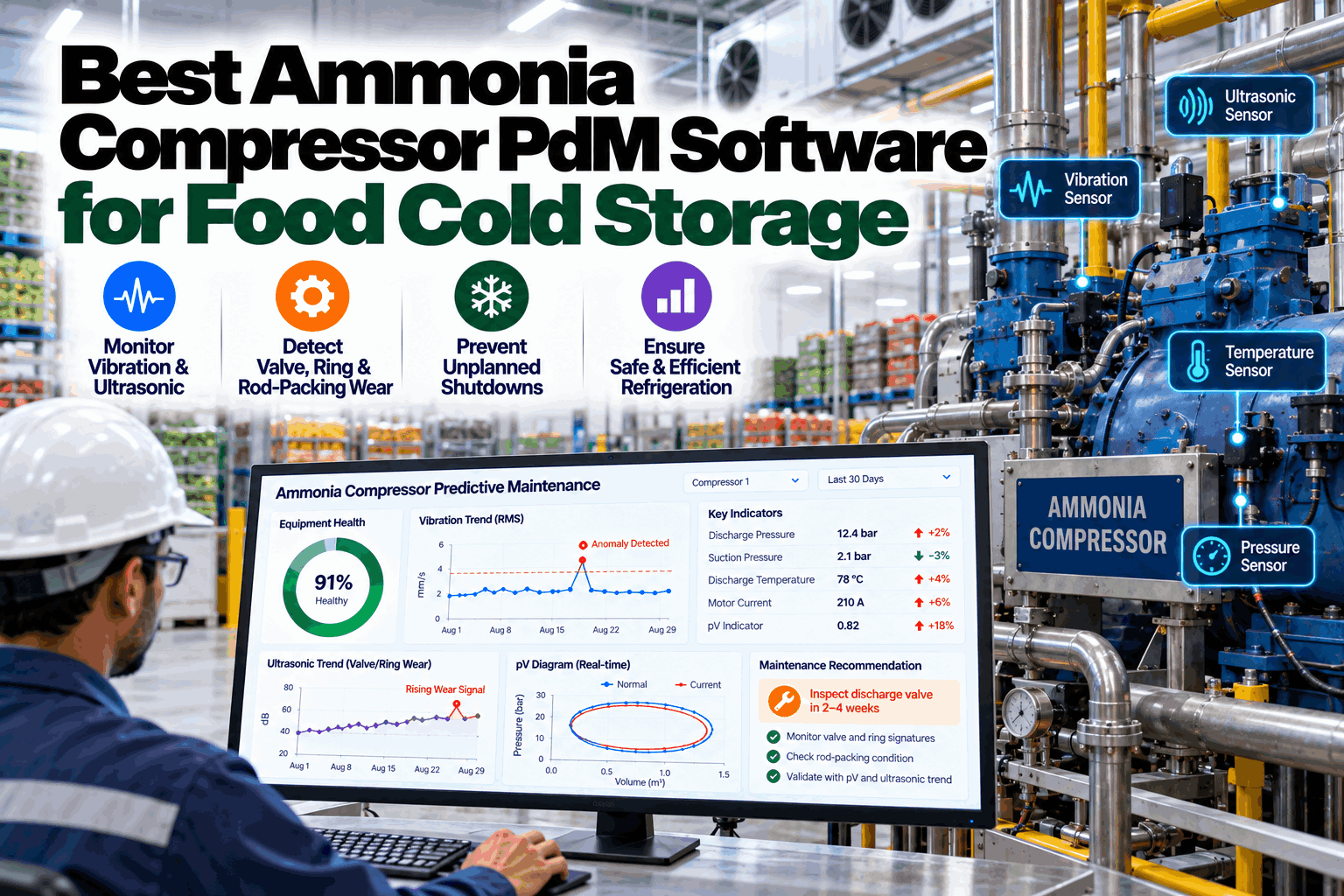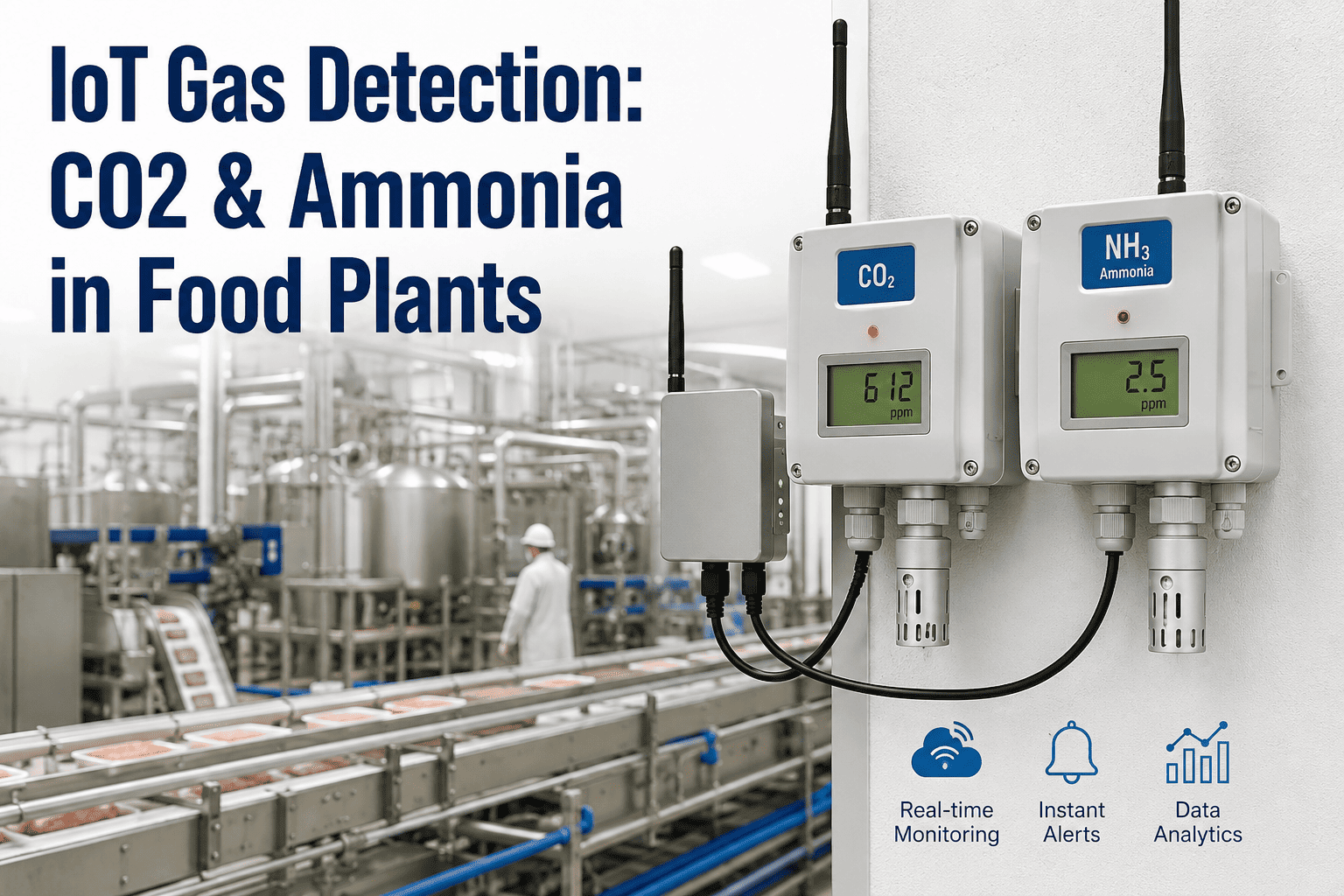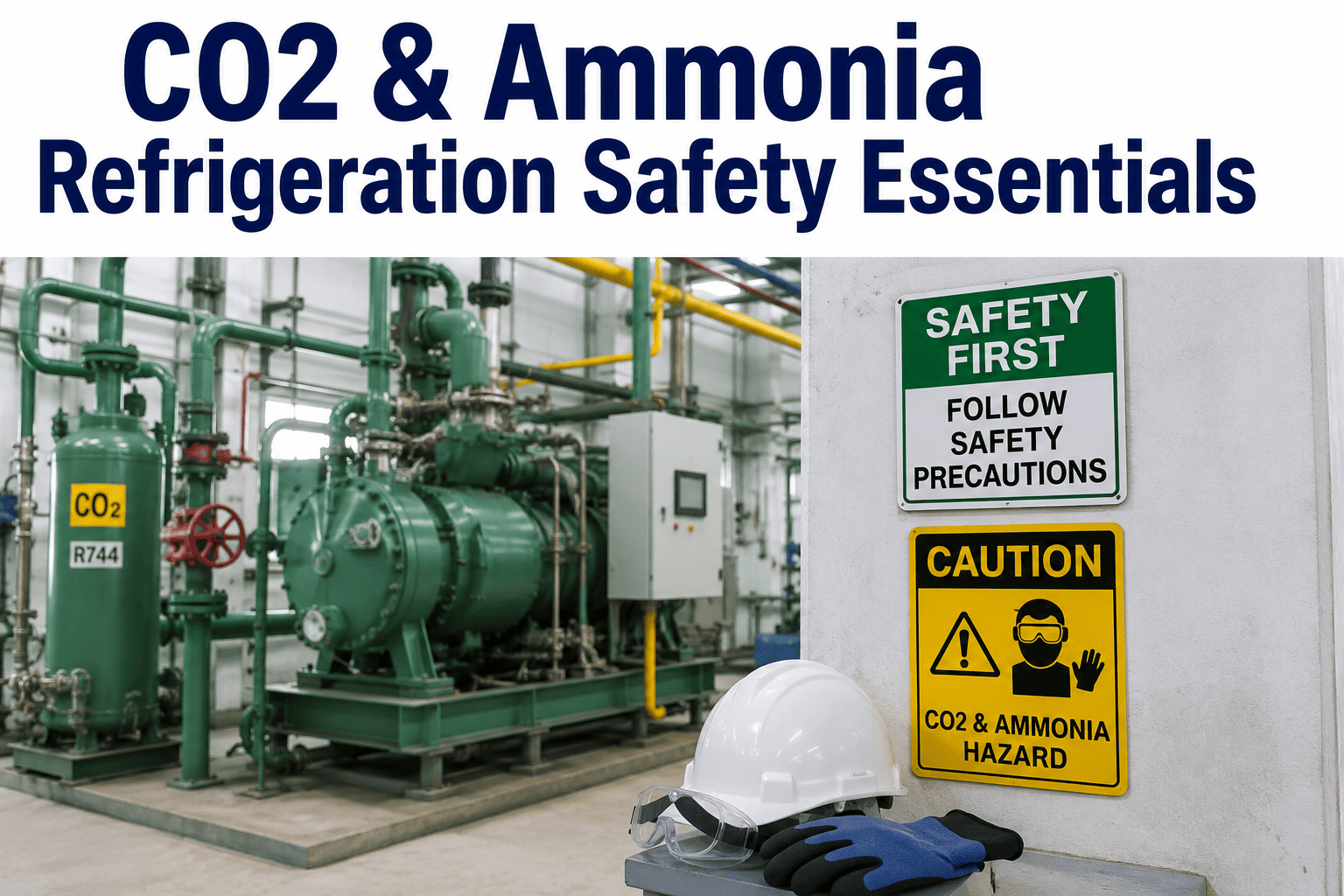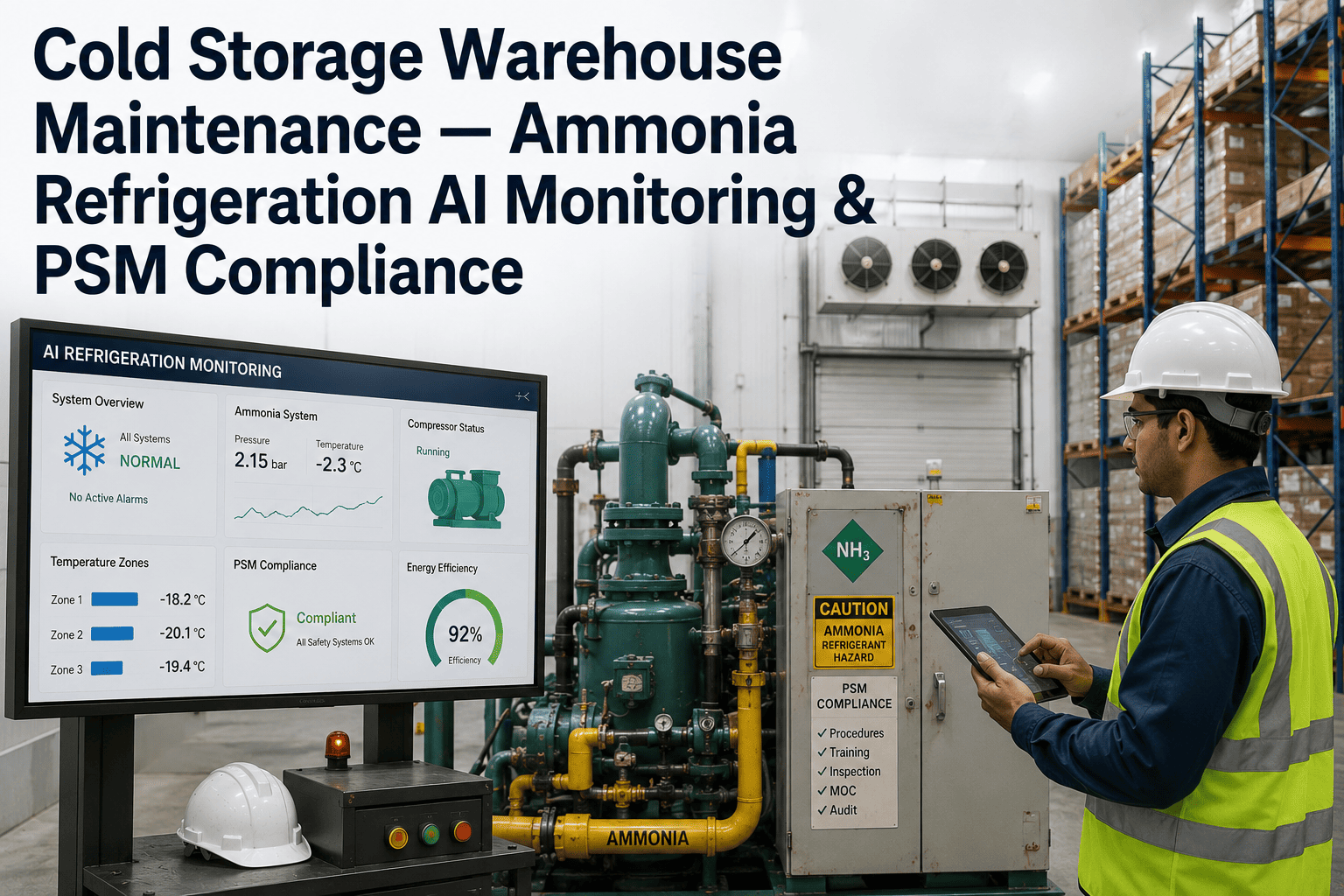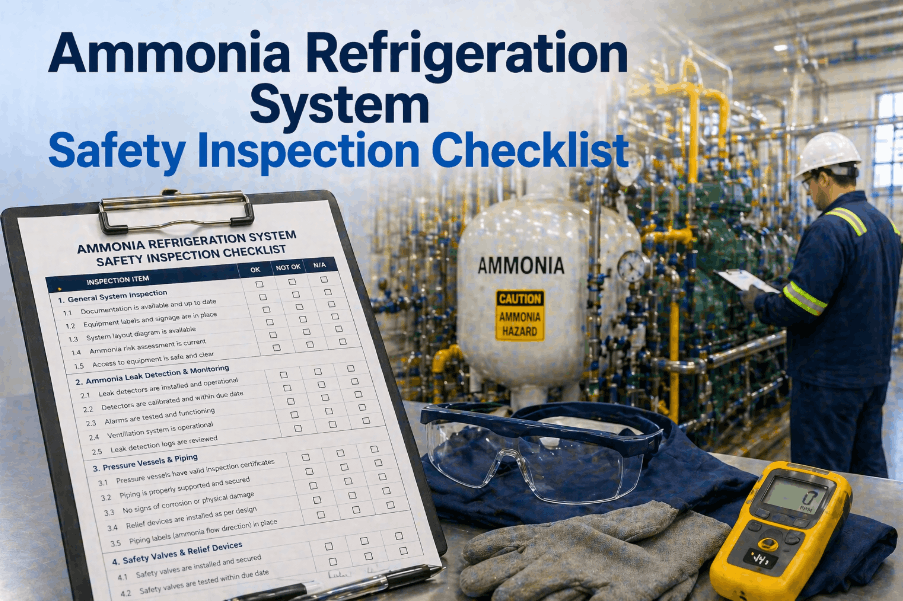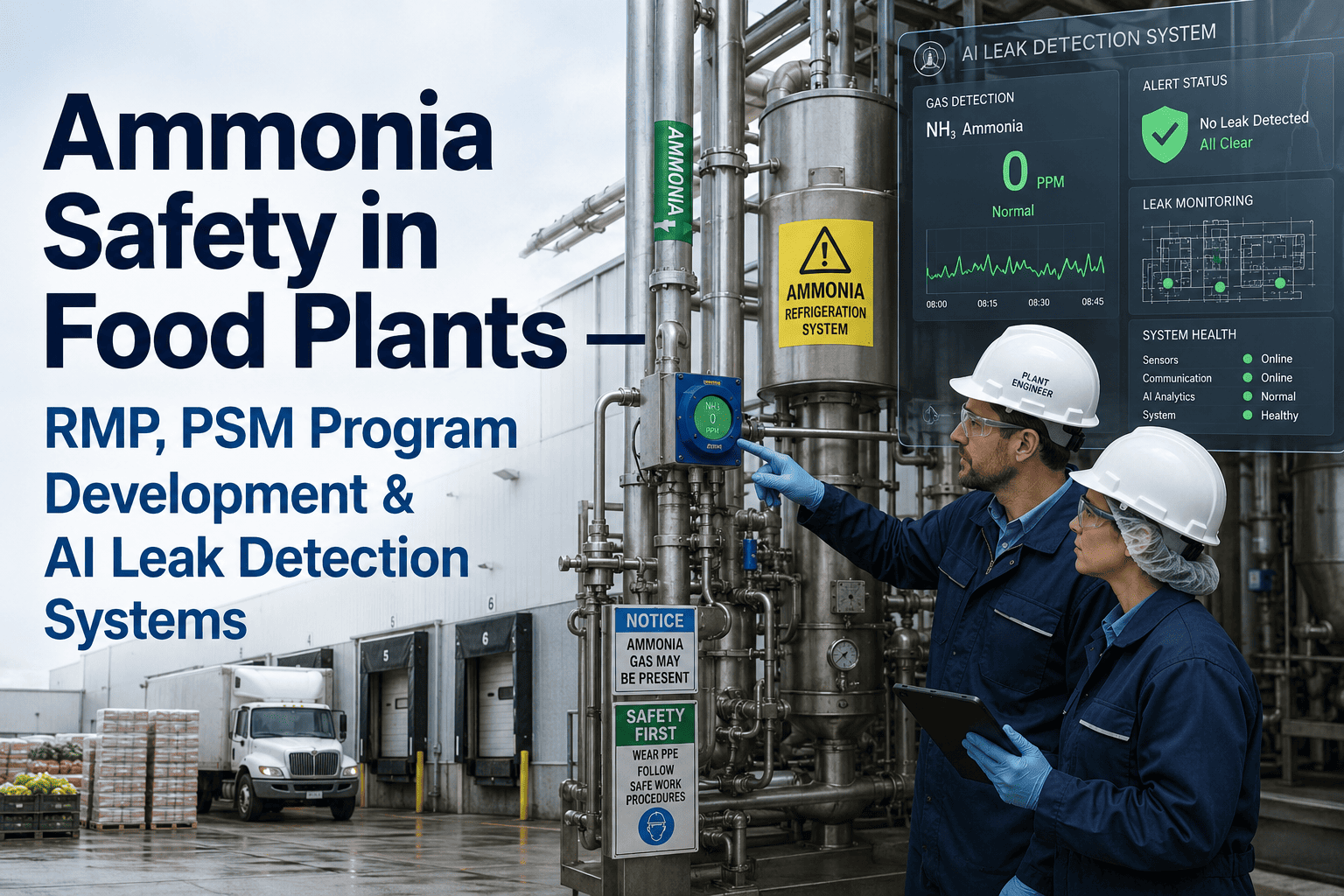
Ammonia is the refrigerant of choice for cold storage and freezing in food plants because it is cheap and efficient, and that is exactly why so many facilities have more of it on site than they realize until an EPA risk management inspection asks for the exact inventory. A leak that stays under a few hundred ppm is an evacuation and a bad afternoon; a leak that climbs past a thousand ppm near a confined mechanical room becomes a life-safety event within minutes, which is why continuous leak detection matters as much as the PSM binder on the shelf, something we can walk through in a demo against your own refrigeration layout.
A PSM Binder Proves You Planned for an Ammonia Release. It Does Not Tell You One Is Happening Right Now
iFactory adds continuous AI-driven ammonia concentration monitoring across your refrigeration footprint, tied directly to the process safety information your PSM and RMP programs already require.
Ammonia Exposure Risk Is Not Linear. Small Concentration Jumps Change Everything
OSHA's PSM standard applies once a facility holds 10,000 pounds or more of anhydrous ammonia, and EPA's Risk Management Program sets its own threshold at the same quantity for covered processes, which catches most mid-size and large cold storage and processing plants. What the regulations don't visualize is how quickly the danger band changes as concentration rises.
PSM's 14 Elements Are the Backbone of Every Ammonia Safety Program
Whether your facility falls under OSHA PSM, EPA RMP, or both, the underlying program structure is the same 14-element framework. Most plants have documentation for each element; fewer have live data feeding back into it.
Four Ammonia Safety Signals iFactory Tracks Across Your Refrigeration System
Fixed ammonia sensors already exist in most machine rooms. iFactory's layer adds pattern detection and faster escalation on top of that existing hardware rather than replacing it.
Early Concentration Drift
Flags a slow upward trend in ambient ammonia readings well before it reaches an alarm setpoint, catching slow leaks that fixed alarms miss.
Valve and Fitting Correlation
Cross-references concentration spikes with recent valve activity or maintenance work to speed up root cause identification.
Confined Space Risk Scoring
Weights readings by room ventilation rate and occupancy pattern, since the same ppm reading means different things in different spaces.
Emergency Response Timing
Logs detection-to-acknowledgment time for every alert, giving EHS a defensible record for RMP five-year audits.
Fixed Alarms Tell You When a Leak Is Already Serious. iFactory Flags the Drift Before That Point
See how continuous monitoring layers onto your existing ammonia detection hardware without a refrigeration system overhaul.
Which Ammonia Safety Program Applies to Your Facility
Coverage depends on your on-site anhydrous ammonia quantity and whether your process is federally regulated, state-regulated, or both, so it's worth checking your inventory against the table below.
| Program | Regulator | Typical Threshold | Core Requirement |
|---|---|---|---|
| PSM | OSHA | 10,000 lbs anhydrous ammonia | 14-element process safety program |
| RMP | EPA | 10,000 lbs anhydrous ammonia | Risk management plan and worst-case scenario analysis |
| IIAR Standards | Industry Body | Any ammonia refrigeration system | Design, installation, and operating practice guidance |
Results Reported by Plants After Adding AI Monitoring to Ammonia Safety Programs
These figures reflect outcomes reported by cold storage and food processing sites after layering continuous monitoring on top of existing PSM and RMP compliance work.
Questions EHS Managers Ask About AI Ammonia Monitoring
Your PSM Program Documents the Plan. Make Sure the Live Data Backs It Up
Book a walkthrough of continuous ammonia monitoring built around your existing refrigeration system and compliance program.