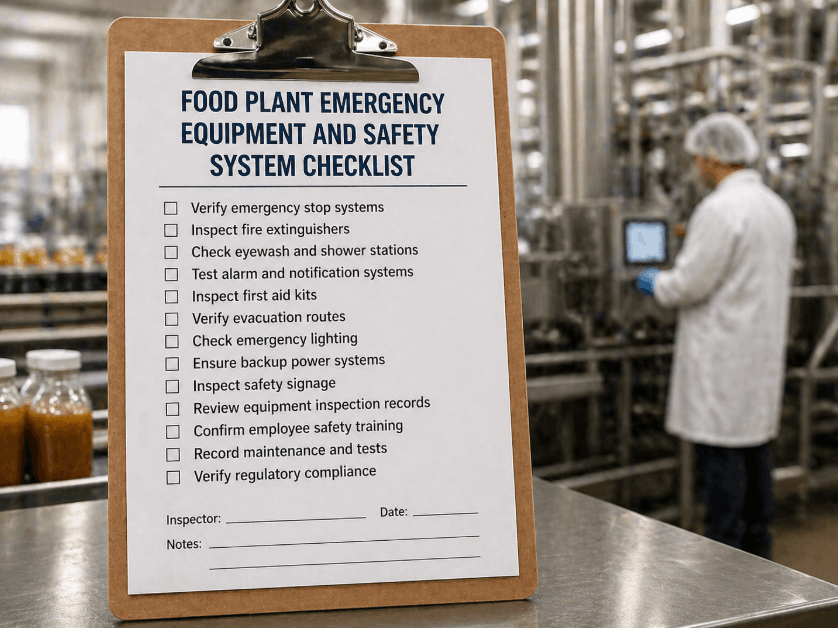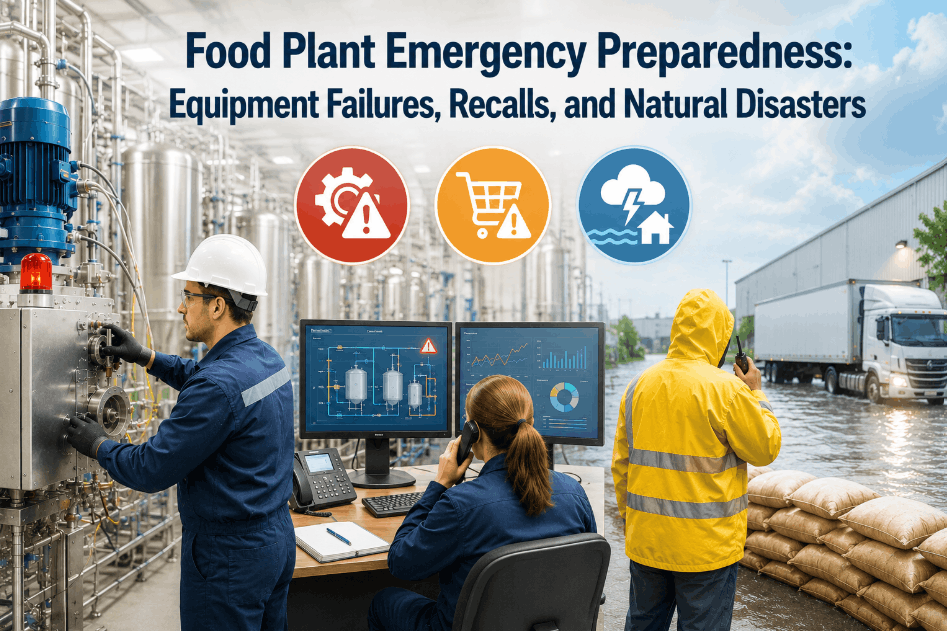
Food plant emergency preparedness is no longer an optional risk management exercise—it is a regulatory expectation and an operational survival requirement for every food and beverage manufacturing facility. Whether the threat is a critical equipment failure, a product recall event, a power outage, or a natural disaster, food plants that lack documented, tested, and AI-driven-supported emergency response protocols face catastrophic exposure: production shutdowns, regulatory penalties, brand damage, and supply chain collapse that can take months or years to recover from. If your facility is still relying on paper-based emergency plans or informal response procedures, Book a Demo to see how intelligent compliance tracking and emergency response documentation can be deployed across your entire plant operation within weeks.
Why Food Production Emergency Planning Has Become a Non-Negotiable Operational Priority
Modern food manufacturing facilities operate at a scale and complexity that amplifies the consequences of every emergency event. A single unplanned equipment failure during peak production can trigger a cascade—missed delivery commitments, temperature control breaches, raw material spoilage, and downstream recall risk—within hours. FSMA Preventive Controls regulations require food facilities to maintain documented contingency plans for supply chain disruptions, process failures, and environmental hazards, yet industry audits consistently reveal that a majority of plants have either incomplete emergency documentation or plans that have never been operationally tested. Without a structured food plant emergency preparedness framework supported by real-time compliance tracking, response decisions default to institutional memory and improvisation—precisely when structured, documented action is most critical. Facilities serious about closing these gaps can Book a Demo to review their current emergency documentation against regulatory requirements.
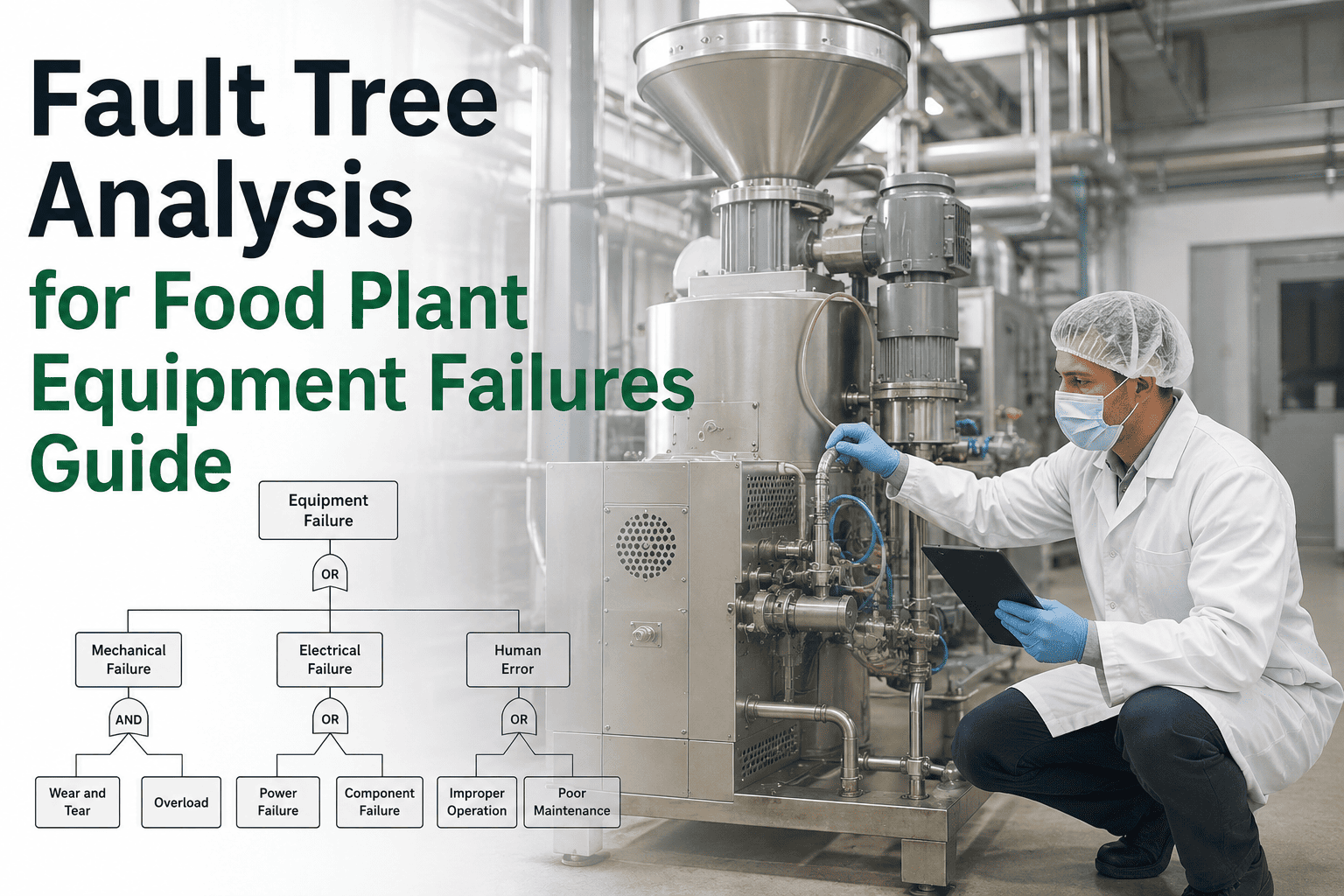
Equipment Failure Events
Critical line equipment failures—CIP systems, refrigeration units, pressure vessels, and filling machines—require pre-documented response protocols that specify isolation procedures, maintenance escalation paths, and production rerouting options to minimize downtime and food safety exposure.
Risk: Production shutdown · Food safety breachProduct Recall Events
A food recall without a pre-built recall documentation framework and traceability infrastructure can extend response timelines from hours to days—each hour of delay compounding regulatory exposure, consumer safety risk, and brand damage that structured recall response plans are specifically designed to prevent.
Risk: Consumer safety · Regulatory penaltyPower Outages and Utility Failures
Food plant power outages trigger immediate temperature control risk across cold storage, processing, and packaging environments. Without pre-documented utility failure protocols that specify monitoring thresholds, backup activation procedures, and product disposition criteria, utility events quickly escalate into food safety non-conformances.
Risk: Cold chain breach · Product lossNatural Disasters and Environmental Events
Floods, extreme weather events, and structural disruptions require facility resilience plans that address water intrusion risk, structural integrity assessment, sanitation requalification procedures, and supply chain alternative sourcing—all of which must be documented before the event, not improvised during it.
Risk: Facility shutdown · Supply disruptionBuilding a Structured Food Plant Emergency Protocol: The Four-Layer Response Architecture
An effective food plant emergency protocol is not a single document—it is a layered system of pre-documented response procedures, communication trees, escalation authorities, and recovery verification checkpoints that activate automatically when an emergency event is detected. AI-driven compliance tracking platforms transform static emergency plans into dynamic, auditable response systems that generate timestamped event records, assign corrective actions to responsible parties, and track resolution progress in real time. Facilities that want to see this framework applied to their own plant environment can Book a Demo for a live walkthrough.
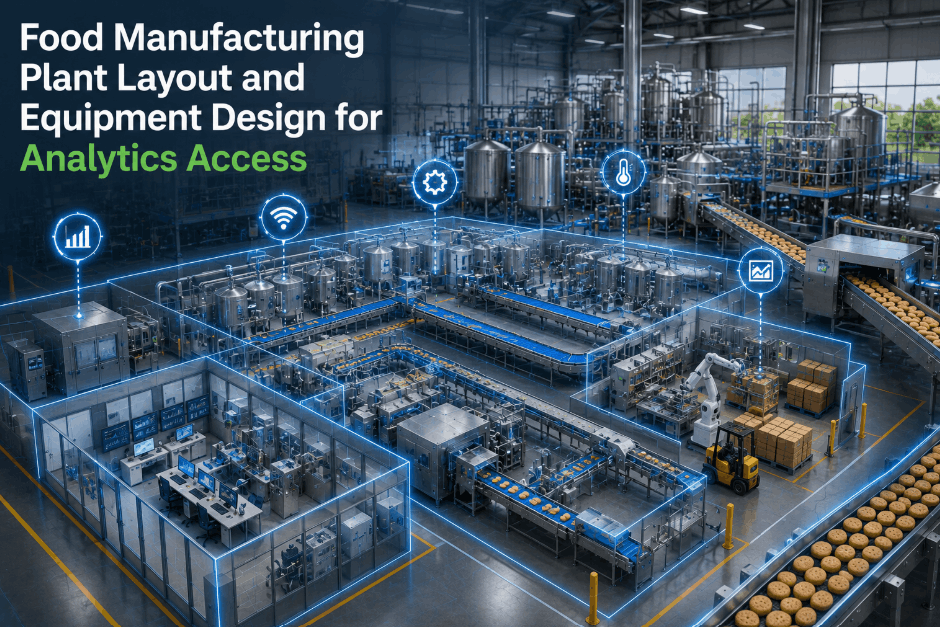
Immediate Detection and Containment
Automated monitoring systems detect equipment anomalies, temperature deviations, and utility failures in real time—triggering pre-configured alert protocols that notify the appropriate response teams before manual observation would identify the issue.
Timeframe: 0–15 minutes post-eventStructured Assessment and Escalation
Pre-documented assessment checklists guide on-site responders through a structured event evaluation—determining production impact scope, food safety exposure risk, and regulatory notification obligations—with all findings timestamped in the compliance tracking system.
Timeframe: 15–60 minutes post-eventDocumented Response Execution
Response action assignments are generated and tracked within the compliance platform—ensuring every corrective measure, product disposition decision, and contractor dispatch is recorded with responsible party attribution and completion timestamps that form the audit trail.
Timeframe: 1–24 hours post-eventRecovery Verification and Requalification
Before production resumes, pre-defined requalification checklists verify equipment functionality, sanitation status, environmental condition, and documentation completeness—with sign-off workflows that prevent premature restart and generate regulatory-ready reinstatement records.
Timeframe: Post-resolution sign-offFood Plant Equipment Failure Response: From Detection to Production Restart
Food equipment failure response must be faster, more structured, and more thoroughly documented than in most other manufacturing environments—because every hour of unplanned downtime in a food plant carries compounding food safety risk that extends far beyond the production schedule impact. Critical processing equipment failures can compromise in-process product, invalidate sanitation states, and trigger HACCP plan deviations that require documented corrective action before any further production is authorized. Facilities that frequently experience unplanned equipment downtime should Book a Demo to see how AI-driven failure detection and response documentation can cut average resolution time significantly.
Automated Failure Detection and Alerting
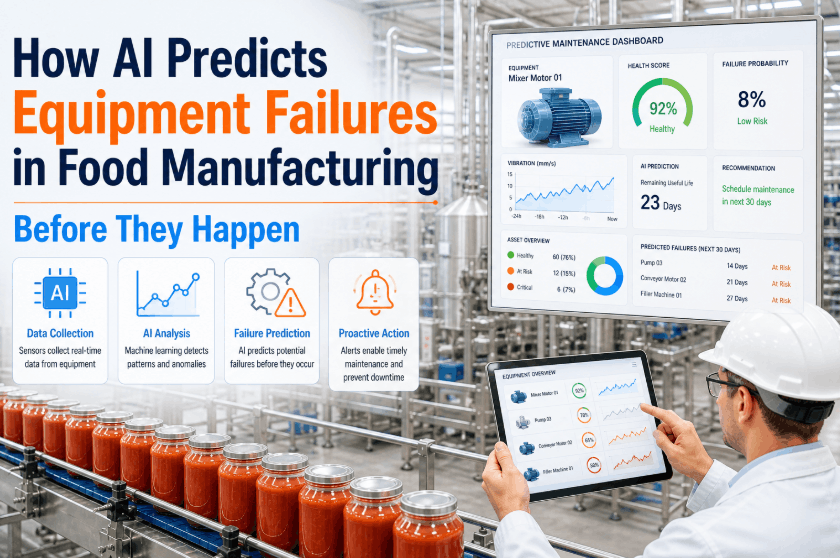
Connected equipment monitoring generates real-time alerts when operating parameters deviate from pre-configured thresholds—temperature excursions, pressure anomalies, motor current irregularities—ensuring maintenance and food safety teams are notified before manual inspection would identify the fault.
HACCP Deviation Documentation
Equipment failures at critical control points trigger automatic HACCP deviation records within the compliance tracking system, prompting the responsible food safety team member to document the nature of the deviation, affected production volume, disposition decision, and corrective action applied.
Maintenance Work Order and Contractor Dispatch
Pre-configured equipment failure protocols automatically generate maintenance work orders with equipment-specific repair procedures, parts lists, and qualified contractor contacts—eliminating the coordination delay that extends downtime when response depends on locating the right information under pressure.
Pre-Restart Verification and Sign-Off
Equipment return-to-service checklists verify repair completion, functional testing, sanitation requalification, and HACCP critical limit re-establishment before authorized sign-off allows production restart—creating an unbroken compliance record from failure event to resumption.
Food Recall Response Plan: Documentation, Traceability, and Regulatory Notification
A food recall response plan is only as effective as the traceability infrastructure and pre-documented procedures that support it. When a recall event is triggered—by an internal non-conformance, a customer complaint, or a regulatory notification—the speed and accuracy of the response is determined entirely by what was built before the event occurred. AI-driven recall documentation systems give food plants the ability to execute mock recalls in hours rather than days, maintain continuous lot traceability from raw material receipt to finished product distribution, and generate the regulatory submission packages that FDA and USDA require within mandatory notification windows. Food manufacturers who have never run a documented mock recall should Book a Demo to assess their current recall readiness against actual regulatory expectations.
End-to-End Lot Traceability for Rapid Recall Execution
Structured lot tracking from raw material supplier through processing, packaging, and distribution creates the traceability chain that enables a food plant to identify and isolate affected product within the regulatory response window—without manual record reconstruction under crisis conditions.
Compliance metric: Recall execution timeFDA and USDA Notification Package Generation
Pre-built regulatory notification templates populated with structured compliance data enable food plants to generate accurate, complete FDA or USDA notification packages within required timeframes—eliminating the manual assembly process that creates errors and delays in unstructured recall environments.
Compliance metric: Notification accuracy rateStructured Recall Communication and Distribution Partner Notification
Recall communication workflows maintain pre-defined distribution partner contact lists, communication templates, and confirmation tracking—ensuring every customer and distribution partner receives timely, consistent recall notification with a documented delivery record for audit purposes.
Compliance metric: Notification completeness rateFood Plant Business Continuity: Power Outages, Natural Disasters, and Supply Chain Disruption
Food plant business continuity planning must address not just the immediate emergency event but the extended recovery period that determines whether a facility returns to full production capacity within days or weeks. Natural disasters, severe weather events, and utility infrastructure failures create multi-layer disruptions—physical facility damage, workforce availability constraints, supplier network interruption, and cold chain continuity challenges—that a single-document emergency plan cannot adequately address. Structured business continuity frameworks assign recovery ownership, pre-identify alternative suppliers and logistics routes, and maintain regulatory-ready documentation of every response decision made during the recovery period.
| Emergency Scenario | Primary Impact | Response Priority | Key Documentation Required | Recovery Timeframe Target |
|---|---|---|---|---|
| Critical Equipment Failure | Production shutdown, HACCP deviation, product at risk | Immediate — within 1 hour | HACCP deviation record, work order, product disposition | 4–72 hours depending on part availability |
| Product Recall Event | Consumer safety, brand exposure, regulatory notification obligation | Immediate — within 2 hours | Lot traceability report, regulatory notification, customer communication log | Ongoing — 30–90 day regulatory resolution |
| Power Outage — Short Duration | Temperature control risk, processing interruption | Urgent — within 30 minutes | Temperature monitoring log, product disposition record | Hours — upon power restoration and verification |
| Power Outage — Extended Duration | Cold chain failure, full production shutdown, sanitation requalification | Critical — simultaneous multi-team response | Cold chain breach documentation, sanitation requalification records | 1–5 days including requalification |
| Natural Disaster — Flood/Storm | Facility integrity, contamination risk, supply chain disruption | Emergency — multi-agency coordination | Facility assessment, environmental monitoring, sanitation requalification | Days to weeks depending on structural impact |
| Ingredient Supply Disruption | Formulation impact, production schedule disruption | Planned response — within 24 hours | Alternative supplier qualification, formulation review, specification comparison | Days to weeks depending on alternative sourcing |
Emergency Analytics for Food Plants: Using AI to Predict, Prevent, and Respond Faster
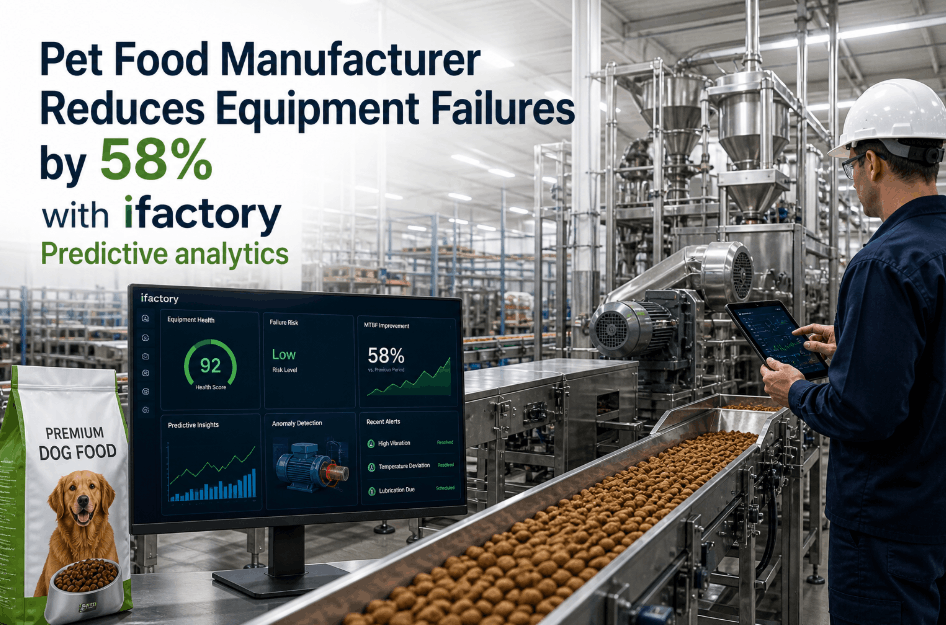
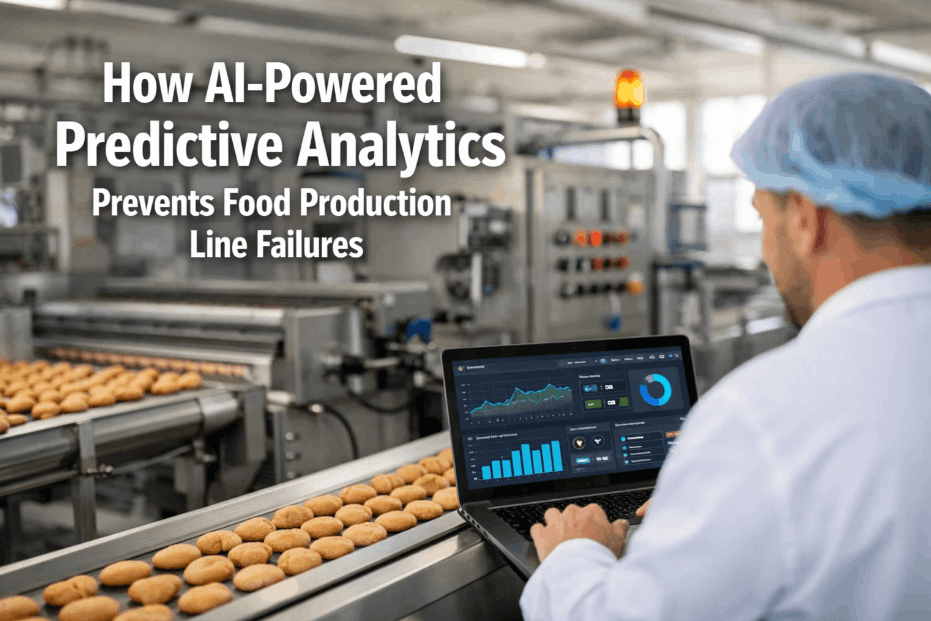
The most significant advantage that AI-driven compliance tracking platforms provide in food plant emergency preparedness is not reactive documentation capability—it is predictive risk intelligence that identifies the conditions that precede emergency events before those events occur. By continuously analyzing equipment performance data, environmental monitoring trends, supplier reliability patterns, and regulatory non-conformance histories, AI-driven emergency analytics platforms allow plant directors to move from reactive crisis management to proactive risk prevention. Facilities that want to see how predictive emergency analytics apply to their specific operational environment can Book a Demo to review their risk profile against industry benchmarks.
Reduction in average emergency response time when AI-driven alerting replaces manual detection and pre-documented protocols replace improvised response coordination.
Reduction in time to complete a mock recall when structured lot traceability and pre-built notification packages replace manual record reconstruction and ad-hoc communication.
Improvement in emergency documentation completeness when structured compliance tracking workflows replace manual post-event record reconstruction under audit pressure.
Emergency response records maintained in exportable, timestamped audit-ready format—eliminating preparation effort when regulatory inspectors request event documentation.
How Structured Emergency Preparedness Creates Value Across the Food Manufacturing Organization
Food plant emergency preparedness documentation generates measurable value for every stakeholder in the organization—operations teams gain confidence that structured response protocols exist for every foreseeable emergency scenario, quality assurance teams gain the auditable event records that regulatory certifications require, and leadership gains the business continuity assurance that protects customer relationships and brand equity when disruptions occur.
Pre-Documented Response Confidence
Pre-built emergency protocols, escalation trees, and recovery checklists give operations leadership confidence that every foreseeable emergency event has a structured, tested response—eliminating improvisation under pressure and reducing the decision burden on individual responders during high-stress situations.
Regulatory-Ready Emergency Documentation
Timestamped emergency event records, HACCP deviation documentation, corrective action logs, and recovery verification records are stored in a centralized, exportable format that directly supports FSMA, BRC, SQF, and FDA audit requirements without post-event reconstruction effort.
Business Continuity and Brand Protection
Structured emergency preparedness reduces the financial exposure of unplanned disruptions—shorter downtime events, faster recall resolution, and complete regulatory documentation reduce the penalty and litigation risk that makes poorly managed emergency events disproportionately expensive.
Food Plant Emergency Preparedness — Frequently Asked Questions
What regulatory requirements mandate food plant emergency preparedness documentation?
FSMA Preventive Controls for Human Food requires food manufacturers to have documented supply chain programs and corrective action procedures that function as emergency response frameworks. BRC Global Standard Issue 9 and SQF Code Edition 9 both include explicit requirements for business continuity planning, crisis management documentation, and incident management procedures that directly apply to equipment failure, recall, and disaster scenarios.
How does AI-driven compliance tracking improve food recall response time?
AI-driven compliance platforms maintain continuous lot traceability records, pre-built regulatory notification templates, and distribution partner contact databases that allow recall teams to execute a complete recall notification within hours rather than days. The elimination of manual record reconstruction—which is the primary source of recall response delay in unstructured environments—is the most significant time-reduction factor.
How frequently should food plant emergency protocols be tested and updated?
GFSI-aligned food safety standards recommend annual full-scale emergency protocol reviews and mock exercises, with interim updates triggered by significant operational changes—new equipment, new product lines, new suppliers, or facility modifications. AI-driven platforms can automate review scheduling and track update completion across all emergency plan components.
What is the minimum documentation required for a food plant power outage response?
A complete power outage response record must include: event start and end timestamps, temperature monitoring data for all affected cold storage and processing environments, product disposition decisions with food safety justification, sanitation requalification records where required, and sign-off documentation authorizing production restart. AI-driven compliance tracking systems generate all of these records automatically from pre-configured outage response templates.
Can a single platform manage emergency preparedness documentation across multiple food manufacturing sites?
Yes. Modern AI-driven compliance platforms support multi-site emergency documentation with shared protocol libraries, site-specific response configurations, and centralized audit trail access that allows corporate food safety teams to monitor emergency response completeness across all facilities simultaneously—without requiring separate system instances or manual report consolidation.
What is the typical timeline for deploying an AI-driven emergency preparedness system?
Most food and beverage facilities complete initial platform deployment and emergency protocol configuration within two to four weeks. Full predictive analytics capability, including equipment failure prediction and supplier risk scoring, typically reaches operational accuracy within 60 to 90 days as historical performance data accumulates and AI models calibrate to the specific facility environment.