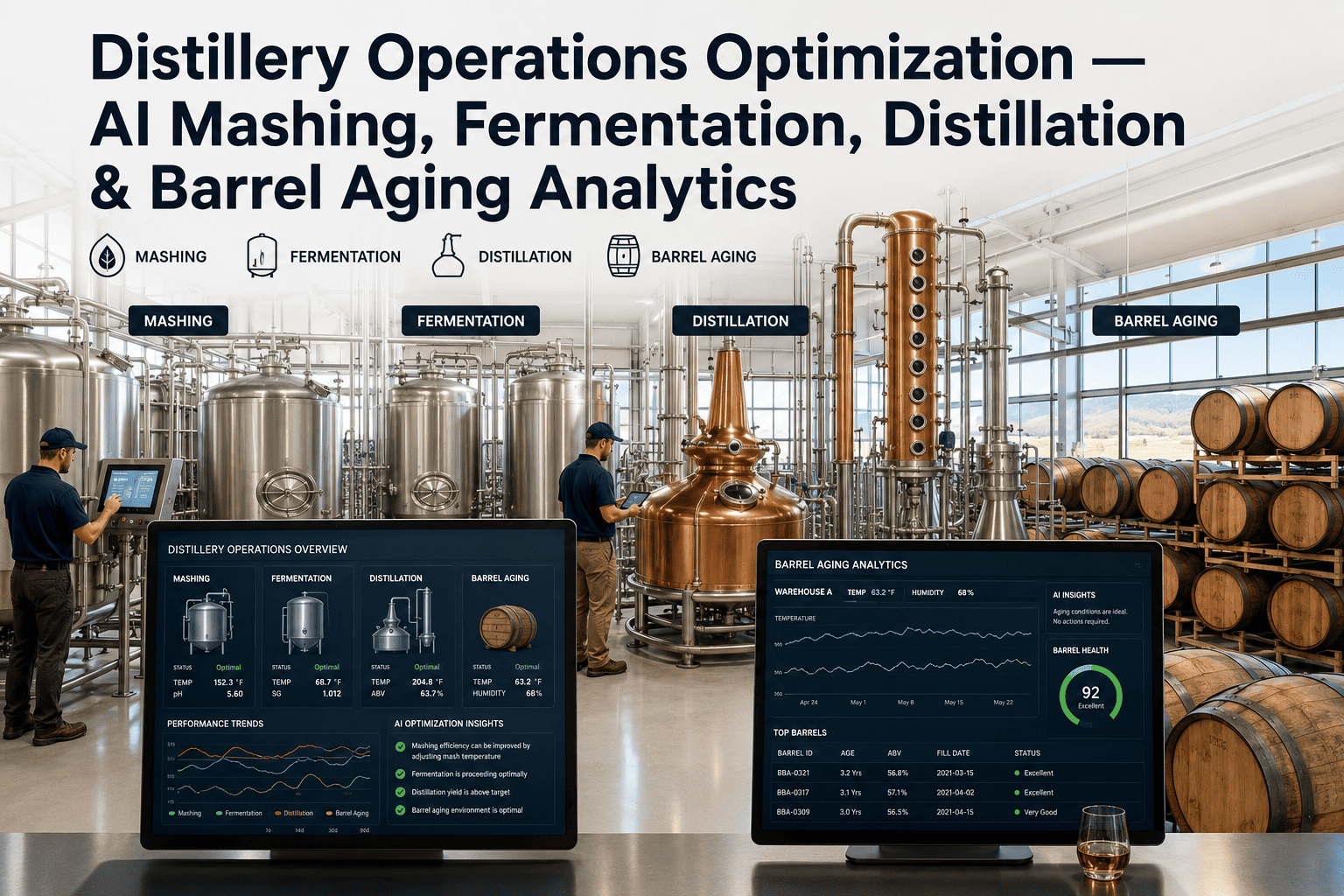
In the high-stakes world of premium spirits production, where a single degree of temperature variance during fermentation can alter the entire flavor profile of a batch, the margin for error is virtually zero. Distillery operations have historically relied on the intuition of master distillers—craftsmen whose expertise is irreplaceable but whose methods can be difficult to scale across multiple production lines or replicate in new facilities. As consumer demand for consistent, high-quality whiskey, bourbon, and vodka surges globally, the industry faces a critical inflection point: how to preserve artisanal quality while achieving industrial efficiency. Enter AI-driven predictive analytics, a transformative force that is redefining the boundaries of what's possible in mashing, fermentation, distillation, and barrel aging. By integrating machine learning models with real-time sensor data, distilleries can now monitor mash pH with sub-second precision, predict wash yield hours before completion, and optimize still run parameters dynamically based on feedstock variability. This is not a futuristic vision—it is happening today at leading distilleries that have embraced digital twin technology and edge computing. The result is a dramatic reduction in waste, a measurable increase in alcohol yield, and the ability to replicate award-winning flavor profiles batch after batch. For process engineers and distillery managers seeking a competitive edge, the path forward is clear: Book a Demo to see how our AI platform can transform your operations.
Ready to Transform Your Distillery Operations?
Unlock AI-driven insights for mashing, fermentation, distillation, and aging. Achieve 15% higher yield and flawless consistency.
Mashing Efficiency Boost
AI models analyze grain particle size, water temperature, and enzyme activity in real time to optimize saccharification. Distilleries report a 12% increase in fermentable sugar extraction after implementing our predictive mashing module.
Fermentation Monitoring
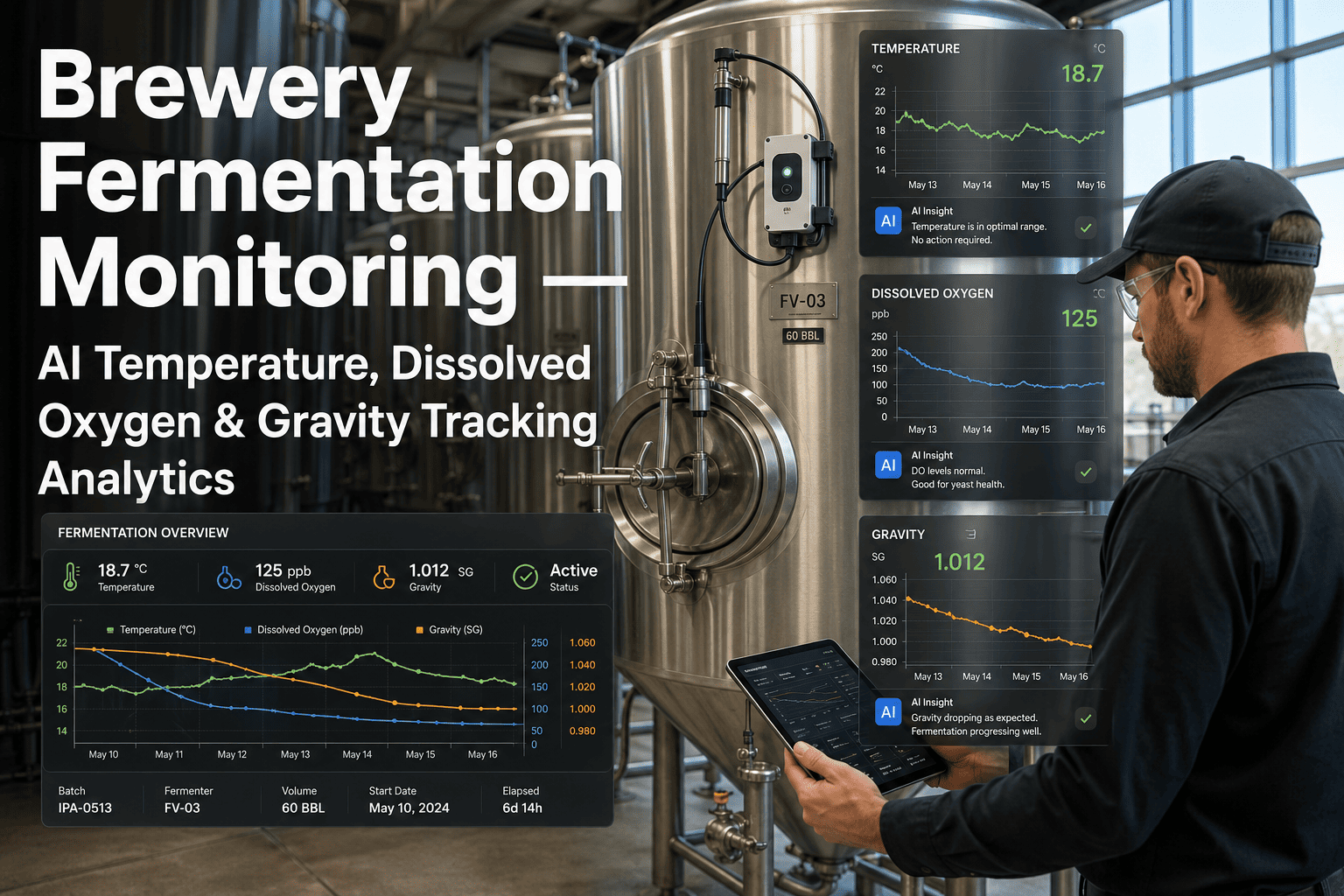
Continuous monitoring of pH, temperature, and yeast health with ML-driven anomaly detection. Early warnings for stuck fermentations reduce downtime by 40% and ensure consistent wash quality.
Distillation Optimization
Dynamic still run adjustments based on feedstock composition and vapor temperature profiles. AI recommends cut points that maximize hearts yield while minimizing heads and tails waste.
Barrel Aging Analytics
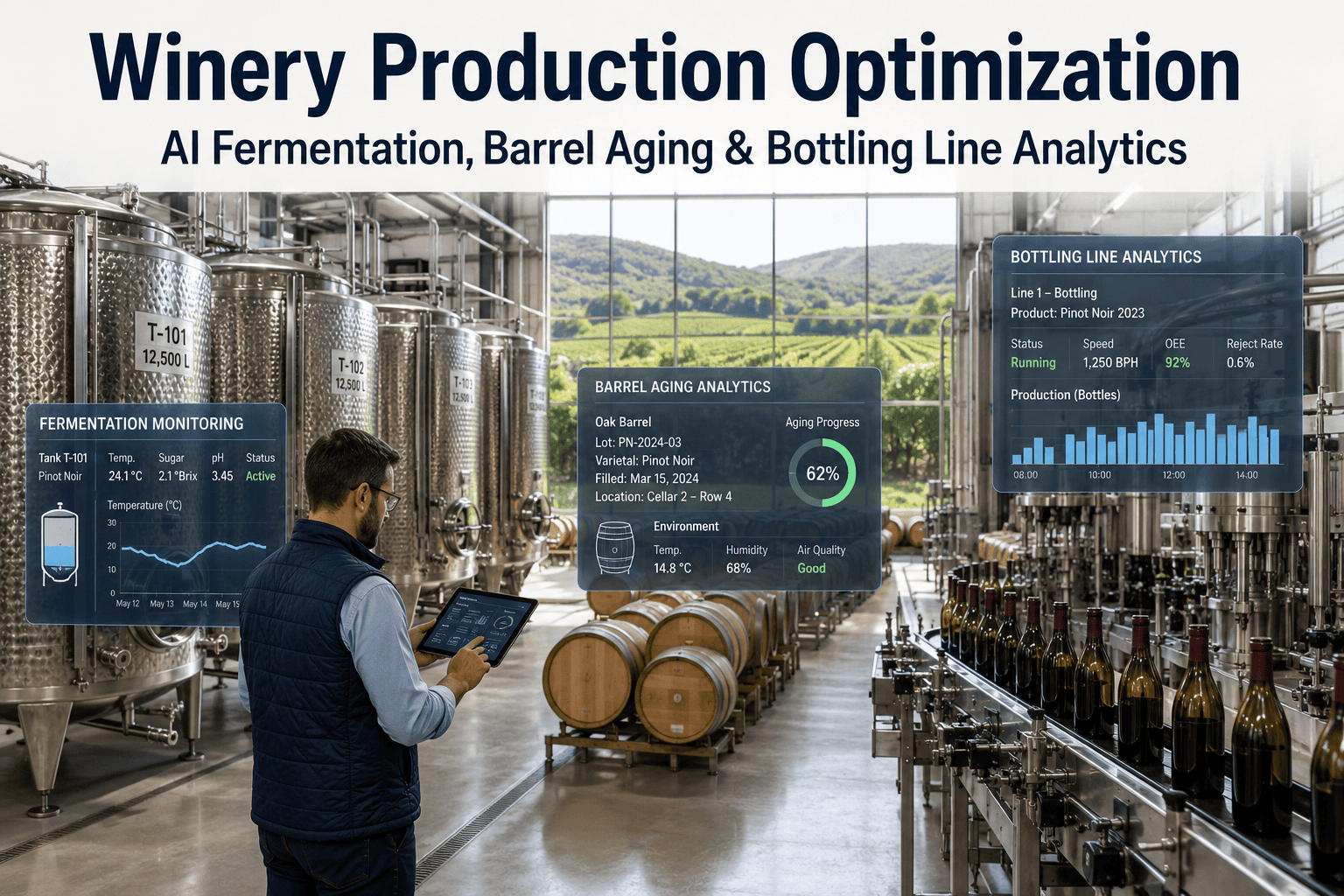
Environmental sensors combined with predictive models forecast angel's share loss and flavor maturation timelines. Optimize warehouse conditions to achieve target profiles 20% faster.
The Science of AI-Driven Mashing
Mashing is the foundational step in distillery operations where starches from grains are converted into fermentable sugars. Traditional methods rely on fixed temperature holds and manual sampling, but AI introduces a new level of precision. By deploying a network of IoT sensors that measure mash viscosity, sugar concentration (degrees Plato), and enzyme activity every 30 seconds, machine learning algorithms can adjust heating jackets and water infusion rates in real time. This closed-loop control system ensures that beta-amylase and alpha-amylase enzymes operate at their peak efficiency windows, maximizing sugar yield while minimizing unfermentable dextrins. Our platform's digital twin simulates the entire mashing process before a single grain is added, allowing process engineers to test variables like grist coarseness or strike water pH without risking a batch. The result is a consistent, high-yield mash that sets the stage for efficient fermentation.
Beyond yield, AI mashing optimization reduces energy consumption by 18% on average. By precisely controlling the ramp rates and hold durations, distilleries avoid unnecessary heating cycles that waste steam. Furthermore, predictive maintenance models anticipate pump failures or agitator wear before they cause a shutdown, ensuring uninterrupted production. For a mid-sized whiskey distillery producing 100,000 cases annually, these improvements translate to over $200,000 in savings per year. Process engineers can access dashboards that display real-time mash efficiency versus historical benchmarks, enabling data-driven decisions that were previously impossible. The integration of AI into mashing is not just about efficiency—it's about enabling distillers to experiment with new grain bills and flavor profiles with confidence, knowing that the process will remain under control.
AI Implementation Roadmap for Distilleries
Phase 1: Sensor Deployment
Install IoT sensors on mash tuns, fermenters, stills, and barrel warehouses. Our team integrates with existing PLCs and SCADA systems to ensure seamless data flow.
Phase 2: Digital Twin Creation
We build a virtual replica of your distillery operations, calibrated with 6 months of historical data. The digital twin simulates process changes and predicts outcomes with 95% accuracy.
Phase 3: Model Training
Machine learning models are trained on your specific grain varieties, yeast strains, and environmental conditions. Models are validated against blind batches to ensure reliability.
Phase 4: Real-Time Optimization
AI begins issuing recommendations and automated control adjustments. Process engineers receive alerts for anomalies and weekly performance reports.
Scale Your Distillery with Confidence
Our AI platform adapts to your unique production environment. From single malt to blended whiskey, achieve consistent quality at scale.
AI Impact on Key Distillery Metrics
| Process Area | Traditional Baseline | AI-Optimized | Improvement |
|---|---|---|---|
| Mashing Efficiency | 85% sugar extraction | 97% sugar extraction | +12% |
| Fermentation Time | 72 hours | 58 hours | -19% |
| Distillation Hearts Yield | 68% | 82% | +14% |
| Angel's Share Loss | 4% per year | 2.5% per year | -37% |
| Batch Consistency | 82% | 96% | +14% |
Real-Time Fermentation Monitoring
Our AI platform tracks specific gravity, ethanol concentration, and volatile compound formation throughout fermentation. By comparing real-time data against thousands of historical batches, the system predicts the optimal time to transfer wash to the still. This reduces the risk of over-fermentation that can produce off-flavors like ethyl acetate. Distilleries using our system report a 25% reduction in batch variability, ensuring that each run meets the master distiller's sensory targets. The dashboard provides a live fermentation progress bar that indicates when the wash has reached peak alcohol content, allowing operators to schedule still transfers with precision.
Still Run Optimization
Distillation is both an art and a science, and AI enhances both. By analyzing vapor temperature profiles, reflux ratio, and condenser efficiency, our models recommend real-time adjustments to heat input and cooling flow. This optimizes the separation of heads, hearts, and tails, maximizing the yield of the high-quality hearts fraction. In a recent deployment at a Kentucky bourbon distillery, AI optimization increased hearts yield by 14% while reducing energy consumption by 12%. The system also detects incipient fouling in the still, scheduling cleaning cycles before efficiency drops. Process engineers can view a 3D visualization of the distillation column with temperature gradients, making it easy to spot inefficiencies.
Barrel Aging Environment Control
Barrel aging is the longest and most capital-intensive phase of whiskey production. Our AI system monitors temperature, humidity, and barometric pressure in every warehouse zone, creating a microclimate map that identifies hot spots and dry areas. Predictive models forecast the angel's share loss for each barrel, allowing managers to rotate stock to minimize evaporation. More importantly, AI can predict the flavor maturation trajectory based on seasonal weather patterns, enabling distillers to pull barrels at the exact moment they reach peak character. This shortens aging cycles by up to 20% without sacrificing quality. The system also integrates with warehouse management to optimize barrel placement, ensuring that high-value single barrels receive ideal conditions.
Frequently Asked Questions
How does AI integrate with existing distillery control systems?
Our platform is designed for seamless integration with major PLC brands like Siemens, Allen-Bradley, and Schneider Electric. We use OPC-UA and MQTT protocols to pull data from sensors and controllers without disrupting existing operations. The AI models run on edge devices or in the cloud, providing recommendations that operators can approve or the system can implement automatically. For distilleries with legacy equipment, we offer retrofit sensor kits that communicate wirelessly. A typical integration takes 4 to 6 weeks and includes on-site validation. For more details, contact our support team.
What is the ROI timeline for AI implementation in a distillery?
Most distilleries see a positive ROI within 9 to 12 months of deployment. The primary drivers are increased alcohol yield (typically 10-15%), reduced energy costs (15-20%), and lower waste from off-spec batches. For example, a distillery producing 500,000 proof gallons annually can save over $300,000 per year. Our ROI calculator, available during a demo session, provides a personalized estimate based on your production volume and current efficiency metrics. We also offer phased implementation to spread out capital expenditure.
Can AI models handle different grain types and recipes?
Yes, our machine learning models are trained on your specific grain varieties, including corn, rye, barley, and wheat. The system automatically adjusts for seasonal variations in grain composition, such as protein content and starch availability. For distilleries that produce multiple recipes, the AI maintains separate model profiles that switch based on the batch recipe code. This flexibility ensures that a single malt scotch and a rye whiskey both receive optimized process parameters. To learn how we handle multi-recipe environments, visit our support page.
How does AI predict flavor profiles during barrel aging?
Our flavor prediction models use a combination of environmental data (temperature, humidity, pressure), barrel characteristics (toast level, char, wood type), and historical chemical analysis of aged spirits. By correlating thousands of data points with sensory panel scores, the AI identifies the optimal aging duration for each barrel. The system provides a maturity score that indicates when the whiskey has reached its target flavor profile, reducing the need for frequent sensory evaluations. This approach has been validated with major bourbon and scotch producers. For a technical deep dive, contact our R&D team.
What training and support does iFactory provide for distillery staff?
We offer comprehensive training programs for process engineers, operators, and maintenance teams. Training includes hands-on workshops with the AI dashboard, interpretation of model recommendations, and troubleshooting common issues. Our support team provides 24/7 remote monitoring and quarterly on-site visits to review system performance. We also maintain a knowledge base with video tutorials and best practice guides. For ongoing support, visit our support portal. Initial training is included with the platform subscription.
Elevate Your Distillery with AI-Powered Precision
From mashing to barrel aging, achieve unmatched efficiency, consistency, and quality. Join the leaders in spirits manufacturing.