
Modern spirits distilleries and wineries operate in an environment where equipment reliability, regulatory compliance, and product consistency are non-negotiable. Whether managing copper pot stills, fermentation vessels, barrel aging rooms, or automated bottling lines, distillery equipment analytics and winery analytics AI-driven platforms are transforming how production teams protect asset uptime, reduce contamination risk, and meet the strict documentation demands of TTB, FDA, and third-party certification bodies. This guide explores how AI-driven preventive analytics changes the operational equation for spirits manufacturers and wine producers running complex, multi-line facilities.
Why Distillery and Winery Equipment Analytics Can't Be an Afterthought
Spirits production and wine manufacturing are asset-intensive operations where equipment failure doesn't just stop a production run — it can ruin a batch, compromise a vintage, or trigger a compliance event that puts a facility's license at risk. Today's multi-line operations generate too much equipment data across too many interdependent systems for manual tracking to catch emerging failures before they become production-impacting events. The case for spirits production equipment analytics isn't theoretical — it's operational survival in a margin-compressed, quality-critical category.
Still Analytics: Protecting the Heart of Every Distillery Operation
The copper pot still or column still is the defining asset of any distillery — and one of the most mechanically demanding pieces of equipment in spirits production. Still analytics powered by AI-driven monitoring tracks still temperature profiles, vapor pressure, heat exchanger efficiency, condenser cooling water flow, and collection vessel fill rates — surfacing deviations before they reach product specification failure or a process safety event. For producers running split-still configurations, unified dashboards give quality managers cross-still visibility from a single interface. If you're evaluating how AI-driven still monitoring would integrate with your existing SCADA or PLC infrastructure, book a demo with ifactory's distillery engineering team to see a live configuration walkthrough.
Fermentation Vessel Analytics: Real-Time Monitoring for Consistent Fermentation Performance
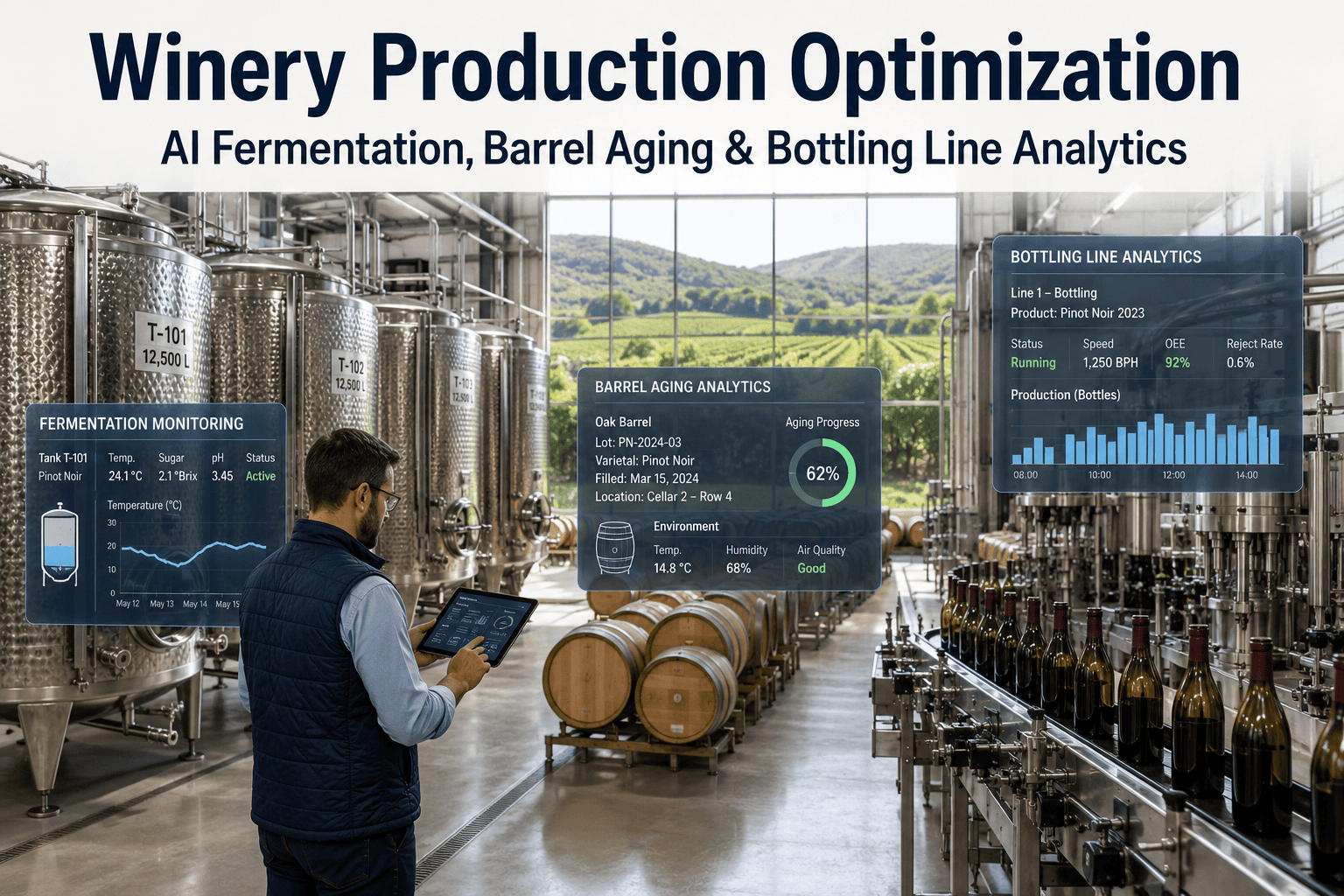
Fermentation is the most sensitive process window in the entire production chain. A stuck fermentation in a distillery wash vessel or a runaway fermentation in a wine tank — both caused by inadequate temperature or nutrient control — can result in off-specification batches and irreversible flavor damage. ifactory's fermentation vessel analytics tracks temperature across multiple vessel zones, pH, Brix trending, CO₂ evolution rate, and agitator amperage — flagging deviations before they progress to batch-impacting events. To see how fermentation analytics integrates with your existing temperature control infrastructure, book a demo with the ifactory winery analytics team.
Barrel Room Analytics and Environmental Controls: Protecting the Aging Inventory
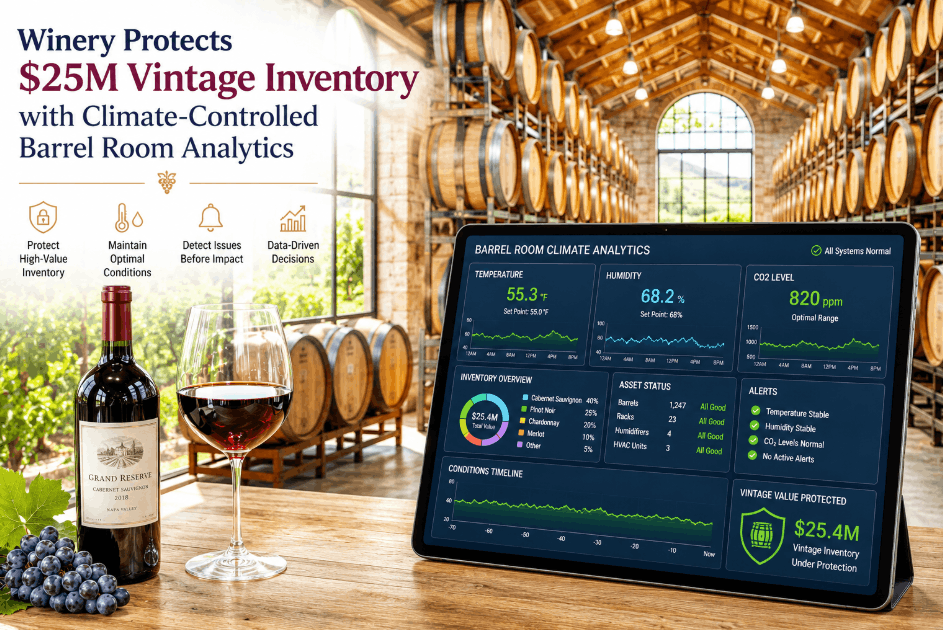
The barrel aging inventory of any whiskey, rum, or brandy operation is the facility's single largest asset — yet the environmental conditions that determine how it matures are frequently tracked only by spot-check readings and paper logs. ifactory's barrel room analytics delivers continuous temperature and humidity monitoring across all rickhouse zones, with AI-driven deviation alerting, spatial floor-and-position mapping, and automated TTB-compliant environmental logs. Producers with multiple aging facilities get unified cross-location visibility and facility-to-facility environmental comparison from a single dashboard. To see a live walkthrough of barrel room environmental monitoring configuration, book a demo with ifactory's spirits analytics team.
| Environmental Parameter | Monitoring Method (Before) | Monitoring Method (After) | Compliance Impact |
|---|---|---|---|
| Rickhouse temperature | Daily spot checks, paper log | Continuous multi-zone sensor | TTB-ready continuous log |
| Relative humidity | Weekly hygrometer reading | Real-time zone monitoring | Automated documentation |
| Barrel temperature cycling | Seasonal observation only | AI deviation alerting | Aging variance reduction |
| Airflow uniformity | Not monitored | Zone differential analysis | Rotation schedule optimization |
| Cold-storage spirit vaults | Manual log-in check | Automated alert on excursion | Zero-gap cold chain record |
Bottling Line Analytics for Wineries and Distilleries: Speed, Accuracy, and Zero Compliance Gaps
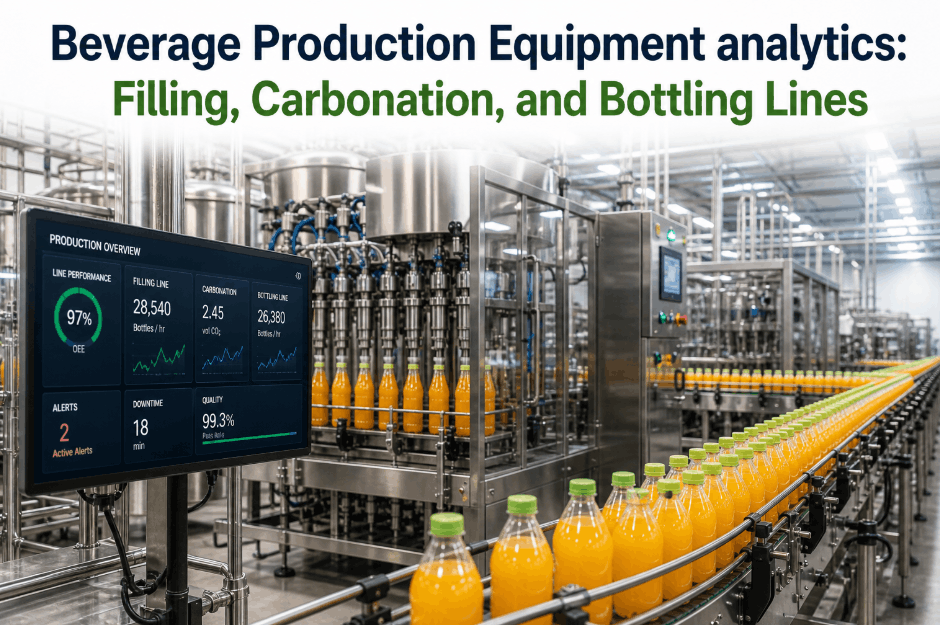
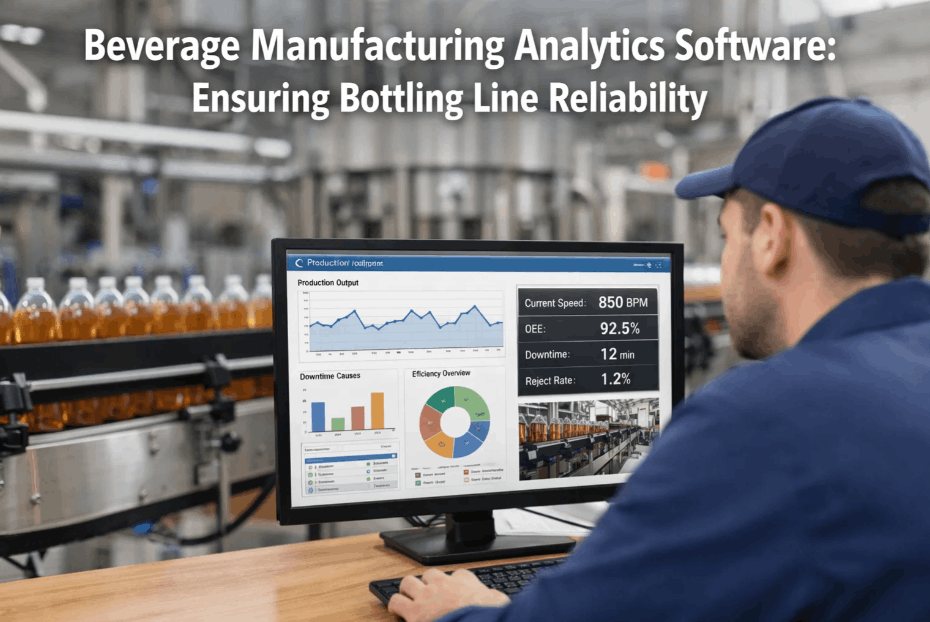
The bottling line is where spirits and wine production converts inventory into revenue — and where equipment failure carries the most immediate financial and regulatory impact. ifactory's bottling line analytics monitors individual filler head performance, capper torque consistency, labeler registration accuracy, and OEE by shift and SKU — detecting mechanical failure signatures before a line stop occurs. AI-driven changeover sequence verification ensures every CIP, fill adjustment, and first-article inspection step is documented before the next production run begins. To see how bottling line analytics integrates with your existing SCADA infrastructure, book a demo and see a live bottling line analytics configuration.
Distillery Sanitation, Winery CIP System Analytics, and Compliance Documentation
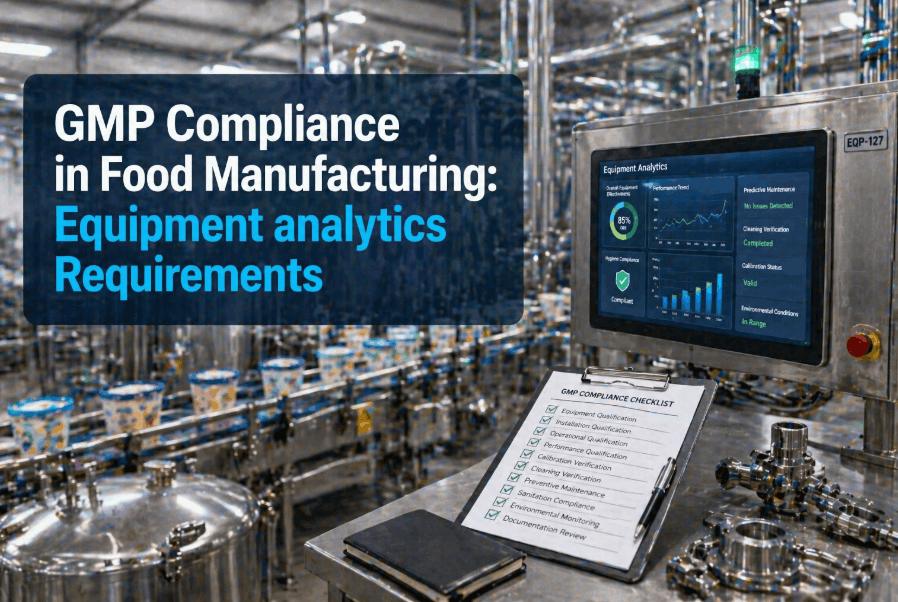
Distillery sanitation and winery CIP system performance are foundational to both product quality and regulatory compliance — yet CIP is among the least monitored parameters in most facilities, assessed by operator sign-off rather than actual measurement. ifactory's CIP analytics tracks caustic concentration at point of use, solution temperature, contact time, rinse conductivity, and flow rate for every cleaning cycle — triggering AI exception alerts when any parameter falls outside the validated specification before that equipment is released for production. For FSMA, SQF, BRC, or USDA Organic compliance, the platform generates CIP documentation packages formatted to each standard's specific record requirements, eliminating retroactive reconstruction before every audit cycle.
Distillery Asset Management: AI-Driven Preventive Maintenance Across the Full Equipment Portfolio
A mature distillery asset management and winery equipment PM program requires unified visibility across the entire equipment portfolio — linking real-time condition data with maintenance calendars, parts inventory, and compliance documentation in a single framework. ifactory moves beyond fixed-interval PM schedules to condition-based maintenance triggers: directing service to equipment that actually needs attention, when condition data says so, rather than on a calendar defined without real equipment health data. AI-generated work orders, parts requisition, labor tracking, and completion documentation feed back into each asset's history record — creating the unbroken asset history that auditors require.
Deploying Distillery and Winery Equipment Analytics: What to Expect
A common concern among distillery and winery operations teams evaluating AI-driven equipment analytics is deployment complexity — specifically, the disruption risk of integrating a new monitoring platform into an active production environment. ifactory's deployment methodology is specifically designed to minimize this risk by prioritizing high-value, high-risk equipment first, running parallel documentation during the transition period, and integrating with existing ERP, SCADA, and laboratory information management systems (LIMS) through standard API connections that don't require custom development or production interruption.
Complete equipment inventory mapped into ifactory's asset framework. Risk tier assigned to each asset based on production criticality, historical failure frequency, compliance documentation requirements, and product quality impact. Deployment sequence defined — highest-risk assets first, with monitoring live before full network completion.
Sensor connections established for priority assets — stills, fermentation vessels, CIP systems, and bottling lines. AI alert thresholds configured against OEM specifications, validated process parameters, and facility-specific operating experience. ERP and SCADA integration activated for automated work order and production data synchronization.
AI engine ingests historical equipment performance data and live sensor streams — establishing facility-specific deviation baselines for each asset type within 14 days of live data ingestion. Quality and maintenance team training integrated into activation schedule. All remaining equipment activated in final phase.
Compliance documentation templates validated against TTB, FDA, and any applicable third-party certification standard requirements. First full audit documentation package generated and reviewed by quality director. Platform fully live across all equipment types and facility areas — real-time monitoring, alert management, and documentation generation operational from Day 45.
Measured Outcomes: AI-Driven Equipment Analytics in Spirits and Wine Production
The operational and financial outcomes of transitioning from reactive equipment management to AI-driven preventive analytics follow consistent patterns across distillery and winery deployments — driven by the same structural improvements: earlier failure detection, eliminated retroactive documentation, and maintenance resources directed by condition data rather than fixed calendars.
| Performance Metric | Before AI-Driven Analytics | After AI-Driven Analytics | Change |
|---|---|---|---|
| Unplanned equipment downtime events | 12–18 per year | 1–2 per year | −94% event reduction |
| Emergency repair costs | $180K–$280K annually | $70K–$110K annually | −61% cost reduction |
| Maintenance records completed in real time | 38% | 99.1% | +61.1 percentage points |
| Stuck fermentation recovery rate | 40–60% of stalls recovered | 98% early detection, full recovery | Near-zero batch loss |
| CIP parameter verification completeness | Sign-off only (no measurement) | 100% parameter-verified cycles | Audit-grade CIP records |
| Audit preparation time | 3–6 weeks per cycle | Same-day documentation export | −85% preparation time |
| Compliance corrective action requests | 2–4 per audit year | 0 in first post-deployment year | Zero CARs post-deployment |
| Barrel room environmental documentation | Manual spot checks, paper log | Continuous multi-zone digital record | Full TTB-compliant coverage |


.png)