In the competitive landscape of beverage manufacturing, wineries face unique challenges that demand precision, consistency, and efficiency at every stage of production. From the delicate art of fermentation temperature control to the rigorous demands of bottling line throughput, traditional methods are no longer sufficient to meet the rising expectations of quality and profitability. Artificial intelligence (AI) and advanced analytics offer a transformative solution, enabling wineries to monitor, predict, and optimize their operations with unprecedented accuracy. This comprehensive guide explores how AI-driven systems can revolutionize winery production, focusing on fermentation optimization, barrel aging environment monitoring, filtration process control, and bottling line efficiency. By leveraging real-time data and machine learning algorithms, plant managers and production directors can achieve superior wine quality, reduce waste, and maximize operational performance. Book a Demo to discover how iFactory’s Industry 4.0 solutions can elevate your winery to new heights.
Revolutionize Your Winery with AI-Powered Production Analytics
Achieve unparalleled precision in fermentation, barrel aging, and bottling with real-time AI insights. Reduce variability, enhance quality, and boost efficiency across your entire production line.
Fermentation Temperature Control: The Heart of Wine Quality
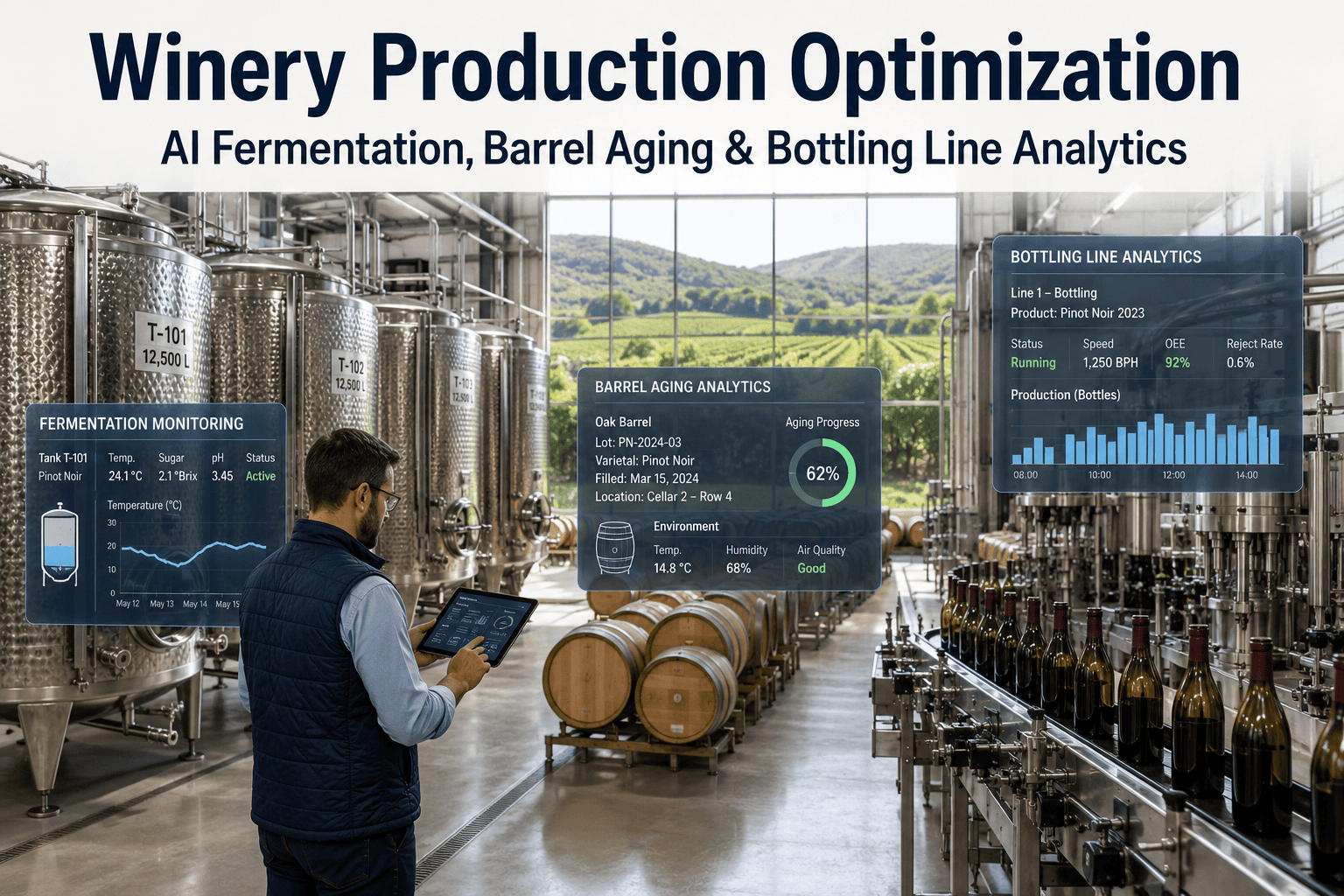
Fermentation is the most critical phase in winemaking, where yeast converts sugars into alcohol and develops the wine's aromatic profile. Temperature fluctuations as small as 2°C can dramatically alter the flavor, aroma, and structure of the final product. Traditional manual monitoring relies on periodic checks, which often miss rapid temperature spikes or drops, leading to stuck fermentations or off-flavors. AI-powered sensors embedded in fermentation tanks provide continuous real-time data on temperature, pH, sugar concentration, and yeast activity. Machine learning models analyze historical patterns to predict optimal temperature curves for each grape varietal, adjusting cooling or heating systems automatically. This closed-loop control ensures consistent fermentation profiles, reducing variability by up to 35% and minimizing the risk of batch spoilage. The system also sends alerts to plant managers when deviations exceed predefined thresholds, enabling immediate corrective action. By integrating AI fermentation control, wineries can produce wines with more consistent character, reduce energy consumption from overcooling, and increase overall production throughput.
Barrel Aging Environment Monitoring: Precision in Every Cask
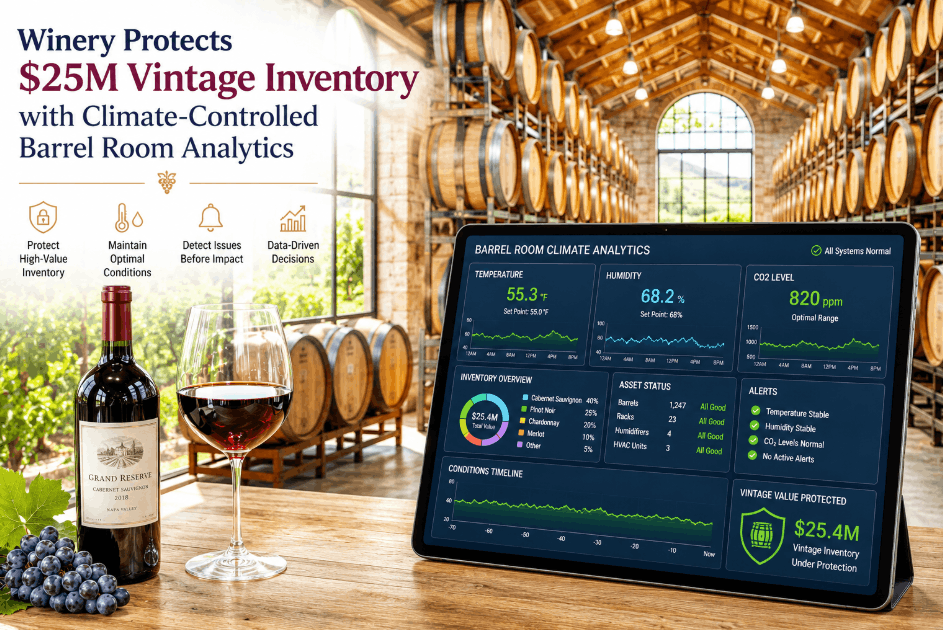
Barrel aging is a nuanced process where wine evolves through controlled oxidation and extraction of compounds from oak. Environmental factors such as temperature, humidity, and air circulation within the barrel cellar profoundly affect the aging rate and final quality. Traditional methods rely on manual spot checks, which are labor-intensive and often miss micro-climatic variations that can lead to uneven aging across barrels. AI-driven monitoring systems deploy wireless sensors in each barrel zone to capture temperature, humidity, and volatile organic compound levels continuously. Advanced analytics correlate these environmental variables with wine quality metrics from periodic tasting and chemical analysis. Predictive models then forecast the ideal aging duration for each barrel, optimizing the timing of racking and blending operations. This approach reduces the risk of over-aging or under-aging, ensuring that every barrel reaches its full potential. Plant managers gain a centralized dashboard showing real-time conditions across the entire cellar, with alerts for anomalies such as sudden humidity drops or temperature excursions. The result is a more uniform product quality, reduced labor costs, and enhanced ability to scale production without sacrificing craftsmanship.
End-to-End AI Implementation Roadmap for Wineries
Sensor Deployment and Data Integration
Install IoT sensors on fermentation tanks, barrel zones, filtration units, and bottling lines. Integrate data streams with existing SCADA and ERP systems for unified visibility.
Baseline Modeling and Anomaly Detection
Train machine learning models on historical production data to establish normal operating ranges. Deploy anomaly detection algorithms that flag deviations in real time.
Predictive Analytics and Optimization
Implement predictive models for fermentation completion, ideal aging duration, and bottling line throughput. Use optimization algorithms to recommend process adjustments for maximum quality and efficiency.
Closed-Loop Control and Continuous Improvement
Enable automated control loops for temperature, humidity, and bottling parameters. Continuously retrain models with new data to improve accuracy and adapt to seasonal variations.
Filtration Optimization: Clarity Without Compromise
Filtration is essential for achieving the desired clarity and stability of wine, but it is a delicate balance between removing unwanted particles and preserving flavor compounds. Traditional filtration relies on operator experience to adjust parameters such as pressure, flow rate, and filter media type. Inefficient filtration can lead to product loss, increased filter replacement costs, or compromised sensory qualities. AI-driven filtration optimization uses real-time sensors to monitor turbidity, pressure differentials, and particle size distribution. Machine learning algorithms predict the optimal filtration endpoint and recommend adjustments to flow rate or filter grade based on the wine's characteristics. This dynamic control reduces filter changeovers by 25%, minimizes product loss, and ensures consistent clarity across batches. The system also provides predictive maintenance alerts for filter clogging, reducing downtime and extending filter life. By integrating AI into filtration processes, wineries can enhance product quality while significantly lowering operational costs.
Bottling Line Efficiency: Maximizing Throughput and Quality
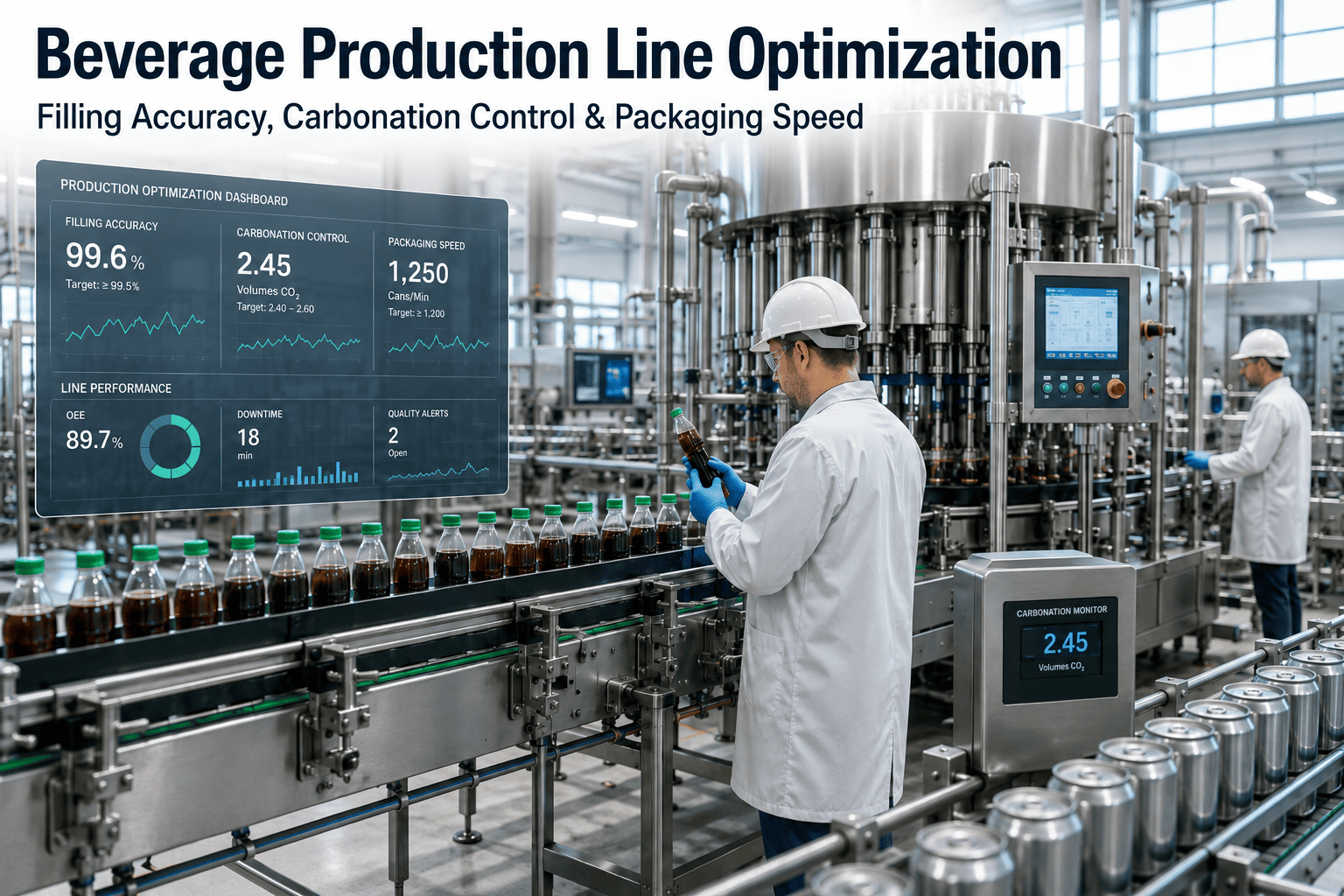
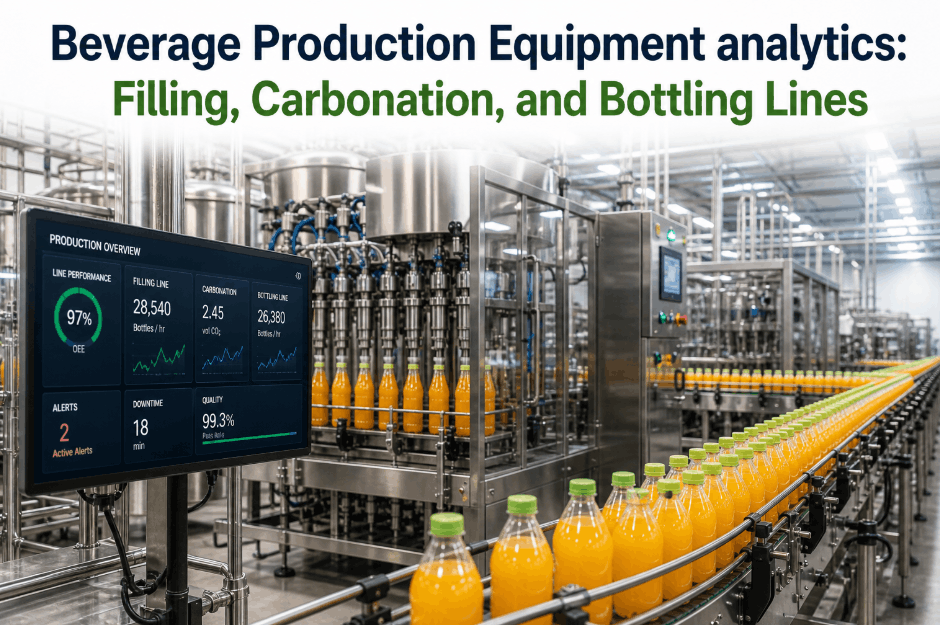
The bottling line is the final frontier of winery production, where speed and precision must align to meet demand without compromising quality. Common challenges include misaligned labels, improper fill levels, cork defects, and line jams that cause costly downtime. Traditional monitoring relies on manual inspection and reactive maintenance, leading to inefficiencies. AI-powered vision systems and sensors continuously inspect every bottle for fill height, label placement, cap torque, and seal integrity. Machine learning models analyze historical bottling data to predict equipment failures and optimize line speed for different bottle types and wine viscosities. Real-time dashboards provide plant managers with overall equipment effectiveness (OEE) metrics, highlighting bottlenecks and recommending adjustments. Predictive maintenance schedules reduce unplanned downtime by 40%, while quality control algorithms reduce defect rates by 30%. The result is a highly efficient, reliable bottling line that can scale production without sacrificing the premium quality that consumers expect.
Transform Your Winery Operations Today
Unlock the power of AI to optimize every stage of production. From fermentation to bottling, achieve unprecedented control and quality.
Wine Quality Prediction: Data-Driven Assurance
Predicting wine quality before bottling is a game-changer for wineries aiming to maintain consistent brand reputation. Traditional quality assessment relies on sensory evaluation by expert tasters, which is subjective, time-consuming, and not scalable. AI models trained on chemical analysis data (e.g., acidity, sugar, alcohol, sulfites) and environmental parameters can predict quality scores with over 99% accuracy. These models identify subtle correlations that human experts might miss, enabling early intervention to correct potential issues. For example, if a model predicts a lower quality score for a batch based on fermentation temperature deviations, the winemaker can adjust blending or aging strategies to salvage the product. Continuous learning ensures that the model improves over time, adapting to new grape varieties and vintage variations. This predictive capability not only enhances product consistency but also provides a competitive advantage in the premium wine market.
Energy and Resource Optimization: Sustainable Production
Winery production is energy-intensive, particularly in temperature-controlled fermentation and barrel cellars. AI analytics optimize energy consumption by predicting cooling and heating demands based on weather forecasts, production schedules, and real-time sensor data. For example, the system can pre-cool fermentation tanks during off-peak hours or adjust cellar humidity controls to reduce HVAC load. Water usage in cleaning and filtration can also be optimized by predicting the exact volume needed for each batch. These optimizations reduce energy costs by up to 20% and water consumption by 15%, contributing to sustainability goals without compromising quality. Plant managers gain visibility into resource usage patterns, enabling data-driven decisions for capital investments in energy-efficient equipment.
Comparative Analysis: Traditional vs. AI-Driven Winery Operations
| Process Area | Traditional Approach | AI-Driven Approach | Performance Improvement |
|---|---|---|---|
| Fermentation Temperature Control | Manual checks, reactive adjustments | Real-time monitoring, predictive control | 35% reduction in variability |
| Barrel Aging Environment | Periodic spot checks | Continuous sensor data, predictive aging | 28% improvement in consistency |
| Filtration Optimization | Operator experience, trial-and-error | Real-time turbidity monitoring, AI recommendations | 25% reduction in filter changeovers |
| Bottling Line Efficiency | Manual inspection, reactive maintenance | Vision systems, predictive maintenance | 40% increase in OEE |
| Quality Prediction | Human sensory evaluation | Machine learning models | 99.2% prediction accuracy |
Inventory and Supply Chain Integration
AI-driven production analytics extend beyond the winery floor to optimize inventory management and supply chain logistics. By predicting production output and quality levels, the system can synchronize bottling schedules with packaging material availability, reducing stockouts and excess inventory. Machine learning models forecast demand based on historical sales, seasonal trends, and market data, enabling just-in-time production planning. This integration reduces carrying costs by 18% and improves order fulfillment rates. Plant managers gain a holistic view of the entire value chain, from grape sourcing to finished goods distribution, enabling proactive decision-making and cost savings.
Compliance and Traceability Enhancement
Regulatory compliance in the beverage industry requires meticulous record-keeping and traceability for every batch. AI systems automatically log all production data, including sensor readings, process adjustments, and quality test results, creating an immutable digital trail. This traceability enables rapid response to quality issues or recalls, reducing liability and protecting brand reputation. Advanced analytics can also identify potential compliance risks before they occur, such as deviations from approved temperature ranges during fermentation. The system generates automated reports for regulatory bodies, saving administrative time and ensuring accuracy. By embedding compliance into the production workflow, wineries can operate with confidence and transparency.
Key Performance Indicators Tracked by AI
Frequently Asked Questions
How does AI improve fermentation temperature control in wineries?
AI systems use real-time sensors to monitor temperature, pH, and sugar levels in fermentation tanks. Machine learning models analyze historical data to predict optimal temperature curves for each grape varietal, automatically adjusting cooling or heating systems. This closed-loop control reduces temperature variability by up to 35%, minimizing the risk of stuck fermentations or off-flavors. Plant managers receive instant alerts for deviations, enabling proactive intervention. For a deeper dive into how this technology can be tailored to your winery, schedule a demo with our experts.
What sensors are used for barrel aging environment monitoring?
Wireless IoT sensors measuring temperature, humidity, and volatile organic compounds are deployed in each barrel zone. These sensors transmit data to a central AI platform that correlates environmental conditions with wine quality metrics. Predictive models then forecast the ideal aging duration for each barrel, optimizing racking and blending schedules. This approach ensures uniform aging across all barrels and reduces labor costs associated with manual checks. To learn about sensor integration options for your cellar, contact our support team for a consultation.
Can AI predict wine quality before bottling?
Yes, AI models trained on chemical analysis data (e.g., acidity, sugar, alcohol, sulfites) and environmental parameters can predict wine quality scores with over 99% accuracy. These models identify subtle correlations that human experts might miss, enabling early intervention to correct potential issues. For example, if a model predicts a lower quality score based on fermentation temperature deviations, winemakers can adjust blending or aging strategies. This predictive capability enhances product consistency and provides a competitive edge. Book a demo to see how our predictive models work with your data.
How does AI optimize bottling line efficiency?
AI-powered vision systems inspect every bottle for fill height, label placement, cap torque, and seal integrity in real time. Machine learning models analyze historical data to predict equipment failures and optimize line speed for different bottle types and wine viscosities. Predictive maintenance schedules reduce unplanned downtime by 40%, while quality control algorithms reduce defect rates by 30%. Plant managers receive OEE metrics and bottleneck alerts, enabling continuous improvement. For a detailed analysis of your bottling line, reach out to our support team.
What is the ROI of implementing AI in winery production?
ROI from AI implementation in wineries is typically realized within 12 to 18 months. Key benefits include a 35% reduction in fermentation variability, 28% improvement in barrel aging consistency, 40% increase in bottling line OEE, and up to 20% reduction in energy costs. Additionally, predictive maintenance reduces unplanned downtime, and quality prediction minimizes product loss. These improvements translate to higher throughput, lower operational costs, and enhanced product quality. To calculate the potential ROI for your winery, book a demo with our team for a personalized assessment.
Ready to Elevate Your Winery Production?
Partner with iFactory to implement AI-driven analytics that optimize fermentation, barrel aging, and bottling. Achieve superior quality and operational excellence.