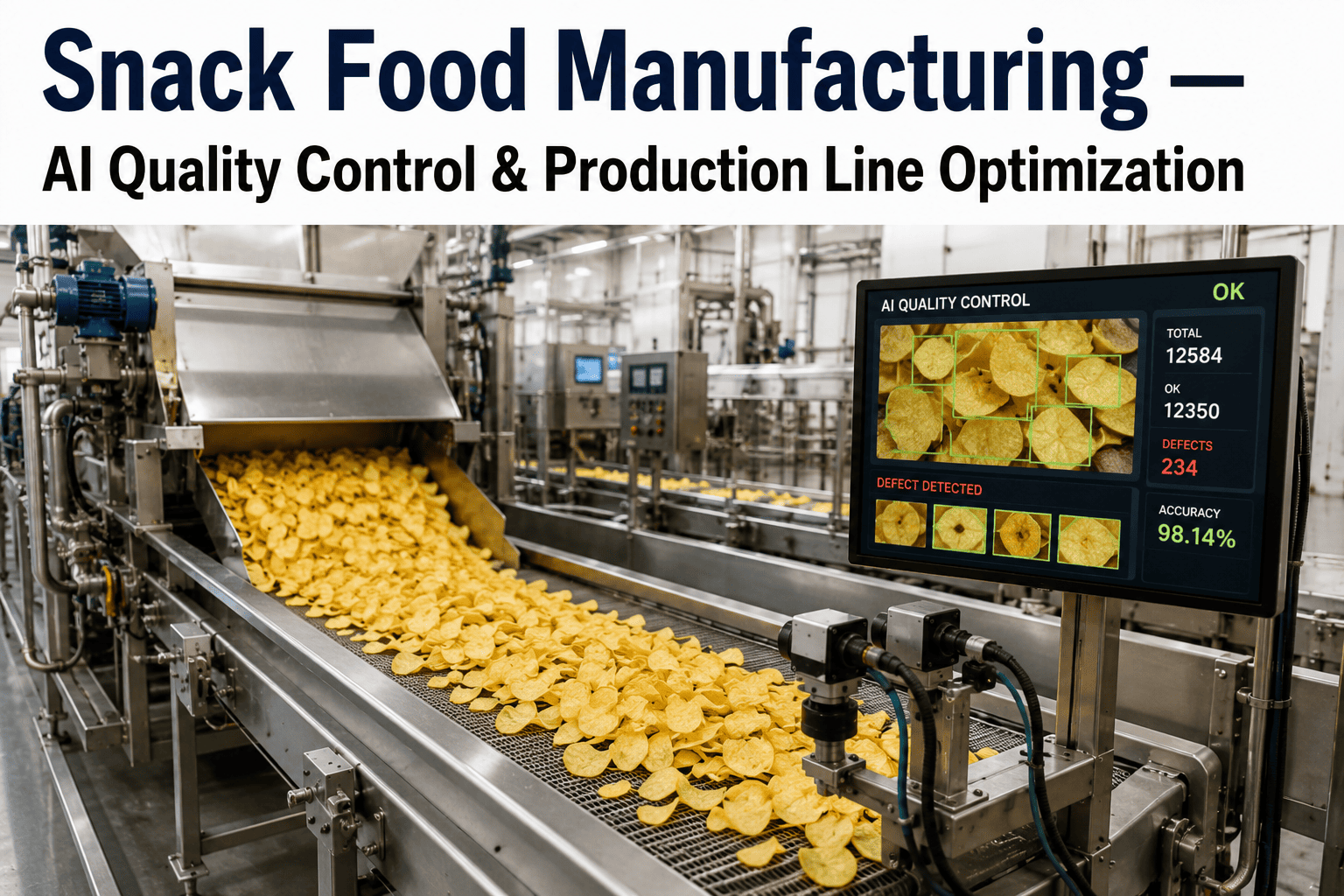
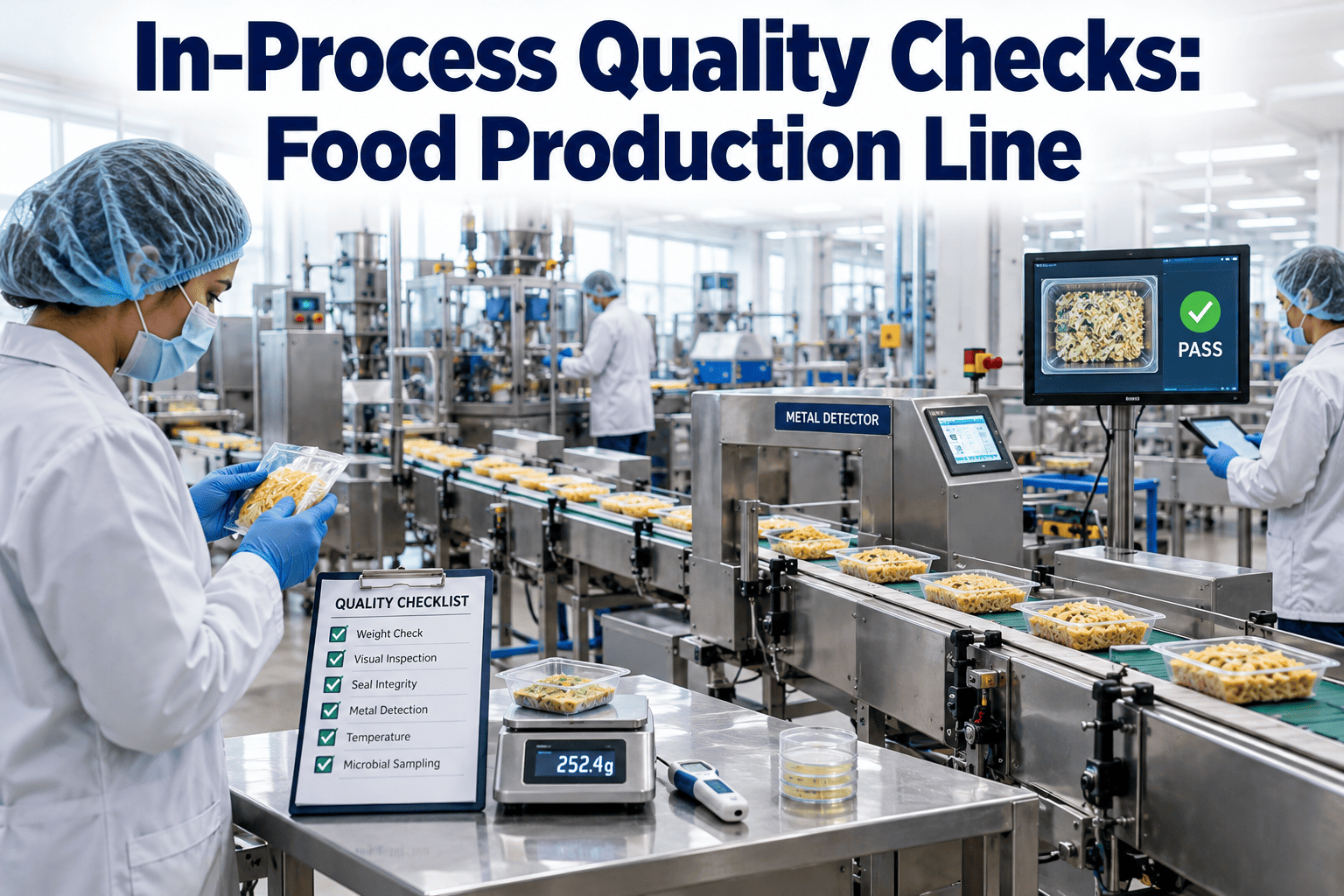
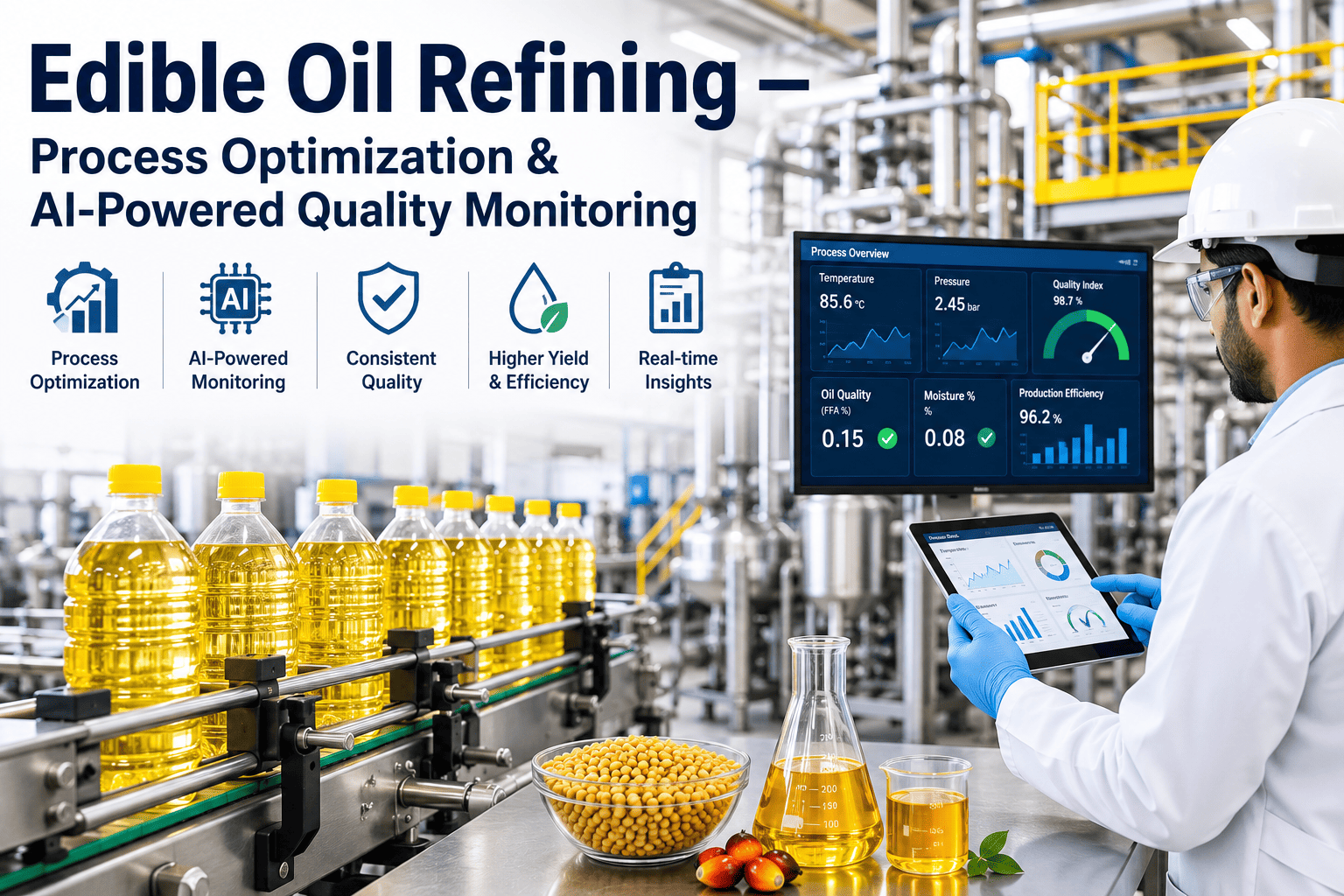
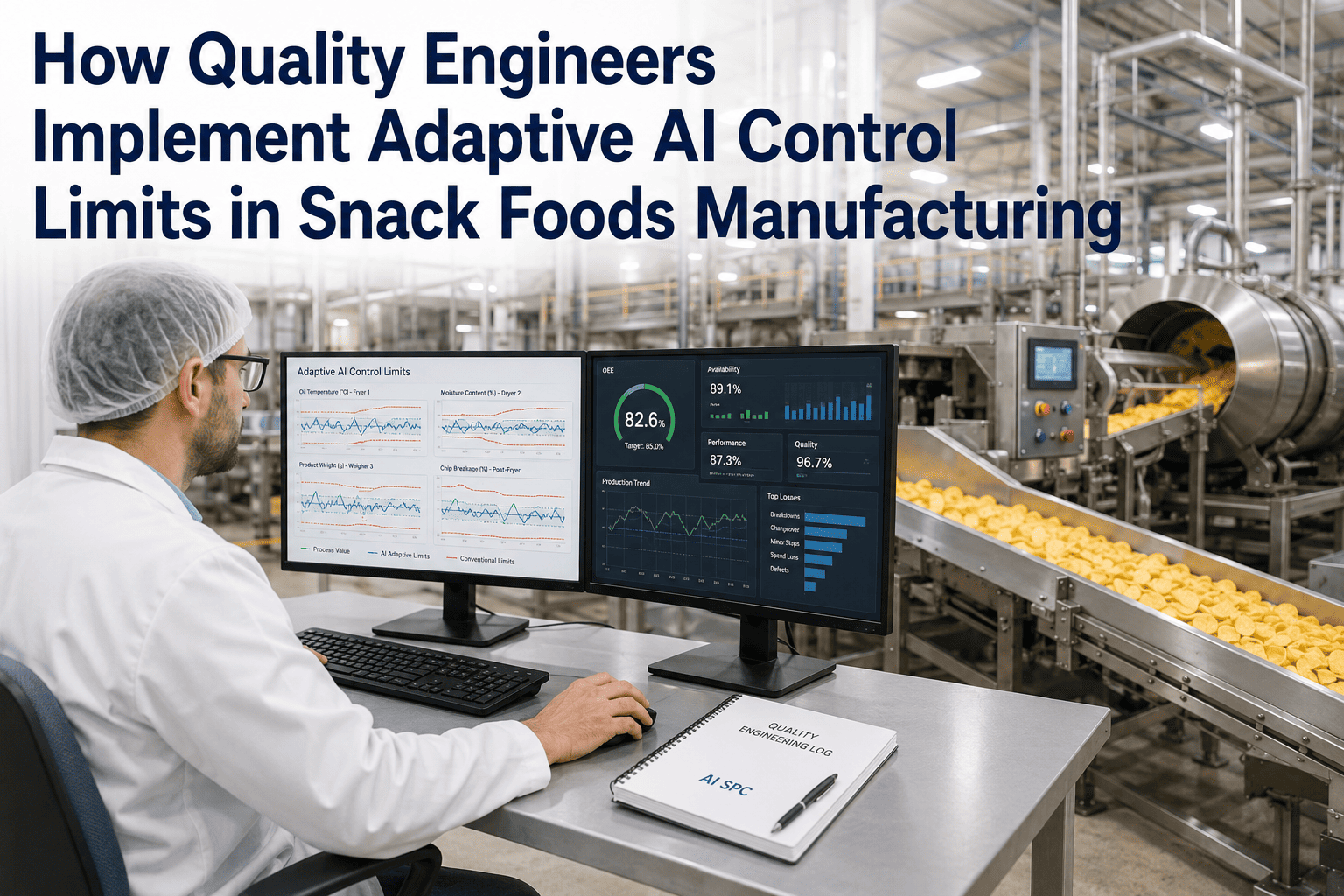
A snack line looks fine from the catwalk. Then the shift report comes in and seasoning drum weights were off on bag 4,000, three fryers ran two degrees hot for forty minutes, and nobody caught either one until the reject bin was already full. Plant Managers running frying, baking, or extrusion lines are told to hit OEE targets while working with vision checks that miss subtle color drift and seasoning systems tuned once a quarter instead of once a shift. Book a demo to see how AI-driven monitoring catches these drifts before they become a pallet of rejected product.
Snack Food Manufacturing
Stop Losing Margin to Seasoning Drift, Fryer Swings, and Late-Shift Quality Catches
AI-driven visual inspection, seasoning uniformity control, and real-time OEE tracking built for frying, baking, and extrusion lines — so problems get caught at bag 400, not bag 4,000.
30%
Typical waste reduction achievable across frying, baking, and extrusion lines with continuous monitoring
3 Lines
Frying, baking, and extrusion are the three process types where drift most often goes undetected between manual checks
Hourly
How often most plants sample seasoning and moisture manually, versus continuous automated sampling
1 Shift
How long an undetected fryer temperature swing typically runs before a manual quality check flags it
Where the Margin Actually Leaks
Four Quality Gaps That Hourly Manual Checks Cannot Close
A manual quality check every hour looks thorough on paper. In practice it means fifty-nine minutes of blind production between each look at the line — and that gap is where scrap, rework, and customer complaints get created.
01
Seasoning Application DriftTumble drum wear and product bed depth changes shift seasoning coverage gradually, and a hand-check every hour cannot see a trend developing bag by bag.
02
Fryer and Oven Temperature SwingsOil degradation, burner cycling, and load changes cause temperature drift that alters color and texture well before an operator notices anything visually wrong.
03
Extrusion Density VariationMoisture content and screw speed interact in ways that are hard to catch by eye, producing density variation that only shows up after packaging when the bag weight is already wrong.
04
Late Detection of Color and Shape DefectsBy the time a defect is visible to a person walking the line, several minutes of product — sometimes an entire tote — has already moved past the inspection point.
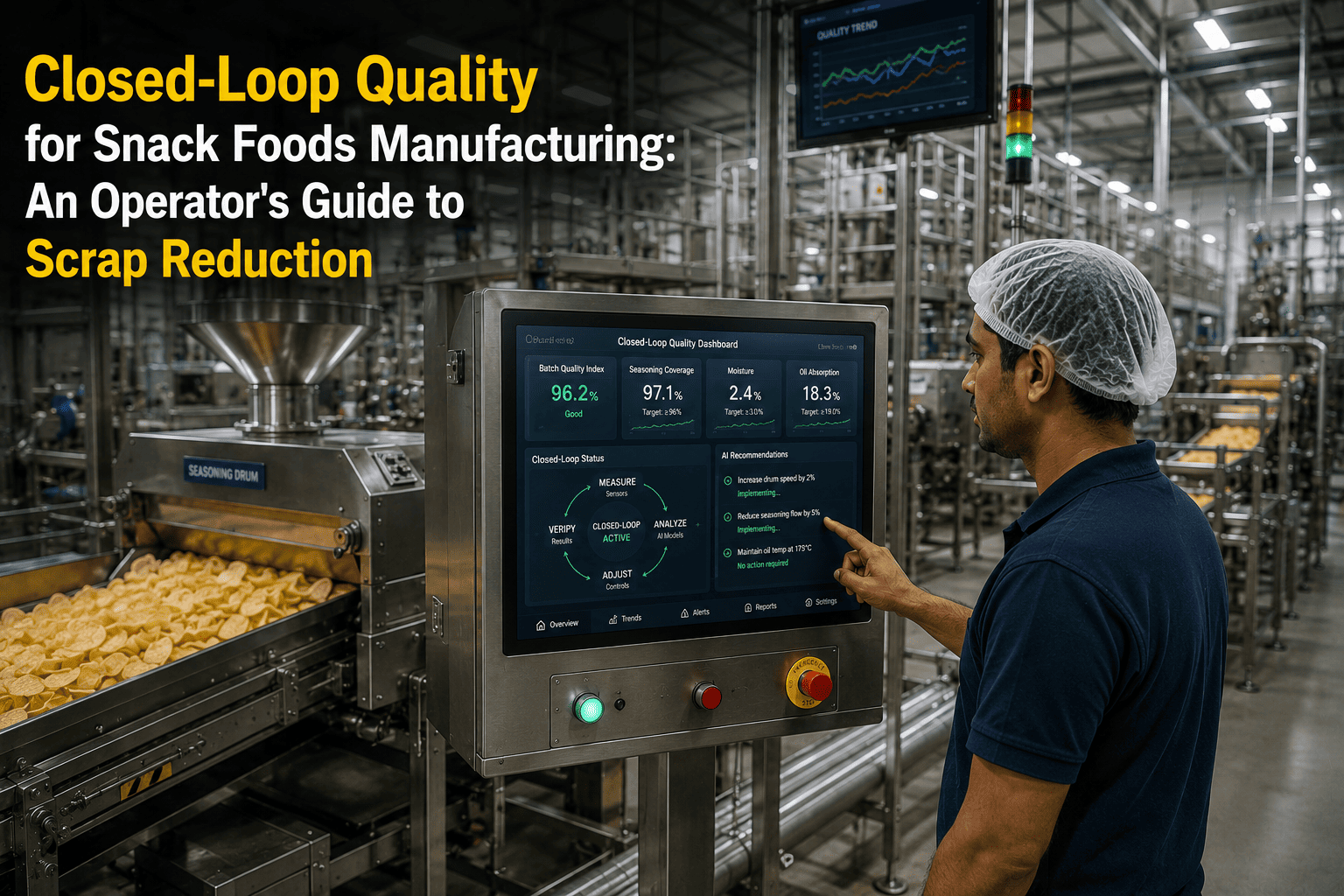
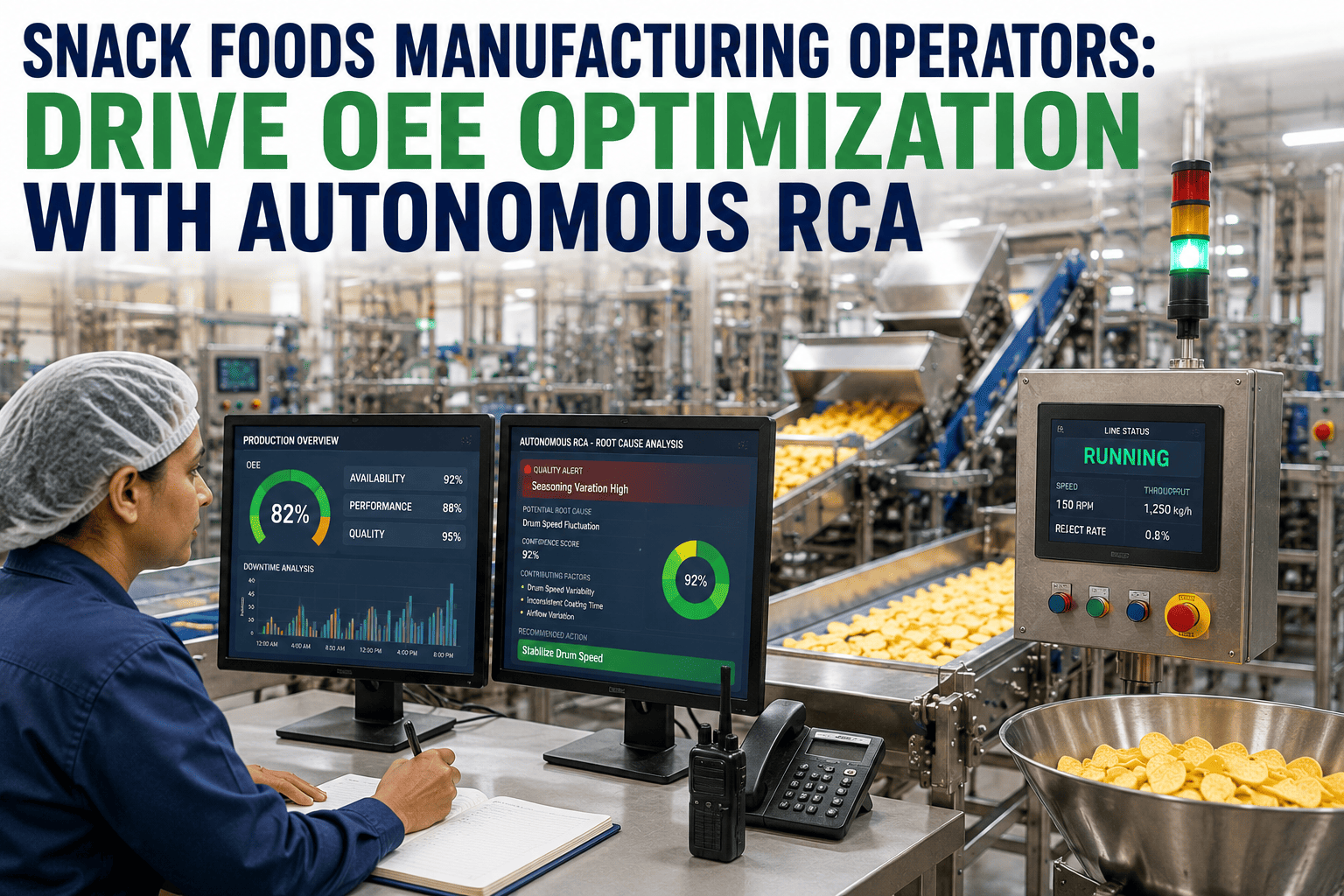
iFactory Watches Every Fryer, Drum, and Extruder in Real Time — Not Once an Hour
Continuous visual inspection, seasoning uniformity tracking, and live OEE dashboards configured for your specific line layout and product mix.
Manual Checks vs. Continuous Monitoring
What Changes When Inspection Runs Every Second Instead of Every Hour
Process Stage
Hourly Manual Check
Continuous AI Monitoring
Frying / Baking Temp
Swings caught after color is already off across a full batch
Drift flagged within seconds of leaving the target range
Seasoning Coverage
Coverage checked on a handful of bags per shift
Every bag's coating uniformity tracked against target
Extrusion Density
Density issues found at packaging, after the batch is made
Density trend visible in real time at the extruder
OEE Visibility
Calculated at end of shift from paper logs
Live dashboard updates continuously across every line
We ran three lines with one quality tech splitting attention between all of them. Seasoning coverage would drift for a full shift before anyone flagged it, because the manual check schedule just could not keep up with three lines at once. Once we had continuous coverage tracking on all three, the tech's job changed from constantly walking the floor to reviewing exceptions the system already flagged. Waste on the seasoned line alone dropped noticeably within the first month, and the tech actually had time to work on root cause instead of chasing the next hourly check.
— Plant Manager, Regional Snack Food Producer
Common Questions
What Plant Managers Ask Before Deploying AI on a Snack Line
Does this replace our existing vision inspection cameras?
In most plants, existing cameras stay in place and the AI layer sits on top of the feeds already being captured. Rather than ripping out hardware, the system typically adds continuous analysis to data that used to be checked only periodically by a person, along with seasoning and temperature signals that most camera setups were never configured to interpret in the first place.
Contact support to review what your current camera and sensor setup can already provide.
How long does it take to see a measurable waste reduction?
Most plants see an early signal within the first few weeks of continuous monitoring, once the system has enough production data to establish a reliable baseline for each product and line. The larger, sustained waste reduction typically builds over the following two to three months as thresholds get tuned to the specific product mix and shift patterns running through that plant.
Can the system handle multiple product recipes on the same line?
Yes. Snack lines routinely switch between seasoning blends, cut sizes, and bake or fry profiles within a single shift, so the monitoring needs to know which recipe is running at any given moment. The system is configured with target ranges per product, so a changeover does not get flagged as a defect just because the acceptable seasoning or color range shifted along with the recipe.
What happens when the system flags a drift — does it stop the line automatically?
That depends entirely on how a plant wants it configured. Most plants start with alerts only, so operators and the quality team see the flag and decide on the response themselves. Some plants later choose to automate specific low-risk adjustments, such as a seasoning drum feed rate, once they have enough confidence in the alert accuracy from that particular line.
Do we need new sensors on the fryers and extruders, or does this work with what we have?
It depends on what is already instrumented. Many frying and baking lines already have temperature sensors that simply are not being pulled into a continuous monitoring view, and that existing data can usually be put to work quickly. Extrusion lines occasionally need an added density or moisture sensor to get full coverage, which is typically scoped during an initial line assessment.
Book a demo to get a specific answer for your equipment.
Your Line Already Tells You When Something's Wrong. It Just Isn't Being Heard Every Second.
Continuous visual inspection, seasoning uniformity tracking, and live OEE dashboards — configured for your fryers, ovens, and extruders, and reviewed with your quality team before go-live.