An FDA investigator rarely calls ahead. Most facility inspections begin with a knock on the door, credentials shown, and a request to begin the walkthrough within minutes — which means inspection readiness cannot be something a plant scrambles to build the week before a scheduled visit. Facilities that stay in a constant state of readiness treat every day like it could be inspection day, keeping records current, corrective actions closed, and staff prepared to answer questions calmly. Facilities that do not tend to walk away with a Form 483 listing observations that a well-prepared plant would never have accumulated in the first place. This guide covers what to have in place before an inspector arrives, how to conduct yourself during the visit, and how to write a 483 response that actually satisfies the FDA, with more detail available on our support page.
Understanding What Triggers an FDA Inspection
FDA inspections are not random events without pattern. Routine surveillance inspections follow a risk-based schedule tied to product category and facility history, while for-cause inspections follow a complaint, a recall, an adverse event report, or information from another regulatory body. Understanding which category applies helps a plant anticipate scope — a routine inspection typically covers the full facility against the Food Safety Modernization Act preventive controls rule, while a for-cause inspection focuses narrowly on the specific issue that triggered it, often with less advance flexibility in how the visit unfolds.
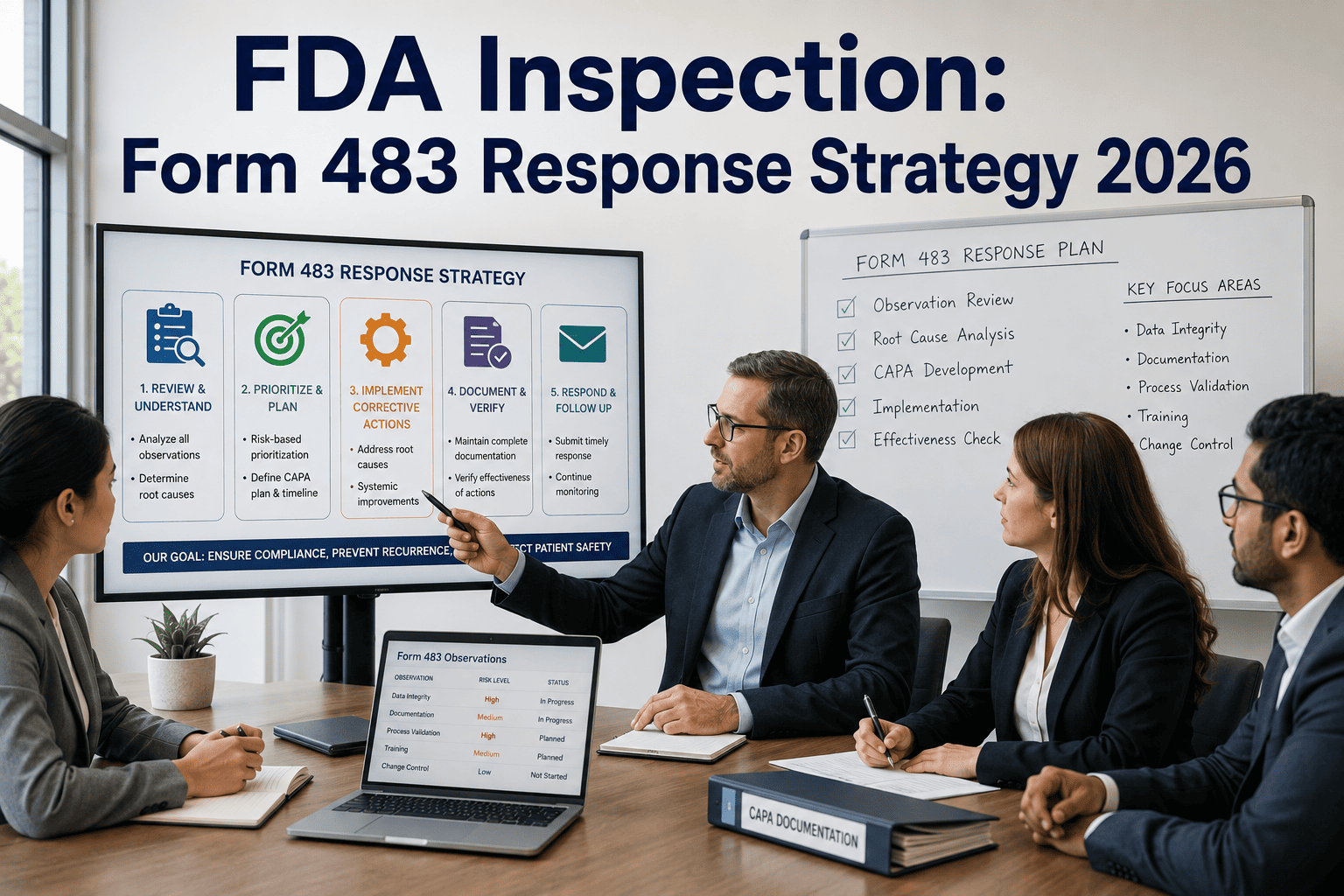
Readiness Protocols
Designate a front-desk protocol for verifying investigator credentials, assign a trained escort team, and keep all FSMA-required records current and retrievable within minutes, not days.
Inspection Conduct
Answer only what is asked, provide requested records promptly without volunteering extra documents, and have a designated scribe document every question and area the investigator reviews.
483 Response
Convene the response team immediately, address each observation individually with root cause and corrective action, and submit within the FDA's stated response window.
Not confident your records would survive an unannounced visit today? Book a demo to see how continuous digital record-keeping keeps you audit-ready year round.
Structuring an Effective Form 483 Response Letter
A Form 483 lists observations, not violations — how you respond largely determines whether the FDA proceeds to further enforcement action or considers the matter addressed. The strongest responses follow a consistent structure for every single observation listed.
Restate the Observation
Quote the specific 483 item exactly as written so the response is unambiguous to the reviewing officer.
Root Cause Analysis
Explain the actual underlying cause, not just the surface symptom the investigator observed on the floor.
Immediate Correction
Detail what was fixed already, with dates, so the FDA sees action taken before the letter was even sent.
Preventive Action Plan
Describe systemic changes preventing recurrence, with named owners and realistic completion timelines.
Supporting Evidence
Attach photos, updated SOPs, training records, or lab results that substantiate every claim made in the response.
Keep Every Record Inspection-Ready, Automatically
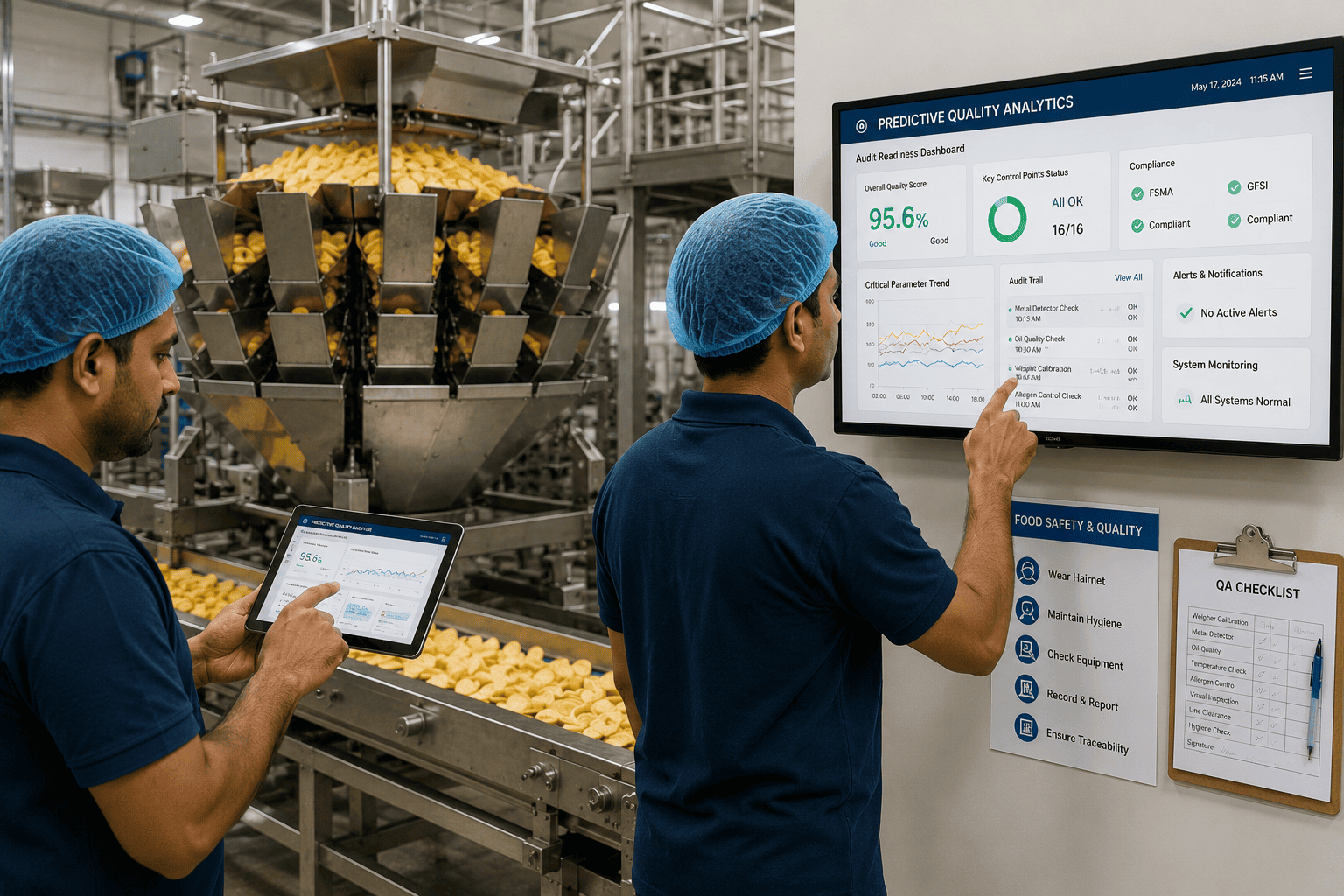
iFactory centralizes your FSMA documentation, CCP monitoring logs, and corrective action history so nothing is scrambled together the day an investigator walks in. Book a demo to see the readiness dashboard.
Common Form 483 Observation Categories
Certain observation categories appear repeatedly across FDA inspection records. Recognizing them ahead of time lets a plant self-audit against the exact gaps investigators are trained to look for.
| Observation Category | Common Root Cause | Preventive Focus |
|---|---|---|
| Inadequate Monitoring Records | Manual logs incomplete or completed after the fact | Real-time digital CCP logging |
| Environmental Monitoring Gaps | Insufficient swab sites or corrective action follow-up | Documented zone-based sampling plan |
| Supplier Verification Failures | Approved supplier list not reviewed on schedule | Automated supplier document expiry tracking |
| Sanitation Deviations | Master sanitation schedule not consistently followed | Digital sanitation checklist with sign-off |
| Recall Plan Deficiencies | Mock recall exercises not performed or documented | Scheduled, logged mock recall drills |
Pre-Inspection Readiness Checklist
These are the categories investigators check first, and the ones a facility should be able to satisfy without delay at any point in the year.
Facility Registration
Current FDA facility registration renewed on the biennial schedule with no lapses.
Food Safety Plan
Hazard analysis and preventive controls plan reviewed and reaffirmed within the past year.
Monitoring Records
CCP and preventive control monitoring logs complete, signed, and retrievable within minutes.
Corrective Actions
All prior internal and external audit findings closed with documented verification.
Training Records
Employee training documentation current, including the qualified individual designation.
Recall Readiness
Traceability records and a recently tested mock recall procedure on file.
Want a gap analysis against these readiness categories before your next inspection window? Schedule a demo or contact support for a readiness review.
Frequently Asked Questions
Be Ready for the Knock on the Door, Any Day of the Year
iFactory keeps your FSMA records, CCP logs, and corrective actions continuously current and instantly retrievable, so inspection readiness is a permanent state, not a fire drill.