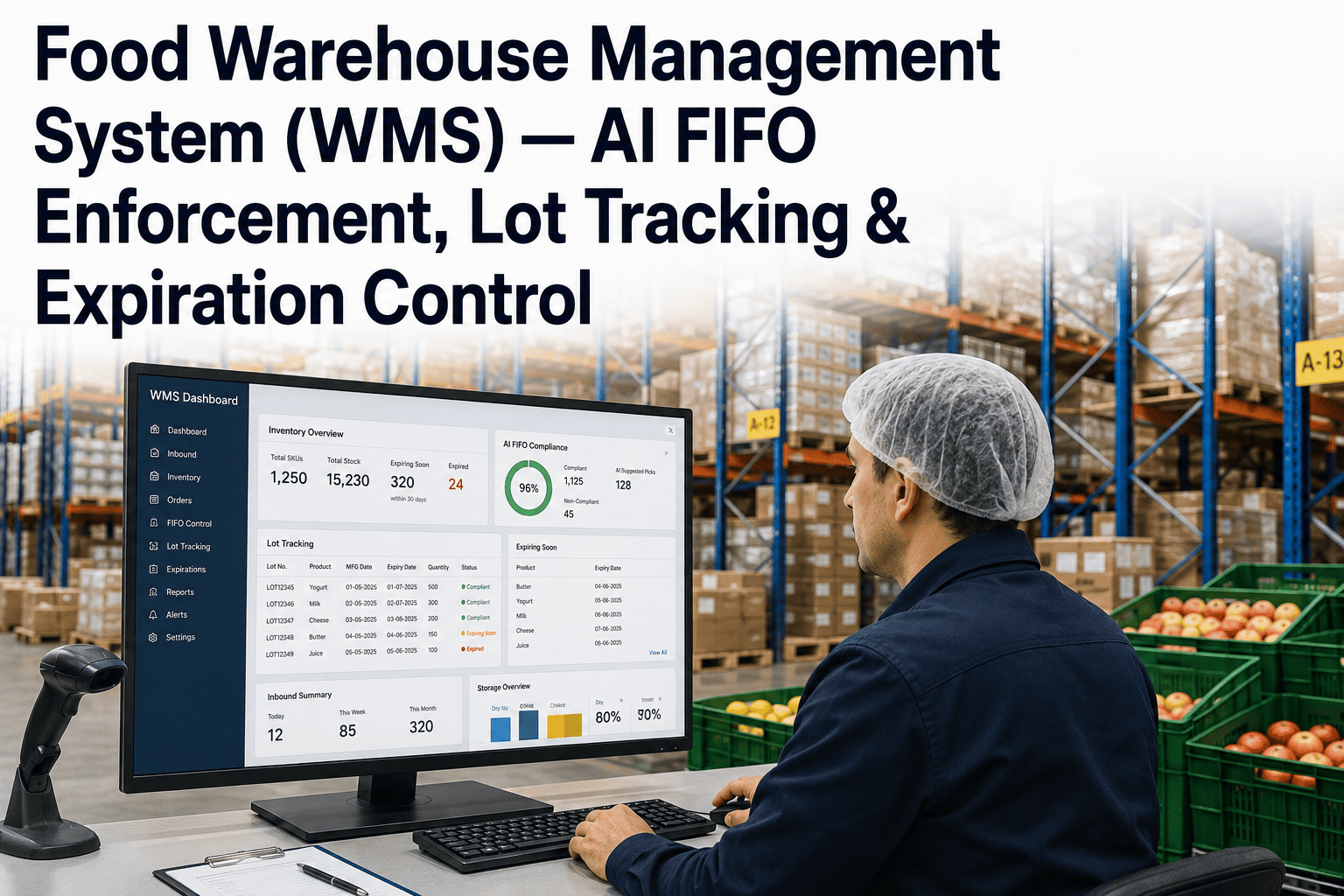
Managing a food warehouse is fundamentally different from general warehousing. Perishable goods demand strict adherence to First-Expiry-First-Out (FEFO) or First-In-First-Out (FIFO) protocols, precise lot-level traceability, and real-time expiration monitoring. A single lapse can result in massive write-offs, regulatory fines, or even a public health crisis. Traditional warehouse management systems (WMS) often lack the specialized logic needed to handle temperature-sensitive inventory, cross-docking for fresh produce, or automated recall workflows. This is where an AI-powered Food Warehouse Management System becomes indispensable. By integrating machine learning algorithms, IoT sensors, and predictive analytics, modern food WMS platforms transform chaotic cold storage and dry goods facilities into lean, compliant, and highly profitable operations. This article explores the critical capabilities of a food-specific WMS, from automated FIFO enforcement to intelligent lot tracking, and shows how iFactory's AI-driven solution can future-proof your food logistics. Get more knowledge about iFactory's food warehouse solutions.
Why Food Warehouses Need a Specialized WMS
Food warehouses face unique challenges that generic WMS cannot address. Temperature fluctuations, short shelf lives, and strict regulatory oversight (FDA, USDA, HACCP) demand a system built for perishables. A specialized food WMS automates FIFO/FEFO enforcement, ensuring older stock is always shipped first. It provides lot-level tracking from receiving to dispatch, enabling rapid, precise recalls. Real-time expiration alerts prevent costly write-offs and protect brand reputation. Without this, operations directors risk compliance failures, inventory shrinkage, and inefficient labor allocation. iFactory's AI WMS delivers these capabilities natively, reducing waste by up to 45% and improving inventory accuracy to 98%. The system learns from historical data to predict demand, optimize storage locations, and flag high-risk items before they expire. This is not just a software upgrade; it is a strategic investment in operational excellence.
Core Capabilities of an AI Food WMS
Automated FIFO/FEFO Enforcement
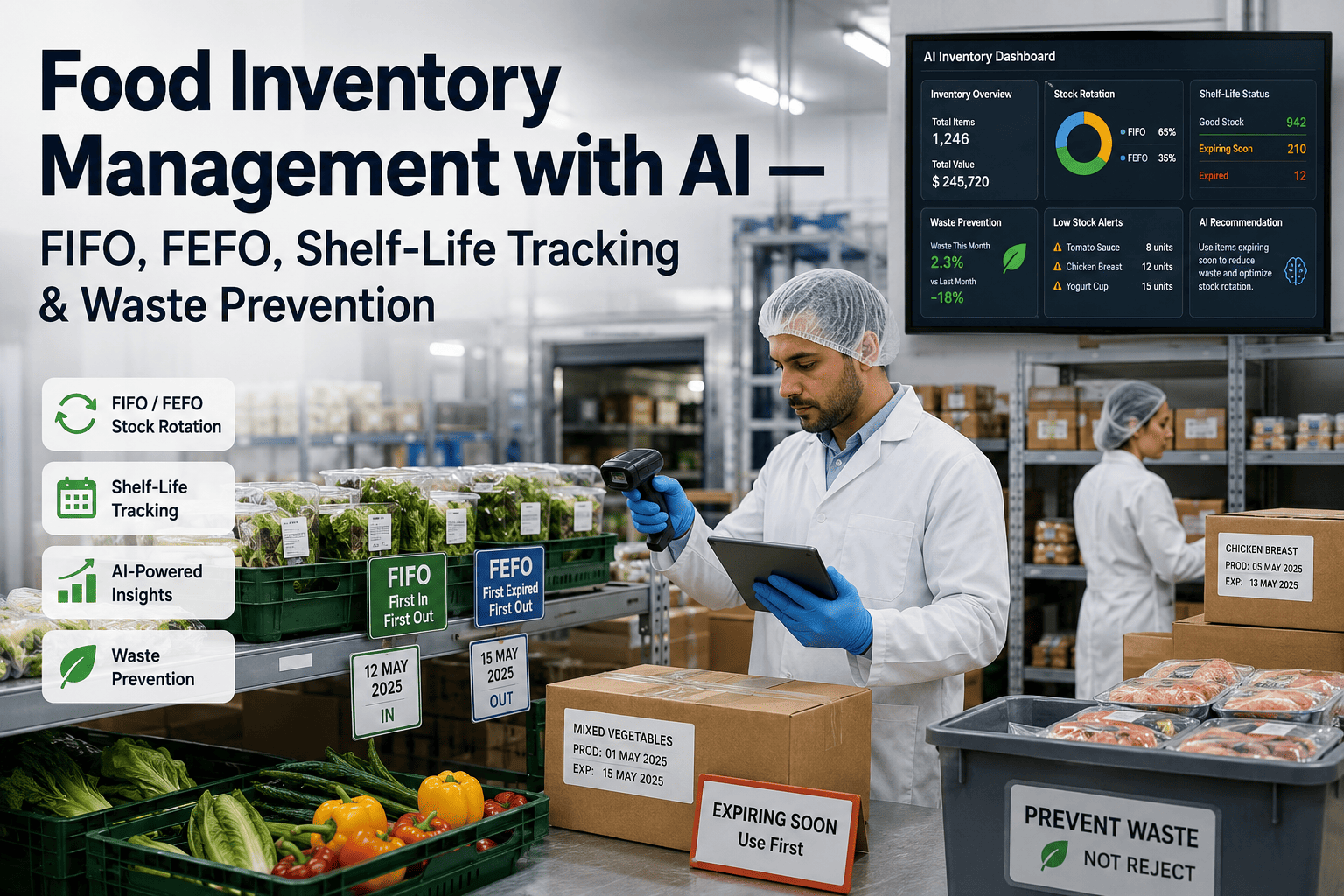
The system assigns storage locations based on expiry dates and receipt timestamps. When picking, it directs workers to the oldest lot first, eliminating manual guesswork. This reduces spoilage and ensures compliance with food safety standards.
Lot-Level Tracking & Traceability
Every pallet, case, or unit is tracked by lot number, supplier, and production date. In case of a recall, the system can isolate affected inventory in minutes, not days. This granularity is essential for regulatory audits and consumer safety.
Real-Time Expiration Alerting
Automated alerts notify managers of approaching expiry dates. The system can recommend markdowns, donations, or expedited shipping. This proactive approach reduces waste and maximizes revenue from near-expiry goods.
Cross-Docking Optimization
For fresh produce and high-turnover items, the WMS coordinates cross-docking to minimize dwell time. Inbound shipments are routed directly to outbound docks, reducing handling and preserving freshness. AI predicts the best staging areas to avoid congestion.
Temperature & Humidity Integration
IoT sensors feed real-time environmental data into the WMS. If a cooler deviates from the set range, the system triggers an alert and can automatically reroute perishable inventory to compliant storage. This protects product integrity and reduces loss.
Demand-Driven Replenishment
Machine learning models analyze sales history, seasonality, and promotions to forecast demand. The WMS then generates optimized replenishment orders, balancing service levels with inventory carrying costs. This prevents overstocking of short-shelf-life items.
Implementation Roadmap for Food WMS
Assessment & Data Integration
Map current workflows, identify pain points, and integrate with existing ERP and IoT devices. This phase typically takes 2-4 weeks.
System Configuration & AI Training
Configure FIFO/FEFO rules, lot tracking parameters, and alert thresholds. Train AI models on historical data for demand forecasting and anomaly detection. Duration: 3-6 weeks.
Pilot Deployment
Roll out the system in one zone or product category. Monitor performance, gather feedback, and refine algorithms. This phase runs 4-8 weeks.
Full Rollout & Optimization
Deploy across all warehouse areas. Continuous learning and optimization ensure the system adapts to changing demand patterns and seasonal peaks.
Transform Your Food Warehouse Operations
Achieve 98% inventory accuracy and reduce waste by 45% with iFactory's AI-powered WMS. Schedule a personalized demo today.
Food WMS vs. Generic WMS: A Comparison
| Capability | Generic WMS | iFactory Food WMS |
|---|---|---|
| FIFO/FEFO Enforcement | Manual rules, error-prone | AI-driven, automated |
| Lot Tracking | Basic lot fields | Full lot genealogy |
| Expiration Alerts | Static date checks | Predictive, with action recommendations |
| Cross-Docking | Manual coordination | AI-optimized staging |
| Temperature Monitoring | Not integrated | Real-time IoT integration |
| Recall Speed | Days to weeks | Minutes to hours |
Frequently Asked Questions
How does AI improve FIFO compliance in food warehouses?
AI enhances FIFO by dynamically assigning storage locations based on expiry dates and receipt timestamps, and by learning from picking patterns to optimize bin placement. The system can also predict which items are most likely to be picked together and stage them accordingly, reducing travel time and ensuring the oldest stock is always dispatched first. This automated enforcement eliminates human error and increases compliance to over 99%. Contact support for more details.
What lot tracking granularity does the WMS provide?
The WMS tracks inventory at the lot level, including supplier, production date, receipt date, and all movements (receiving, putaway, transfer, picking, shipping). It also captures temperature and humidity exposure for each lot, enabling full traceability. In the event of a recall, the system can instantly identify all affected lots, their current locations, and which customers received them. This granularity is critical for regulatory compliance and minimizing recall scope. Learn more about lot tracking.
Can the system handle multiple temperature zones?
Yes, the WMS supports multiple temperature zones (frozen, chilled, ambient) and can enforce zone-specific storage rules. It integrates with IoT sensors to monitor conditions in real time. If a zone deviates from its set point, the system alerts managers and can automatically block further putaway into that zone until the issue is resolved. This protects product quality and reduces waste from temperature excursions. Get support for multi-zone setup.
How does the WMS help with regulatory compliance (FDA, USDA, HACCP)?
The WMS automates documentation and record-keeping required by FDA, USDA, and HACCP standards. It generates audit-ready reports on lot traceability, temperature logs, and FIFO compliance. The system also supports electronic signatures and maintains an immutable audit trail. By automating these tasks, the WMS reduces the administrative burden and ensures that records are always accurate and accessible. Explore compliance features.
What is the typical ROI for implementing a food WMS?
Most food warehouses see a full ROI within 12-18 months. The primary savings come from reduced waste (up to 45%), lower labor costs through optimized picking and putaway, and fewer fines or recall-related losses. Additionally, improved inventory accuracy reduces carrying costs and stockouts. The exact ROI depends on current operational efficiency and product mix. Book a demo to see a personalized ROI estimate.
Ready to Eliminate Food Waste and Boost Efficiency?
Deploy iFactory's AI food WMS and gain full control over expiration dates, lot traceability, and compliance. Our experts will guide you every step of the way.