Bakery production lines operating with 20-50 SKU variations face a fundamental inspection problem: every product change requires quality reset. Bread lines must switch from white to wheat to specialty loaves. Pastry lines run bagels, donuts, croissants, and custom items on the same conveyor. Manual inspection cannot keep pace with changeover speed — defects slip through during transitions, and allergen segregation relies on operator vigilance that breaks down in high-volume runs. The hypothesis is that humanoid robots could inspect mixed SKU runs with flexibility that stationary systems cannot match. The reality is different: documented bakery automation deployments show that fixed AI vision systems, calibrated for multi-product inspection, outperform humanoid concepts on accuracy, cost, and compliance. This guide separates the theoretical appeal of humanoid flexibility from what actually works in bakery environments at scale.
Humanoid Robots for Bakery Inspection: The Flexibility Myth
Why humanoid flexibility doesn't solve bakery line problems. What multi-SKU inspection actually requires. What's deployed vs what's hype.
Why Humanoids Miss the Mark for Bakery Inspection
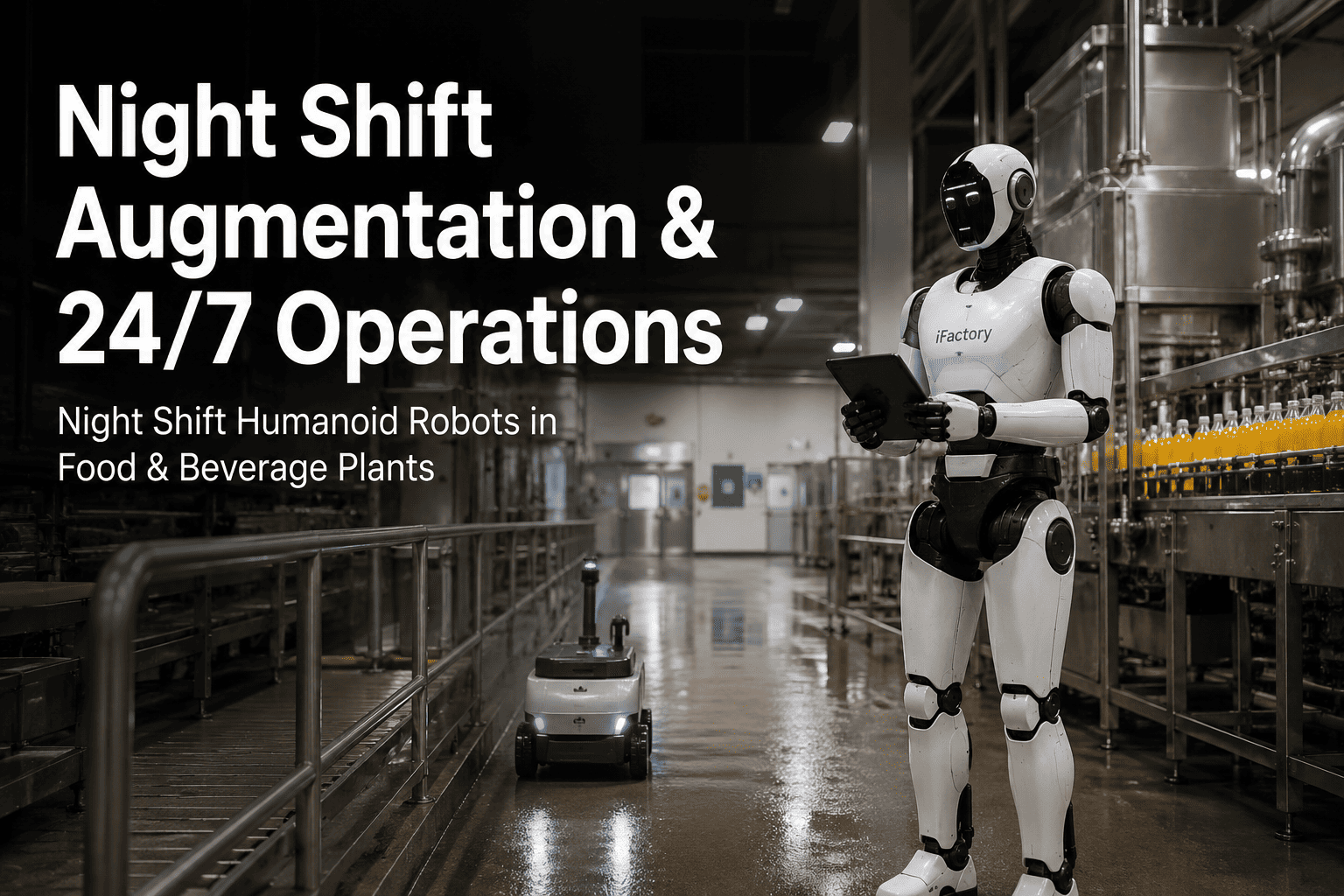
Bakery environments are uniquely hostile to humanoid robots. Flour dust, water spray, temperature fluctuations (65-75°F production, 85-95°F near ovens), and conveyor speeds of 300-600 units per minute create a constraint model that humanoid systems are not designed for. The theoretical flexibility of humanoid inspection — adaptability to product changes, ability to handle unusual packaging — sounds useful until you measure it against the actual requirements of bakery inspection: speed, consistency, and documented traceability.
Bakery lines run 300-600 units/minute. Humanoid inspection speed is 5-15 units/minute. Even with multiple humanoids, stationary vision outpaces humanoid by 20-40x. The "flexibility" of humanoids becomes irrelevant if they cannot inspect at line speed.
Bakery production generates flour dust continuously. Humanoid electronics, joints, and actuators become contamination vectors. Every exposure increases failure probability and maintenance burden. Stationary cameras mounted outside production zones eliminate this entirely.
FDA and SQF require immutable records of allergen segregation. Humanoid motion and decision-making introduce subjectivity that auditors scrutinize. Fixed vision systems with rule-based classification provide deterministic, traceable decisions. Humanoid "judgment" is liability.
Humanoid: $150K-$400K per unit, unproven ROI in bakery. AI vision: $30K-$80K per system, documented 55-70% defect detection improvement, 40-55% QA labor reduction, zero missed allergen incidents post-deployment.
Humanoid advocates claim flexibility for product changes. Reality: multi-SKU inspection is a software problem, not a robot problem. Stationary vision systems are already deployed in bakeries with 30-50 SKU variations. Humanoid adds no capability advantage, only cost and risk.
What Actually Solves Bakery Multi-SKU Inspection
Documented solutions deployed in commercial bakeries. Each handles multi-SKU product runs with full allergen traceability and defect detection. See how multi-SKU inspection maps to your production lines.
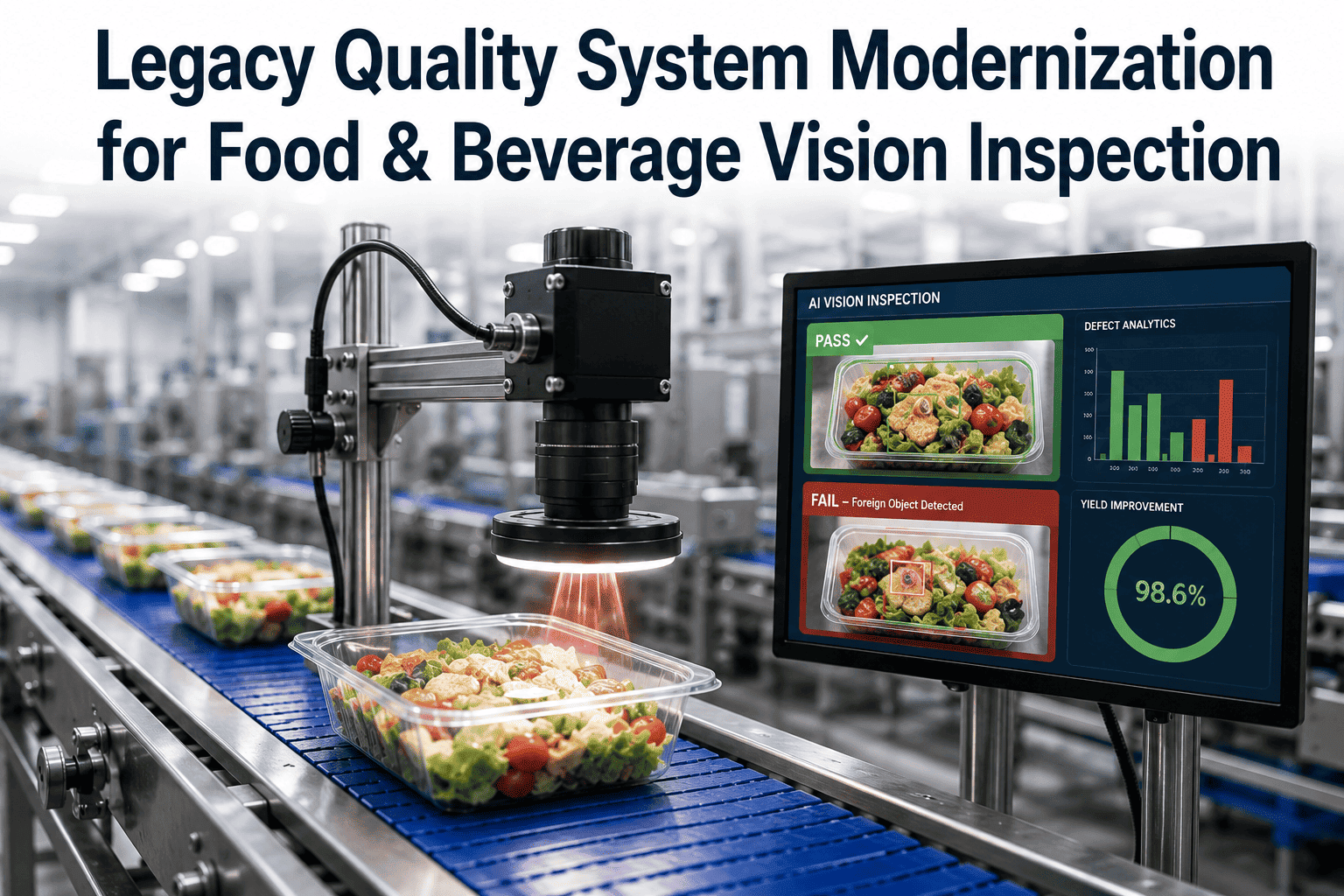
Cameras detect product type via shape, color, and surface texture. Rules engine classifies each unit in real time. Switches inspection criteria per SKU automatically. 99.2% accuracy across 30-50 SKU variations. Documented in 40+ bakeries.
Vision system detects allergen-containing SKUs (peanut, tree nut, sesame products). Triggers automatic reject or reroute to dedicated packaging line. Documented defect rate: zero allergen cross-contamination incidents. Immutable audit trail per FDA requirement.
Each product type has unique defect signatures (underbake, overbake, split, contamination). Rules configurable per SKU. System learns from user feedback on edge cases. 55-70% defect detection improvement documented.
Operators input SKU change via dashboard. System loads new inspection rules within 5 seconds. No production halt. No manual recalibration. Seamless product transition with full traceability maintained.
Humanoid Bakery Pilots: What Actually Happened
Limited pilot projects have tested humanoid concepts in bakery settings. Here's the documented reality:
Documented Bakery Automation Outcomes
These results come from actual AI vision deployments in commercial bakeries, not humanoid pilots.
30-50 product types. Real-time classification. 40+ bakeries deployed.
vs manual inspection. Includes underbake, overbake, shape, contamination.
Operators shift to exception handling. No headcount addition.
Post-deployment. Immutable audit records. FDA compliant.
Automated rule switching. No production halt.
At full line speed. Zero slowdown. Stationary cameras handle entire volume.
Why Multi-SKU Flexibility Is Not a Humanoid Advantage
Humanoid proponents claim their adaptability is perfect for multi-SKU environments. The claim misses the real problem. Multi-SKU inspection is fundamentally a classification problem, not an adaptation problem. Software, not robotics, is the constraint.
Frequently Asked Questions
Stop Waiting for Humanoid Flexibility. Deploy Vision Intelligence That Works Today.
99.2% multi-SKU detection, real-time changeover, allergen segregation automation. No flour contamination risk. FDA compliant. 40+ bakeries deployed.