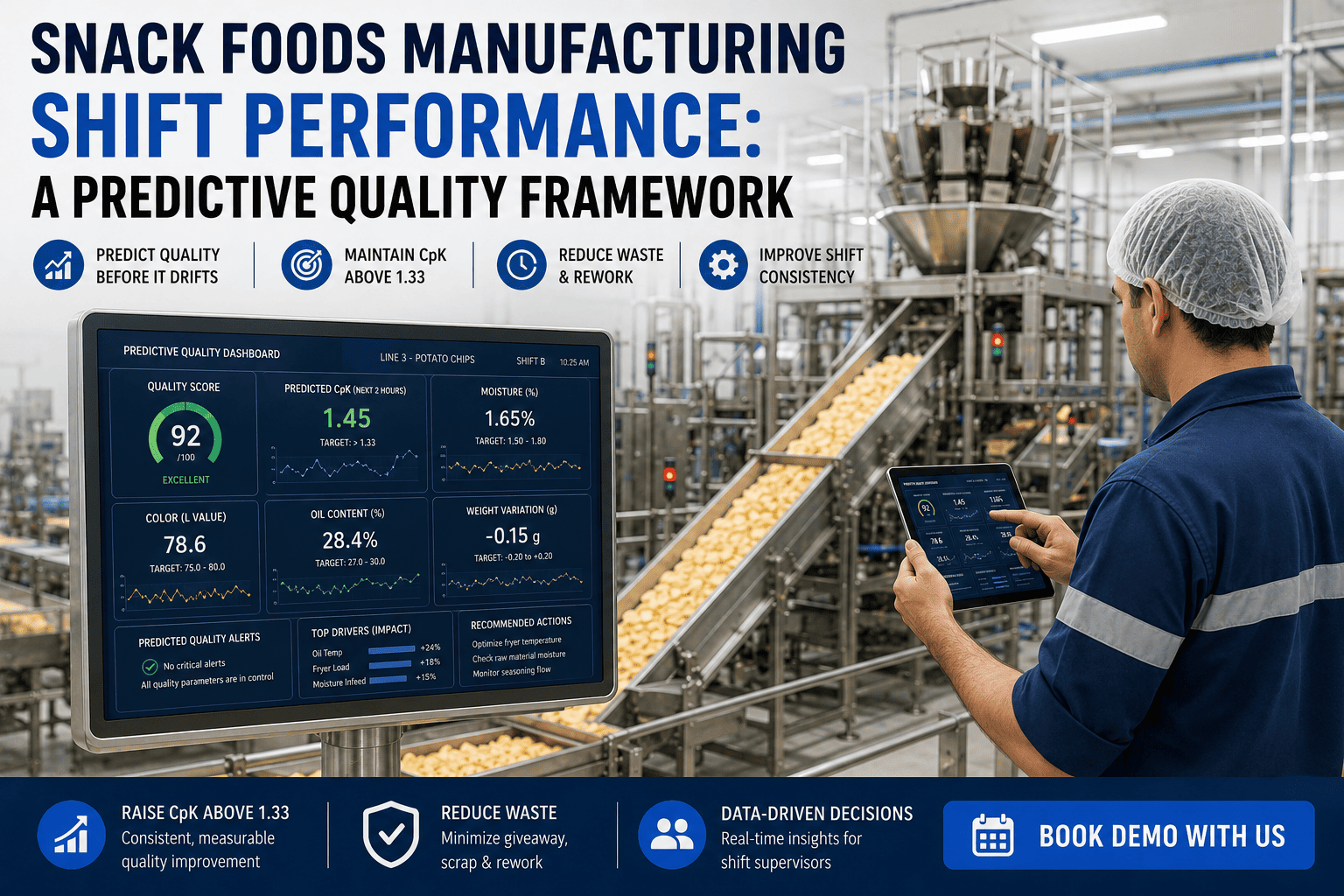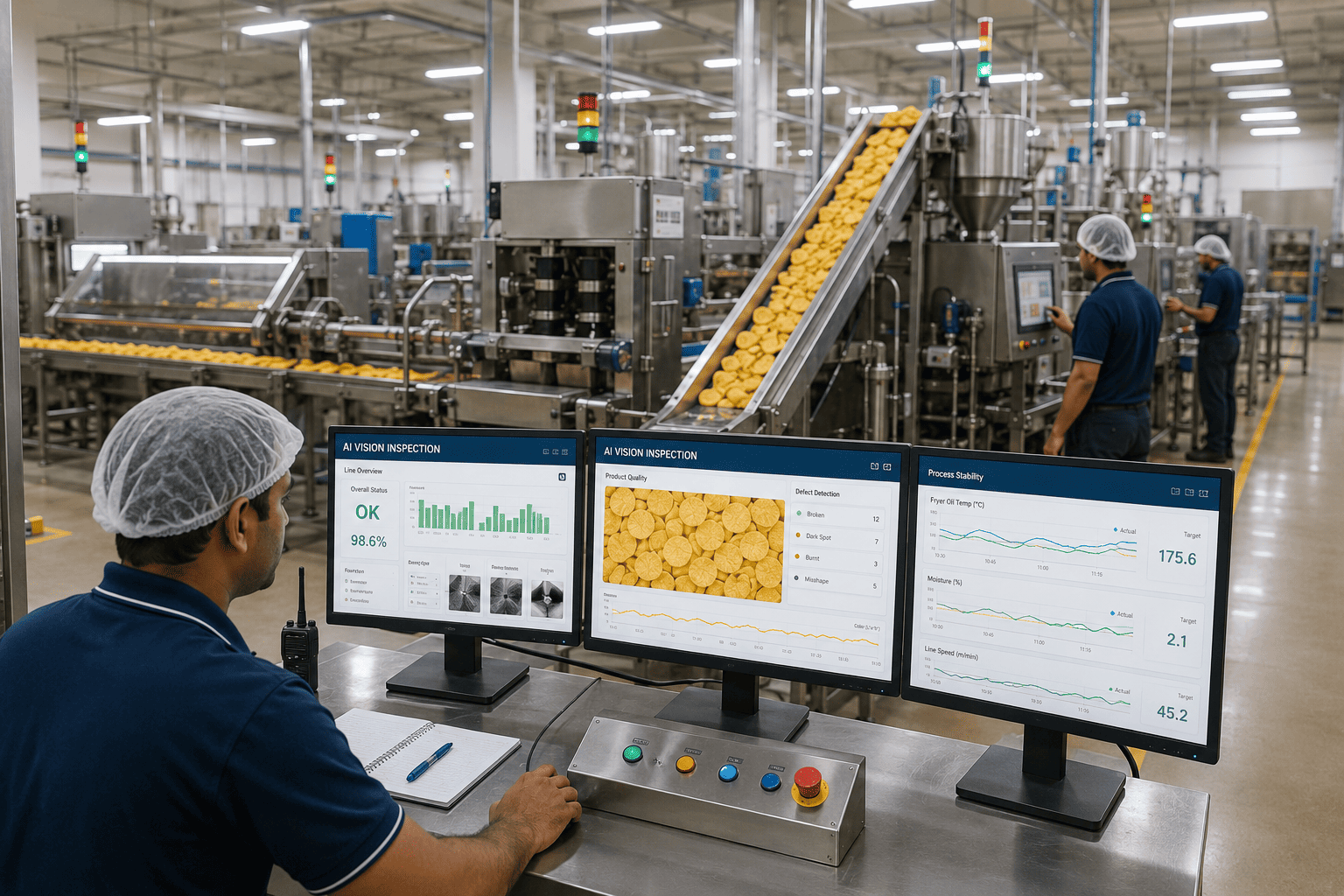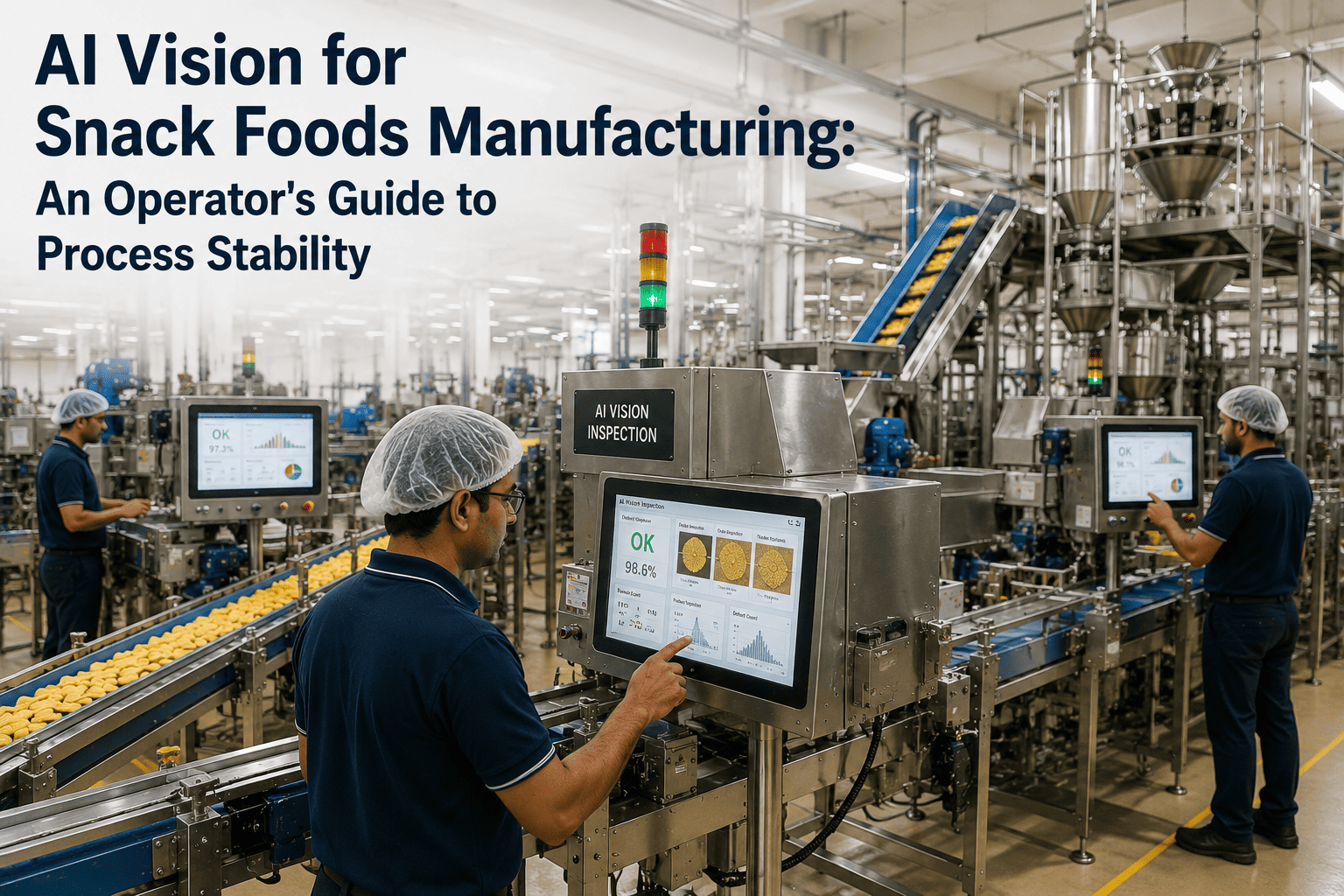
Shift quality varies. Your morning shift produces beautiful, consistent product. Your afternoon shift: same line, different supervisor, different environmental conditions, different team dynamics. Color's slightly different. Seasoning coverage inconsistent. Weigher's drifting. By evening shift, quality is noticeably off. Shift-to-shift consistency is broken. Manual inspection can't catch these subtle variations — especially across shifts when different teams are evaluating subjective criteria (color, coverage, appearance). AI vision inspection sees everything the same way, every shift, every piece. Detects color variations humans miss. Identifies seasoning coverage gaps. Flags weight inconsistencies. Works consistently across all shifts. Your product looks the same at 6 AM as it does at 6 PM. Process capability improves because variation shrinks. Cpk climbs above 1.33. This guide shows shift supervisors how AI vision inspection eliminates shift-to-shift inconsistency, catches quality problems manual inspection misses, and maintains consistent quality regardless of which team is running the line. To see AI vision consistency in action, book a vision inspection demo with our team.
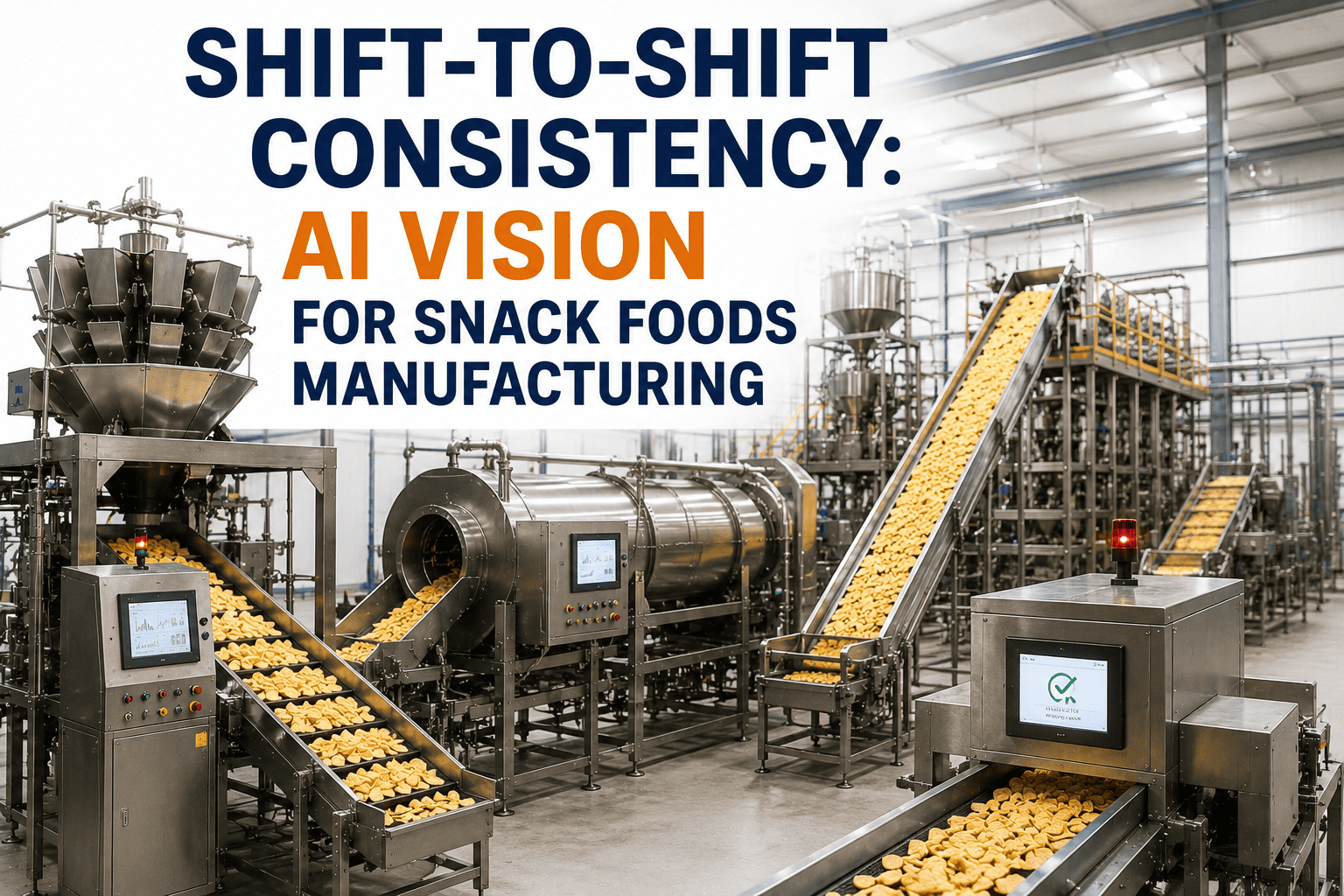
Shift-to-Shift Consistency: AI Vision for Snack Foods Manufacturing
Consistent quality across all shifts · Color standardization · Seasoning coverage verification · Automated visual QC · Cpk above 1.33.
The Shift Consistency Problem: Why Quality Varies Across Your Three Shifts
Your facility runs three shifts. Monday morning shift: color is perfect (Delta E 1.2-1.8). Product moves down line. Seasoning coverage is even. Weight is consistent (49.9-50.1g). Quality score: excellent. Same Monday afternoon: different supervisor, different team, slightly different ambient conditions. Color still good but slightly darker (Delta E 2.1-2.5). Seasoning coverage uneven on some pieces. Weigher drifting (50.2-50.4g). Quality score: acceptable but noticeably different. Monday night shift: third supervisor, third team. Color now definitely darker (Delta E 2.8-3.4). Seasoning sparse on 5-10% of pieces. Weigher giving away (50.5-50.8g). Quality score: marginal. Same product line. Same recipe. Different results across shifts.
Why? Manual quality inspection is subjective. Each supervisor has slightly different standards. "This color looks good to me" varies between people. Each team handles products differently. Each shift has different environmental conditions (temperature, humidity, lighting). Your process capability index reflects all this shift-to-shift variation. Cpk stuck at 1.05-1.20. You're operating below the 1.33 industry target because consistency across shifts is broken. AI vision inspection changes this. Computer vision is objective and consistent. Same detection standards every shift, every piece, every day. Your product looks the same regardless of shift. Cpk climbs to 1.35-1.55 because variation caused by shift differences disappears.
What AI Vision Catches That Manual Inspection Misses
AI measures color in Delta E units (objective). Detects 0.5-1.0 Delta E shifts human eyes miss. Catches darkening, fading, or hue shifts before they become visible problems. Ensures color is consistent piece-to-piece across shift.
AI vision detects seasoning distribution. Identifies areas with insufficient coverage (bald spots), excessive concentration (clumps), or uneven dispersion. Manual inspection: "Looks seasoned." AI vision: Maps coverage percentage and flags variance. Every piece verified.
AI detects surface flaws manual QC spots randomly. Cracks in snack. Charring. Discoloration patches. Oil marks. AI vision inspects 100% of production. Catches defects human checkers miss on spot-check samples.
AI vision verifies dimensions. Detects oversized/undersized pieces. Identifies shape deviations (broken corners, deformed pieces). Ensures every piece meets shape spec. Weight consistency paired with shape verification = true portion consistency.
Three Shift Consistency Scenarios Solved by AI Vision
Morning shift: Color is perfect. AI vision approves every piece (Delta E 1.2-1.8). By afternoon, fryer oil has aged slightly. Color darkening begins. Manual QC (spot-check every 30 min): supervisor says "still looks good." AI vision continuously monitoring: detects Delta E trending 1.8 → 2.1 → 2.4. At 2.4, alert: "Color is drifting. Delta E now 2.4 (was 1.5 this morning). Trend suggests out-of-spec in 15 min. Recommend fryer adjustment." Supervisor adjusts. Delta E comes back to 1.8. Zero off-color product shipped to customer. Manual inspection would have discovered color problem 30 minutes later during next spot-check. By then, 1,200+ pieces already out-of-spec. Manual acceptance varies by supervisor. AI vision: same standard, same shift.
Morning shift seasoning is perfect. Seasoning applicator working optimally. Coverage: 95%+. Afternoon shift: different applicator setup (cleaned, adjusted slightly differently). Coverage drops to 85-90%. Manual QC: "Looks seasoned." Passes. AI vision: detects coverage gap. "Seasoning coverage 87% (target 92%). Coverage uneven on north/south sides. Recommend applicator pressure adjustment." Supervisor adjusts. Coverage climbs back to 94%. Night shift: operator forgot to fully load seasoning hopper. Coverage only 72% on pieces. Manual QC (tired staff, end-of-day): "Looks OK." Passes some under-seasoned pieces. AI vision: flags immediately. "Coverage only 72%. Below 85% minimum. Reject pieces until hopper reloaded." Zero under-seasoned pieces reach customer. Same seasoning standard across all shifts. Cpk improves because seasoning variation shrinks.
Morning shift: Line running smoothly. One out of 5,000 pieces has a crack (fryer hiccup). Manual QC spot-checks 30 pieces per hour. Misses the cracked piece. It ships to customer. Customer complaint. Afternoon shift: Temperature fluctuation causes some pieces to break. Manual QC catches 2-3 of the 8-10 broken pieces. Rest ship. Evening shift: Fryer oil too hot. Charring occurs on 3-5% of pieces. Manual QC: spot-checks miss most. Off-spec pieces ship. AI vision 100% inspection: detects every defect in real-time. Cracked piece flagged immediately. Broken pieces detected before they reach packaging. Charred pieces rejected before shipping. Zero defect pieces reach customer. All three shifts benefit from same 100% inspection. Manual QC at best catches 60-70% of defects (when supervisors are diligent). AI vision catches 95%+.
How AI Vision Maintains Consistency: The Technology
What AI Vision Delivers to Shift Supervisors
Frequently Asked Questions
Achieve Shift Consistency With AI Vision
Shift supervisors using AI vision inspection maintain consistent quality across all shifts. Same color standards. Same seasoning coverage requirements. Same defect detection. Customer receives consistent product every time. Process capability improves because shift-to-shift variation disappears. Cpk climbs above 1.33 threshold.