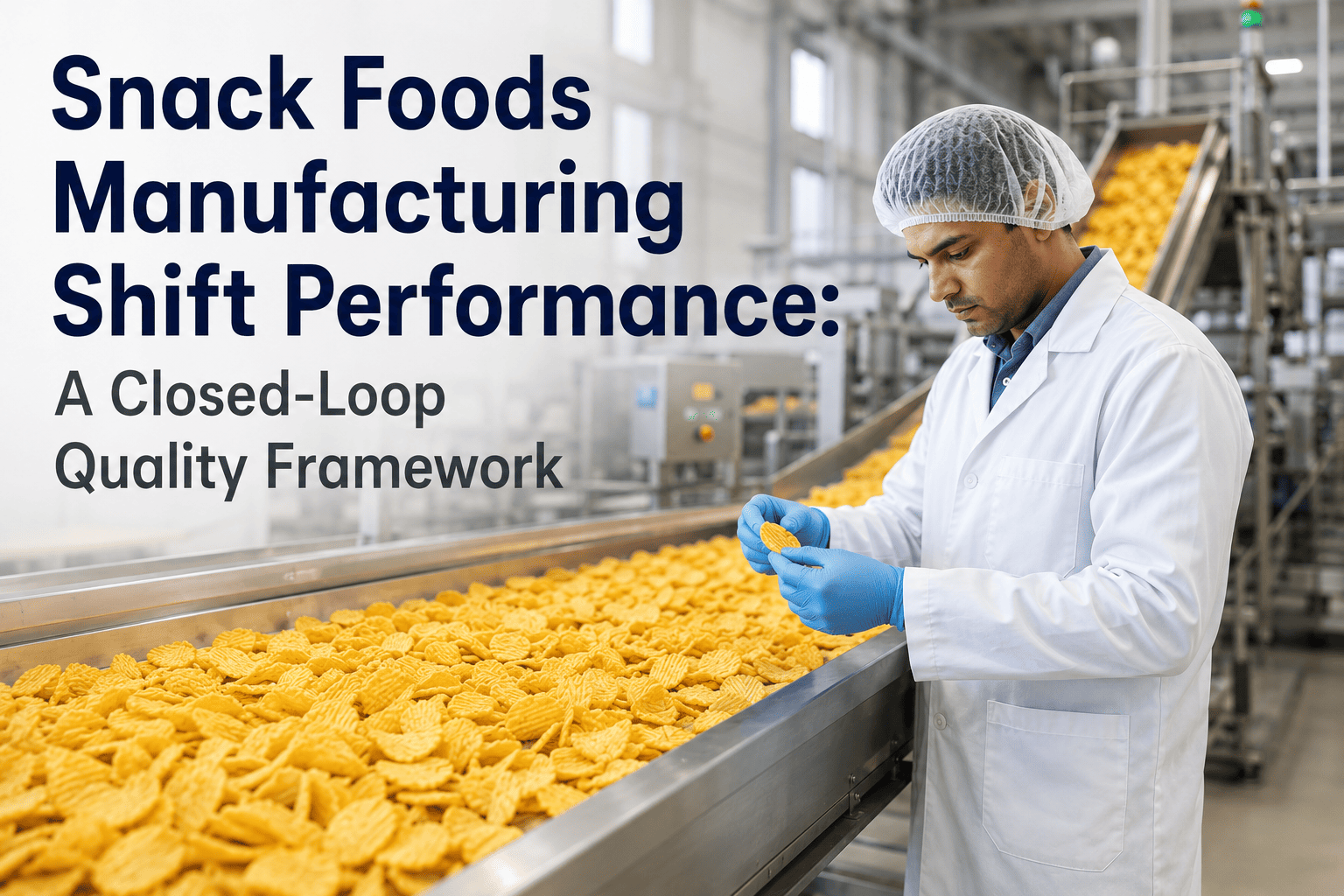
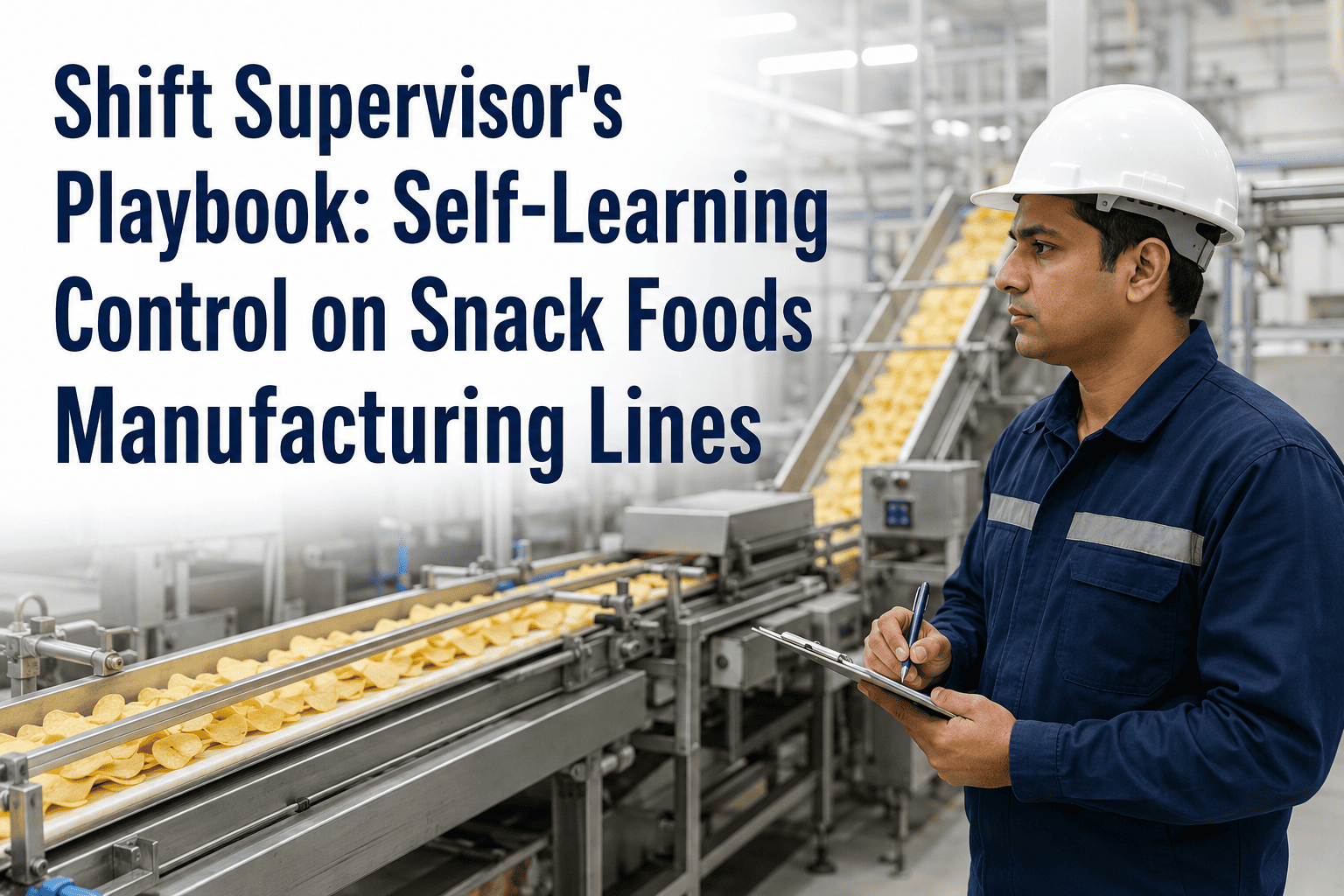
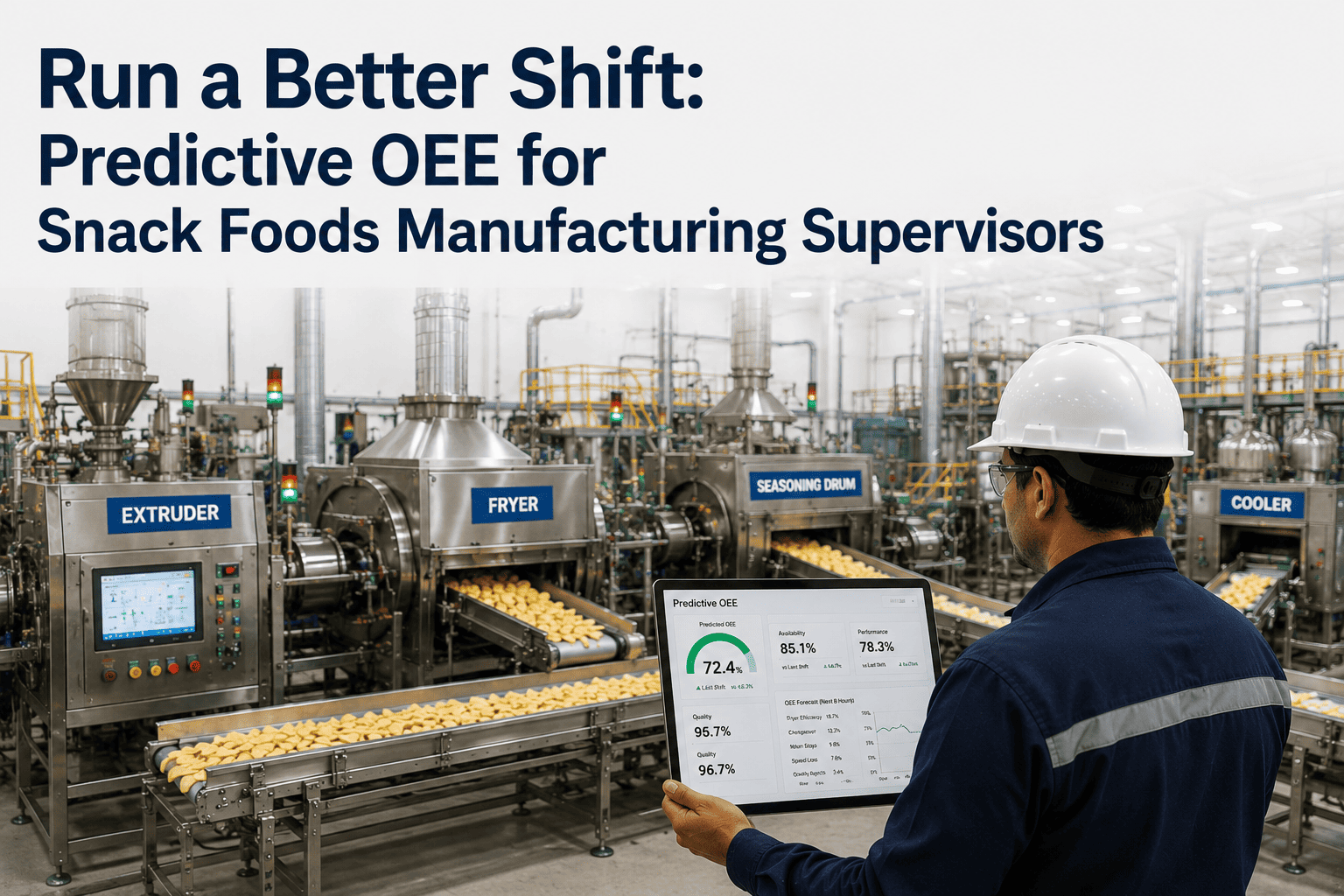
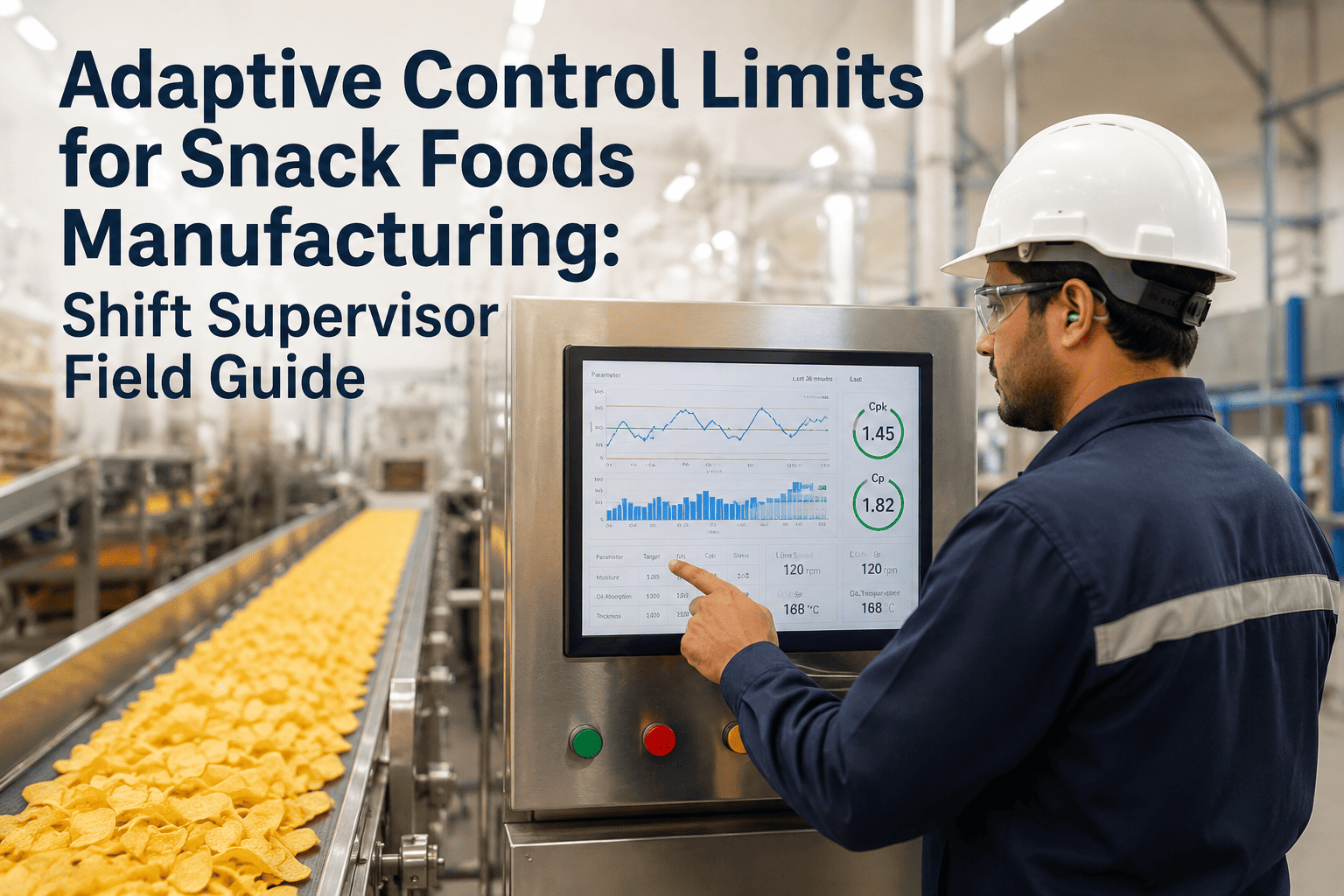
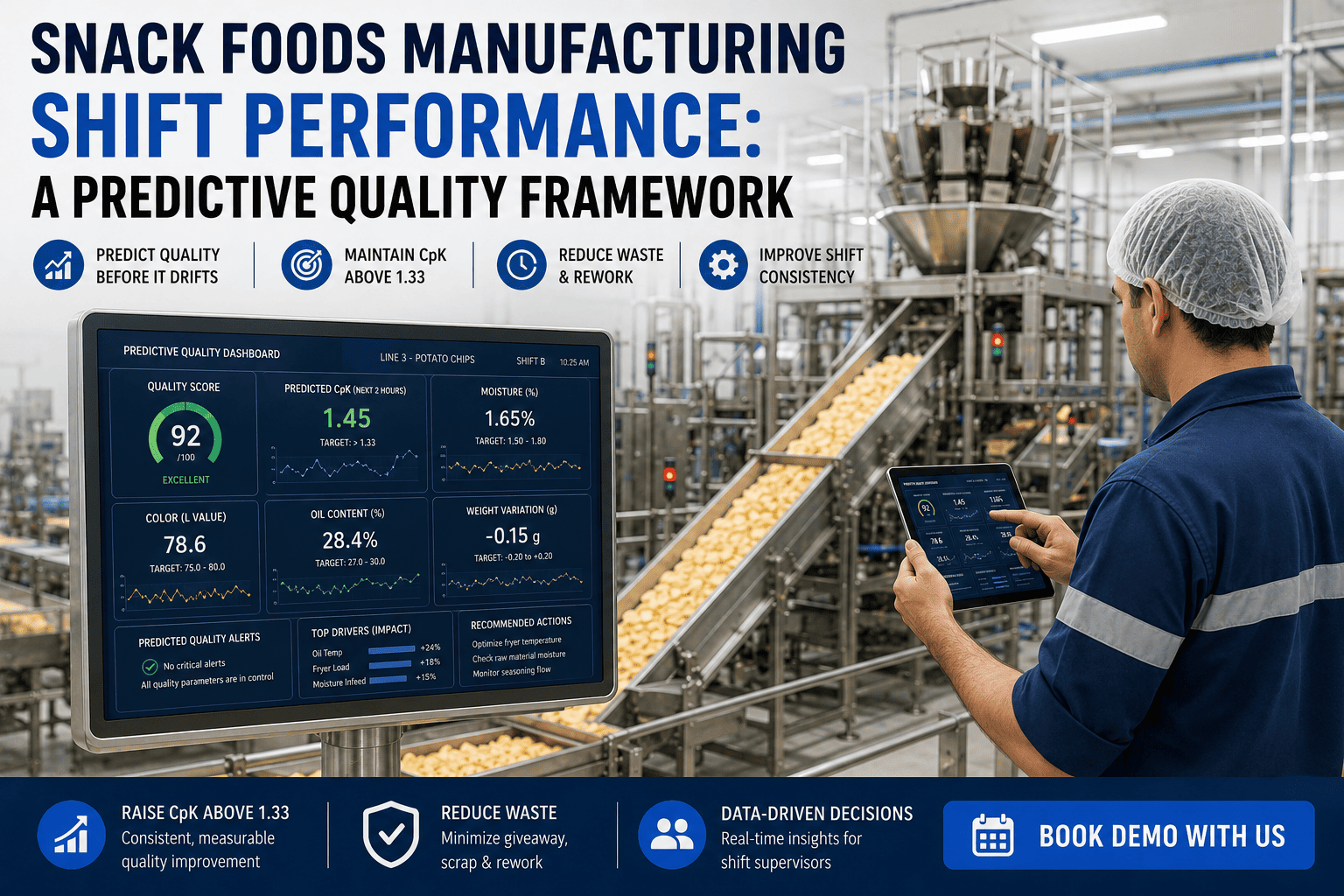
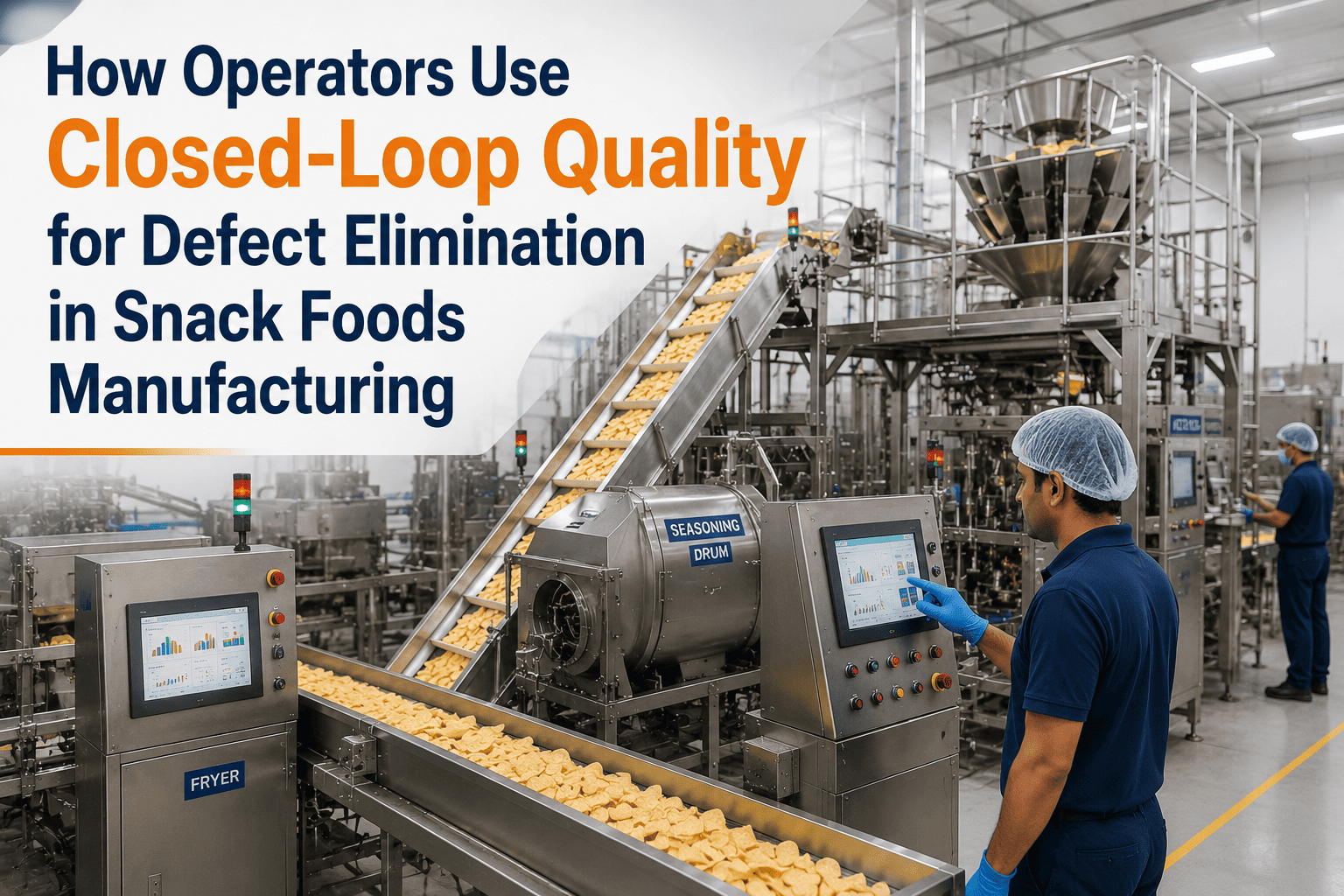
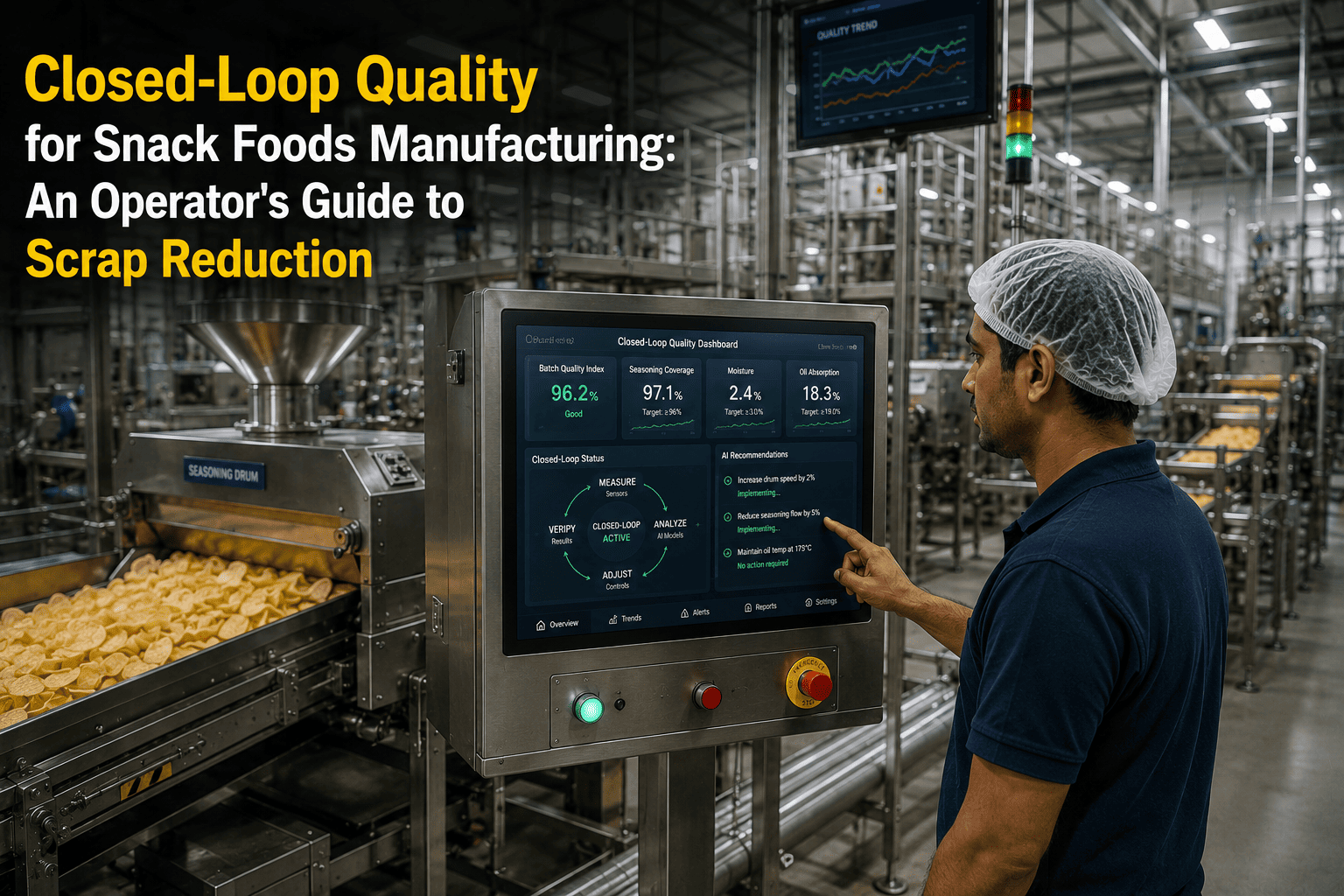
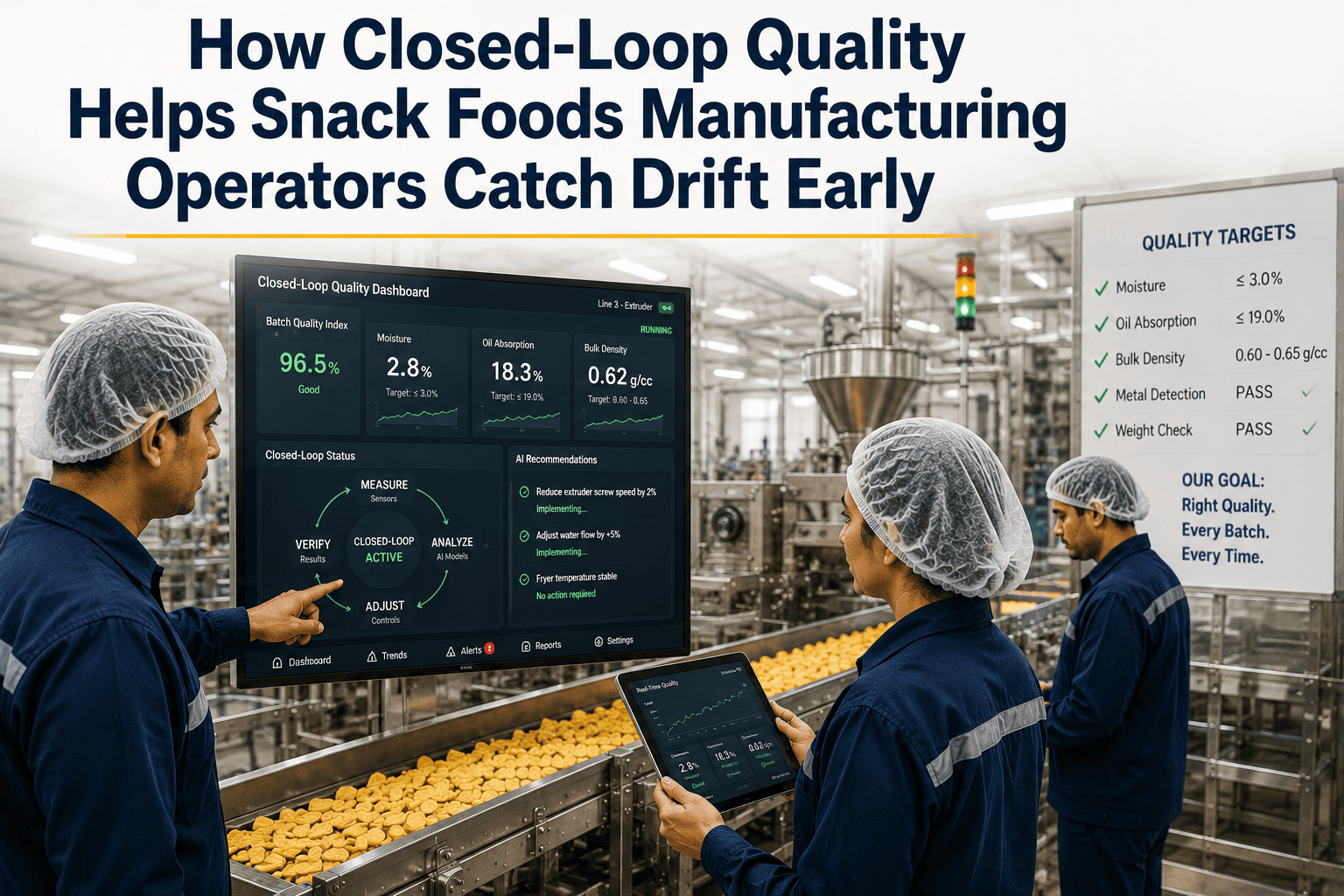
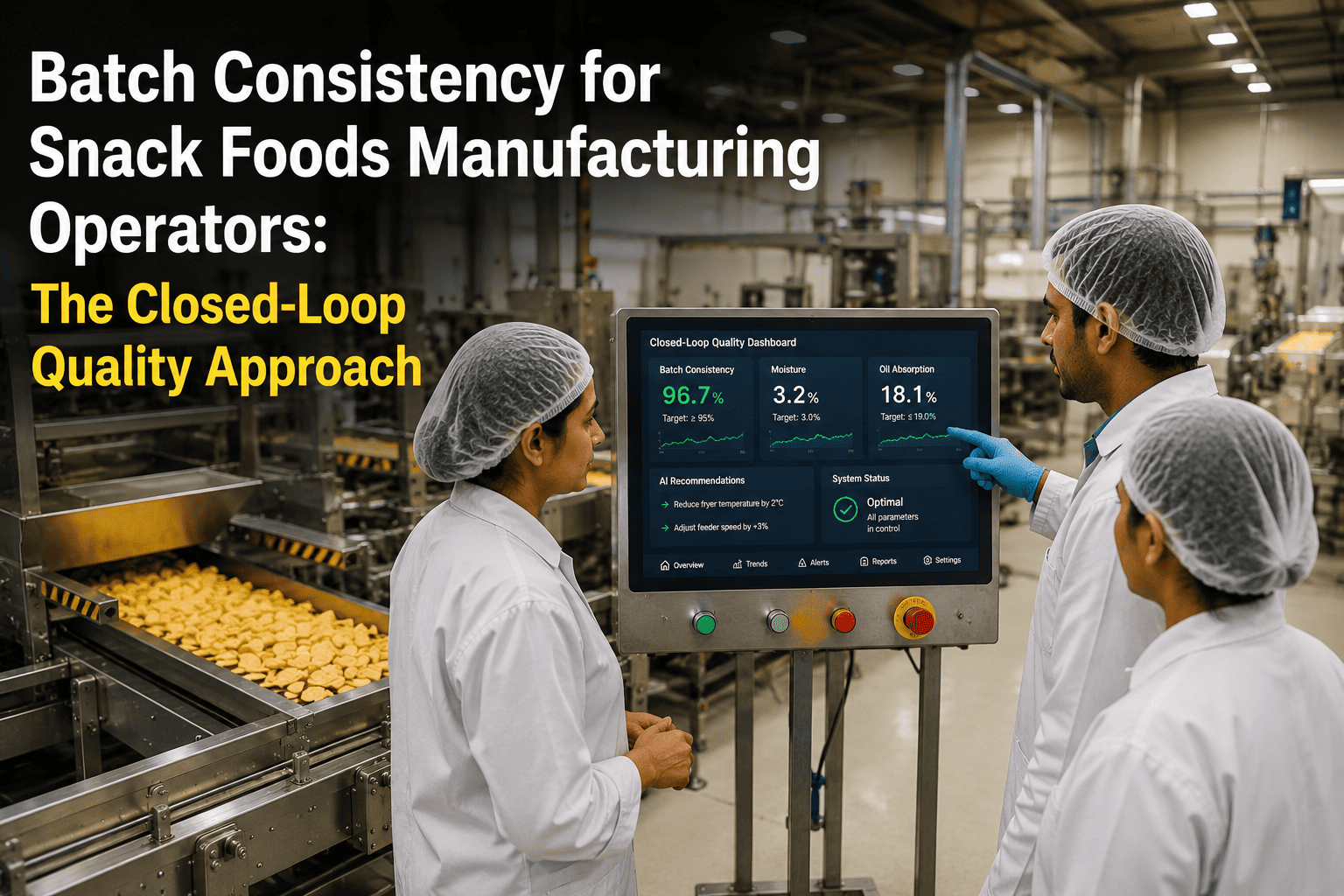
Snack foods shift supervisors live with color drift. A fryer cycle runs hot. Snacks brown darker than target. SKU rejects spike. Manual intervention required. Supervisor manually adjusts temperature. Next cycle runs cold. Products too light. More rejects. Manual adjustment again. This reactive loop wastes hours, creates rejects, tanks Cpk. Closed-loop AI quality optimization eliminates this chaos. Instead of reacting to drift, AI continuously monitors product color and moisture in real-time, automatically adjusts fryer parameters before drift occurs, and delivers consistent quality cycle after cycle. The supervisor doesn't disappear — they gain visibility, control, and confidence. This guide covers how closed-loop quality works, what shift supervisors actually do with AI-optimized systems, and why leading snack foods manufacturers are deploying self-correcting quality to crush Cpk targets. Book Demo with Us to see closed-loop quality in action.
Snack Foods · Closed-Loop Quality · Shift Supervision
Closed-Loop Quality: How Shift Supervisors Achieve Zero Color Drift
Real-time product monitoring · Automated parameter adjustment · Cpk 1.8+ delivery · Zero color drift · Self-correcting processes · Supervisor confidence.
Cpk 1.8+
Process capability achieved
Zero
Color drift rejects (from closed-loop control)
2-3 sec
Real-time response to drift
98%
Process uptime (minimal manual intervention)
The Color Drift Problem: Manual Control Is Doomed to Fail
A fryer is a temperature-sensitive beast. Ambient temperature fluctuates. Oil viscosity drifts. Heat exchanger efficiency decays. Humidity varies. Any change shifts the thermal dynamics, which shifts product color. A shift supervisor cannot see these micro-changes in real time — they're invisible without sensors. So they react: monitor product coming off line, spot color drift, manually adjust temperature, wait 2-3 cycles to see if it worked, adjust again. This human feedback loop is slow, reactive, and imprecise. The result: constant color variation, frequent rejects, manual override loops that consume 1-2 hours per shift, supervisor stress, and inconsistent Cpk. Closed-loop AI quality replaces this chaos with continuous, data-driven self-correction. Sensors measure product color and moisture in real time. AI compares actual to target. When drift is detected, the system automatically adjusts fryer parameters (temperature, oil flow, residence time) in 2-3 seconds. No manual intervention. No reject spike. Cpk stays locked above 1.8. Supervisor spends shift confident the process is self-correcting.
Manual Color Control vs Closed-Loop AI Quality
1. Product Comes Off Line
Supervisor visually inspects color. Is it right? Darker than expected? Lighter?
2. Drift Detected (30-60 sec delay)
Supervisor realizes color is off. Has mental model of what went wrong. Guesses at fix.
3. Manual Adjustment (1-2 minutes)
Supervisor manually adjusts fryer temperature. Hopes adjustment is right magnitude and direction.
4. Wait and See (2-3 cycles = 10-15 min)
Waits for next product batch. Checks color. Was adjustment enough? Too much? Adjust again.
Total: Color drift consumes 1-2 hours per shift, frequent rejects, unpredictable Cpk
1. Real-Time Product Sensing (Continuous)
Vision + spectral sensors measure product color in real time as it comes off line. Data streamed to AI every 500ms.
2. Drift Detection (Instantaneous, <100ms)
AI compares actual color to target. Detects deviation before it reaches QC threshold. Alerts supervisor in real time.
3. Auto-Adjustment (2-3 seconds)
AI calculates optimal parameter adjustment and sends command to fryer PLC. Temperature adjusted automatically. No supervisor manual intervention.
4. Confirmation (Next cycle confirms)
Next batch comes off line. Color back on target. Loop closes. No rejects. Cpk stays above 1.8. Supervisor monitors dashboard.
Total: Zero manual intervention most shifts, consistent quality, Cpk 1.8+ guaranteed
Four Quality Control Problems Closed-Loop AI Solves
01
Color Drift — Manual Adjustments Create Oscillation
Fryer temperature drifts 2°F. Product color drifts from target. Supervisor increases temperature 5°F to correct. Overcorrects. Next cycle too dark. Supervisor decreases temperature 5°F. Undercorrects. Next cycle too light. This oscillation pattern wastes product and creates rejects. Closed-loop AI detects drift in real time (before visual inspection) and applies precise, proportional corrections (0.5-1.5°F) that dampen oscillation. Color stays locked to target. Zero drift-induced rejects.
Precision adjustmentZero oscillation
02
Moisture Creep — Humidity Changes Cascade Into Product
Plant humidity rises 15% on a summer afternoon. Oil viscosity changes. Residence time in fryer effectively increases. Products absorb more moisture. Crunchiness drops. Supervisor doesn't see this coming — humidity sensor is on the wall, not integrated with fryer control. By the time supervisor notices softer product, 200+ units are already affected. Closed-loop AI monitors ambient humidity, oil temperature, and product moisture simultaneously. When humidity rises, AI automatically adjusts fryer parameters (oil flow, temperature) to maintain product moisture at target. Supervisor prevents moisture creep before it affects product.
Humidity compensationProactive adjustment
03
Equipment Drift — Oil Temperature Sensor Calibration Decay
Fryer temperature sensor drifts 3°F over months. Supervisor trusts the PLC readout. Thinks temperature is 350°F. Actually 353°F. Product gradually gets darker. Supervisor is confused — temperature readout looks right, but product is off. Blames humidity, oil quality, ambient conditions. Manually adjusts in wrong direction. Closes-loop AI cross-validates temperature measurements with product quality outcomes. When sensor drift is detected (temperature readout doesn't match product quality), AI alerts supervisor to recalibrate sensor. Prevents masked drift that hides in sensor error.
Sensor validationDrift detection
04
Shift Transition — Handoff Loses Institutional Knowledge
Day shift supervisor understands the fryer's temperament. Knows oil age and viscosity. Knows ambient conditions. Makes adjustments that work. Night shift supervisor doesn't have this context. Takes control and discovers the fryer behaves differently. Spends 30+ minutes recalibrating. Creates rejects during ramp-up. Closed-loop AI captures all this institutional knowledge in a data model. When shift changes, AI hands off a complete context: current oil condition, recent drift patterns, current environment state. New supervisor starts with system already calibrated and optimized for current conditions. Ramp-up time drops from 30min to 5min. Zero transition rejects.
Knowledge captureSeamless handoff
How Closed-Loop Quality Works: The Control Architecture
Product Color (Real-time)
Vision + spectral sensors on discharge conveyor. Measures actual color every 500ms.
Compare to target color range. Calculate deviation (ΔE in color space).
Drift detected before visual inspection. Response triggered in <100ms.
Product Moisture
Moisture analyzer (NIR or capacitive) on discharge line. Continuous measurement.
Compare to moisture spec. Detect creep or drying. Calculate correction magnitude.
Moisture held within ±1% spec. No soft/brittle product rejects.
Fryer Parameters
PLC/SCADA data: temperature, oil flow, residence time, oil age.
Model the fryer as dynamic system. Predict how parameter change affects product outcome.
Precise adjustment recommendations: fryer temperature +1.2°F, oil flow -0.3 gpm, residence time +0.5 sec.
Environment State
Ambient humidity, temperature, pressure sensors. Thermal sensors on heat exchanger.
Account for environmental compensation in fryer model. Predict drift from environmental change.
Proactive adjustment. If humidity jumps 5%, AI compensates before product is affected.
Supervisor Intent
Dashboard input: target color, target moisture, process constraints (min/max temp).
Closed-loop respects supervisor constraints while optimizing automatically.
Supervisor keeps control. System executes strategy, supervisor maintains oversight.
Three Shift Scenarios: Closed-Loop Quality in Action
Shift supervisor starts morning. Line is warm, oil is aged 3 days, ambient humidity is 55%. AI system is aware of all three conditions from previous shift data. Supervisor sets target color (hunter color 42-48) and moisture (3.2-3.8%). Presses "run." First batch comes off line. Color slightly light (48.1, 0.1 above target). AI detects in real time. Automatically increases fryer temperature 0.8°F. Next batch: color 44.2, perfect. Line runs for 8 hours. Four times throughout shift, small drifts occur (environmental humidity fluctuates, oil viscosity changes). AI corrects each drift in <3 seconds. By lunch, supervisor has logged zero manual adjustments. Cpk sits at 1.94. Rejects from color drift: zero. Shift supervisor spends day monitoring dashboard, eating lunch, restocking material — not troubleshooting fryer drift.
Manual adjustments0 (vs 8-12 typical manual shift)
Cpk maintained1.91-1.97 throughout shift
Color drift rejects0 units
Supervisor confidence"Process is self-correcting. I can focus on other responsibilities."
Book Demo with Us
Afternoon shift. AC fails. Plant temperature creeps to 82°F. Humidity jumps from 55% to 70%. Old system: supervisor would discover this in 20-30 minutes when product starts looking wrong. Manual adjustments would follow. Rejects would spike. New system with closed-loop AI: humidity sensor data flows into AI model continuously. When humidity rises 5%, AI predicts product moisture will increase 0.4% without compensation. Automatically decreases oil dwell time by 0.3 seconds and increases fryer temperature 0.6°F. First batch post-humidity-change comes off line with moisture 3.45 (dead center of 3.2-3.8 spec). Supervisor gets dashboard alert: "Humidity compensated +0.6°F, -0.3s dwell. No action required." Batch runs clean. Cpk stays 1.88. No rejects. Supervisor deals with AC failure while AI handles process drift compensation.
Humidity jump+15% detected and compensated
Product moisture deviationPrevented. Stayed within spec.
Manual adjustments required0 (AI prevented problem)
Rejects preventedEstimated 40-60 units of moisture-drift rejects avoided
Book Demo with Us
Day shift supervisor logs off at 6 PM. Day shift Cpk: 1.96. Line is stable. Oil is 4 days old, running smooth. Night supervisor arrives at 5:50 PM. Without AI: spends first 30-45 minutes "tuning in" to how the fryer feels today. Makes adjustments. Creates rejects during ramp-up. Loses efficiency. With closed-loop AI: system handoff captures everything. Dashboard shows: "Oil age: 4 days. Current temp: 352.1°F. Ambient: 62%RH. Last manual adjustment: -0.2°F at 4:15 PM (resolved color drift). Current Cpk: 1.96." Night supervisor steps in. Presses "continue." AI resumes closed-loop control with day shift's optimized settings. First batch: color 45.3, moisture 3.4. Perfect. No ramp-up rejects. Night shift inherits stable process. Continues delivering Cpk 1.9+.
Shift ramp-up time45 min → 5 min (context preserved)
Ramp-up rejects20-30 units typical → 0 units
Night shift Cpk continuityStarts at 1.96, stays above 1.9 throughout
Supervisor experience: "I came in and the process was already tuned. Never seen that before."
Book Demo with Us
What Closed-Loop Quality Delivers to Shift Supervisors
Cpk 1.8+
Process capability delivered consistently
Closed-loop self-correction locks quality above 1.8 without supervisor manual tuning
-85%
Color drift rejects eliminated
Typical snack line: 50-60 rejects/shift from color drift → near zero
-90%
Manual adjustments eliminated
Supervisor frees 1-2 hours per shift from constant fryer tuning
5 min
Shift handoff + ramp-up time
Incoming supervisor inherits optimized process. Zero ramp-up rejects or tuning.
Frequently Asked Questions
Deploy Closed-Loop Quality for Snack Foods Shift Supervisors
Cpk 1.8+ delivery without constant manual tuning. Real-time closed-loop quality adjustment that learns your fryer, your environment, your oil, your product. Shift supervisors gain confidence. Rejects disappear. Quality becomes predictable.
Closed-Loop Control
Color Drift Elimination
Cpk 1.8+ Delivery
Real-Time Adjustment
Supervisor Confidence