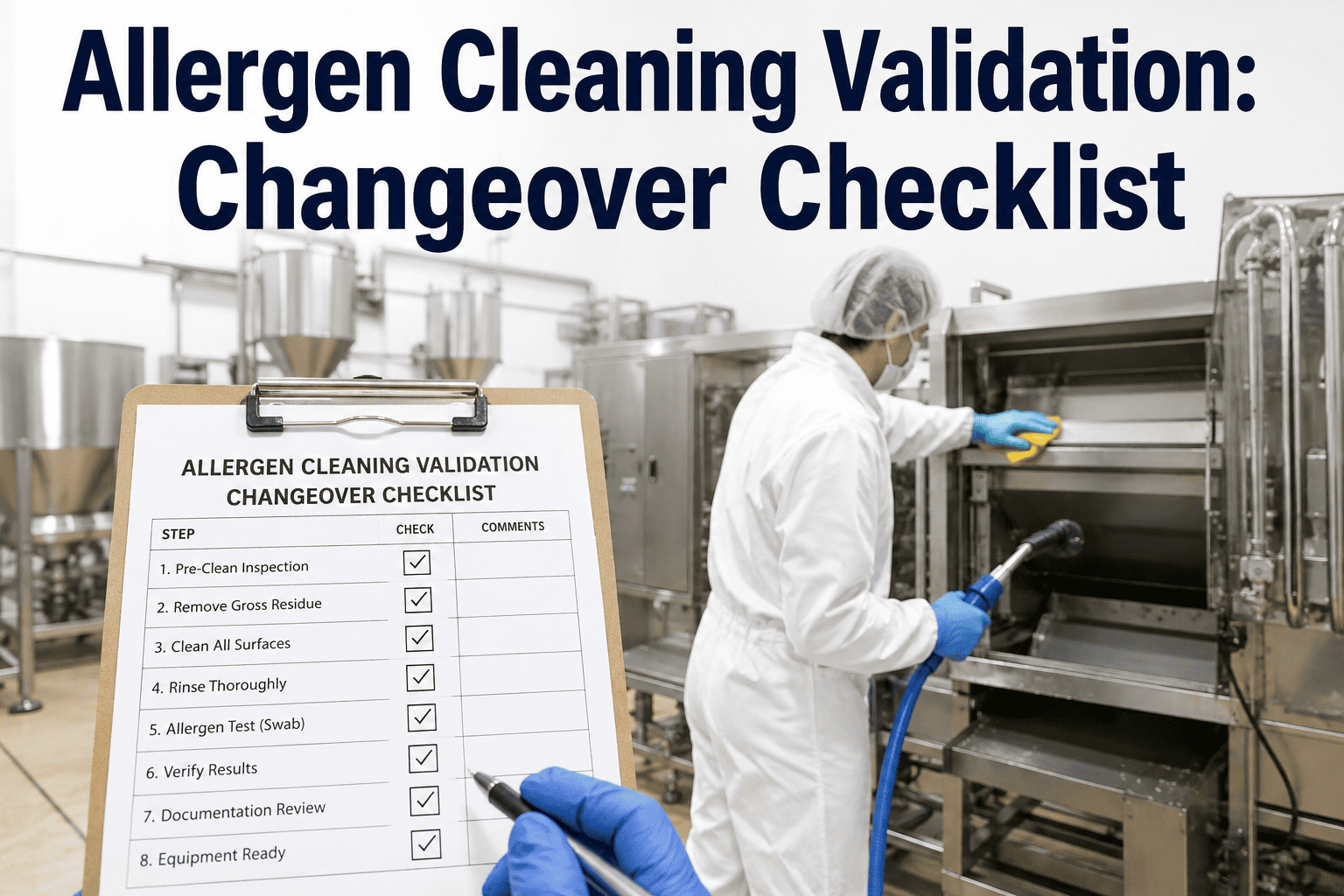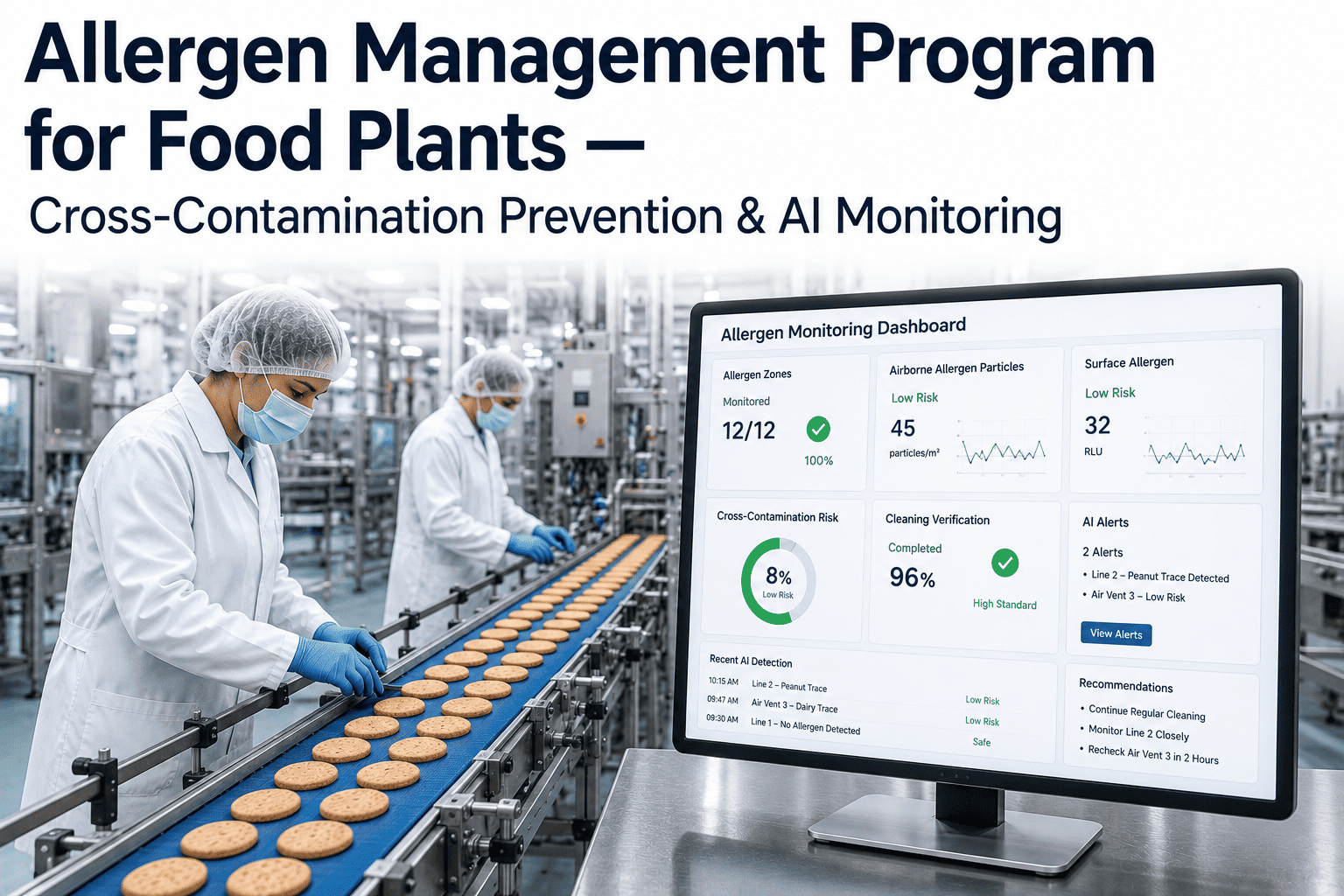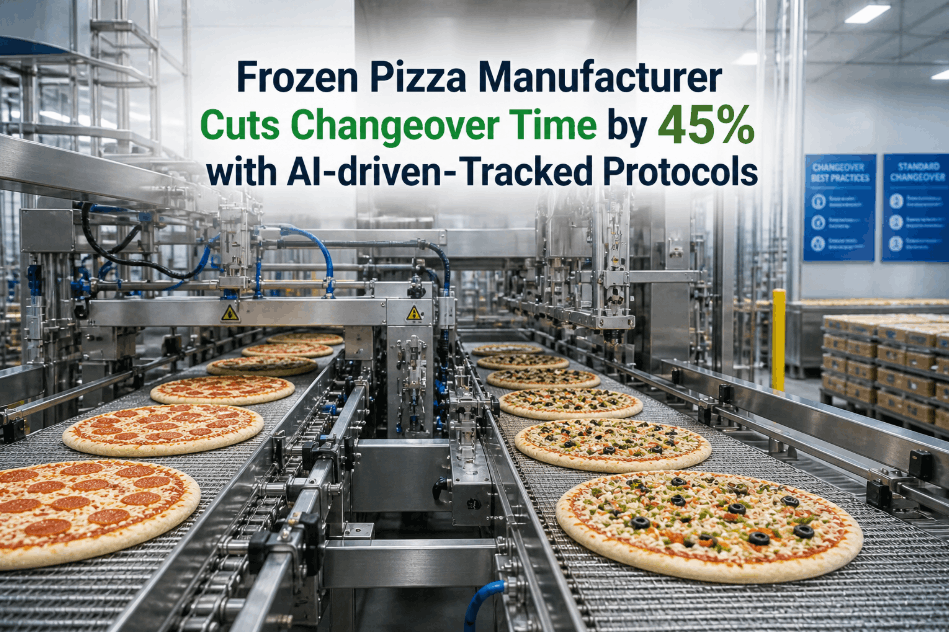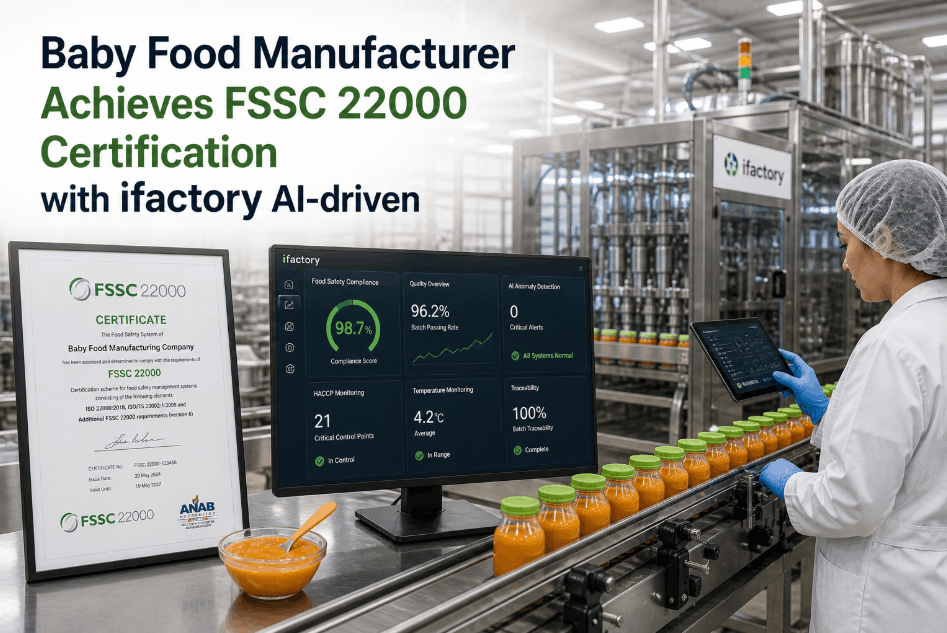
For a multi-line spice manufacturer processing over 200 SKUs across shared production equipment, allergen management was not a compliance checkbox — it was a daily operational crisis. Undeclared allergen incidents, inconsistent changeover documentation, and manual batch segregation logs were creating regulatory exposure and eroding retailer confidence. This is the account of how a mid-size spice plant eliminated cross-contamination events, achieved full allergen changeover traceability, and passed three consecutive third-party food safety audits using ifactory's Work Order Automation platform. Book a demo to see how ifactory's allergen protocols work for spice manufacturing operations.
Client Background
The manufacturer operates a 95,000 sq. ft. spice blending and packaging facility processing more than 200 product SKUs across nine shared production lines. Product mix includes free-from, organic, and allergen-containing blends — including formulations with mustard, celery, sesame, and tree nut derivatives — all processed on overlapping equipment within the same shift structure. The quality and operations team comprised 38 staff, with allergen changeovers managed through a combination of printed standard operating procedures, paper sign-off sheets, and supervisor verbal confirmation. Book a demo to explore how ifactory fits allergen-intensive spice manufacturing environments.
The Challenge
Spice manufacturing presents one of the most complex allergen management environments in food production. Shared grinding, blending, and packaging equipment must serve both allergen-containing and allergen-free formulations within the same production schedule. A single incomplete changeover — a missed cleaning step, an unsigned validation, a mislabeled batch — can result in an undeclared allergen event with consequences ranging from regulatory action to consumer harm. For this manufacturer, the pre-existing system was structurally incapable of preventing those outcomes at the required frequency and consistency.
The Solution: ifactory Work Order Automation for Allergen Management
The facility deployed ifactory's Work Order Automation platform to replace paper-based allergen changeover management with a fully digitized, AI-driven protocol system. Every allergen changeover — across all nine lines and all allergen class transitions — was governed by a structured, equipment-specific digital work order, verified by photo evidence, and linked directly to batch release logic. Quality staff, line operators, and supervisors accessed the platform from mobile devices and fixed terminals on the production floor.
- Unique changeover protocols configured per line and allergen transition type
- Work orders auto-generated based on production schedule and allergen class shift
- Step sequencing enforced — no step can be skipped or completed out of order
- Photo evidence required for all critical cleaning validation steps
- ATP swab results entered directly into the work order record
- Validation sign-off timestamped against operator credentials at point of completion
- Batch automatically placed on hold if changeover work order is incomplete
- Release triggered only when all validation steps are signed off and recorded
- Quality managers receive real-time alerts on incomplete or escalated changeovers
- AI-driven risk scoring applied to each allergen class transition by line
- High-risk transitions (e.g., mustard to free-from) trigger enhanced cleaning protocols
- Risk history visible per line to support scheduling optimization and risk reduction
- Digital batch records linked to all associated changeover documentation
- Real-time segregation status visible to production planners and quality team
- Complete audit-ready traceability from raw material intake to finished batch release
- All changeover records, validations, and batch releases stored in searchable digital archive
- Exportable compliance reports formatted for BRC, SQF, and FSSC 22000 audits
- Historical records retrievable by line, date, allergen class, or batch number
Implementation Approach
Deployment was phased across the nine production lines over eight weeks, prioritizing the highest-risk allergen transitions in the first phase to establish validated protocols before extending platform coverage. The full facility was operational on ifactory before the next scheduled third-party audit cycle. Book a demo to walk through a rollout plan tailored to your facility's allergen profile and line configuration.
The three lines with the highest allergen transition frequency — including mustard, sesame, and tree nut changeovers — were onboarded first. Equipment-specific cleaning protocols were digitized, allergen transition risk classifications were configured, and the automated batch hold logic was validated against the existing HACCP plan. Quality leads completed platform onboarding in under three hours per person.
Protocol templates from Phase 1 were adapted for the remaining six lines based on allergen risk profile and equipment configuration. All 38 quality and operations staff were active on the platform by end of week five. Batch segregation tracking was integrated with the existing ERP system to enable real-time status visibility for production planners without duplicating data entry.
A full internal audit of eight weeks of digital changeover records confirmed 100% step completion rates across all nine lines — a baseline that had been unachievable under the paper system. The quality team conducted a mock third-party audit using ifactory's compliance export module, identifying and resolving three minor documentation gaps before the live audit cycle commenced.
By month three, the platform was operating autonomously across all production lines. Allergen changeover completion rates stabilized at 100%. The facility passed its first post-deployment third-party food safety audit with zero major non-conformances related to allergen management — a first in the facility's operating history. Two subsequent audits produced the same outcome.
Results After Full Deployment
The transition from paper-based allergen management to ifactory's AI-driven Work Order Automation produced verifiable, measurable improvements across every food safety, compliance, and operational dimension that matters to a spice manufacturer operating allergen-containing and free-from products on shared equipment.
Performance Summary
| Metric | Before ifactory | After ifactory | Improvement |
|---|---|---|---|
| Cross-Contamination Events (18 mo.) | 3 suspected events | 0 events | 100% elimination |
| Changeover Documentation Completeness | 38% complete | 100% complete | +62 pts |
| Cleaning Validation Cycle Time | 47 min avg. | 12 min avg. | -74% |
| Audit Non-Conformances (Allergen) | 2–4 per audit | 0 — 3 consecutive | 100% reduction |
| Quality Manager Documentation Time | 2–3 hrs/day | Under 20 min/day | ~87% less |
| Allergen Batch Holds Per Month | 6 avg. | 0.4 avg. | -93% |
Key Benefits and Business Impact
The deployment of ifactory's allergen management automation created compounding value beyond compliance — improving production throughput, retailer confidence, regulatory standing, and the facility's capacity to scale SKU volume without proportional increases in quality risk.
Eliminating paper-based changeover management removed the human failure modes — missed steps, unsigned validations, illegible records — that had produced three cross-contamination events. Enforced digital sequencing means allergen protocols are followed correctly every time, regardless of shift, operator, or production pressure.
The 93% reduction in precautionary allergen batch holds freed production capacity that had been routinely tied up in holds triggered by unverifiable paper documentation. Lines that were previously idled pending manual record verification are now cleared for release automatically when digital changeover completion is confirmed.
Three consecutive third-party audit passes with zero allergen management non-conformances have materially strengthened retailer relationships and supported new contract discussions with food service customers who specify food safety certification as a supply qualification. Complete digital traceability is now a competitive differentiator, not a compliance gap.
Recovering nearly two hours of daily quality manager time from manual documentation chasing created capacity for proactive food safety improvement activities — root cause analysis, supplier qualification, and new product allergen assessments — that had been consistently deprioritized under the paper-based workload.
The facility added 22 new SKUs — including four additional allergen-containing formulations — during the study period without increasing quality headcount or audit risk. ifactory's protocol configuration absorbed each new allergen transition type as a template extension rather than requiring a redesign of the changeover management system.
In the event of a customer complaint, regulatory inquiry, or product recall investigation, the facility can now retrieve complete, time-stamped allergen changeover records for any batch in seconds. The absence of this capability under the paper system had been identified as a significant regulatory exposure in a pre-deployment gap assessment.
Conclusion
For spice manufacturers operating allergen-containing and free-from formulations on shared equipment, the gap between a compliant changeover and a cross-contamination event is a single missed step. When that step is managed by paper, verbal confirmation, or individual memory, the system cannot guarantee consistent compliance at production volume and frequency. This case study demonstrates what becomes possible when allergen changeover management is governed by a digital, AI-driven work order system: protocols are completed correctly every time, cleaning validations are photo-verified and traceable, batch releases are linked to documented evidence of allergen clearance, and audit readiness is continuous rather than a pre-inspection scramble. Book a demo to see how ifactory's allergen protocol automation applies to your production environment.
For this spice manufacturer, ifactory's Work Order Automation transformed a structurally fragile, paper-dependent allergen management system into a verifiable, continuously improving food safety operation. The outcomes — zero cross-contamination events across 18 months, 100% changeover documentation completeness, and three consecutive clean audit passes — were not the result of additional staff or additional inspection. They were achieved by replacing a system designed for a simpler era with digital infrastructure capable of governing complex allergen transitions at scale, in real time, with full traceability. Any food manufacturer facing similar allergen complexity on shared equipment can achieve comparable results by making the same structural decision: replace coordination by paper with coordination by platform.