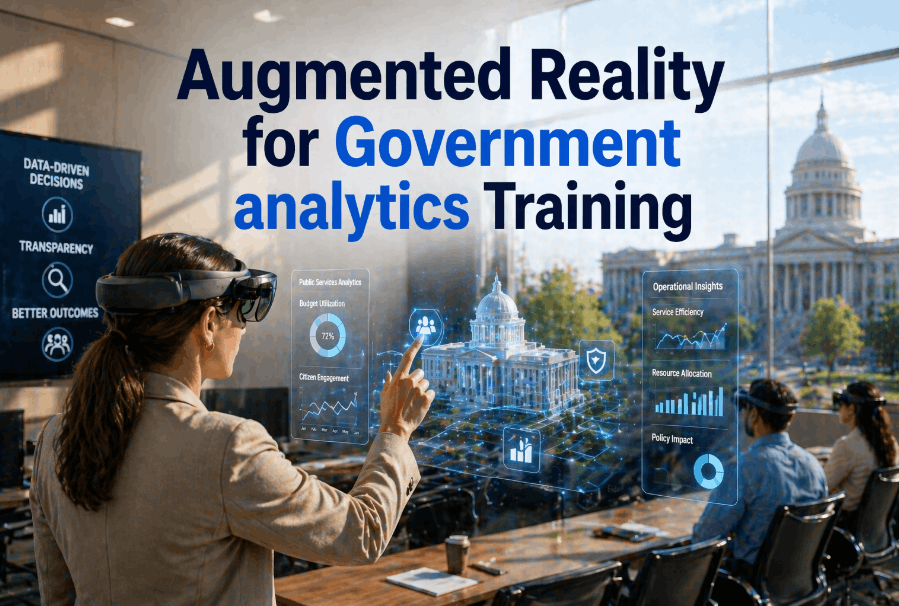
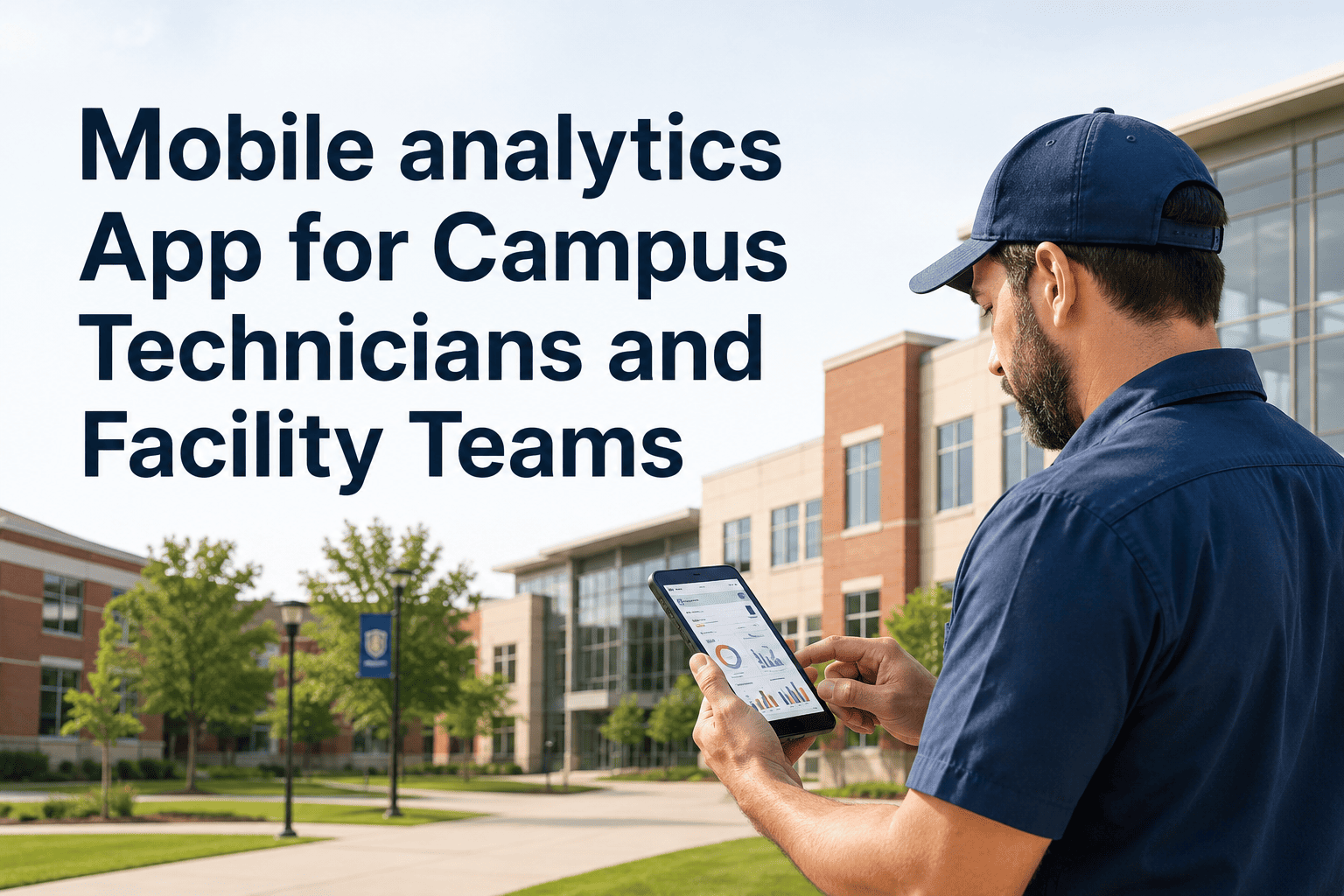
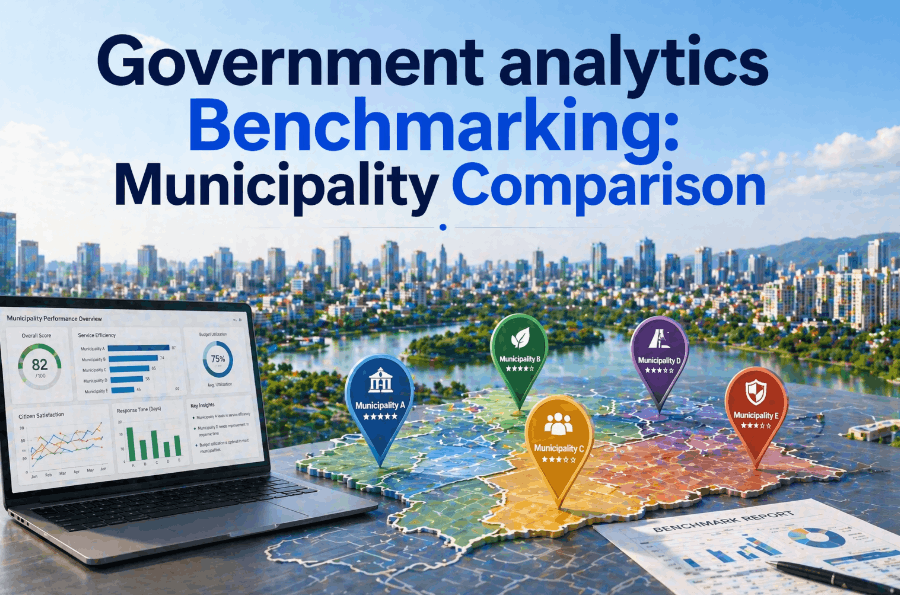
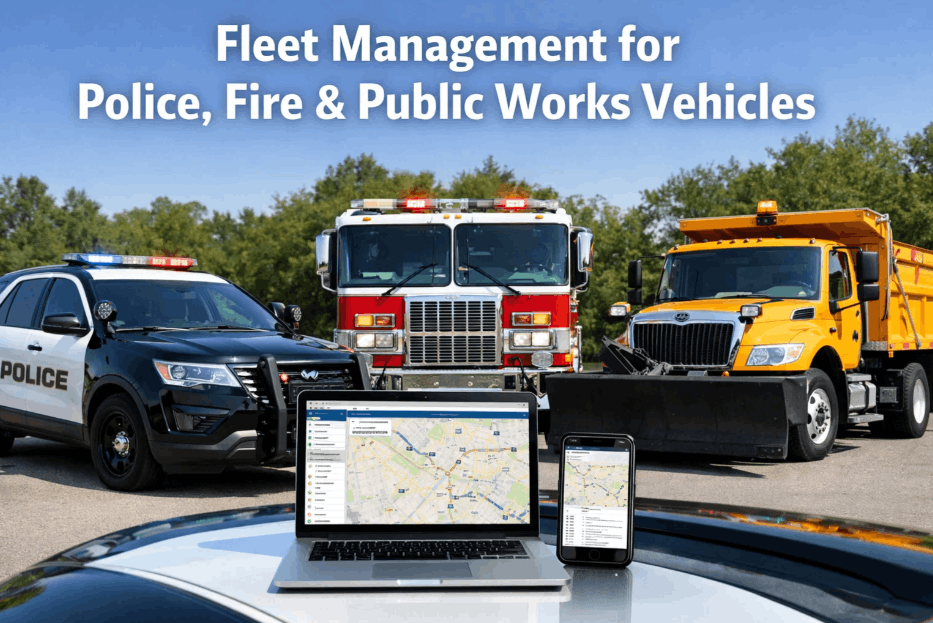
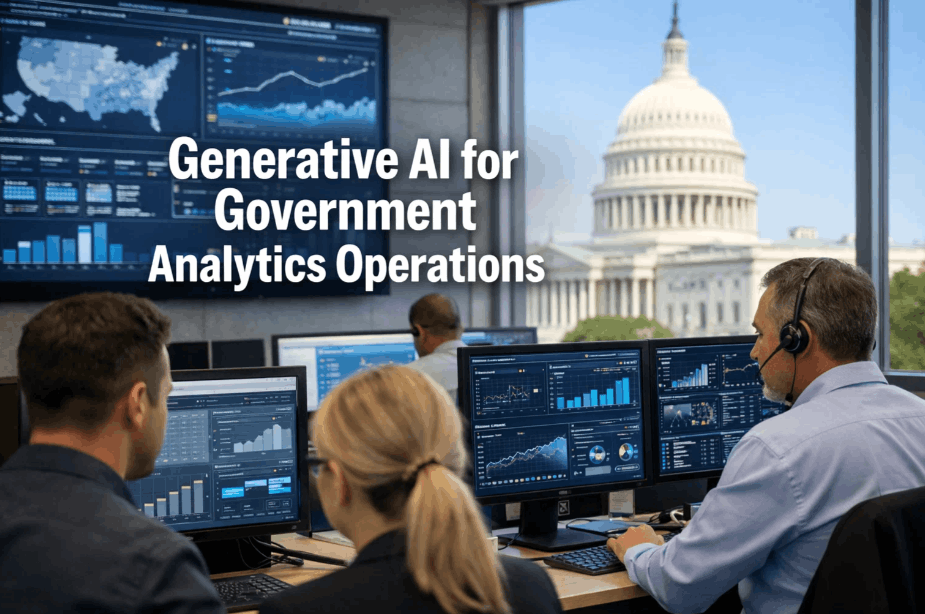
Augmented reality for government analytics training is reshaping how public sector agencies onboard technicians, transfer institutional knowledge, and maintain critical infrastructure. As government organizations face mounting pressure to modernize field operations — from utility maintenance and public works inspections to emergency response training — AR government analytics platforms are emerging as the most effective solution for closing the skills gap, accelerating competency development, and reducing costly on-site errors. This article explores how augmented reality government technology is being deployed across public sector environments and what it means for the future of government workforce training.
AR TRAINING · GOVERNMENT TECHNOLOGY · FIELD SERVICE ANALYTICS
Transform Government Workforce Training With Augmented Reality Analytics
iFactory's AR-powered government training platform delivers remote expert guidance, digital work instructions, and real-time field support — enabling public sector agencies to train technicians faster, reduce infrastructure downtime, and achieve complete knowledge transfer across distributed teams.
Why Augmented Reality Is the Future of Government Analytics Training
Government agencies managing public infrastructure — water treatment facilities, electrical grids, transportation networks, and emergency response systems — depend on highly skilled technicians who can diagnose complex problems and execute precise maintenance procedures under pressure. Traditional classroom-based training and printed manuals are no longer sufficient to meet the demands of modern public works environments. AR analytics training solves this challenge by overlaying real-time digital guidance directly onto physical equipment, enabling technicians to learn by doing rather than by reading.
The shift toward augmented reality government programs is being driven by three converging forces: an aging public sector workforce approaching retirement, increasingly complex infrastructure systems requiring specialized technical skills, and growing pressure to reduce operational costs without compromising service delivery. AR training government platforms address all three simultaneously — accelerating knowledge transfer from experienced specialists to newer recruits, providing step-by-step procedural guidance on complex systems, and enabling remote expert support that eliminates the need for costly specialist travel.
60%
faster technician onboarding with AR-guided government training programs
40%
reduction in field errors when AR work instructions replace paper-based procedures
3–5x
knowledge retention improvement with AR immersive training vs. traditional methods
$320K
average annual savings per agency on specialist travel and on-site expert costs
Core Applications
Key Use Cases for AR Government Analytics in Public Sector Field Operations
Understanding where AR field service government technology delivers the highest impact requires mapping applications to specific operational challenges. These use cases represent the areas where government agencies are currently deploying augmented reality to achieve measurable improvements in workforce capability and infrastructure reliability.
Remote Expert Guidance for Public Infrastructure
When a field technician encounters an unfamiliar fault condition on aging water treatment or electrical infrastructure,
AR remote expert technology enables a senior specialist located anywhere in the world to see exactly what the technician sees — overlaying annotations, highlighting components, and providing real-time verbal guidance through smart glasses or mobile AR devices. This eliminates multi-day response delays and dramatically reduces mean-time-to-repair on critical public systems. To explore how remote expert AR works in practice,
book a demo with our government technology team.
Digital Work Instructions for Complex Maintenance Procedures
Digital work instructions delivered through AR overlay critical procedural steps directly onto equipment surfaces in the technician's field of view. Rather than consulting a paper manual or tablet-based checklist, the technician sees each step precisely positioned on the relevant component — reducing cognitive load, eliminating procedural errors, and ensuring compliance with regulatory maintenance standards. Government maintenance teams using digital AR work instructions consistently report near-zero error rates on complex procedures that previously required experienced supervisor oversight.
AR Analytics Training for New Government Technicians
Structured AR analytics government training programs enable new public sector technicians to complete hands-on training exercises on virtual representations of actual infrastructure equipment before performing live maintenance. Trainees can practice fault diagnosis and repair procedures in simulated environments that mirror real-world conditions — building competency and confidence without the risk of disrupting operational systems. Agencies using AR simulation training report first-time-right rates on live maintenance tasks that are significantly higher than traditionally trained cohorts.
Knowledge Capture and Institutional Transfer
One of the most significant challenges facing government agencies is capturing the tacit knowledge held by retiring specialists before it walks out the door.
Government AR technology platforms enable experienced technicians to record annotated AR work procedures — capturing not just the steps but the contextual judgment and problem-solving approaches that define expert-level performance. These knowledge assets become permanent training resources accessible to every technician across the organization. Want to see this capability applied to your agency's knowledge management challenges?
book a demo to learn more.
Public Works AR for Infrastructure Inspection
Public works AR applications for infrastructure inspection enable inspectors to overlay digital schematics, historical maintenance records, and compliance checklists onto physical infrastructure during field inspections. An inspector examining a bridge structure can simultaneously view structural load specifications, previous inspection findings, and regulatory compliance requirements — without switching between devices or documents. This integrated information environment improves inspection accuracy and produces richer compliance documentation that withstands regulatory scrutiny.
AR Technician Government Certification Programs
Government certification programs for AR technician government roles are emerging as regulatory bodies recognize AR-based competency assessment as a valid alternative to traditional written and practical examinations. AR certification platforms can objectively assess procedural accuracy, response time, and decision quality in simulated scenarios — producing verifiable performance data that supports qualification decisions and continuing education requirements for public sector technical roles.
Impact Analysis
How AR Field Support Government Programs Reduce Infrastructure Downtime and Training Costs
The financial case for investing in AR field support government programs rests on three measurable value drivers: reduced training time and cost, lower field error rates and rework expenses, and elimination of costly specialist travel for routine support calls. Understanding each driver in context helps agencies build the business case for AR technology investment and set realistic expectations for return on investment timelines.
01
Training Time and Cost Reduction
Traditional government technical training programs require 6–18 months of structured classroom and supervised field instruction before technicians are certified for independent operation. AR-augmented training programs consistently reduce this timeline by 40–60% by enabling hands-on procedural practice in simulated environments from day one. The cost reduction compounds over time as training programs become self-paced and scalable — removing the dependency on senior technician time for every onboarding cycle. Agencies with high technician turnover report AR training programs paying for themselves within the first year through reduced training overhead alone.
02
Field Error Reduction and Rework Elimination
Maintenance errors on public infrastructure carry costs that extend well beyond the immediate rework expense — service disruptions, regulatory penalties, public safety incidents, and reputational damage can multiply the direct cost of a single procedural mistake by ten times or more. AR-guided field operations eliminate the information gaps that cause procedural errors: technicians always have the correct specification in view, can never skip a critical step without visual confirmation, and have access to real-time expert support when unusual conditions arise.
AR government analytics platforms that track procedure completion rates and deviation events provide management with the data needed to continuously refine work instructions and training programs. For a walkthrough of how this works in practice,
book a demo with our field operations specialists.
03
Specialist Travel Cost Elimination
Large government agencies managing distributed infrastructure across wide geographic areas face significant costs whenever specialized technical expertise must physically travel to a remote site. AR remote expert platforms eliminate most of these travel requirements by enabling specialists to provide real-time visual guidance from a central location. An expert in a state capital can simultaneously support multiple field technicians across the region — compressing the response time from days to minutes while reducing expert travel costs to near zero. Agencies deploying AR remote support typically recover the full platform investment within the first six months through travel cost savings alone.
04
Compliance Documentation and Audit Readiness
Government infrastructure maintenance is subject to extensive regulatory documentation requirements. AR platforms with integrated analytics automatically capture timestamped records of every maintenance procedure performed — including technician identity, procedure steps completed, deviations recorded, and expert guidance provided. This documentation layer transforms compliance record-keeping from a manual burden into an automatic byproduct of normal field operations — ensuring agencies are always audit-ready and reducing the administrative overhead of regulatory reporting by an estimated 70%.
Traditional Training vs. AR Government Analytics Training — Performance Comparison
How public sector agencies perform across critical workforce development metrics when using conventional training methods versus integrated AR analytics training platforms.
Government Technical Training — AR vs. Traditional Methods
Implementation Guide
Building an AR Analytics Training Program for Government Agencies — Best Practices
Successful deployment of government training technology powered by augmented reality requires a structured implementation approach that addresses content development, device selection, workforce change management, and analytics integration. These best practices reflect the lessons learned from AR training deployments across public sector organizations at municipal, state, and federal levels.
01
Conduct a Workforce Skills Gap Assessment Before Platform Selection
Before selecting an AR platform, government agencies must document the specific competency gaps that AR training is intended to address. A systematic skills assessment identifies which procedures carry the highest error risk, which knowledge domains are most vulnerable to attrition from retiring specialists, and which field support scenarios generate the most specialist travel expense. This assessment shapes both the content development roadmap and the platform evaluation criteria — ensuring the selected AR solution is optimized for the agency's specific operational challenges rather than generic training use cases. Interested in how this assessment process works?
book a demo to see our government readiness evaluation framework.
02
Develop AR Work Instructions With Subject Matter Expert Involvement
The quality of AR work instructions directly determines the training and operational outcomes the platform delivers. Effective AR content development requires active participation from experienced field technicians and subject matter experts — capturing not just procedural steps but the contextual judgment and troubleshooting logic that distinguish expert performance from basic task completion. Government agencies that invest in high-quality AR content development during initial deployment report significantly better field performance outcomes than those who adapt generic training content for their AR platform.
03
Select AR Hardware Appropriate for Government Field Environments
Government field technicians operate in demanding environments — outdoor locations exposed to weather extremes, confined utility spaces with limited connectivity, and safety-critical sites where device reliability is non-negotiable. AR hardware selection for government AR technology deployments must prioritize durability ratings (IP67 or better), battery life sufficient for full shift operation, connectivity resilience for remote locations, and compatibility with required personal protective equipment. Facilities should pilot hardware in representative field conditions before committing to large-scale procurement decisions.
04
Integrate AR Analytics With Existing Government Data Systems
AR platforms that operate in isolation from existing government data infrastructure — asset management systems, work order platforms, compliance databases, and training management records — deliver a fraction of their potential value. Integration of AR analytics government platforms with GIS systems, CMMS platforms, and HR training management software creates a unified operational intelligence environment: AR procedure data enriches asset maintenance histories, training completion records flow automatically to workforce management systems, and compliance documentation populates regulatory reporting tools without manual data re-entry.
05
Establish Continuous Improvement Loops Using AR Performance Analytics
The analytics layer of a mature AR field support government platform generates rich performance data that conventional training programs cannot capture: step-level procedure completion times, deviation frequencies by location and technician, remote expert engagement patterns, and correlation between training completion and field performance outcomes. Government agencies that establish regular analytics review processes — monthly or quarterly — can identify emerging skill gaps, refine AR work instructions based on real-world field feedback, and demonstrate continuous improvement in workforce capability to oversight bodies and regulatory agencies.
Regulatory Alignment
How AR Government Analytics Training Supports Public Sector Compliance Requirements
Government training programs operate within a complex regulatory environment that includes federal workforce development mandates, OSHA safety training requirements, infrastructure-specific maintenance standards, and public accountability expectations that private sector organizations do not face. AR analytics training platforms are uniquely positioned to satisfy these requirements while simultaneously improving operational performance.
OSHA Safety Training Compliance
- Verified competency demonstration through AR simulation assessment
- Automated documentation of safety procedure training completion
- Real-time hazard identification overlays during field operations
- Incident investigation support with AR session replay capability
OSHA documentation: fully automated
Government Workforce Development Standards
- OPM competency framework alignment for technical government roles
- Individual development plan integration with AR learning paths
- Performance assessment data exportable for HR system integration
- Continuing education credit tracking with verifiable completion records
Workforce compliance: continuously documented
Infrastructure Maintenance Regulatory Standards
- NERC CIP compliance support for electrical infrastructure technicians
- EPA water system operator certification program integration
- DOT maintenance technician qualification documentation
- Complete maintenance procedure audit trails for regulatory inspection
Regulatory audit readiness: real-time
Agency Outcome
A mid-sized municipal utility managing water treatment infrastructure across seven facilities deployed an AR analytics training platform to address an urgent knowledge transfer challenge: 34% of their certified technicians were eligible for retirement within 18 months. Within 90 days of deployment, the agency had captured structured AR work instructions for 140 critical maintenance procedures. New technicians trained on the AR platform demonstrated competency on live equipment 52% faster than historically trained cohorts. When a complex pump station failure occurred at a remote facility, AR remote expert guidance enabled an on-site junior technician to execute a complete repair in 4 hours — a repair that previously required flying in a specialist at a cost of $8,400 and 48 hours of infrastructure downtime. The agency reported the AR platform delivered its projected 18-month ROI within the first 7 months of operation.
Adoption Roadmap
Deploying AR Analytics Government Training — A Phased Implementation Roadmap
Government agencies achieve the best outcomes from AR training government programs when they follow a phased deployment approach that validates the platform in high-impact use cases before scaling across the full organization. This four-phase roadmap delivers measurable results within 60 days and full operational capability within six months.
1
Phase 1 — Pilot with Highest-Risk Maintenance Procedures (Weeks 1–8)
Select the 5–10 maintenance procedures that carry the highest consequence of error — either due to safety risk, service disruption potential, or regulatory exposure — and develop AR work instructions for each. Deploy with a small technician cohort and measure first-time-right rates, completion time, and user experience feedback. This phase validates the platform in real operational conditions and generates early performance data that supports the internal business case for full deployment.
Outcome: Validated AR platform with proven performance data from live field operations
2
Phase 2 — Knowledge Capture From Senior Specialists (Weeks 6–16)
Engage retiring and senior technicians in structured AR content creation sessions to capture expert-level knowledge as reusable training and work instruction assets. Prioritize procedures where tacit expert judgment is most critical and hardest to document in conventional formats. Each captured procedure becomes a permanent organizational knowledge asset — eliminating the irreversible knowledge loss that typically accompanies specialist retirement.
Outcome: Institutional knowledge library accessible to every technician across the organization
3
Phase 3 — Full Technician Training Program Integration (Months 4–6)
Integrate the AR platform into formal technician certification and continuing education programs. Configure structured AR learning paths aligned to qualification requirements and connect platform completion data to HR and workforce management systems. Deploy remote expert capability across all facilities — enabling any technician to access specialist guidance from any location within minutes of a complex field event. Activate AR analytics dashboards to monitor workforce competency and field performance in real time.
Outcome: Fully operational AR training ecosystem with integrated analytics and compliance documentation
4
Phase 4 — Continuous Improvement and Expansion (Month 6 Onward)
Activate predictive analytics capabilities to identify emerging skills gaps before they manifest as field performance problems. Use AR session data to continuously refine work instructions, update training content as infrastructure or regulations change, and measure the ongoing contribution of AR training to workforce capability metrics. Expand AR deployment to additional facility types, technical disciplines, and geographic locations based on demonstrated ROI from initial phases. This phase transforms the AR platform from a training tool into a permanent operational intelligence system. Ready to plan your agency's AR deployment?
book a demo to start the conversation.
Outcome: Self-improving AR analytics ecosystem delivering compound operational benefits year over year
PROVEN IN PUBLIC SECTOR · 60% FASTER ONBOARDING · COMPLIANCE-READY
Deploy AR Analytics Training Across Your Government Agency — Start With a Demo
iFactory's AR government training platform connects your entire field workforce with real-time expert guidance, digital work instructions, and knowledge transfer capabilities built specifically for public sector infrastructure environments. From utilities and public works to emergency services and transportation — we deliver the AR analytics foundation your agency needs to build a future-ready technical workforce.
Frequently Asked Questions About AR Government Analytics Training
What is AR government analytics training?
AR government analytics training uses augmented reality technology to deliver step-by-step procedural guidance, remote expert support, and immersive simulation experiences to government technicians working on public infrastructure. The analytics layer captures performance data that enables agencies to measure competency development, identify skill gaps, and optimize training programs continuously.
How does AR remote expert guidance work for government field technicians?
AR remote expert platforms use smart glasses or mobile devices to stream the technician's field of view to a remote specialist. The specialist can annotate the live video feed — highlighting components, drawing guidance arrows, and displaying reference information — while communicating verbally in real time. The technician sees the expert's annotations overlaid on the physical equipment, enabling precise guided maintenance without the specialist being physically present.
What government infrastructure types benefit most from AR field support?
AR field support delivers the highest value on complex, high-stakes infrastructure where procedural errors carry significant consequences: water treatment and distribution systems, electrical transmission and distribution networks, transportation infrastructure including bridges and tunnels, public safety communications systems, and emergency management facilities. Any government operational environment where specialist knowledge is scarce and geographically concentrated benefits substantially from AR remote support capability.
How long does it take to implement an AR analytics training program for a government agency?
Initial AR platform deployment with a core set of work instructions for priority procedures can be operational within 30–45 days. Full integration with existing government data systems, development of a comprehensive AR content library, and deployment of training analytics dashboards typically requires 90–180 days depending on the size of the agency and complexity of the infrastructure portfolio being covered.
Can AR government training platforms integrate with existing HR and workforce management systems?
Yes. Modern AR analytics platforms provide API-based integration with HR information systems, learning management systems, asset management platforms, and work order management software. Training completion data, competency assessment results, and field performance metrics flow automatically into existing government workforce management infrastructure — eliminating manual data entry and providing a unified view of technical workforce capability.
What ROI can a government agency expect from AR training technology investment?
Government agencies typically recover their AR platform investment within 6–12 months through a combination of reduced training time, eliminated specialist travel costs, lower field error rates, and reduced compliance documentation overhead. Agencies managing large distributed infrastructure portfolios with significant specialist travel expenses often achieve positive ROI within the first 90–120 days through remote expert support savings alone.
Future-Ready Government Workforce
iFactory — AR Analytics Training Built for Public Sector Infrastructure
Government agencies responsible for critical public infrastructure cannot afford the knowledge gaps, training delays, and field errors that characterize outdated workforce development approaches. iFactory's AR analytics training platform delivers the remote expert guidance, digital work instructions, and performance analytics that public sector technical teams need to build and sustain world-class operational capability — within government budget realities and compliance requirements.
Remote expert AR guidance reducing specialist travel costs by up to 90%
Digital work instructions with 100% automated compliance documentation
AR simulation training cutting technician onboarding time by 40–60%
Knowledge capture platform preserving institutional expertise from retiring specialists
Real-time workforce analytics tracking field performance and competency trends
Integration-ready architecture connecting to existing government data systems