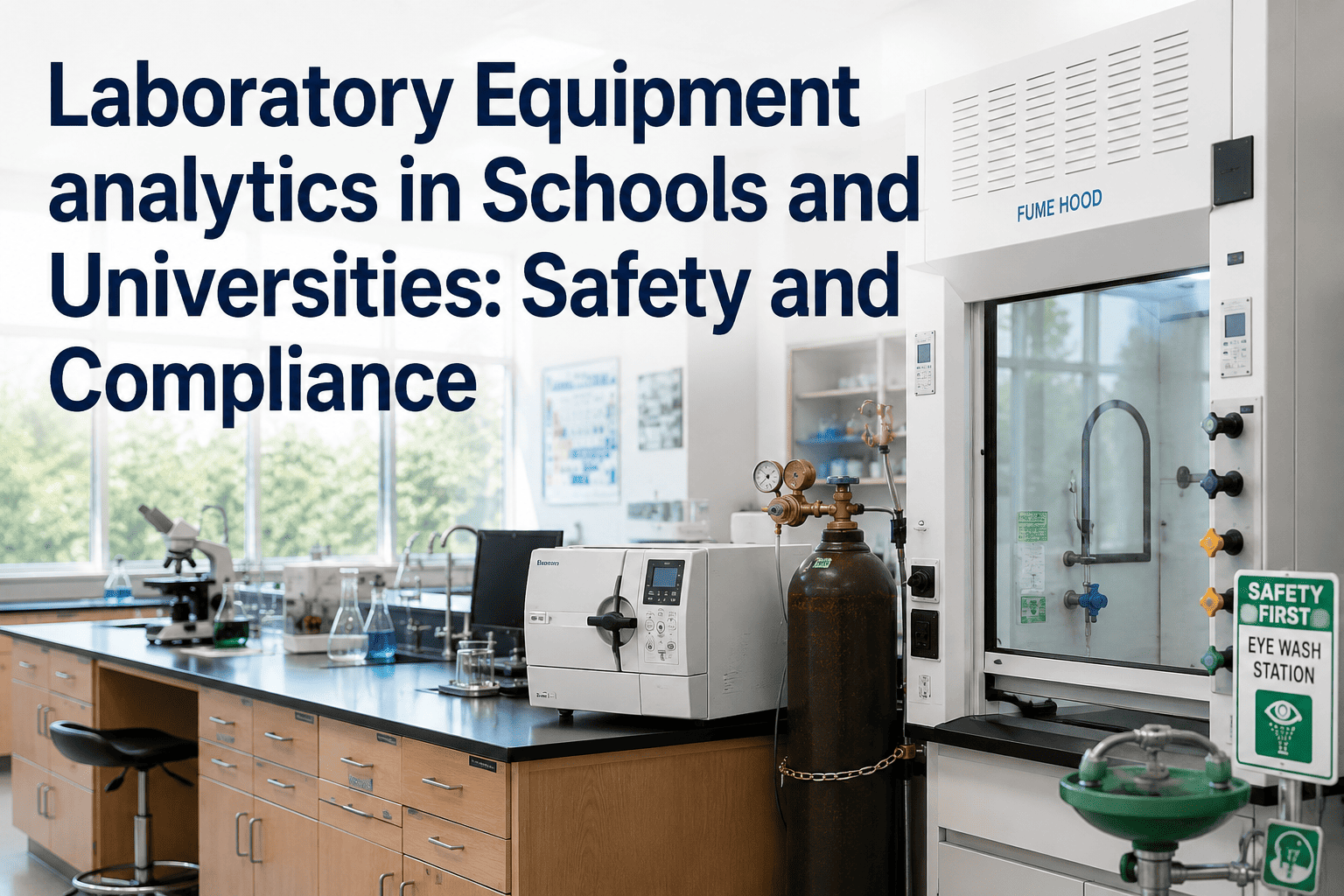
Laboratory safety and compliance in schools and universities demands rigorous equipment maintenance. Fume hoods, gas systems, eyewash stations, autoclaves, and specialized instruments require regular inspections to meet OSHA standards and ensure student safety. Today, most institutions manage lab equipment through paper logs, manual scheduling, and reactive maintenance—leaving critical safety gaps. AI-driven laboratory equipment analytics automates compliance documentation, predicts maintenance needs before failures occur, tracks ventilation performance in real-time, and generates OSHA-ready inspection reports instantly. Your labs operate safer, student safety improves, and compliance becomes continuous rather than crisis-driven. This guide shows lab managers and facilities directors how AI-driven equipment analytics eliminates lab safety chaos, ensures regulatory compliance, and protects students and staff.
Laboratory Equipment Analytics: AI-Driven Safety and Compliance for Schools
Automated OSHA compliance · Real-time ventilation monitoring · Equipment failure prediction · Inspection scheduling · Safety documentation.
Laboratory Equipment Management: Safety and Compliance Challenges
You manage science laboratories across multiple buildings: biology labs, chemistry labs, physics labs, engineering facilities. Each laboratory contains critical equipment: fume hoods that must maintain negative pressure, gas systems (nitrogen, hydrogen, argon) requiring safety certification, eyewash stations and emergency showers needing accessibility verification, autoclaves for sterilization, spectrometers, centrifuges, and specialized instruments. OSHA standards require documented fume hood inspections (annually + quarterly certifications), gas cylinder inspections, eyewash station functionality tests, and autoclave sterility validations. Today you manage this with spreadsheets, paper checklists, and email reminders. Fume hood maintenance is overdue but you don't know. An eyewash station isn't checked until someone notices the sign. A gas system safety certification expired two months ago. Lab safety and compliance slip through gaps in manual tracking. When an OSHA inspector arrives, you scramble to assemble scattered documentation from multiple systems.
Annual certifications, quarterly function tests, pressure monitoring—required by OSHA. Documentation scattered. Test dates missed. No data on hood performance trends.
OSHA requires detailed inspection records. Manual logs, handwritten forms, paper files. Hard to find specific documentation during audits. Gaps go unnoticed until inspection.
Autoclaves fail without warning. Gas systems lose pressure. Fume hoods stop functioning during critical experiments. No predictive maintenance—reactive fixes only.
Malfunctioning ventilation, faulty eyewash stations, expired safety certifications create hazards. Students exposed to fume hood failures, gas leaks, contamination risks.
Laboratory Equipment Monitoring: Real-Time Safety Intelligence
Negative pressure dropped 8%. Schedule service within 48 hours before use.
21 days remaining. Schedule recertification inspection now.
Last validation: Dec 2024. Annual validation due within 30 days.
OSHA Compliance Requirements & AI-Driven Automation
Laboratory Equipment: Critical Systems Overview
Fume hoods must maintain negative pressure (typically 80-150 linear feet per minute face velocity). OSHA 1910.1450 requires annual recertification and documented quarterly tests. AI-driven systems monitor hood pressure continuously, detect degradation trends, schedule certifications 90 days in advance, and maintain digital certification records. When pressure drops below safe thresholds, alerts notify staff immediately.
Laboratories use compressed gases (nitrogen, hydrogen, argon, CO2). Each cylinder requires safety inspection, pressure verification, and certification before use. Gas systems need annual safety inspections for leaks, connections, and regulator function. AI-driven tracking ensures no expired certifications, monitors cylinder pressure trends, flags low-pressure cylinders for replacement, and maintains complete safety inspection documentation.
ANSI Z358.1 requires monthly functional tests of eyewash stations and emergency showers. Tests must verify water flow, water temperature (between 60-100°F), and physical accessibility. Manual testing relies on staff memory—often missed. AI-driven systems send automated monthly reminders, capture test data on mobile devices, verify water specifications, track flow rates over time, and flag degrading equipment.
Autoclaves require annual sterility validation per FDA and USP standards. Validation includes temperature mapping, steam penetration verification, and chemical indicator testing. Annual validation ensures sterile processing integrity. AI-driven systems track validation schedules, alert before expiration, store validation certificates digitally, and flag autoclaves with degrading performance indicators before failure.
Spectrometers, centrifuges, pH meters, balances, and other instruments have manufacturer-recommended maintenance intervals. Preventive maintenance extends equipment life and ensures measurement accuracy. AI-driven predictive maintenance tracks usage hours, predicts component wear, schedules service before failure, and maintains equipment calibration records.
What AI-Driven Laboratory Equipment Analytics Delivers
Automated tracking ensures no missed inspections. Complete documentation always audit-ready. Pass OSHA inspections with zero findings on lab safety.
Equipment failures caught before they happen. Ventilation performance continuously verified. Eyewash stations and safety systems always functional. Student hazard exposure eliminated.
No more manual scheduling, paper forms, or compliance documentation assembly. Automated reminders, digital inspections, instant documentation. Staff focus on research and teaching.
Predictive maintenance prevents emergency repairs. Equipment serviced before failure. Lifespan extended. Replacement cycles optimized based on actual condition data.
Implementation: From Manual Tracking to Automated Safety
Frequently Asked Questions
Pressure sensors installed in fume hoods and ventilation ducts stream continuous data to the system. The system compares actual pressure to OSHA-required specifications (typically 80-150 linear feet per minute face velocity). When pressure drops below safe thresholds, instant alerts notify lab staff. Historical pressure trends help predict when filters need replacement or repairs are needed before complete failure.
Yes. The system connects via API to most lab information management systems (LIMS). If you use spreadsheets or paper logs, we can import historical data and create a structured digital system. No rip-and-replace required. Integration typically 2-4 weeks depending on system complexity.
The system detects abnormal pressure changes immediately and sends urgent alerts to lab staff and facilities team. Coupled with predictive maintenance, most failures are prevented before they occur—the system flags degrading performance weeks in advance, giving time to schedule service. In rare cases where unexpected failure occurs, immediate alerts minimize exposure time and prevent student safety risks.
Yes. Complete OSHA-compliant reports are generated automatically: fume hood certification records, gas system inspection documentation, eyewash station test logs, autoclave validation certificates. All reports are timestamped, digitally signed, and organized by equipment and date. During OSHA inspections, you generate compliance documentation on demand—no scrambling to find paper records.
Immediate: staff time savings (4-6 hours weekly) and automated compliance scheduling visible in week 1. Safety improvements visible within 2-4 weeks as automated testing ensures no missed monthly eyewash checks or quarterly hood certifications. Equipment failure prevention accelerates after month 2-3 when predictive models have sufficient data. By month 6, full safety and compliance benefits are realized.
Protect Your Laboratory With AI-Driven Equipment Analytics
Schools and universities using AI-driven laboratory equipment analytics maintain complete OSHA compliance, eliminate equipment failures, enhance student safety, and reduce maintenance costs. Student exposure to ventilation failures, gas leaks, and malfunctioning safety equipment is eliminated. Staff spends less time on manual compliance tracking and more time on research and teaching. Equipment failures are prevented before they occur. The ROI is undeniable: zero compliance violations, enhanced student safety, extended equipment lifespan, and 30%+ maintenance cost reduction.
See How Laboratory Equipment Analytics Applies to Your Institution
We assess your current lab equipment status, compliance gaps, and safety risks—then show specific ROI based on your equipment portfolio and regulatory requirements. Custom analysis shows 5-year impact for your school or university.