A school district superintendent oversees 12 campuses today. Strategic plan calls for 8 new schools in 3 years — enrollment growth of 40%. Current analytics: each school has its own HVAC monitoring system, its own energy dashboard, its own compliance documentation process. When a new building opens, IT must set up a completely new system from scratch. Procedures vary by campus. Data from 12 campuses is fragmented across incompatible platforms. When auditors ask "Show me energy compliance across all 20 schools," the superintendent must manually compile reports from 20 different systems. This scenario repeats across hundreds of rapidly growing school districts. The superintendent needs analytics infrastructure that scales: one platform for all campuses, standardized procedures rolled out to each new building in weeks instead of months, compliance managed at the district level, and a team that can support 20+ schools without hiring 20+ new facility managers. This guide covers the scaling challenge growing districts face, the five pillars of scalable analytics (standardization, cloud architecture, rapid onboarding, team management, compliance automation), and how AI-driven cloud analytics enables districts to grow without fragmenting their operations. Book a Scalable District Analytics Demo to see how multi-campus deployment works.
SCHOOL DISTRICT GROWTH · MULTI-CAMPUS ANALYTICS · CLOUD SCALING
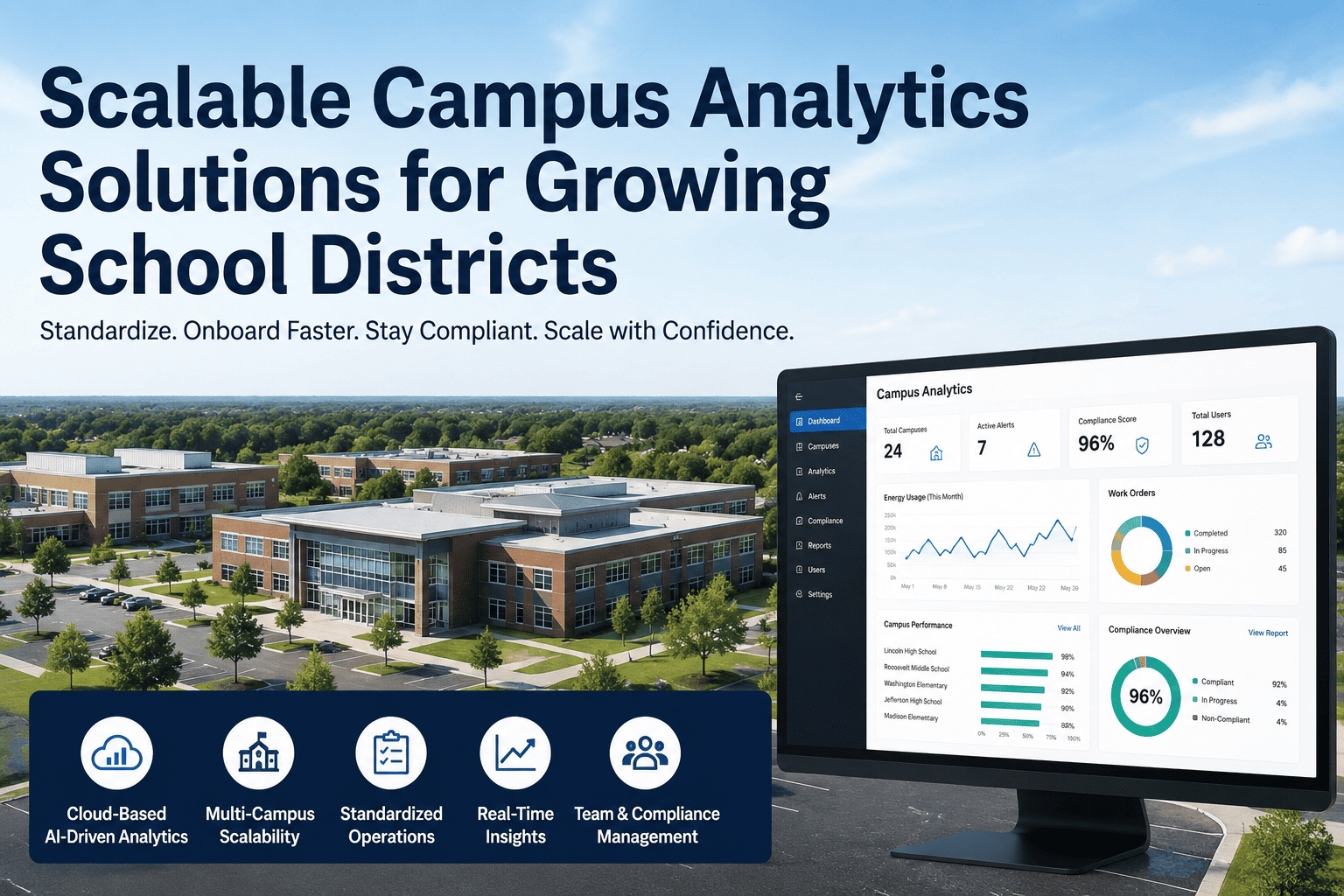
Scalable Campus Analytics Solutions for Growing School Districts
Standardize procedures across all campuses · Onboard new buildings in weeks, not months · Maintain district-wide compliance · Scale analytics teams without fragmentation.
12→20
Typical district growth in 3 years
8 weeks
New campus onboarding (with standardization)
40%
Reduction in IT setup time per building
1 platform
All campuses, unified compliance, team control
The Scaling Crisis: When Districts Grow Faster Than Operations Can Scale
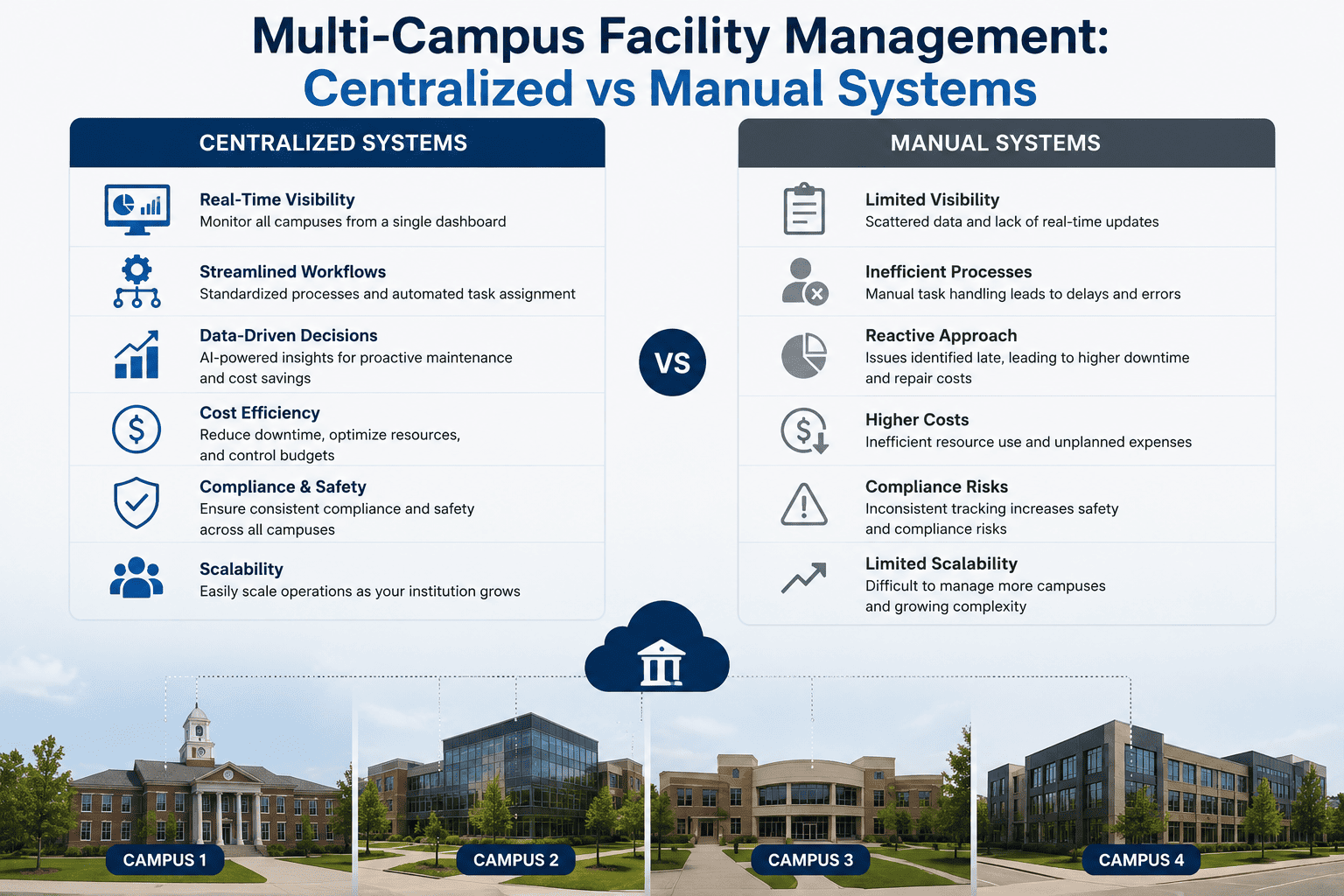
A school district operating 12 campuses has 12 separate analytics systems. Each campus's facility manager uses their own HVAC platform, their own energy dashboard, their own audit documentation process. Procedures are ad-hoc and inconsistent: campus A checks energy compliance quarterly, campus B annually, campus C not at all. When a new building opens, IT must configure a completely new system. Weeks of setup. New facility manager must learn a custom system. When auditors arrive, the superintendent must manually compile reports from 12 incompatible data sources. This fragmentation costs time and compliance risk.
The superintendent's 3-year strategic plan calls for 8 new schools. Growth is necessary and planned — but unscalable operations will break under the strain. Adding 8 new systems to 12 existing ones creates chaos. The solution is standardization: one cloud-based platform for all campuses, one set of procedures used everywhere, one unified compliance dashboard. New buildings onboard in weeks using templates, not custom builds. The district's analytics team scales horizontally (adding trained managers) instead of vertically (hiring specialized engineers for each new system).
The Scaling Challenge: From 12 to 20 Campuses in 3 Years
Year 1: 12 Campuses (Today)
Systems: 12 separate analytics platforms (fragmented)
Procedures: Inconsistent across campuses
Compliance: Manual reporting (hours per audit)
Team: 1 district IT manager + 12 facility specialists (ad-hoc collaboration)
Onboarding: 8-12 weeks per new building
Year 2: 16 Campuses (+4 New)
Systems: 16 separate platforms (chaos increasing)
Procedures: 16 different ways to do things
Compliance: Superintendent manually pulls 16 reports (2-3 days work)
Team: 1 IT manager + 16 specialists (coordination impossible)
Onboarding: 10-14 weeks per new building
Year 3: 20 Campuses (+8 New)
Systems: 20 separate platforms (unmanageable)
Procedures: No standardization possible
Compliance: Audits take 1 week to compile data
Team: District IT team drowning in support tickets
Onboarding: 12-16 weeks per new building
The Problem: Each new campus adds complexity exponentially, not linearly. Systems don't talk. Procedures don't standardize. Teams can't scale. The district loses visibility and control.
The Solution: 5 Pillars of Scalable Campus Analytics
01
Cloud-First Architecture
All campuses connect to single cloud platform. Data aggregation, compliance reporting, and analytics done centrally. New campuses onboard instantly — no on-prem server builds.
02
Standardized Procedures
One set of procedures (HVAC management, energy monitoring, compliance checks) deployed to all campuses. Campus facility managers use same templates, same workflows, same documentation.
03
Rapid Onboarding
New campus opens → template deployed → systems live in 4-6 weeks. No custom configuration. No new infrastructure. Facility manager trained on standard procedures, not custom system.
04
Centralized Compliance
District dashboard shows compliance status for all 20 campuses. Auditor asks "show energy compliance" → one report generated instantly from unified data. No manual compilation.
05
Scalable Team Management
District IT team manages one platform serving 20 campuses. Facility managers at each campus follow standard procedures. Team scales horizontally (add trained managers), not vertically (hire engineers for each system).
From Fragmentation to Standardization: The Scaling Framework
Stage 1: Assess Current State
Inventory 12 existing systems, document procedures at each campus, identify compliance gaps, assess team capabilities.
2-3 weeks
Stage 2: Define Standard Procedures
Create one set of procedures for all campuses: HVAC monitoring protocols, energy management workflows, compliance documentation standards, team responsibilities.
3-4 weeks
Stage 3: Migrate Existing Campuses
Migrate 12 existing campuses to cloud platform. Consolidate data. Train facility managers on standard procedures. Establish centralized compliance dashboard.
8-12 weeks
Stage 4: Deploy New Campuses
Each new building opens → instantiate campus template → connect sensors/HVAC → facility manager trained on standard procedures. Live in 4-6 weeks instead of 12-16 weeks.
Per building: 4-6 weeks
Stage 5: Optimize & Expand
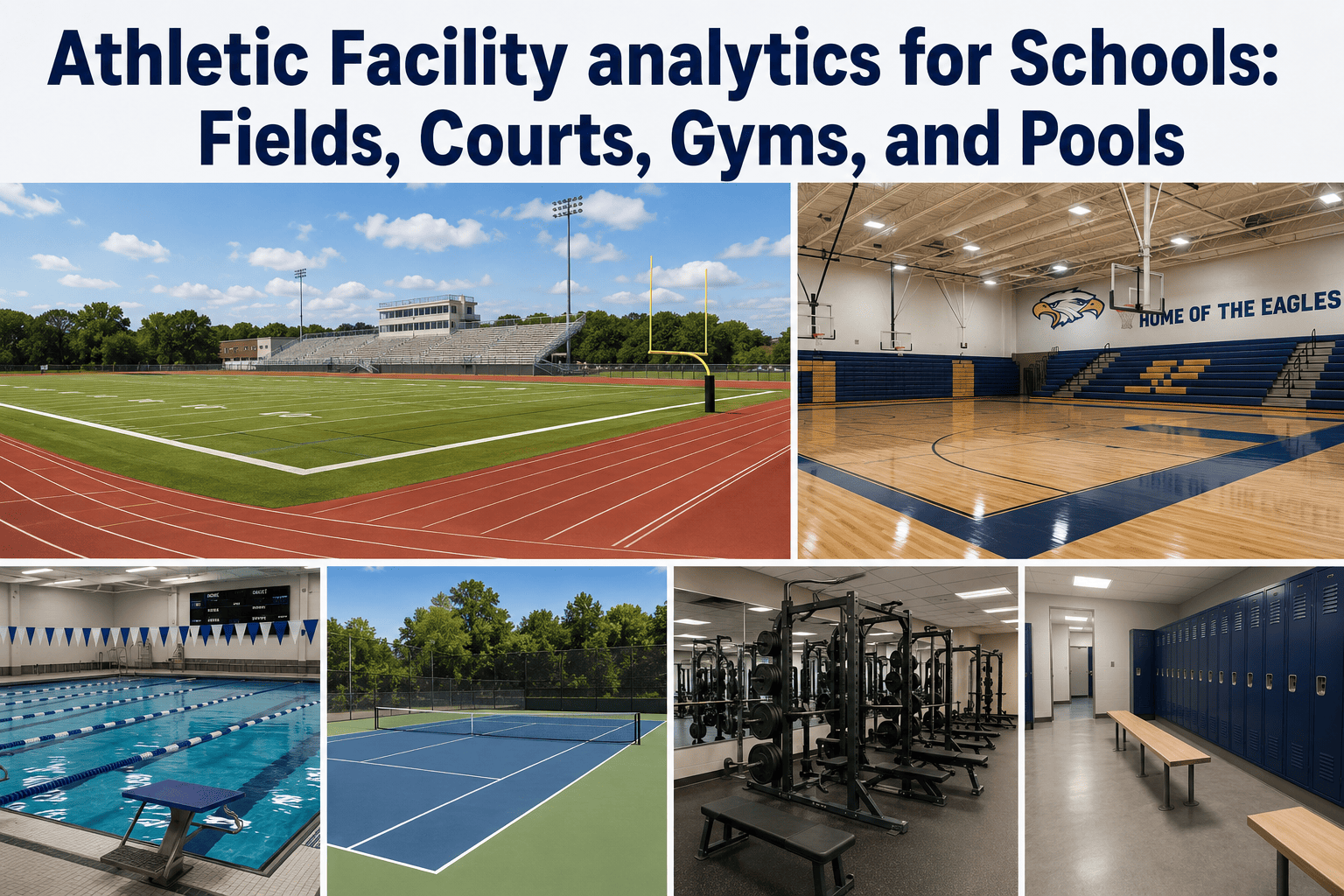
Monitor district-wide analytics. Identify best practices at one campus, replicate across all. Expand to additional facilities (athletic facilities, portable classrooms, administrative buildings).
Ongoing
Rapid Onboarding: New Campus Deployment Timeline
Week 1-2: Discovery & Planning
Building opens. Facility manager on staff.
IT team conducts facility walkthrough. Document all HVAC systems, energy equipment, sensor locations.
Plan sensor deployment and integration points.
Week 3-4: Sensor Installation & Integration
Install CO2, humidity, temperature sensors in classrooms and HVAC system.
Integrate with existing HVAC controls (no reprogramming required).
Connect to cloud platform using standard campus template.
Week 5-6: Training & Go-Live
Train facility manager on standard procedures (same training as all other campuses).
Validate data collection and system integrations.
Campus goes live. New building visible on district dashboard immediately.
Centralized District Dashboard: One View of All 20 Campuses
Overall District Energy Use
2.4M kWh YTD (vs 2.1M target)
Campus breakdown: Elementary avg 1,200 kWh/sf/yr, Middle avg 1,450, High avg 1,680
HVAC Compliance (All Campuses)
18/20 at target, 2 with alerts
Campus Middle School: CO2 levels 15% above safe threshold. Recommendation: HVAC upgrade. Cost estimate: $80K.
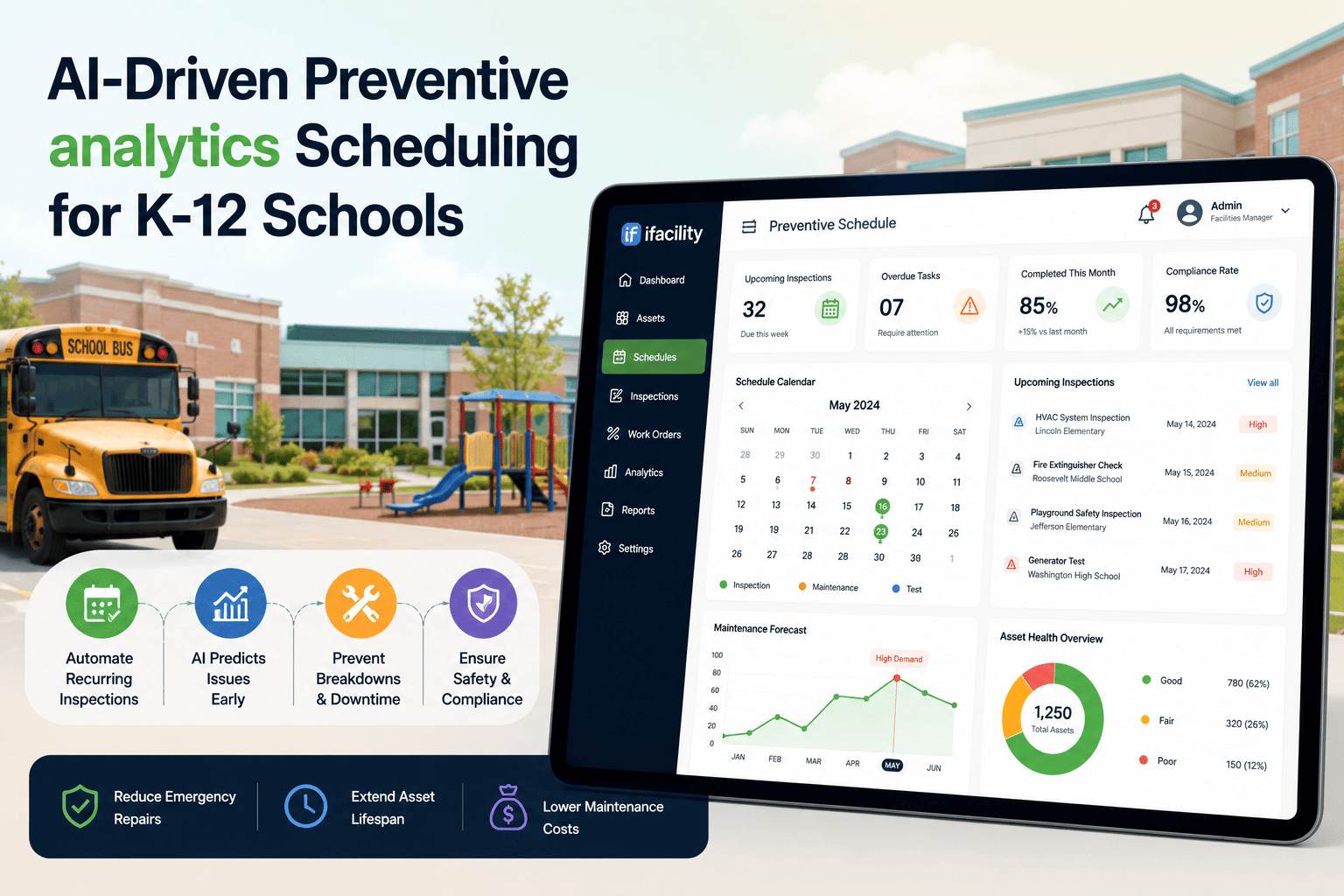
Preventive Maintenance
156 items scheduled, 12 in progress, 3 overdue
Overdue: Campus High School boiler service (overdue 4 weeks). Risk: emergency failure mid-winter.
Audit Readiness (Next Month)
18/20 campuses fully documented
2 campuses need: IAQ compliance documentation, energy baseline documentation. Estimated effort: 20 hours per campus.
My Campus Energy Today
182 kWh consumed so far (vs 165 target)
HVAC: 128 kWh. Lighting: 34 kWh. Equipment: 20 kWh.
Air Quality Status
All classrooms nominal
CO2 range: 620-760 ppm. Humidity: 35-48%. No alerts.
Today's To-Do List
2 preventive maintenance items due
1) HVAC filter replacement (per standard 3-month schedule). 2) Energy audit monthly check.
Scaling Results: 12-Campus District Growing to 20
| Metric |
Before Scaling
(12 Campuses, Fragmented) |
After Scaling
(20 Campuses, Unified) |
Improvement |
| New campus onboarding time |
12-16 weeks
(custom build) |
4-6 weeks
(template deploy) |
-70% |
| Audit preparation time |
3-5 days
(manual compilation from 12 systems) |
2-4 hours
(automated from 1 platform) |
-95% |
| Facility manager training |
40 hours
(custom system per campus) |
12 hours
(standard procedures for all) |
-70% |
| District IT support time |
60+ hours/month
(managing 12 different systems) |
15 hours/month
(supporting 1 platform × 20 campuses) |
-75% |
| District energy visibility |
No consolidated view
(manual spreadsheet) |
Real-time dashboard
(all 20 campuses) |
New capability |
| Compliance consistency |
Each campus follows own procedures |
Standardized procedures across all campuses |
100% standardized |
Frequently Asked Questions
Scale Your District Without Fragmenting Your Operations
Growing school districts need analytics infrastructure that scales with them — standardized procedures, rapid onboarding, centralized compliance, and unified team management. Cloud-based analytics enables districts to grow from 12 to 20 to 50 campuses without fragmenting operations. One platform. One set of procedures. One compliance dashboard. One team managing everything.
Cloud Scaling
Standardized Procedures
Rapid Onboarding
Centralized Compliance
Team Management
Multi-Campus Dashboard
District Growth