Energy Management for School Districts: How AI-driven Reduces Utility Costs by 25%
By james Hart on June 3, 2026
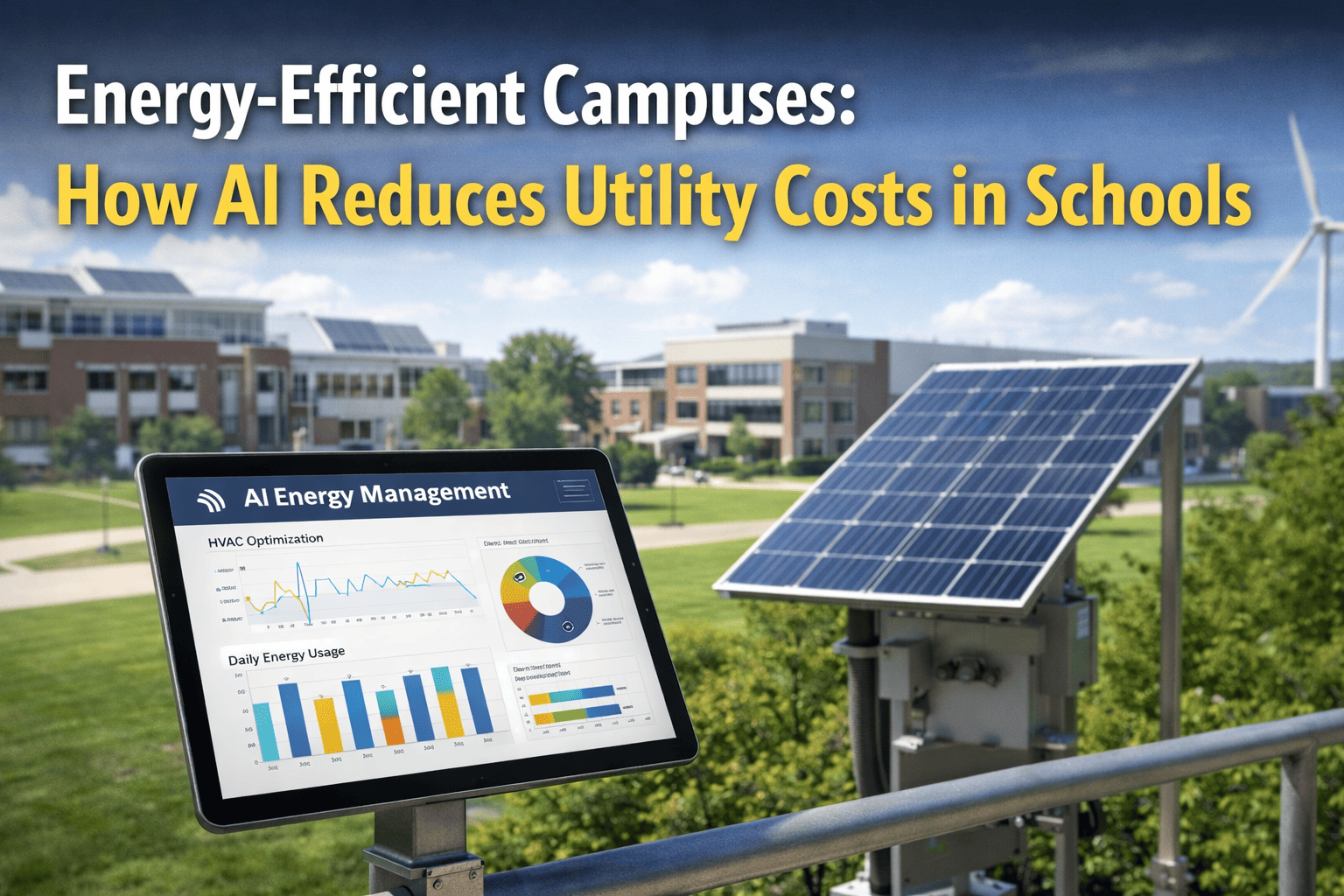
School districts waste millions annually on utilities because buildings operate on fixed schedules regardless of occupancy. Winter break: heating empty classrooms to 68F for 2 weeks. Summer: cooling vacant buildings to 72F for 10 weeks. Hallways lit 24/7 at full brightness even at 2 AM when motion-activated dimming could save 60%. A typical 500,000 square foot K-12 school building wastes $150K-$200K annually on heating, cooling, and lighting spaces that sit empty. AI-driven energy management systems cut this waste automatically by adjusting HVAC setpoints based on occupancy, scheduling lights based on natural daylight and motion, and integrating academic calendars into building conditioning logic. School districts achieve 25-35% utility cost reduction without any reduction in comfort or learning environment quality. This guide explains how AI energy management works, what the economics look like, and why leading school districts are deploying it. To see AI energy optimization in action, schedule an energy demo with our team.
SCHOOL OPERATIONS · ENERGY MANAGEMENT · SUSTAINABILITY
Energy Management for School Districts: AI-Driven Systems That Cut Utility Costs by 25%+
Automated HVAC optimization based on occupancy · Intelligent lighting with daylight harvesting · Calendar-integrated scheduling · Real-time energy analytics · Measurable savings in months.
Traditional school buildings operate on fixed schedules created years ago, never adjusted despite curriculum changes, class schedule shifts, or building usage patterns. HVAC systems condition all spaces 24/7 on the same setpoints. Lighting runs at full brightness in empty hallways at 2 AM. Building automation systems, if they exist, are rarely updated to match actual operational patterns. The result: millions wasted annually on heating, cooling, and lighting spaces that are empty.
A typical 500,000 square foot K-12 school on fixed schedules costs $1.75M-$2.25M annually in utilities. With AI-driven energy management, the same building costs $1.3M-$1.5M. The $400K-$750K annual difference is pure waste that could fund teacher salaries, technology investments, or facility improvements.
Energy Management Comparison: Manual Schedules vs AI Optimization
Manual/Fixed Energy Schedules (Current)
Winter Break (2 weeks)
HVAC heats empty building to 68F. Heating cost: $8,000. Lighting on 24/7. Light cost: $3,000. Total: $11,000.
Spring Break (1 week)
HVAC on normal schedule. Cost: $5,500. Hallway lighting never dimmed. Light cost: $2,000. Total: $7,500.
Summer (10 weeks)
HVAC cooling entire building to 72F despite 95% occupancy reduction. Cooling cost: $45,000. Lighting on all day. Cost: $15,000. Total: $60,000.
Daily School Year
HVAC maintains 72F 24/7. Lighting at full brightness. Annual waste from breaks and 24/7 operation: $400K+.
Occupancy sensors show zero motion. Lighting dims automatically. HVAC reduced. Cost: $2,600. Savings: $4,900.
Summer (10 weeks)
Calendar integration sets summer mode. Building cooled to 78F when vacant, 72F during day camp. Cooling cost: $20,000. Lighting dimmed. Total: $7,000. Savings: $38,000.
Daily School Year
HVAC adjusts 68-72F based on occupancy. Lighting adjusts to natural daylight and motion. Annual savings: $400K+ without comfort loss.
Four Energy Waste Problems AI Solves
01
HVAC Waste During Unoccupied Periods
Buildings heated or cooled to comfort setpoints 24/7 regardless of occupancy. Winter break: heating empty classrooms costs $8K for 2 weeks. Summer: cooling unoccupied buildings costs $45K for 10 weeks. AI detects occupancy and automatically backs off HVAC during breaks — maintaining infrastructure while eliminating conditioning waste.
Hallways, stairwells, and corridors lit 24/7 at full brightness even during 2 AM when no one is present. Annual hallway lighting cost: $12K per building. Motion-activated dimming reduces brightness when motion absent, turns off lights entirely at night. Annual cost drops to $4.8K. Savings: $7.2K per hallway corridor.
No Daylight Harvesting: Artificial Lights on During Peak Sunlight
Classrooms with south-facing windows lit at full brightness even during sunny afternoons when natural light is sufficient. Daylight harvesting sensors reduce artificial lighting 40% during high natural light periods. Annual savings per classroom: $2K. Multiply across 100 classrooms: $200K annual waste.
Most schools have isolated systems: HVAC controller, lighting controller, occupancy sensors. Each operates independently with no coordination. HVAC never knows spaces are empty. Lighting never coordinates with HVAC decisions. Sensors never trigger energy-saving modes. AI unifies all systems — when occupancy drops, HVAC backs off AND lighting dims automatically.
System integrationCoordinated control25-35% reduction
How AI Energy Management Works: The Optimization Engine
Adjust HVAC and lighting to actual occupancy, not schedules
Empty spaces don't get heated/cooled/lit. Saves $50K+/year.
Natural Light Levels
Daylight sensors, time of day, season, weather
Reduce artificial lighting when natural light sufficient
40% less artificial lighting during high natural light periods.
Academic Calendar
School schedules, break periods, summer sessions
Shift to reduced-operation modes during breaks and summer
Winter/spring/summer breaks: $50K savings per break period.
Weather Data
Temperature, humidity, solar radiation forecasts
Pre-condition building based on predicted weather
On hot days, pre-cool before peak heat. Reduces peak demand charges.
Energy Pricing
Time-of-use rates, demand charges, peak hours
Shift energy-intensive work to low-cost periods
Defer non-critical cooling to off-peak hours. Lower utility bills.
Three Energy Optimization Scenarios
SCENARIO 1Single Building: K-12 School 500K Sq FtBuilding-level savings
Current State: Elementary school, 500K square feet. Annual utility bill: $2.0M ($4/sq ft). HVAC: $1.0M. Lighting: $0.6M. Other: $0.4M. Building on 24/7 fixed schedule regardless of occupancy.
AI Energy Management Deployment: Install occupancy sensors in classrooms and hallways. Upgrade lighting to LED with motion/daylight control. Integrate academic calendar. Deploy cloud analytics. Cost: $75K. Payback: Under 2 months.
Current State: Mid-size district with 50 schools. Total built area: 20M sq ft. Annual utility budget: $80M ($4/sq ft). Each school operates independently with inconsistent energy management.
Phased AI Energy Deployment: Year 1: Deploy to 10 schools (pilot). Year 2: Expand to 25 schools. Year 3: Full district rollout. Total investment: $2.5M (estimated $50K per school average).
SCENARIO 3Higher Education Campus: University 10M Sq FtCampus-level sustainability
Current State: Mid-size university, 100+ buildings, 10M sq ft. Annual utility budget: $50M ($5/sq ft). Campus operates year-round with varying occupancy. Building automation fragmented across departments.
Unified AI Energy Platform: Integrate all buildings under single AI system. Add occupancy and environmental sensors to 50 priority buildings. Deploy over 18 months. Investment: $3M.
Average across all school districts deploying AI energy management systems.
12-18
Month payback period
Investment recovered through utility savings. ROI continues indefinitely after payback.
60%
Hallway lighting reduction
Motion-activated dimming cuts lighting costs in corridors, stairwells, and non-teaching spaces.
100%
Comfort maintained
AI saves energy only during unoccupied periods. Occupied spaces maintained at optimal comfort.
Frequently Asked Questions
Typical cost: $50K-$150K per building depending on size and complexity. Payback: 12-18 months from utility savings alone. After payback, all savings accrue directly to the district budget. ROI typically exceeds 600% in year 1.
No. AI energy management maintains comfort when buildings are occupied (68-72F, appropriate lighting). It only reduces conditioning when spaces are empty. Student comfort is actually improved by optimized lighting (reduced eye strain) and consistent temperature control.
Cloud-based platforms deploy in 7-14 days per building. Sensors connect via existing WiFi. No servers or complex integration required. Districts can start with 1-5 buildings, prove value, then expand to entire system.
Yes. Even older HVAC systems benefit from optimized setpoints based on occupancy. Savings are 15-25% depending on system age. Newer systems (last 10 years) achieve 25-35% savings. Smart controls work with equipment of any age.
Yes. Modern platforms integrate with existing BMS, HVAC controls, and lighting systems via APIs. If no BMS exists, standalone smart controls can be installed without replacing existing equipment. Phased integration is possible.
You can book a demo to see how AI energy management works and calculate your specific district's savings potential. Or contact support to discuss your buildings and energy challenges in detail.
Stop Wasting Millions on Empty Building Conditioning
AI-driven energy management cuts 25%+ from your district's utility budget while maintaining comfort and supporting learning. Recover $400K-$750K annually per 500K square foot building. Redirect savings toward teachers, technology, and student outcomes.