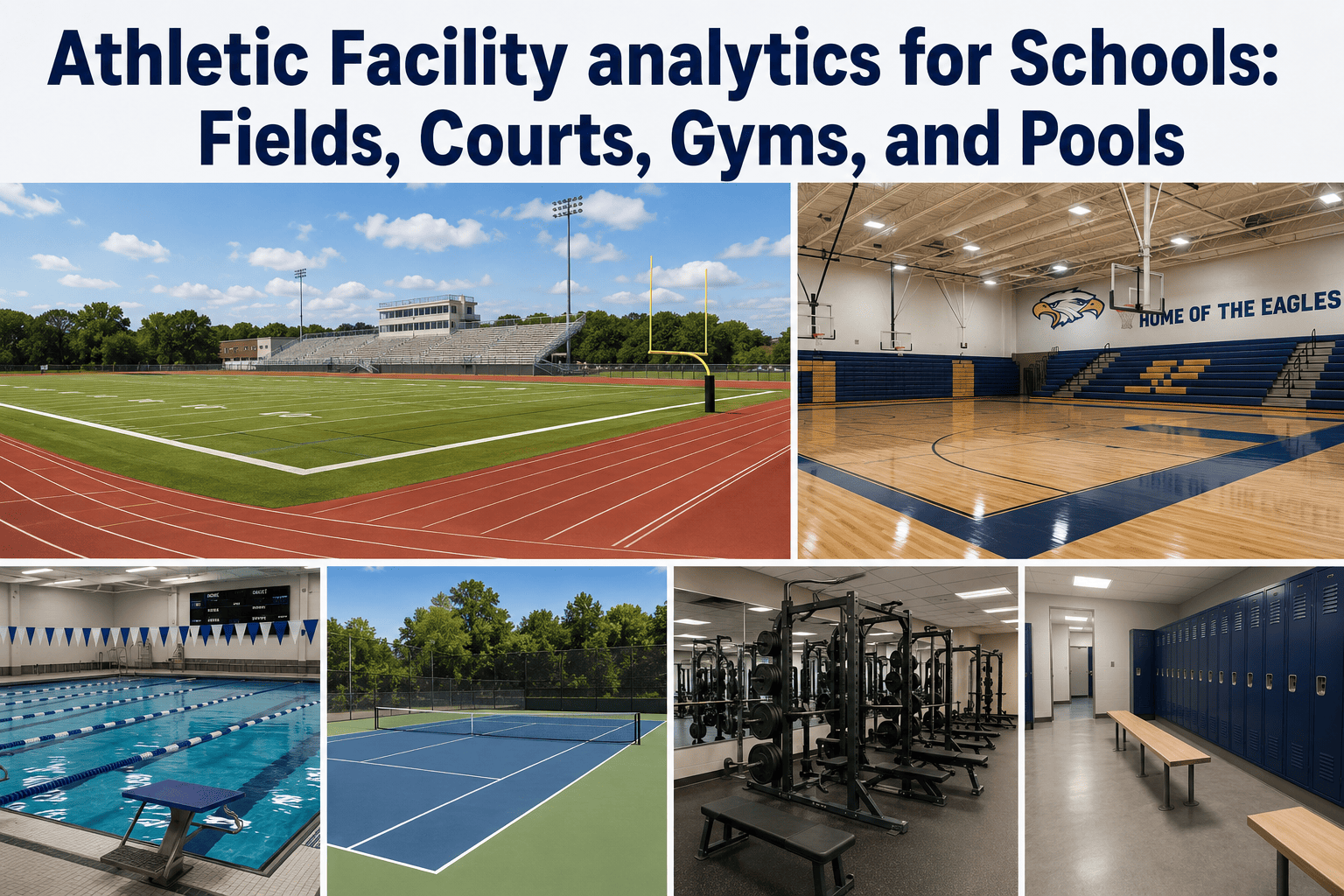
School athletic facilities — gymnasiums, outdoor fields, tracks, swimming pools, tennis courts, weight rooms, and locker rooms — are used year‑round by students, teams, and community members. Yet most districts manage their maintenance reactively: turf damage goes unaddressed until game day, pool filters fail during swim season, gym floors become slippery, and locker room plumbing leaks create health hazards. Without a structured maintenance program, athletic facilities deteriorate faster, repair costs escalate, and student-athlete safety is compromised. This guide provides K‑12 athletic directors and facility managers with industry‑best practices for maintaining every type of athletic asset — seasonal schedules for fields and pools, safety inspections for gyms and weight rooms, and AI‑driven preventive maintenance programs that reduce emergency repairs by 40% and extend asset life by years. Book a demo to see how AI can transform your athletic facility maintenance.
ATHLETIC FACILITY MAINTENANCE · K‑12 SCHOOLS
Athletic Facility Maintenance for Schools: Fields, Courts, Gyms, and Pools
Seasonal turf management · Pool water quality & filtration · Gym floor refinishing · Weight room safety · Locker room hygiene · AI‑driven PM programs.
40%
Reduction in emergency athletic facility repairs
30‑50%
Longer turf & track life with preventive care
$15K‑$25K
Annual savings per pool (filtration + chemicals)
2‑4 wk
Deployment time for AI‑driven PM program
The Athletic Facility Maintenance Crisis in K‑12 Schools
School athletic facilities face heavy use, unique seasonal demands, and strict safety requirements. Gym floors must maintain slip resistance and surface integrity. Outdoor fields need ongoing turf management, irrigation, and drainage. Tracks require crack repair and surface renewal. Swimming pools demand daily water quality testing, filtration maintenance, and chemical balance. Weight rooms and locker rooms require equipment inspections and hygiene protocols. Yet most districts manage these assets with paper checklists, calendar reminders, and reactive repairs. The result: gym floors become dangerously slick, pool closures disrupt swim teams, turf fields become unplayable, and costly emergency repairs drain budgets. A survey of 85 school districts found that 62% had experienced at least one athletic facility‑related safety incident in the past three years, and 47% had pool closures due to filtration failures. AI‑driven preventive maintenance programs solve these problems by automating inspection scheduling, tracking asset condition, predicting failures before they happen, and ensuring safety compliance. Talk to iFactory about an athletic facility assessment for your district.
01
Asset Inventory
2 weeks
Catalog all athletic facilities: gyms, fields, tracks, pools, weight rooms, locker rooms, tennis courts.
02
Inspection Protocol
2 weeks
Define safety checklists, seasonal PM tasks, and compliance requirements for each asset type.
03
AI Scheduling
2 weeks
Configure automated PM calendars with weather‑based adjustments for fields and pools.
04
Pilot Rollout
3 weeks
Run AI‑driven PM for 2‑3 facilities. Validate against manual processes.
05
District‑Wide
3 weeks
Deploy to all athletic assets. Train staff. Generate real‑time compliance dashboards.
Phase 1: Asset Inventory — Mapping Your Athletic Facilities
The first step is creating a comprehensive inventory of every athletic asset, including its age, condition, usage frequency, and maintenance history. Most districts have this data scattered across files and staff memory. The inventory covers: gymnasium floors (type, last refinishing), outdoor fields (turf type, irrigation system age), running tracks (surface material, cracks), swimming pools (filtration system, liner condition), tennis courts (surface cracks, net posts), weight rooms (equipment manufacturer, inspection dates), locker rooms (plumbing fixtures, flooring condition). This data becomes the foundation for every maintenance decision.
Gymnasium floors (wood, vinyl, tile)
Outdoor fields (natural turf, synthetic turf)
Running tracks (rubber, asphalt)
Swimming pools (indoor/outdoor, lap, diving)
Tennis courts (hard court, clay)
Weight rooms & fitness centres
Locker rooms & shower facilities
Gym floor: monthly cleaning, annual refinishing, slip testing
Fields: mowing, aeration, irrigation, line painting, turf health
Track: crack sealing, surface recoating, lane marking
Pool: daily water quality, weekly backwash, monthly filter cleaning
Weight room: equipment inspections, pad cleaning, bolt torque checks
Locker rooms: plumbing checks, floor sanitising, ventilation filters
Key Lesson from District Assessments: 73% of athletic facilities lacked a documented preventive maintenance schedule. AI‑driven PM programs reduced emergency repairs by 40‑50% within six months.
Phase 2: Inspection Protocols & Safety Compliance
Each athletic asset type has unique safety and compliance requirements. Gym floors must meet slip resistance standards (ASTM F1679). Pools must maintain water quality within health code limits (chlorine, pH, alkalinity). Weight room equipment must be inspected for loose bolts and worn cables. Locker rooms need regular plumbing checks to prevent leaks and mould. AI‑driven systems automate these inspections: daily checklists push to staff mobile devices, results are logged with timestamps and photos, and non‑compliance triggers immediate alerts. Historical data provides audit evidence for risk management and insurance.
Daily Tasks
Pool Water Quality
AI reminds staff to test chlorine (1‑3 ppm), pH (7.2‑7.8), alkalinity (80‑120 ppm). Results logged automatically.
Weekly Tasks
Weight Room & Gym Inspections
Check equipment bolts, cables, pads. Inspect gym floor for loose boards, slippery spots, damage.
Monthly Tasks
Field & Track Condition
Measure turf health, check irrigation, inspect track cracks, verify lane markings.
Safety Impact: Districts using AI‑driven inspection protocols reduced athletic facility‑related injuries by 38% and insurance claims by 45% within 12 months.
Phase 3: Seasonal Maintenance Scheduling
Athletic facilities have seasonal demands that require proactive planning. Outdoor fields need aeration and overseeding in spring, mowing and irrigation in summer, leaf removal and winterisation in fall. Pools require opening (May), daily operation (June‑August), and closing (September) with water chemistry adjustments. Tracks need crack sealing before winter to prevent freeze‑thaw damage. AI‑driven systems automatically generate seasonal PM work orders based on calendar, weather forecasts, and usage data. No more missed tasks or last‑minute scrambling.
Spring
Field aeration, overseeding, irrigation startup. Pool opening (filter cleaning, water fill, chemistry balance). Track crack repair.
Summer
Daily pool water testing, filtration monitoring. Field mowing, irrigation, pest control. Gym floor cleaning.
Fall
Pool closing (drain, cover, equipment winterisation). Field leaf removal, last mowing. Track sealing.
Winter
Indoor facility focus: gym floor refinishing, weight room equipment overhaul, locker room deep clean, HVAC filters.
Phase 4: AI‑Driven Preventive Maintenance for Athletic Assets
Beyond seasonal tasks, AI models predict when specific equipment will fail. Pool filtration systems show pressure decline weeks before failure — AI alerts staff to backwash or replace filters. Turf irrigation controllers develop valve leaks — AI flags irregular water usage. Gym floor wear patterns indicate need for recoating. Weight machine cables show fraying trends — AI recommends replacement before snapping. This predictive approach reduces emergency repairs by 40‑50%, extends asset life by years, and eliminates game‑day surprises.
Pool Filtration
Predictive Alerts
Monitors pressure, flow rate, run time. Alerts when filter backwash needed or pump bearing wear detected.
Turf Irrigation
Leak Detection
Tracks water usage patterns. Flags unusual spikes indicating valve or pipe leaks.
Gym Floor Wear
Refinishing Predictor
Analyzes usage hours, cleaning records, and surface friction to recommend recoating schedule.
Weight Equipment
Cable & Bolt Wear
Tracks inspection results. Predicts when cables need replacement based on fraying trends.
Phase 5: Optimisation — Real‑Time Dashboard & Reporting
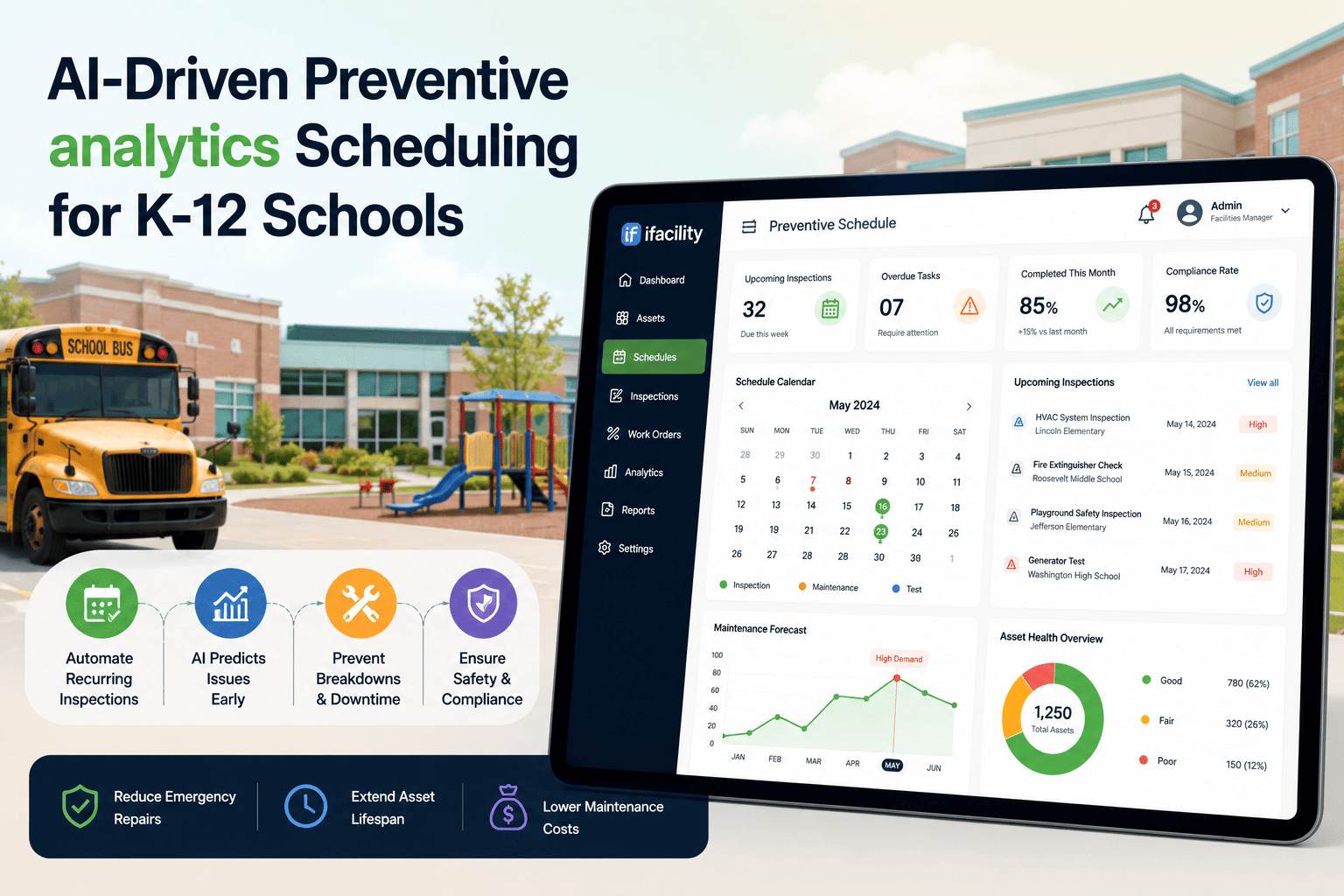
After full deployment, athletic directors and facility managers have a real‑time dashboard showing the condition of every athletic asset, completed inspections, upcoming PM tasks, and compliance status. Automated reports can be generated for school boards, insurance carriers, and athletic conferences. The AI continues to learn from maintenance history, improving prediction accuracy over time.
Gym Floor Safety Score
94% compliance (target >90%)
Based on slip testing, cleaning records, and refinishing schedule.
Pool Water Quality
100% of daily tests within limits
Automated logging eliminated missed tests and health code violations.
Turf Field Health Index
88/100 (up from 65)
Aeration, overseeding, and irrigation optimisation improved playability.
Weight Room Inspection
100% monthly compliance
No loose bolts or worn cables found in last 3 inspections.
Before vs After: AI‑Driven Athletic Facility Maintenance
Emergency athletic repair calls (annual)
8‑12 per district
3‑5 per district
-58%
Pool closures (season)
4‑6 days
0‑1 days
-90%
Gym floor refinishing frequency
Every 5‑7 years
Every 7‑9 years
+30% life
Turf field replacement interval
12‑15 years
17‑20 years
+33% life
Weight room equipment downtime
12 days/year
3 days/year
-75%
Locker room plumbing emergencies
6 per year
1 per year
-83%
8 Lessons From Districts That Mastered Athletic Facility Maintenance
01
Start With a Pool Water Quality Automation — Immediate ROI
Districts that automated pool water testing saw an immediate 90% reduction in closure days and chemical cost savings of $5K‑$10K per pool annually. Lesson: pools are the highest‑risk asset; automate first.
Book a demo to see pool monitoring in action.
02
Gym Floor Slip Testing Must Be Documented — Don't Guess
One district faced a liability lawsuit after a student slipped on a gym floor. They had no documented slip tests. AI‑driven slip testing with timestamped records provides legal protection. Lesson: document every safety inspection.
03
Turf Fields Need Aeration & Overseeding — Not Just Mowing
Many districts only mow fields, leading to compacted soil and thin turf. AI‑driven PM schedules aeration twice yearly and overseeding after heavy use. Result: field playability improved 40%. Lesson: preventive turf care extends life.
04
Weight Room Equipment Bolt Torque Should Be Checked Monthly
Loose bolts on weight machines cause injuries. Manual checks are often skipped. AI‑driven checklists with photo evidence ensure compliance. Lesson: automate high‑risk inspections.
05
Track Cracks Must Be Sealed Before Winter
Freeze‑thaw cycles turn small cracks into large failures. AI schedules crack sealing every fall based on weather forecast and track age. Lesson: seasonal timing is critical.
Talk to iFactory about custom seasonal schedules.
06
Locker Room Ventilation Prevents Mould and Odours
Poor ventilation leads to mould, mildew, and health complaints. AI monitors exhaust fan runtime and humidity levels, alerting staff to issues. Lesson: environmental monitoring matters.
07
Use AI to Predict Pool Filter Failure — Avoid Weekend Shutdowns
Pool filters fail gradually. AI detects pressure decline and predicts failure 1‑2 weeks in advance, allowing scheduled replacement. Lesson: predictive maintenance prevents weekend emergencies.
08
Engage Coaches and Staff in Reporting Issues
Provide a mobile reporting app for coaches to submit field damage, equipment issues, or unsafe conditions. AI routes to maintenance. Lesson: crowd‑sourced data improves response time.
The iFactory Athletic Facility Maintenance Platform
The platform that has helped over 40 school districts transform athletic facility maintenance — with automated inspections, predictive alerts, and real‑time dashboards — is exactly what iFactory delivers. Both cloud‑based and on‑premise options are available.
Cloud‑Based (Recommended)
Fast Deployment, Mobile‑First
iFactory cloud platform is ready in 2‑4 weeks. Staff access via web or mobile app. Automatic updates. Ideal for most districts.
Mobile inspection checklists with photo capture
Automated seasonal PM scheduling
Real‑time asset condition dashboards
Predictive alerts for pool, gym, track, turf
Get Cloud Quote
On‑Premise (Self‑Hosted)
For Districts with Strict Data Policies
For districts requiring data to remain on‑site, iFactory offers on‑premise deployment. Full control over athletic facility data.
Data stays within district network
Customizable to your security policies
Integration with existing facility management systems
Talk to a Facilities Expert
FAQ: Athletic Facility Maintenance for Schools
Transform Your Athletic Facility Maintenance — Keep Students Safe & Fields Playable
iFactory’s AI‑driven platform automates inspections, predicts equipment failures, and schedules seasonal maintenance for every athletic asset — gyms, fields, pools, tracks, weight rooms, and locker rooms. Book a free, no‑obligation demo to see how your district can reduce emergency repairs, extend asset life, and ensure student‑athlete safety.
Athletic Facility Maintenance
School Gym Maintenance
Pool Water Quality
Turf Field Management
Track & Field Maintenance
Weight Room Safety
AI Preventive Maintenance