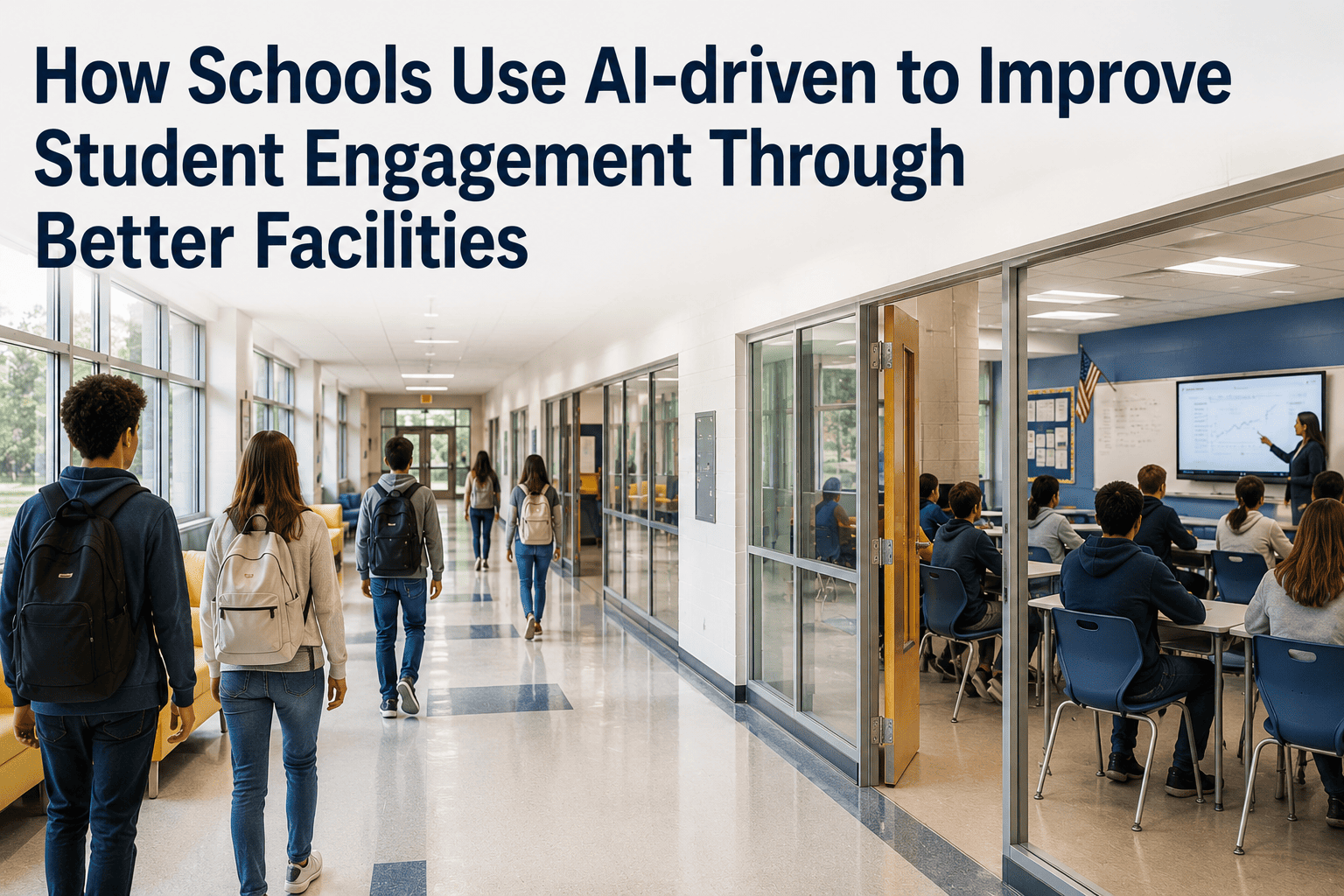
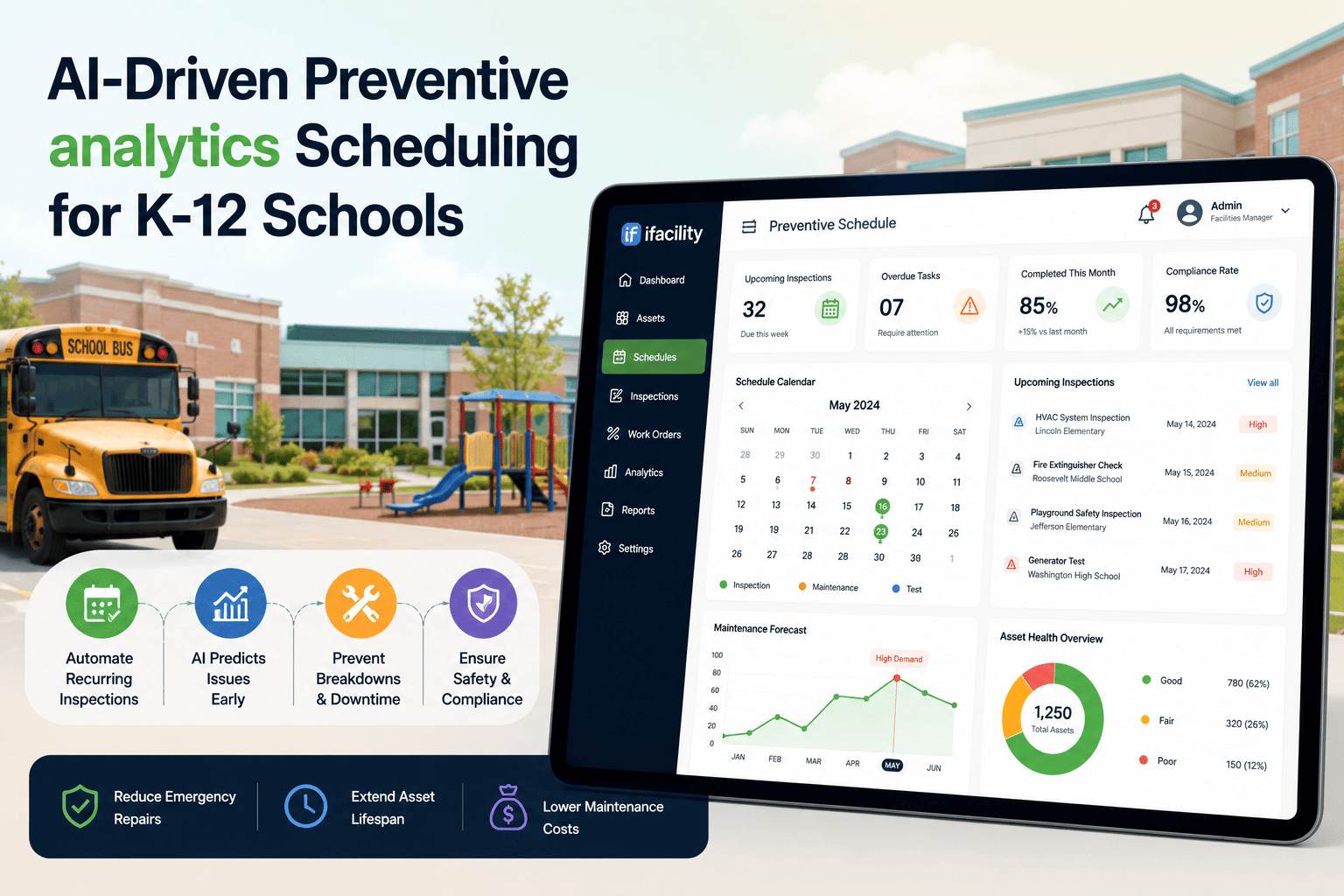
Campus facility teams spend 40-50% of their time managing facility quality — coordinating HVAC maintenance, technology repairs, restroom cleanliness, building inspections, preventive work — without realizing they're directly impacting student engagement and retention. A cold classroom tanks engagement for the day. Broken technology frustrates students. Dirty restrooms signal neglect. Yet most schools manage facilities reactively, responding to problems after they've already harmed student experience. This guide covers how facility quality directly drives student engagement, what AI-driven facility management delivers, and why leading schools are automating facility operations to maximize student satisfaction and retention. To see how facility quality improves engagement outcomes, schedule a demo with our team.
Student Engagement · Facility Quality · Campus Operations
How AI-Driven Facilities Improve Student Engagement and Retention
Comfort drives engagement · Reliability builds trust · Cleanliness signals respect · AI-optimized maintenance ensures consistency · Engagement follows naturally.
15-20%
Engagement increase with quality facilities
12-15%
Attendance improvement from comfort
4.2/10
Typical facility satisfaction today
8.1/10
Achievable with AI-driven management
Why Facility Quality Matters: The Engagement Connection
A principal reviews student engagement surveys. The correlation is stark: students in well-maintained classrooms (comfortable temperature, working technology, clean spaces) show 15-20% higher engagement. Students in poorly-maintained classrooms (cold/hot, broken equipment, dirty) show disengagement, absenteeism, and lower retention. Facility quality is not peripheral to student success — it's foundational. A school with failing facilities sends a message: "We don't care about your experience." A school with reliable, comfortable, clean facilities sends the opposite: "Your success matters to us." AI-driven facility management keeps buildings operating at peak performance, continuously, ensuring students never experience neglect.
Manual vs AI-Driven Facility Management
1. Reactive Response (Students complain)
Classroom is too cold. Students complain. Facilities staff called. HVAC technician responds days later.
2. Guesswork Priority (Ad-hoc decisions)
Multiple HVAC issues across campus. Which one is urgent? Facilities director guesses based on visibility, not actual risk.
3. Equipment Failure (Prevention deferred)
High-risk maintenance work deferred for months. Equipment fails unexpectedly. Emergency repair costs spike.
4. Student Impact (Engagement suffers)
Facilities failing during school day. Students uncomfortable, frustrated, disengaged. Attendance and retention decline.
Total: Broken facilities, poor student experience, reactive crisis management
1. Predictive Monitoring (Before problems occur)
Sensors track temperature, humidity, equipment health in real-time. AI predicts failures 2-4 weeks in advance.
2. Risk-Based Prioritization (Automated, data-driven)
AI analyzes all facility issues, scores by failure risk and impact to student experience. High-risk work scheduled first.
3. Prevention Maintenance (Scheduled proactively)
High-risk work scheduled during breaks or low-occupancy times. Equipment maintained before failure. Emergency repairs rare.
4. Student Impact (Engagement protected)
Facilities reliable and comfortable continuously. Students experience consistency, comfort, cleanliness. Engagement rises.
Total: Reliable facilities, consistent student experience, prevention-based management
Four Facility Problems That Tank Student Engagement
01
Temperature Extremes — Cognitive Performance Collapses
A classroom is 64°F in winter. Students wear jackets. Their minds are on discomfort, not learning. Research shows: cognitive performance drops 15-25% in uncomfortable temperatures. Engagement collapses. AI scheduling maintains optimal temperature (68-72°F) continuously through predictive HVAC management. Students focus on learning, not complaints.
Comfort drives engagement15-25% cognitive gain
02
Technology Failures — Lesson Disruption and Frustration
A projector fails during class. Wi-Fi drops during a research activity. A computer won't start for a digital project. Students experience frustration and boredom. Teachers revert to worksheets. Higher-order thinking disappears. AI-driven predictive maintenance monitors all technology and schedules repairs before failures occur. Technology reliability jumps from 82% to 97%. Lessons flow without interruption. Student engagement in tech-enabled lessons rises 28%.
Reliability enables deep learning28% engagement gain
03
Restroom Degradation — Dignity and Belonging Eroded
Restrooms are broken and dirty. Students avoid them, holding their bladder all day. By afternoon, discomfort and distraction cascade across classes. Broken toilets signal "we don't care," eroding student sense of belonging. AI monitors restroom functionality and cleanliness continuously. When sensors detect issues, automated work orders trigger immediate repair. Restrooms stay clean and functional. Students feel respected. Engagement and belonging strengthen.
Cleanliness signals respectBelonging matters
04
Lighting and Ambiance — Mood and Alertness Collapse
A classroom has burned-out bulbs. Dingy lighting causes fatigue and reduces alertness. Students struggle to focus. The dimness feels unwelcoming, signaling neglect. AI-driven lighting management maintains optimal brightness throughout the day, scheduled to boost alertness during critical learning periods. Burned-out bulbs are flagged and replaced before students notice. Bright, welcoming classrooms energize learning. Student alertness and engagement rise measurably.
Lighting affects alertnessAmbiance sets tone
How AI-Driven Facility Management Works: The Optimization Engine
Equipment Health Score
Real-time sensors (HVAC, technology, building systems)
Predict failures 2-4 weeks in advance. Schedule maintenance before breakdown.
Facilities reliable and comfortable. Students experience consistency, not disruption.
Occupancy Patterns
Class schedules, campus occupancy data
Schedule maintenance during low-occupancy windows. Preserve student experience during learning time.
No facility disruptions during class. Students never experience broken facilities during peak learning.
Comfort Metrics
Temperature, humidity, CO2, light sensors
Continuously adjust HVAC and lighting to maintain optimal comfort zone
Comfortable learning environment drives 15-20% engagement improvement
Cleanliness Monitoring
IoT sensors in restrooms, high-traffic areas
Alert custodial staff immediately when cleaning is needed
Clean, well-maintained spaces signal respect. Student sense of belonging strengthens.
Emergency Events
Real-time failure alerts, urgent repairs
Re-prioritize schedule, minimize disruption to classes
Even during emergencies, student experience is protected through smart prioritization
Three Campus Scenarios: Facility Quality Transforms Student Experience
High school science wing has temperature control failures for months. Classrooms drift from 64°F to 78°F randomly. Students complain constantly. Engagement in science classes: 5.2/10. AI-driven HVAC management deployed: system continuously monitors temperature in all science classrooms, automatically adjusts heating/cooling to maintain 70°F ±2°. Within two weeks, temperature stabilization complete. Students stop complaining about discomfort. Focus shifts to learning. Teacher survey: "Students actually pay attention now." Engagement in science classes rises to 7.4/10 (+42%).
Temperature consistency±2°F (vs ±14°F before)
Engagement improvement5.2 → 7.4 (+42%)
Student satisfaction3.1/10 → 7.8/10 with facility comfort
Time to deployment3-4 weeks (minimal disruption)
Schedule Facility Demo
Middle school depends heavily on technology for instruction: 1:1 device program, projector-based lessons, interactive tools. But technology uptime is only 82%. Projectors fail 2-3x per week. Wi-Fi drops during peak usage. Students experience frustration and boredom. Tech-enabled lessons become worksheet fallback. Engagement with digital learning: 4.1/10. AI-driven predictive maintenance deployed: all technology monitored for health signals. System predicts projector bulb failure 2 weeks in advance — bulb replaced before failure. Wi-Fi access points monitored for performance degradation — issues fixed before students notice. Technology uptime rises to 97%. Projector failures drop to near-zero. Wi-Fi stays reliable. Teachers confidently use technology. Engagement with digital learning rises to 6.8/10 (+66%).
Technology uptime82% → 97%
Emergency tech repairs2-3/week → 0-1/month
Engagement with tech lessons4.1 → 6.8 (+66%)
Teacher confidence"Technology just works" mindset
Schedule Facility Demo
High school has reputation for neglected facilities. Restrooms are broken and dirty. Lockers are dented. Hallways are dingy. Students don't feel respected. School pride is low. Student retention (year-over-year): 84%. Many students transfer to "better" schools. AI-driven facility management deployed: sensors monitor restroom functionality and cleanliness continuously. Automated work orders alert custodial staff immediately when cleaning is needed. Broken fixtures are repaired within hours, not weeks. Lighting upgrade brightens hallways and common areas. Building transforms from neglected to cared-for. Student perception shifts: "The school cares about us." School pride rises. Students choose to stay. Retention rises to 93% (+9 points). Students recruit friends. Application rates increase.
Restroom qualityBroken/dirty → Clean/functional
Facility repair timeDays → Hours
Student retention84% → 93% (+9 pts)
School pride perception"School doesn't care" → "School cares about us"
Schedule Facility Demo
What AI-Driven Facility Management Delivers to Schools
15-20%
Student engagement improvement
Comfort, reliability, and cleanliness drive measurable engagement gains
12-15%
Attendance improvement
Students want to be in school when facilities are comfortable and welcoming
60-75%
Emergency facility repair reduction
Prevention scheduling prevents failures from disrupting student experience
45%
Facilities management time freed
Directors focus on strategy instead of daily reactive facility crises
Frequently Asked Questions
Deploy AI-Driven Facilities for Student Engagement
Facility quality drives student engagement. AI-optimized maintenance ensures comfort, reliability, and cleanliness continuously. Watch engagement, attendance, and retention rise as students experience schools that invest in their experience.
Student Engagement
Facility Quality
Comfort Control
Technology Reliability
Predictive Maintenance