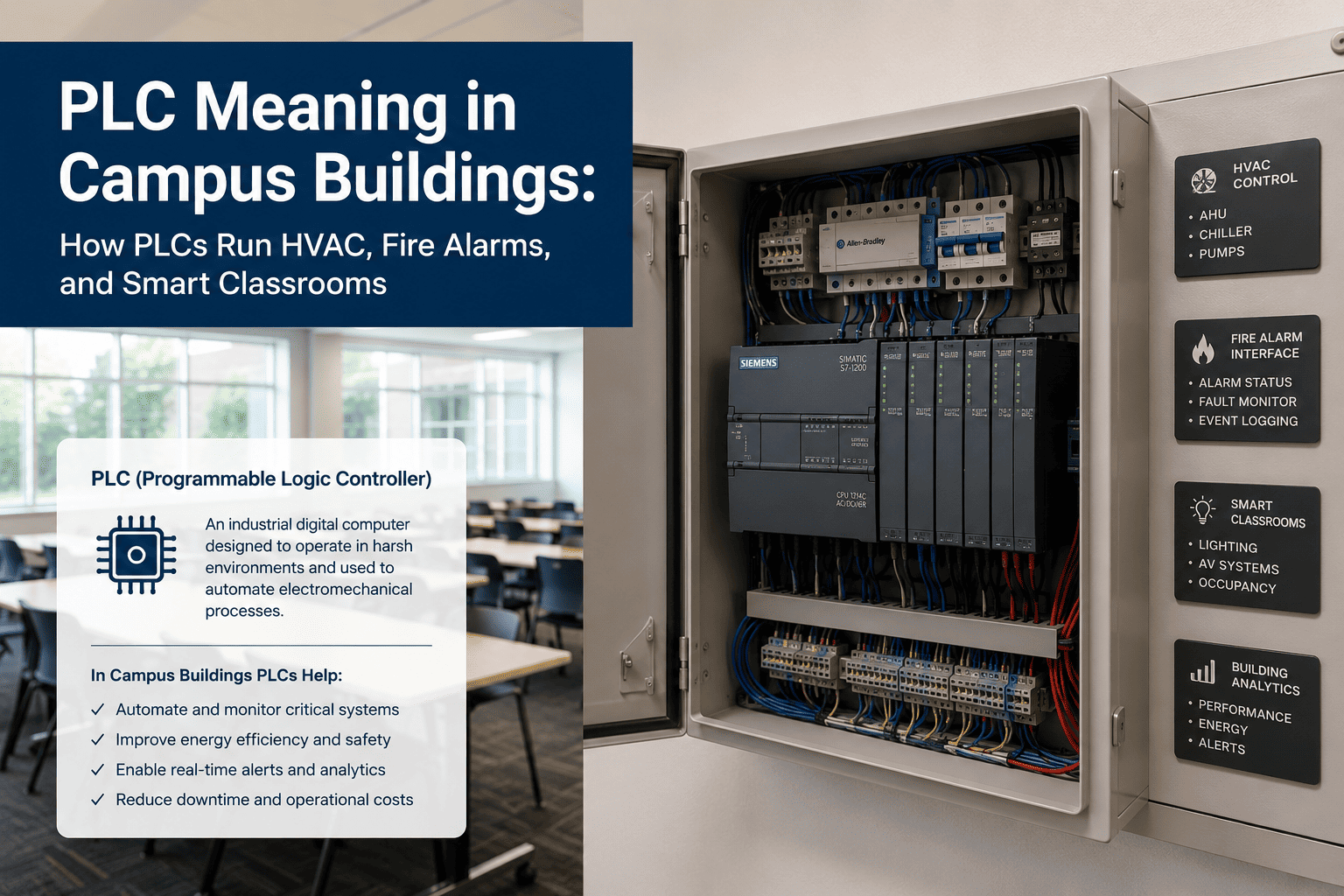
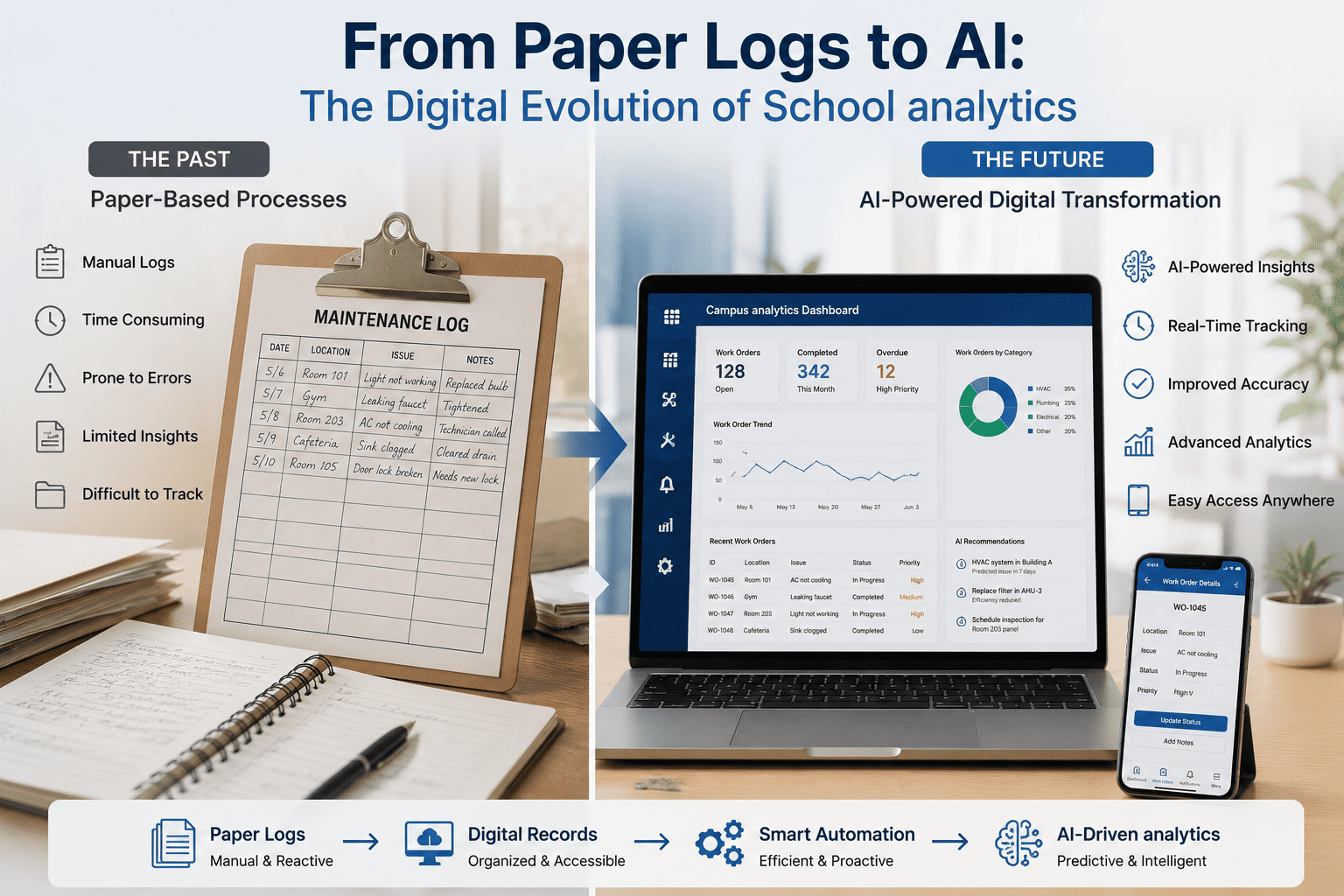
Modern classrooms are becoming intelligent spaces where AI manages climate, lighting, occupancy, and digital resources in real-time. Smart classroom technology combines environmental sensors, IoT devices, digital whiteboards, occupancy analytics, and AI-driven infrastructure maintenance into unified learning environments. Schools deploying smart classroom systems report 25-40% energy savings, 30-50% improvement in student engagement through optimized learning conditions, and dramatically reduced facility management overhead. The challenge: maintaining complex technology infrastructure across dozens of classrooms while keeping systems running 24/7. iFactory's AI-powered platform monitors classroom systems — from HVAC sensors to whiteboard connectivity — generating predictive maintenance alerts, occupancy-based resource optimization, and audit-ready documentation. Book a demo to see smart classroom management in action.
Smart Classrooms · Education Technology · 2026
AI-Powered Smart Classrooms: How Technology Transforms Learning Environments
Climate control automation · Smart lighting systems · Digital whiteboard analytics · Occupancy sensing · Infrastructure AI-driven maintenance · Real-time learning environment optimization.
25-40%
Energy savings through automation
30-50%
Student engagement improvement
60%+
Reduced IT support tickets
1-2 Wk
Deployment with AI monitoring
Why Schools Are Adopting AI-Powered Smart Classrooms
Traditional classrooms rely on manual controls — thermostats adjusted by hand, lights left on all day, whiteboards disconnected from lesson plans, occupancy unknown to facilities teams. Smart classrooms automate these systems, but managing dozens of sensors, controllers, and digital tools across a school creates complexity. Teachers need reliable technology. Facilities teams need visibility. Administrators need cost control. AI bridges this gap by learning classroom patterns, predicting failures, and optimizing resource use in real-time.
Smart Classroom Ecosystem — Connected Learning Space
Climate
HVAC Systems
Temperature · humidity · air quality sensors
Predictive alerts
Lighting
Smart Lights
Occupancy · natural light · color temperature
Auto optimization
Display
Digital Boards
Whiteboards · projectors · interactive panels
Usage analytics
Occupancy
Sensors
Room capacity · attendance · activity zones
Real-time data
Network
IoT & WiFi
Connectivity · device management · bandwidth
Health monitoring
Three Critical Challenges Smart Classrooms Solve
01
Energy Waste From Manual Climate & Lighting Control
Teachers manually adjust thermostats. Lights stay on during lunch and after school. HVAC runs at full capacity regardless of occupancy. Schools waste 30-50% of conditioning and lighting budget on unoccupied or over-conditioned spaces. AI-powered smart classrooms learn occupancy patterns, adjust temperature and humidity based on real-time capacity, and dim or off lights when rooms are empty. Result: 25-40% energy savings with improved comfort during class.
HVAC optimizationSmart lightingOccupancy-based control
02
Technology Infrastructure Failures Mid-Lesson
WiFi drops. Projectors overheat. Interactive whiteboards lose connection. Teachers have no warning — disruption happens during instruction. IT support arrives hours later. iFactory's AI monitors network health, temperature sensors on projectors and controllers, whiteboard connectivity, and device power status. 48-hour advance failure prediction allows maintenance during off-hours. Teachers never experience downtime.
Book a demo to see classroom infrastructure monitoring.WiFi monitoringDevice healthPredictive alerts
03
Learning Environment Optimization Hidden in Sensor Data
Schools have temperature, humidity, occupancy, and light sensors but no way to analyze if conditions correlate with student performance. Are classes too warm? Too bright? Overcrowded? AI transforms sensor data into actionable insights — showing which classrooms have optimal learning conditions and which need adjustment. Teachers and administrators see real-time dashboards identifying rooms that boost engagement vs. rooms losing attention due to environmental factors.
Comfort analyticsOccupancy insightsEngagement patterns
Smart Classroom Technology Components
Climate Control
Occupancy sensors · thermostats · air quality monitors
Optimal temp · humidity forecasts
Comfortable learning conditions improve focus 20-30%
Smart Lighting
Ambient light sensors · motion detection · color temp adjustment
Usage by hour · energy consumption
Optimal lighting reduces eye strain and improves attention
Digital Whiteboards
Interactive panels · projection systems · content tracking
Lesson engagement · tool usage patterns
Analytics show which presentation styles engage students most
Occupancy Sensing
Capacity monitors · zone sensors · attendance tracking
Real-time occupancy · peak usage times
Informs space allocation, overcrowding detection, usage planning
Network Infrastructure
WiFi access points · bandwidth monitors · device management
Connectivity health · performance dashboards
Stable connectivity enables cloud-based learning tools reliably
Smart Classroom Use Cases
AI learns each classroom's thermal characteristics, occupancy patterns, and comfort preferences. On cool mornings when room is empty, HVAC pre-conditions for arrival time. During class, temperature holds steady based on occupancy and outside conditions. Compressor vibration, refrigerant pressure, and fan motor health monitored continuously — 48-hour advance prediction prevents HVAC failures that would force classroom closure.
Savings25-35% energy reduction
Prediction48hr+ failure warning
Book Demo
Ambient light sensors detect natural daylight entering classroom. Smart lights automatically dim or off to supplement — reducing energy use by 40-50% compared to always-on manual lighting. Occupancy sensors ensure lights turn off when room empties. Color temperature adjusts based on time of day and light type — warm light for morning, neutral for peak focus hours, cooler light removed to support evening attention. Teachers control overrides via mobile app or physical switches.
Energy40-50% lighting reduction
ControlManual override always available
Book Demo
WiFi access points, projection systems, interactive whiteboards, and digital displays are monitored for connectivity, power status, temperature, and device health. AI learns normal operating patterns — identifying degradation before failures cascade. Teachers receive zero disruption. IT staff gets daily dashboards showing which devices need attention and which proactively require replacement before failure. Auto-generated work orders with required parts and troubleshooting steps.
Uptime99.5%+ classroom tech availability
OutputAuto work orders + spare parts
Book Demo
What AI-Powered Smart Classroom Management Delivers
25-40%
Energy savings through automation
HVAC + lighting optimization · occupancy-based control
30-50%
Student engagement improvement
Optimized comfort conditions · stable technology
60%+
Reduction in IT support tickets
Predictive maintenance · fewer failures
48hr+
Advance failure prediction
Maintenance scheduled off-hours · zero teacher disruption
FAQ: AI-Powered Smart Classrooms
Transform Your Classrooms Into Intelligent Learning Spaces
AI-powered smart classroom management optimizing climate, lighting, network infrastructure, and occupancy — with 25-40% energy savings, 30-50% student engagement improvement, predictive maintenance preventing technology failures, and 48-hour advance alerts protecting teacher productivity.
HVAC Automation
Smart Lighting
Occupancy Analytics
Network Monitoring
Predictive Maintenance