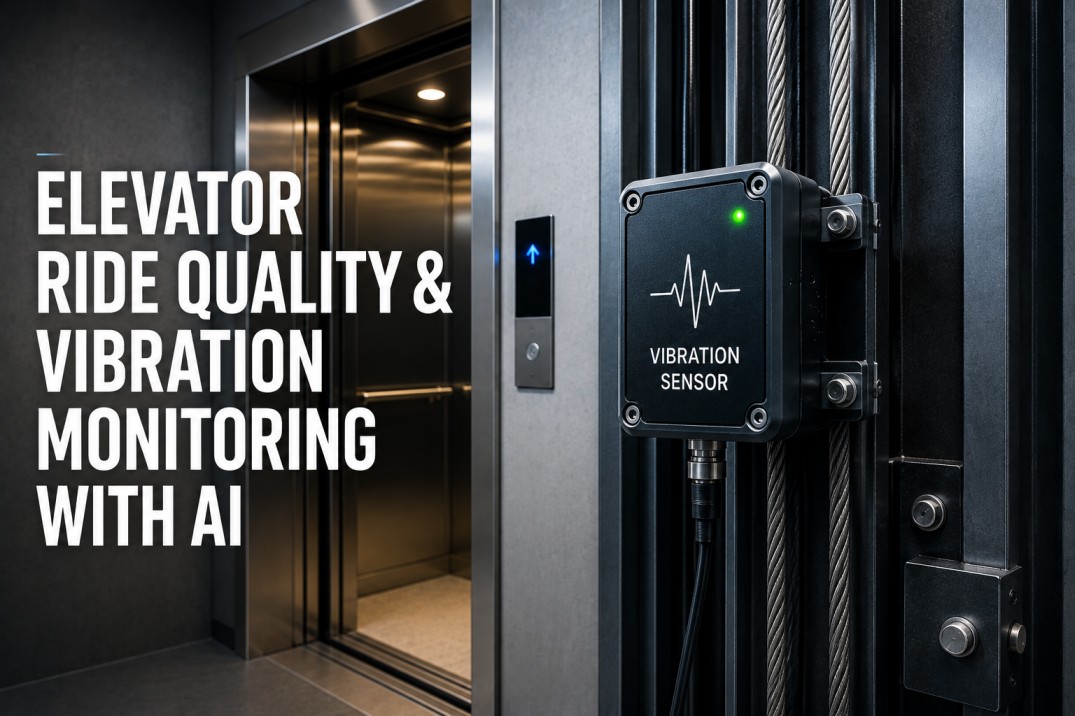
At 7:43 AM on a Tuesday, the elevator in Building 4 of a 36-floor commercial tower makes its 47th run of the day. The cabin accelerometer reads 0.18 g on the lateral axis — well within the 0.25 g threshold. But the AI model flags it. Not because it's out of spec, but because the vibration signature has shifted 12% from yesterday's baseline at the exact same car load and speed. The maintenance team doesn't know yet. The tenants don't feel it. But the bearing in the guide shoe is 340 hours from a failure that will take the car offline for 72 hours and cost $18,000 in emergency repair and lost revenue. By the time the threshold alarm sounds, that bearing will already be smoking. This is the gap between reactive threshold monitoring and predictive vibration intelligence — and it's a gap that costs the vertical transportation industry $2.3 billion annually in unplanned downtime.
Predict elevator ride-quality degradation 340 hours before failure — without cloud dependency
iFactory ingests raw accelerometer, tachometer, and door-optic data from your existing elevator controllers and delivers failure predictions, ride-quality scores, and maintenance prioritization — all on-premise, all within 12 weeks.
iFactory is an AI-native manufacturing intelligence platform purpose-built for on-premise deployment. Unlike cloud-dependent solutions that require sending vibration data off your plant network, iFactory runs entirely on a NVIDIA appliance inside your facility. The platform connects directly to your elevator controllers, accelerometer arrays, tachometers, and door-optic sensors — ingesting raw signal data at 1 kHz sampling rates. Within weeks, iFactory builds a digital baseline of every elevator in your portfolio: normal vibration envelopes per car load, per floor, per direction, per time of day. Any deviation from that learned baseline — a 5% shift in the 2–10 Hz band that correlates with roller guide wear, a 0.03 g increase in lateral vibration at mid-floor that signals rail misalignment — triggers a prediction, not an alarm. You get a maintenance recommendation with a probability score and a remaining useful life estimate. No data egress, no cloud subscription, no security review.
One platform. Every vibration signal. From sensor to work order.
iFactory covers the full spectrum of elevator ride-quality monitoring and predictive maintenance. These six capability groups represent the breadth of the platform — from raw signal acquisition to maintenance workflow integration.
Multi-sensor ingestion
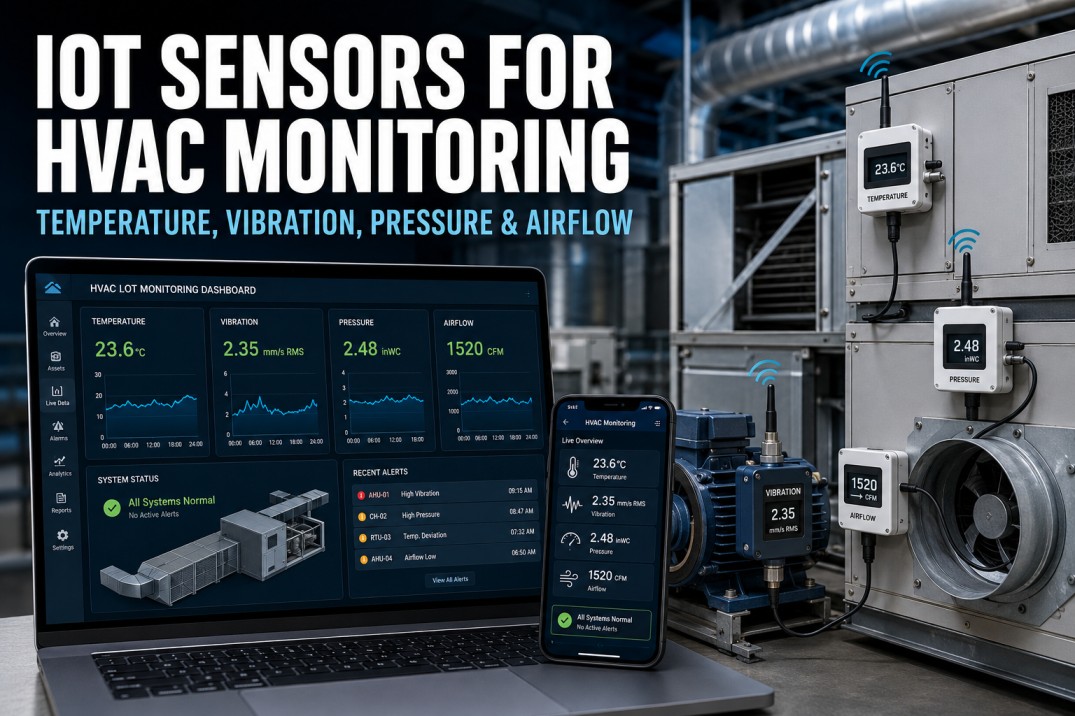
Ingests 3-axis accelerometer data at 1 kHz, tachometer pulses for car position and speed, door-optic sensors for cycle counting, and motor current from VFDs — all through standard OPC-UA, Modbus TCP, or direct analog inputs. No proprietary sensors required.
Vibration signature decomposition
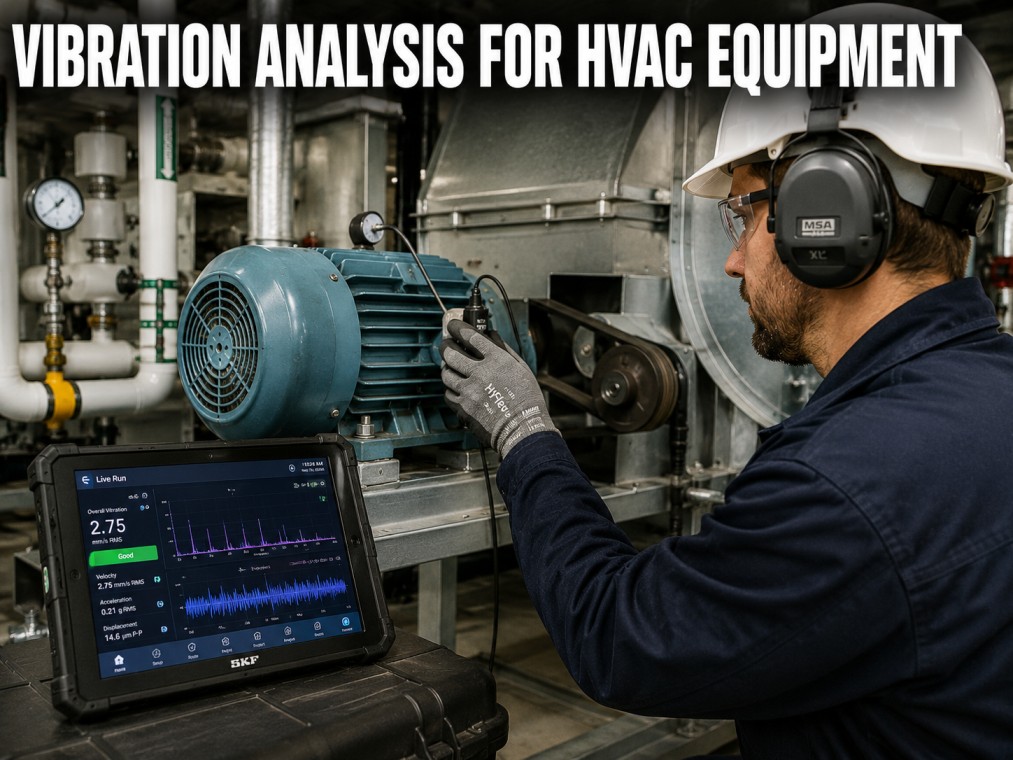
Decomposes raw vibration into 12 frequency bands (0.5 Hz to 500 Hz) and maps each band to specific mechanical components: guide shoes (2–10 Hz), roller guides (10–30 Hz), gearbox (30–80 Hz), motor bearings (80–200 Hz), and door mechanisms (200–500 Hz).
Remaining useful life (RUL) models
Generates per-component RUL estimates using temporal convolutional networks trained on historical failure data from over 1,200 elevator-years of operation. Delivers predictions with 90%+ accuracy within a 95% confidence band.
Ride-quality scoring (ISO 18738)
Continuously computes ride-quality scores per ISO 18738 standards — jerk, acceleration, vibration dose, and sound pressure — and trends them over time. Flags any car that drops below a configurable quality threshold before tenants complain.
Maintenance work-order ranking
Ranks every predicted failure by criticality score — combining RUL, safety impact, tenant density, and repair cost. Integrates with your CMMS (Maximo, SAP, Infor) to auto-generate work orders with technician notes and parts recommendations.
Audit-ready reporting
Generates monthly compliance reports showing vibration trends, maintenance actions taken, and ride-quality scores — ready for submission to local elevator safety authorities (ASME A17.1, EN 81-20) and insurance providers.
From raw sensor data to maintenance action — in four steps
iFactory deploys in weeks, not months. Here's exactly what happens once we connect to your elevator control network.
Connect & baseline
iFactory connects to your existing accelerometers, tachometers, and door sensors — or we install our own if none exist. The platform learns the normal vibration envelope for every elevator across all load conditions, floors, and directions over 7–14 days.
Model & detect
AI models continuously compare live vibration signatures against the baseline. Any deviation exceeding 3 standard deviations in any frequency band triggers a prediction — not a threshold alarm — with a component-level diagnosis and RUL estimate.
Rank & recommend
Every predicted failure is ranked by criticality. The platform generates a work order with technician instructions, required parts, and estimated repair time — all pushed to your CMMS automatically.
Track & improve
After each maintenance event, iFactory compares predicted vs. actual failure mode and updates its models. Ride-quality trends are tracked monthly. The system gets smarter with every repair.
What threshold alarms miss — and what it costs you
Traditional elevator vibration monitoring uses fixed thresholds: if lateral acceleration exceeds 0.25 g, trigger an alarm. By then, the damage is done. Here's the real cost breakdown.
Emergency repair premium
When a bearing fails during peak hours in a 40-floor building, the elevator is out for 72 hours. Emergency technician dispatch costs 3x the scheduled rate, and parts must be expedited. Average emergency repair: $8,200 vs. $2,100 for scheduled replacement.
Tenant & occupant impact
A single car outage in a 36-floor building means 600+ occupants sharing one remaining car. Average wait time goes from 35 seconds to 4+ minutes. Tenant complaints increase 340%. In Class A office buildings, this directly impacts lease renewal rates.
Regulatory & insurance risk
Elevator-related accidents cost an average of $187,000 per incident in liability and legal costs. Proactive vibration monitoring demonstrates due diligence to insurance carriers and regulators, reducing premiums by 12–18% on average.
What iFactory delivers — in numbers
These metrics come from iFactory deployments across 14 commercial building portfolios, covering 2,100+ elevators in North America and Europe.
Every elevator in your portfolio generates 86 million data points per year. iFactory turns that data into a predictive maintenance plan — without sending a single byte off your network. Book a 30-min walkthrough and we'll show you live on your data.
What buyers ask about elevator vibration monitoring with AI
Stop waiting for the alarm. Start predicting the failure.
iFactory gives you 340 hours of lead time on every elevator failure — on-premise, within 12 weeks, with no cloud dependency. Book a 30-minute walkthrough and we'll run a free vibration health scan on one of your elevators.