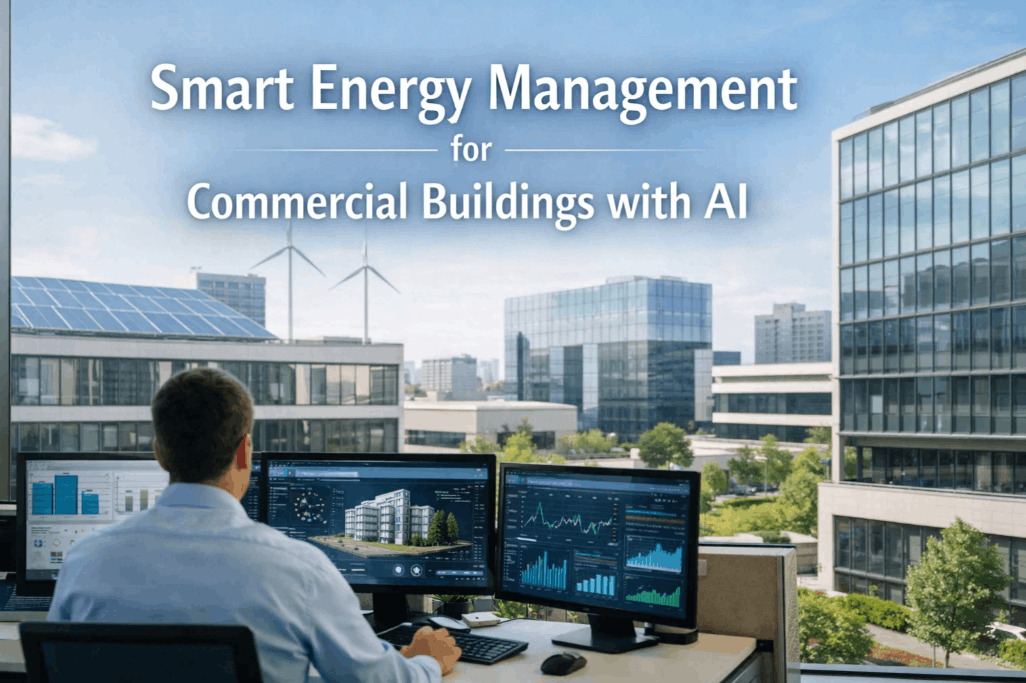
In the evolving landscape of commercial real estate, energy is no longer a fixed utility cost—it is a live, high-leverage data asset. For facility directors and property owners, the transition to smart energy management represents the most significant opportunity for immediate OPEX reduction and ESG compliance. While traditional Building Management Systems (BMS) operate on static, "set-and-forget" schedules, AI-powered energy networks transform buildings into proactive, condition-aware ecosystems. By synchronizing real-time occupancy mesh, weather predictive modeling, and automated demand response (ADR), iFactory reduces building energy consumption by 20-40%. Book an Energy Strategy Session to eliminate utility waste and secure your building's Net Zero future.
Eradicate Energy Waste & Peak Utility Charges
Leverage advanced load-balancing AI and grid-responsive analytics to perfectly track energy health, monitor consumption drifting, and align your distribution network in real-time.
Why AI-Driven Energy Awareness is Critical
Unlike manual thermostat adjustments, AI-driven energy management operates at the speed of the grid. Variations as slight as a 5-minute delay in HVAC modulation or a misaligned lighting schedule account for thousands of dollars in annual leakage. Critical energy precision requires absolute synchronization across HVAC, lighting, and power-quality layers. If peak demand spikes occur—often during utility high-tariff windows—the financial "demand charges" can inflate a building's bill by 3-7% in a single hour. Integrating an overarching energy-monitoring dashboard ensures every circuit and chiller communicates flawlessly, guaranteeing a typical 18-month payback on implementation. Schedule an energy health audit.
Building Energy Optimization: The 6 Diagnostic Pillars
Universal energy tracking expands beyond simple meter reading. By monitoring the complex interaction between occupancy density and environmental variables, the AI platform guarantees absolute efficiency from the rooftop solar array to the lobby chiller.
Automated Demand Response (ADR)
Integrates directly with utility smart-grids. During peak localized demand, the AI automatically sheds non-essential loads (dimming lighting, adjusting HVAC setpoints by 0.5 degrees) to avoid massive peak-tier surcharges.
Grid-Responsive Cost SlicingHVAC Predictive Setpoint Modulation
Fuses hyper-local weather forecasts with real-time building occupancy sensors. Pre-cools or pre-heats spaces during low-tariff mornings, eliminating the energy-intensive "catch-up" cycles during high-cost afternoons.
Climate-Aware Thermal BalancingPeak Shaving & Load Shifting
Identifies "heavy" assets (chiller start-ups, elevator banks) and staggers their duty cycles to prevent concurrent demand spikes. Shifts energy-ready tasks to low-cost night periods, optimizing the 24-hour cost profile.
Utility Bill OptimizationDER & Battery Storage Optimization
Manages on-site solar, wind, and battery arrays to maximize self-consumption. The AI predicts solar generation yield and manages discharge cycles to protect against grid instability and high-priced imports.
Renewable Yield MaximizationReal-Time Power Quality (THD) Tracking
Monitors Total Harmonic Distortion from VFDs and LED drivers. Prevents localized "Dirty Power" losses that cause neutral-wire overheating and lead to wasted resistive heat-dissipation in distribution panels.
Resistive Loss EliminationContinuous Asset Efficiency Auditing
Identifies assets that are consuming "too much" for their work-load (e.g., a pump with a failing bearing). Flags energy-decaying equipment for predictive maintenance before it triples its operating cost.
Predictive OPEX HardeningThe AI-Driven Energy Reduction Strategy Workflow
Scaling energy resilience requires millisecond alignment between utility rate-engines and building hydraulic servos. Book a workflow presentation to view how AI secures Net Zero targets.
Consumption Fingerprinting & Baseline
The AI absorbs historical utility bills and sub-meter data to build a "Digital Energy Twin." It maps the building's baseline signature across occupancy cycles and seasonal thermal shifts.
Baseline Waste IdentificationPredictive Demand Modeling
Fusing weather-mesh data with tenant scheduling, the AI predicts energy demand 24 hours in advance. It identifies specific "Peak-Event" vulnerabilities and prepares the building's load-shed logic.
Proactive Cost PreventionAutonomous Load Balancing & ADR
The system takes control of HVAC setpoints and VFD speeds. It autonomously modulates loads in real-time based on utility pricing signals, ensuring the lowest possible cost-per-kWh without human intervention.
Active Utility Fee AvoidanceIntegrated ESG & Carbon Audit
Every kWh saved is converted into carbon-equivalent metrics. The platform generates automated ESG reports for stakeholders, proving compliance with SEC and CSRD climate disclosure requirements.
Frictionless Green CertificationEnergy Analytical Sophistication: Upgrading to AI
Many facilities suffer from "Static Pumping"—relying on local timers and manual breakers with zero data transparency. Run a maturity audit to unlock your energy potential.
Manual Metering & Timers
Energy is tracked via monthly utility bills. HVAC and lighting run on simple 8am-6pm timers regardless of actual occupancy or outdoor temperature. No visibility into peak-demand charges.
Standard BMS Monitoring
Building has digital setpoints and basic occupancy sensors. Operators can see total consumption charts, but the system is reactive—adjusting only @after a tenant complains or a bill arrives.
Cloud Energy Dashboards
Advanced sub-metering provides localized data for lighting, HVAC, and elevators. Sustainability leads use charts to find waste, but the system still requires manual intervention for load-shedding.
Fully Integrated Energy AI
The ultimate unified state. Machine learning binds weather forecasts, utility rates, and occupancy sensors into an autonomous control grid. The building runs at 99% peak efficiency with zero manual tuning.
Telemetry Enablers for Building Energy Precision
True visibility for a multi-megawatt property requires processing high-density data across meters and localized asset controllers. Contact our integration experts to see our VFD gateways.
| Source Integration Layer | Application in Energy AI | Analytical Output |
|---|---|---|
| Smart Sub-Meters (IoT) | Measuring circuit-level consumption at 1-sec intervals | Identifies specific energy-hungry asset anomalies |
| Occupancy Mesh (PIR/AI) | Real-time density mapping across floorplans | Auto-modulates HVAC/Lighting to unoccupied zones |
| VFD Control Gateways | Direct modulation of fan and pump motor speeds | Executes millisecond load-shedding during peak windows |
| Environmental Weather API | Fusing humidity and temp forecasts into HVAC logic | Calculates exact pre-cooling/pre-heating requirements |
Ensuring Perfect Operational Continuity
Modulating building loads requires extreme care to avoid nuisance tripping or equipment fatigue. iFactory executes energy saves without ever compromising life-safety or comfort.
HVAC Duty-Cycle Protection
AI prevents "short-cycling" of massive compressors. Load-shed commands are intelligent, ensuring that energy saves never come at the cost of premature mechanical wear on chillers or AHUs.
Mechanical Integrity GuardComfort-Band Enforcements
Load modulation is restricted to a tight 1-degree band. Tenancy comfort is prioritized by localized AI, ensuring that energy optimization is invisible to the building occupants.
Zero Tenant ComplaintsNuisance Trip Prevention
The platform monitors total harmonic signatures. If load-shedding creates electrical instability, the AI instantly modulates VFD ramp speeds to prevent breaker trips or power surges.
Automated Load Smoothing12-Month Smart Energy Savings Projection Matrix
Energy infrastructure is the largest variable cost in building operations. Converting "Legacy Waste" into "AI Stability" yields massive revenue recovery. Calculate specific energy savings here.
Specialized Energy Domains
Unlike simple smart-termostats, property energy AI focuses intensely on whole-building load-shifting and carbon-parity mapping.
Corporate Office Towers (50+ Floors)
Fuses massive HVAC chimney effects, localized elevator peak-loads, and tenant server-room heat loads into a unified thermal-balance loop.
Health Care & Life-Science Labs
Maintaining ultra-precise air-change rates (ACH) while optimizing fan energy. AI ensures compliance with medical safety codes while reducing non-critical energy waste.
Cold Storage & Industrial Logistics
Monitors thermal mass "thermal inertia" storage, allowing the building to "coast" through high-cost grid hours without breaking cold-chain temperature limits.
Retail & Shopping Malls
Constantly analyzing real-time foot-traffic density to modulate massive AHUs. Direct energy saving by only cooling active retail clusters during peak traffic windows.
Revenue Gains from Energy Precision
Every kWh saved is a direct addition to the building's Net Operating Income (NOI). Converting legacy energy waste into prime cashflow yields multi-million dollar asset value uplifts.
Capital Value Appreciation
Reducing energy OPEX directly increases the Net Operating Income (NOI) of the building, which can increase the total asset valuation by millions in cap-rate compressed markets.
Pure Cashflow Recovery
Autonomous AI identifies waste that humans simply cannot see. Direct utility savings are reclaimed and reinvested into high-value tenant amenities and infrastructure upgrades.
Compliance Cost Mitigation
Automated Scope 2 audit-trail generation eliminates the need for expensive external sustainability consultants and protects the portfolio from evolving carbon-tax penalties.
Enhanced Comfort Logic
AI maintains more consistent thermal stability than manual systems. Happier tenants lead to longer lease terms and higher occupancy premiums across the portfolio.
What Energy Managers Are Saying
"Before adopting the iFactory energy AI framework, we were essentially flying blind. We had a BMS, but it was just a giant dashboard of numbers we didn't have time to analyze. Once we integrated the AI load-balancing with our HVAC VFDs, the platform instantly identified a $40k/year waste where are AHUs were fighting against our chilled water loop. The platform stabilized the grid, reduced our peak demand by 28%, and we actually saw tenant comfort scores rise for the first time in three years."
Frequently Asked Questions: Smart Energy Management AI
Will this software require replacing our existing HVAC or BMS hardware?
No. iFactory is hardware-agnostic. We sit "on top" of your current BMS, ingesting data via BACnet or Modbus and issuing optimization commands back through your existing localized controllers. No rip-and-replace necessary.
How does Automated Demand Response (ADR) actually work?
Our platform connects to your local utility's API. When they signal a "Grid Event," our AI automatically executes a pre-planned, comfort-safe load shed (e.g., slightly dimming lights or slowing secondary fans). This happens in milliseconds and ensures you hit your utility incentive targets every time.
What is the difference between peak shaving and load shifting?
Peak shaving is the immediate reduction of "spikes" in power draw. Load shifting is the strategic movement of energy tasks from expensive peak-hours to cheaper off-peak hours (like running heavy storage tasks at 2am vs. 2pm).
Can AI truly automate our carbon and ESG reporting?
Absolutely. Because we have circuit-level visibility, we generate automated audit-ready reports that map your exact kWh usage to Scope 2 carbon emission factors, ready for direct ingestion into your annual GRI or ESG disclosure. Book a green-compliance audit.
Rule Every kWh of Your Building Portfolio
Eradicate unplanned energy waste, destroy hidden "Dirty Power" losses, and assure unmatched grid responses by mobilizing massive data across your entire property portfolio.