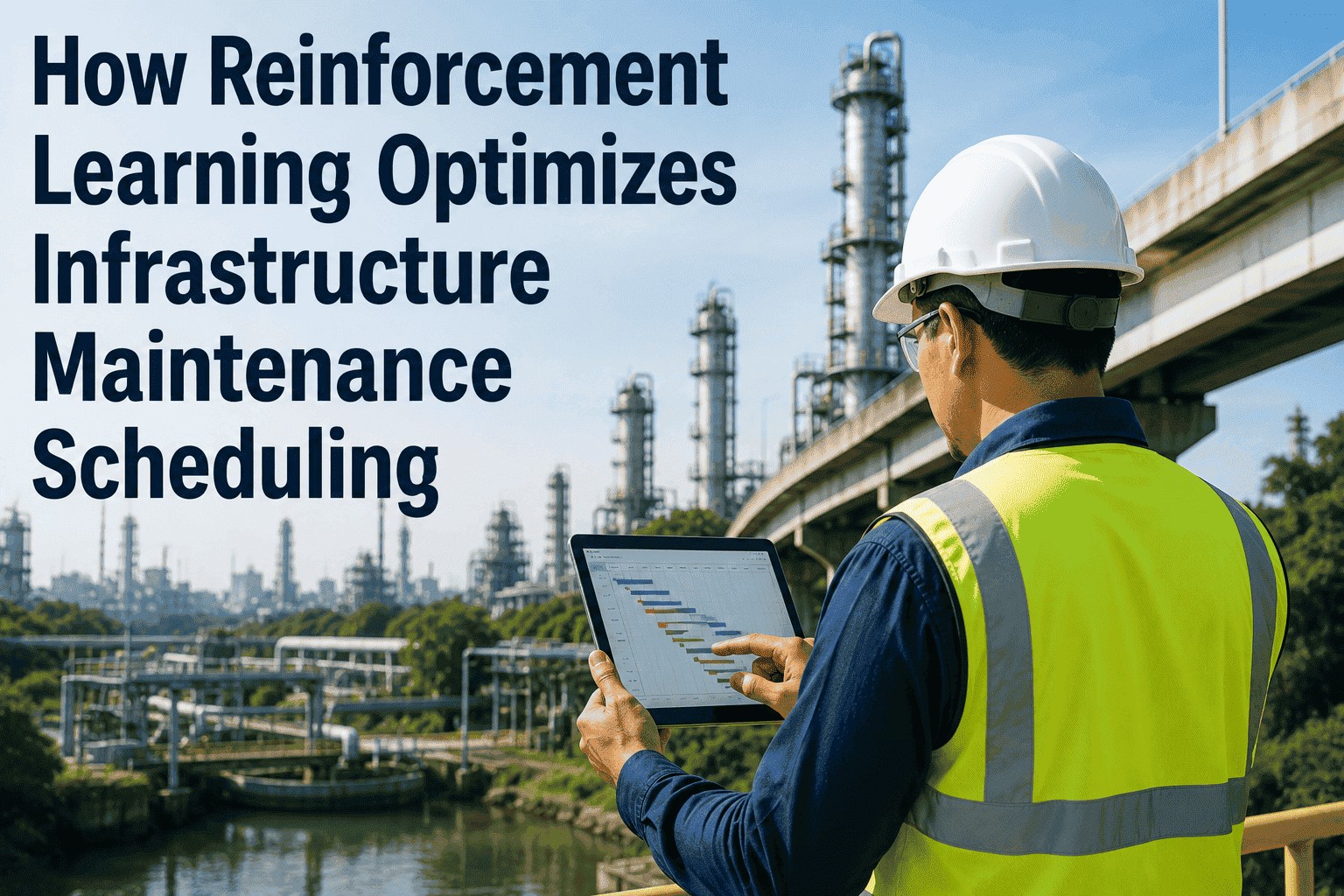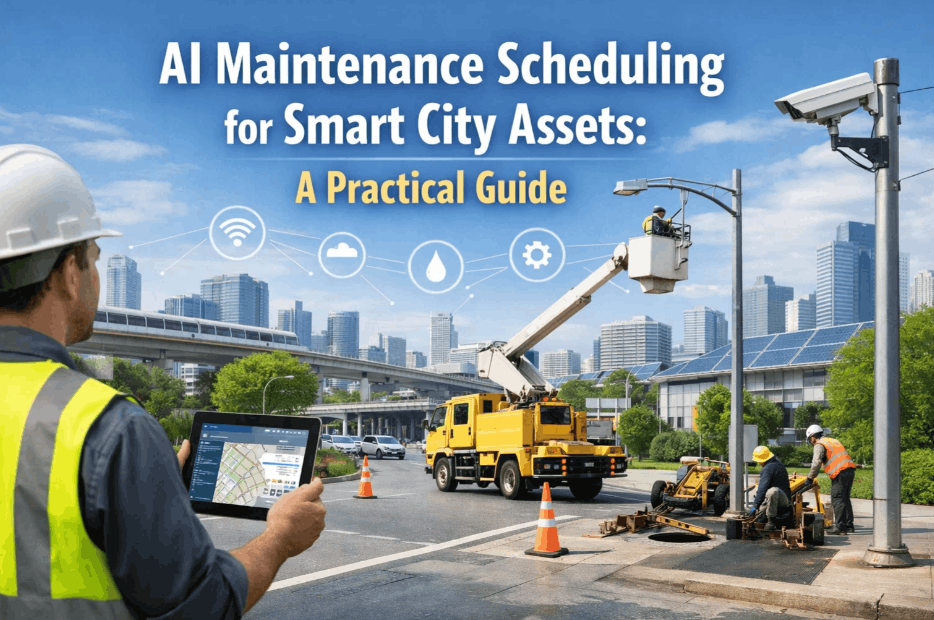
AI maintenance scheduling smart city solutions have become the ultimate operational imperative for urban technology management. Modern municipalities are overseeing thousands of distributed assets—from automated streetlights and wastewater pumps to HVAC systems in public buildings and roadside traffic controllers. However, legacy infrastructure monitoring software relies on manual ticketing systems and rigid calendar intervals, triggering emergency repairs and massive budget overruns. As urban populations explode, proactive machine learning maintenance strategies ensure assets never go offline unexpectedly.
The core problem compounding municipal budgets is the sheer volume of unconnected infrastructure. Utility vaults, electric vehicle (EV) charging stations, connected transit hubs, and distributed energy resources (DERs) are generating terabytes of telemetry data every single hour. Without an intelligent maintenance system, this data sits idle while dispatchers rely on lagging indicators, such as citizen complaints or catastrophic equipment failure, to initiate work orders. Schedule a demo with iFactory to see how true ai asset management natively groups, routes, and automates work orders across these complex city environments before the public ever notices a fault.
INTELLIGENT MAINTENANCE SYSTEM
Automate Work Orders Across 10,000+ City Assets.
Leverage industry-grade predictive analytics infrastructure to transition from scrambling dispatchers to autonomous, AI-driven scheduling.
Why Legacy Methods Fail Smart Infrastructure Management
Traditional municipal maintenance teams use calendar-based "preventative" routines. They service pumps every 90 days, recalibrate traffic sensors every 6 months, and inspect grids annually. The reality of iot smart city maintenance renders this obsolete. The ai asset management capability of iFactory allows teams to pivot toward condition-based scheduling. When thousands of IoT devices transmit vibration telemetry, acoustic fingerprints, and thermal anomalies, human dispatchers cannot parse the optimal workflow without ai predictive maintenance algorithms pointing the way. Schedule a mapping session to transform yours today.
Often, city managers realize their preventative maintenance cycles are paradoxically causing more harm than good. Intrusive calendar-based inspections frequently introduce "maintenance-induced failures" where healthy seals or perfectly calibrated sensors are disturbed unnecessarily. Furthermore, the physical wear rate of an asset depends entirely on its localized operating environment. A water pump running at 90% capacity in a high-sediment district will degrade three times faster than an identical pump in a pure-water residential zone. Ignoring these environmental stressors is exactly where legacy scheduling collapses and machine learning excels.
Routine visits to water treatment pumps that run for only 100 hours wasting technician time and fleet fuel, draining the city budget unnecessarily when the asset requires no attention.
Critical HVAC infrastructure in city data centers often endures unexpected heat waves or power surges, failing long before their calendar inspection date, causing cascading downtime.
Sending specialized crews to the North district to fix a smart metre on Tuesday, and returning to the exact same block on Thursday for a streetlight repair. Spatial unawareness destroys productivity.
City warehouses full of unneeded legacy parts, while crews wait weeks for back-ordered IoT replacement sensors, drastically expanding Mean Time to Repair (MTTR) across the grid.
Architecting the Predictive Analytics Infrastructure
To truly understand the deep value of ai predictive maintenance, city planners must examine the underlying software architecture that powers autonomous dispatch. A robust smart infrastructure management platform does not simply aim to replace existing software; instead, it acts as an intelligent, aggregated overwatch layer. It draws directly from foundational SCADA (Supervisory Control and Data Acquisition) systems, integrates seamlessly with existing municipal ERPs like SAP or Oracle, and ingests live telemetry from field-deployed LPWAN, LoRaWAN, and 5G IoT sensors.
By centralizing this vast data pool into a unified ai maintenance platform, the neural network begins mapping correlations that a human operator could never track. For example, the system might learn over time that a minute 5% voltage drop in a specific grid sector routinely precedes a critical traffic controller failure by exactly 48 hours. Armed with this pattern, the AI can preemptively auto-schedule an electrical crew to intercept the issue before the intersection ever goes dark. Consult with our engineering team to audit your city's current data readiness and integration potential.
The AI Maintenance Scheduling Smart City Playbook
Deploying infrastructure maintenance ai involves migrating from static schedules to dynamic, real-time optimization. iFactory ingests SCADA data, IoT environmental streams, and CMMS historical logs to form a unified neural network. If you are struggling with legacy CMMS rules, schedule a pilot to let our smart city infrastructure ai demonstrate value.
Hyper-Local IoT Telemetry Ingestion
The ai maintenance platform begins by aggregating sensor data from every connected endpoint. Whether parsing vibration signatures from a bridge abutment or assessing the voltage fluctuations of a smart lighting control unit, iFactory centralizes thousands of telemetry streams into a normalized data lake without overwhelming existing IT bandwidth.
Predictive Anomaly Scoring (RUL Calculation)
As data flows in, machine learning models continuously calculate the Remaining Useful Life (RUL) of individual components. The predictive analytics infrastructure establishes normal operating baselines for specific asset models and flags minor deviations—such as a 2% drop in flow efficiency on a municipal pump—30 days before total failure occurs.
Spatio-Temporal Task Clustering
This is where AI maintenance scheduling smart city solutions outpace human planners. The system automatically bundles impending tasks geographically and by required skill-set. If a street camera needs cleaning next week, and a nearby transformer requires a thermal scan in 14 days, the AI schedules both for a single dispatch window this Friday to maximize technician efficiency.
Automated Inventory and Procurement Sync
Before creating the work order, iFactory's machine learning maintenance engine checks municipal warehouse databases. If a specific O-ring or control board is required for the predicted repair, it reserves the part. If out of stock, it automatically initiates a vendor PO, ensuring crews never arrive at a job site lacking components.
Transforming Urban Workflows with Infrastructure Monitoring Software
Cities are multifaceted organisms; a gridlock in the water department impacts roadways, while electrical failures disrupt public transit. iFactory infrastructure ai provides a holistic platform that obliterates departmental silos, giving city managers a command-center view of all ai asset management operations.
The AI dispatches tasks by precisely matching the technical certification, union status, and tool availability of the nearest available crew, eliminating costly mis-assignments.
Schedules are optimized based on real-time city traffic data and historical congestion models, ensuring crews spend their hours turning wrenches rather than sitting in gridlock.
The platform integrates hyper-local weather APIs. If heavy rain is forecast, it automatically reschedules exposed electrical maintenance while moving indoor HVAC tasks up the queue.
When a high-priority, Tier-1 failure occurs (e.g., a burst main), the AI immediately recalibrates all city-wide schedules, rerouting the nearest applicable crew natively and smoothly.
iFactory monitors outsourced contractor networks, logging their response times, first-time fix rates, and invoicing accuracy to ensure taxpayer funds are utilized efficiently.
Beyond daily scheduling, the AI aggregates fault frequencies over years to advise city planners on which legacy assets are costing more to repair than replace, transforming capital expenditure.
Mapping Urban Infrastructure to the iFactory Platform
From high-voltage grids to subterranean water pipelines, smart infrastructure management requires extreme adaptability. The ai maintenance platform seamlessly standardizes thousands of varied assets into a coherent, manageable taxonomy.
| Asset Category | IoT Data Streams Ingested | AI Predictive Insight | Automated Response Capability |
|---|---|---|---|
| Water & Wastewater | Acoustic anomalies, flow rates, pressure drops | Detects cavitation, seal leaks, blockages 2 weeks early | Triggers pressure rerouting, schedules vac-truck dispatch |
| Intelligent Traffic Systems | Latency logs, pixel degradation, thermal stress | Identifies motherboard failure risk in control boxes | Dispatches drone inspection or schedules logic board swap |
| Smart Lighting & Grid | Voltage spikes, amperage draw, lumen decay | Forecasts LED death and localized power grid failure | Groups 50+ impending light failures into one zone sweep |
| Municipal Buildings (HVAC) | Vibration telemetry, compressor cycling limits | Predicts bearing failure or refrigerant leaks | Pre-orders freon, assigns licensed union HVAC technician |
| Public Transit Fleet | OBD2 diagnostics, brake pad wear, transmission heat | Identifies transmission fatigue before catastrophic halt | Pulls vehicle from active route natively during low hours |
Frequently Asked Questions: Smart City AI Scheduling
Navigating the transition from reactive ticketing to autonomous routing generates important questions for city IT and public works administrators. Here is how iFactory's machine learning maintenance architecture systematically solves common deployment friction.
How does AI maintenance scheduling integrate with existing city CMMS tools?
Deploying an intelligent maintenance system rarely requires a "rip and replace." The iFactory platform securely integrates via RESTful APIs directly into existing enterprise asset management systems like IBM Maximo, Cityworks, or SAP. It essentially acts as the intelligent "brain" layer, analyzing the telemetry data and pushing fully optimized work orders back into the familiar interfaces your crews and dispatchers already use daily.
What constitutes "smart city infrastructure ai" in terms of asset coverage?
Coverage extends comprehensively across all networked municipal hardware. This encompasses water and wastewater SCADA systems, smart street lighting arrays, ITS (Intelligent Transportation Systems), smart parking meters, environmental sensors (such as air/pollution quality monitors), and municipal building HVAC environments.
How does machine learning handle complex union rules and technician certifications?
The ai maintenance platform utilizes constraint-based programming algorithms specifically to respect strict labor agreements. Before a maintenance schedule is formally generated and dispatched, the AI cross-references union working hours, overtime legal restrictions, required OSHA safety certifications, and specific vocational licensing requirements to guarantee 100% compliant assignment rules.
Can predictive analytics infrastructure operate securely on local municipal networks?
Absolutely. Security is paramount when managing civic infrastructure. All telemetry and scheduling data processed by the ai asset management engine uses strict end-to-end encryption (TLS 1.3), role-based access control paradigms (RBAC), and complies tightly with municipal IT, GDPR, and localized critical infrastructure security frameworks mandated by federal guidelines.
What happens if a major emergency interrupts the AI-generated schedule?
The core premise of an adaptive intelligent maintenance system is real-time flexibility. In the event of an emergency (such as a burst arterial water main), the AI receives the priority-one alert and immediately recalculates the entire city schedule. It pulls the closest appropriate crew toward the emergency while automatically notifying lower-priority scheduled clients that their maintenance times have shifted slightly to accommodate the crisis.
Defining ROI for Municipalities
Investing in robust ai maintenance scheduling smart city solutions is primarily a risk-mitigation strategy, but the financial returns are rapid and unassailable. By neutralizing the inefficiencies of manual dispatch, cities reclaim millions of dollars previously squandered on unnecessary overtime, emergency contracting premiums, and premature asset replacement. Schedule a pilot to generate a customized breakdown for your specific asset taxonomy.
TAKE CONTROL OF CITY ASSETS
Transform Your Dispatch With iFactory AI Scheduling.
Move beyond the limitations of calendar constraints and siloed municipal departments. Integrate your iot smart city maintenance into an engine that saves time, reduces carbon footprint, and extends infrastructure longevity.