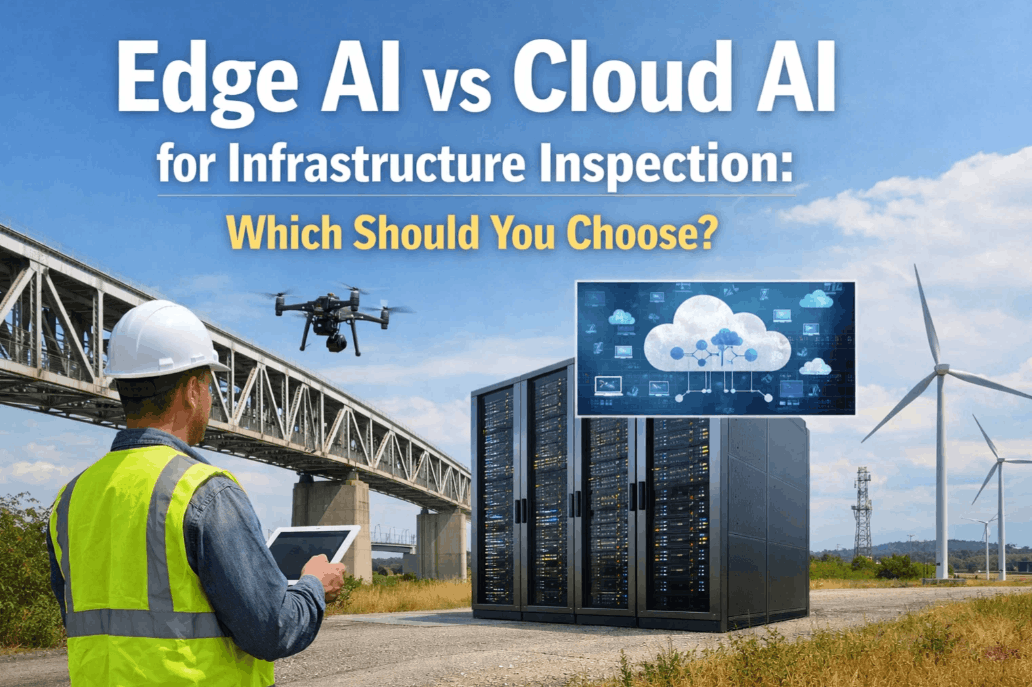
In 2025, the choice between processing data at the edge or in the cloud is no longer a binary one, but a strategic decision that defines the ROI of industrial computer vision systems. While Cloud AI offers unparalleled computational power for long-term fatigue analysis, Edge AI has become the gold standard for high-speed infrastructure inspection where milliseconds matter. Deciding between a local, cloud-resident, or hybrid architecture requires a deep-dive into latency tolerances, bandwidth availability, and the specific risk profile of the asset being monitored. Schedule a Scaling Audit to see how iFactory's multi-architecture platform balances these factors for global infrastructure networks.
Choose the Right Architecture for Your Vision Inspection Network
From real-time bridge monitoring to long-term pavement fatigue analysis—ensure your AI processing matches your operational safety requirements.
Cloud vs. Edge: The Critical Infrastructure Gap
Infrastructure agencies must weigh the elastic scalability of the cloud against the deterministic reliability of edge hardware. Below are the 2025 baseline performance metrics for inspection-grade AI deployments.
The 6 Pillars of AI Processing Selection
Successful infrastructure AI deployments are built on architectures that match the physical reality of the asset site. Evaluation should focus on these six core variables.
Latency & Response Time
If the system must trigger a safety barrier or VMS alert in under 2 seconds, Edge AI is mandatory to avoid round-trip network delays.
Real-Time CriticalBandwidth Economics
Streaming 4K video 24/7 to the cloud for 500+ cameras is economically impossible. Edge processing filters data at the source.
-90% Egress FeesPhysical Asset Location
Remote bridges or tunnels with intermittent 5G coverage require 'Disconnected Edge' modes to maintain safety monitoring 24/7.
Zero-Connection ModeModel Complexity
Cloud AI is superior for 'Second-Pass' analysis where massive neural networks across 5 years of data identify subtle structural shifts.
Deep Historical AuditData Privacy & Sovereignty
Sensitive infrastructure data that cannot leave local soil is processed exclusively on gantry GPUs to meet strict government regulations.
On-Prem SecurityScalability & Update Speed
Cloud platforms allow for instant global rolling updates to AI models across thousands of sites simultaneously via a single dashboard.
Global Version ControlHybrid AI Orchestration: The Data Journey
Edge Visual Capture & 1ms Normalization
Raw 4K streams are normalized locally. The AI strips background noise and prepares vehicle/structural mass for sub-second inference.
60FPS ProcessingReal-Time Local Inference
Critical defects (cracks, debris, wrong-way) are identified instantly on the gantry GPU. No data has left the site at this stage.
<10ms Local TriggerMetadata & Segment Uplink
Only 'Event Anchors' and relevant 10-second clips are encrypted and sent to the cloud, reducing bandwidth consumption by 95%.
Low-Bandwidth SyncCentralized Deep-Audit & Reporting
The Cloud AI performs a 'second-pass' to benchmark results against 100+ other assets, generating predictive maintenance timelines.
Global Fleet AnalysisArchitecture Maturity: From Cloud-Lag to Edge-Autonomous
Cloud-Only / Pure Streaming
Raw video is streamed to a central server. Systems are plagued by high bandwidth costs and multi-second detection delays.
Triggered Cloud Uplink
Basic motion sensors trigger a cloud upload. Better bandwidth management but misses subtle structural fatigue events.
Hybrid Edge-Inference
AI identifies defects locally and syncs metadata to the cloud. The system operates autonomously even during internet outages.
Distributed Edge Mesh
Edge nodes communicate peer-to-peer to track objects across camera fields. Zero-latency response for coordinated safety triggers.
Edge vs. Cloud Decision Matrix: Feature Mapping
| Requirement Category | Cloud AI Solution | Edge AI Solution | iFactory Recommendation |
|---|---|---|---|
| Processing Latency | 250ms - 2,000ms+ | 10ms - 100ms | Edge for Safety |
| Internet Dependency | Mandatory Stable Fiber | Works in Offline Mode | Hybrid Redundancy |
| Hardware Cost | Zero Capex (OpEx focus) | High Capex (Device Tier) | Capex for Long-term |
| Deep Learning Training | High Performance Training | Inference-Only mode | Cloud for Training |
| Data Transmission Cost | High (Video Egress) | Ultra-Low (Metadata) | Edge for Efficiency |
Security & Data Sovereignty: The Edge Advantage
On-Prem Sovereignty
Video data never leaves the gantry firewall. Agencies meet 100% of local data protection laws by keep identifiable data local.
GDPR/CCPA CompliantNetwork Resilience
If the highway fiber link is severed, Edge nodes continue detecting wrong-way drivers and roadway debris with zero interruptions.
Offline First EngineEncrypted Metadata
Only anonymized metadata triggers are synced to the cloud, ensuring that structural and traffic data is triple-encrypted in transit.
AES-256 Multi-Layer12-Month Architecture Transformation Data
CAPEX vs. OPEX Analysis for Vision Inspection
Bandwidth Savings
By processing video locally at the edge, agencies eliminate the need for expensive high-bandwidth fiber leases in remote locations.
TCO Inflection Point
While Edge Capex is higher upfront, the lack of recurring cloud storage and processing fees makes it the lower-cost option globally over 4 years.
"Moving from cloud-only to a distributed edge mesh allowed us to reduce our incident detection time from minutes to milliseconds, while simultaneously slashing our monthly cloud bandwidth expenditure by over 90%."
Frequently Asked Questions: AI Architecture Choice
Is a Hybrid Cloud/Edge approach better?
Yes. Most modern agencies use Edge for 'Real-Time Inference' (detecting potholes or cracks instantly) and sync high-resolution metadata to the Cloud for 'Long-Term Reporting' and model retraining.
How do I manage Edge hardware updates?
iFactory uses 'Containerized Edge Management' (via Kubernetes) to push new AI models remotely to gantry GPUs without requiring a site visit.
Will Edge AI work on my existing cameras?
If your cameras support RTSP/ONVIF streams, they can be plugged into an iFactory Edge Bridge node, instantly upgrading 'dumb' sensors into AI-powered assets.
What happens if the Edge node fails?
iFactory supports 'Hardware Redundancy' where a secondary node takes over processing. If the cloud is reachable, it can also act as an emergency 'Inference Backup'.
Which is more secure for government infrastructure?
Edge AI is inherently more secure because raw video never leaves the gantry hardware, ensuring full compliance with high-security roadway and defense regulations.
Don't Get Locked into the Wrong Architecture
Join the agencies running the world's most resilient infrastructure. Move from cloud-only lag to 3-second autonomous edge detection.