The landscape of highway management is undergoing a tectonic shift from manual CCTV surveillance to autonomous, proactive oversight. Computer vision smart highway management has emerged as the core engine powering the next generation of Intelligent Transportation Systems (ITS). By converting petabytes of raw video data into actionable maintenance and safety alerts, highway agencies can detect structural failures, traffic anomalies, and pavement degradation in real-time. This digital transformation allows departments of transportation to transition from reactive repair cycles to predictive asset management, significantly reducing roadway fatalities and operational expenditures. Schedule a smart highway review to see how iFactory's infrastructure AI platform automates roadway monitoring and defect detection natively.
SMART HIGHWAY AI PLATFORM
Monitor Every Mile of Roadway Automatically with Computer Vision.
Detect incidents in seconds, map pavement defects with millimeter precision, and optimize traffic flow using the industry's most advanced infrastructure AI.
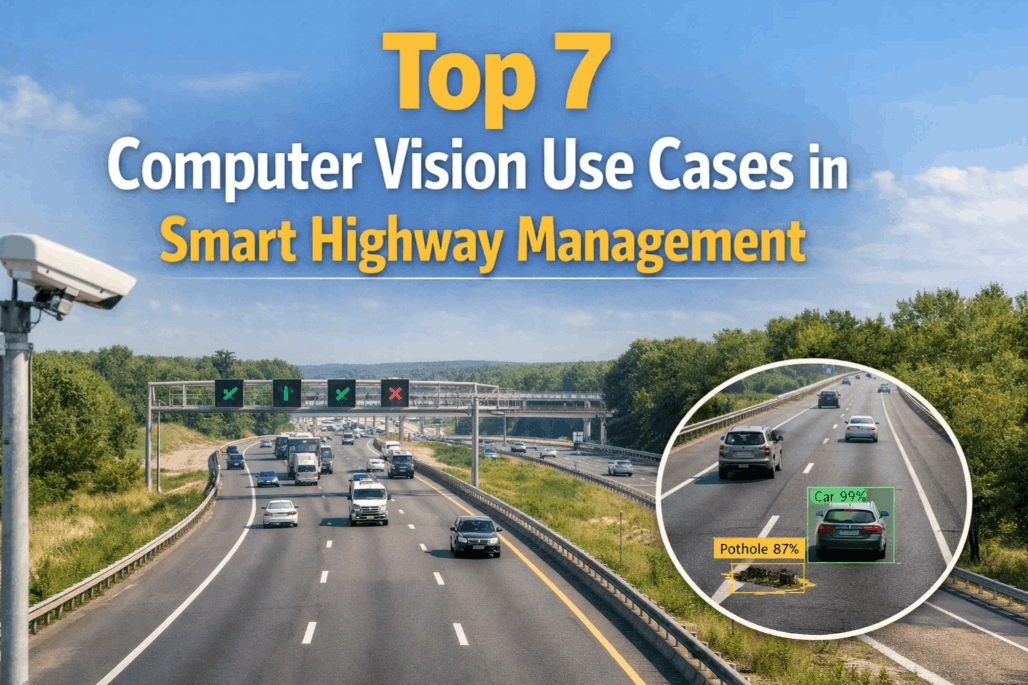
Top 7 Real-World Computer Vision Use Cases in Smart Highway Management
Computer vision smart highway management is no longer a futuristic concept—it is a deployed reality across the world's most advanced transportation networks. By utilizing specialized deep learning models, highway agencies can extract high-fidelity data from existing camera infrastructure to solve complex operational challenges. From automated pavement assessment to real-time incident response, AI vision is the primary driver of highway efficiency and safety.
AI monitors every frame for stopped vehicles, wrong-way drivers, or debris in the roadway. Unlike human operators who experience fatigue, the computer vision system identifies anomalies in seconds, triggering immediate emergency alerts to traffic management centers.
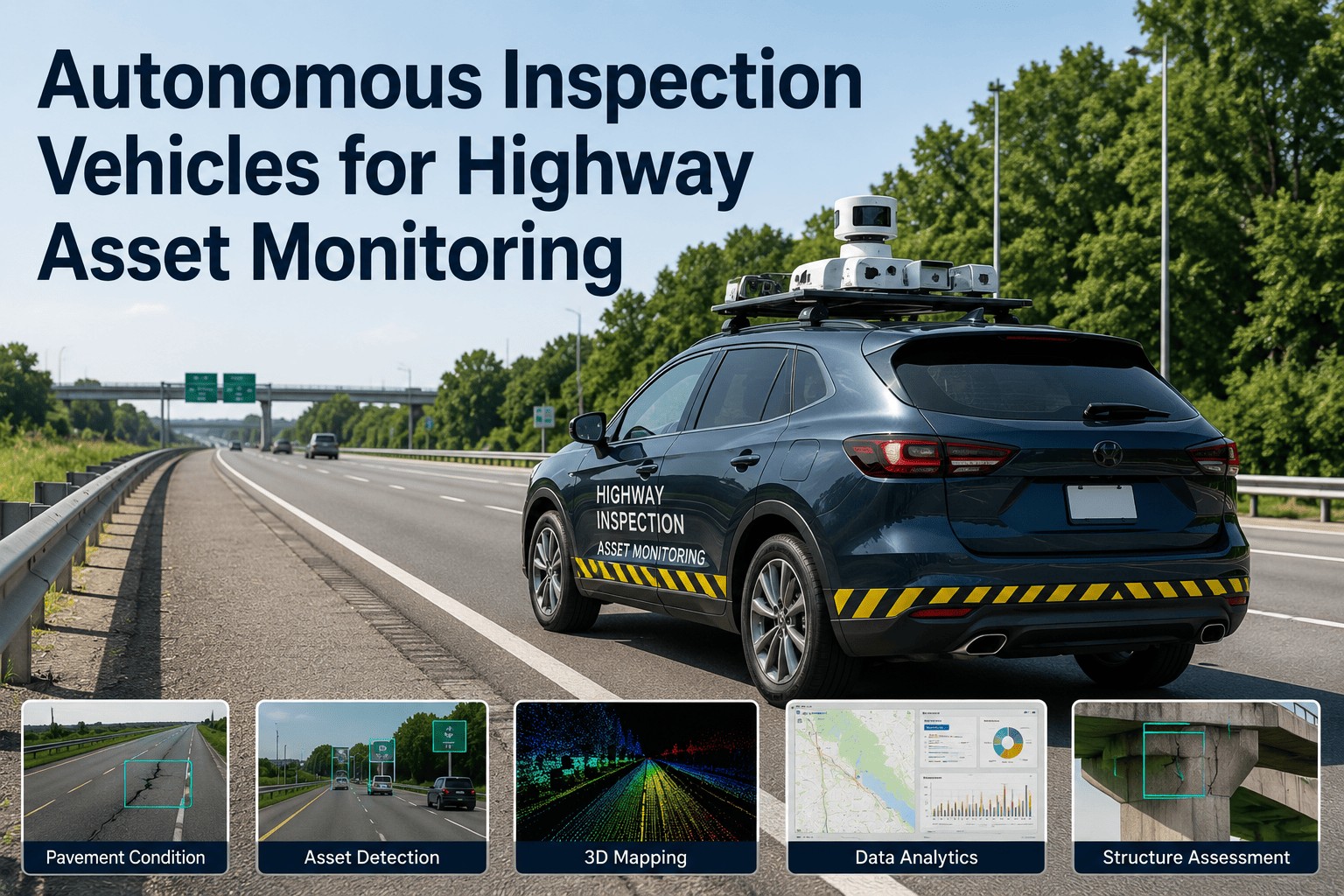
Transforming standard vehicle-mounted cameras into mobile inspection units. The system automatically identifies potholes, alligator cracking, and longitudinal seams with localized GPS coordinates, allowing for predictive maintenance scheduling.
Beyond counting cars, AI analyzes vehicle density and speed across every lane. This data feeds directly into smart signage and variable speed limit systems to proactively mitigate shockwave traffic jams and manage HOV/express lane demand.
Replacing expensive and intrusive in-road sensors with AI vision. The system classifies vehicles (passenger, light-truck, HCV, motorcycle) in real-time, providing the precise load data required for infrastructure lifecycle planning and bridge stress analysis.
High-speed ALPR (Automatic License Plate Recognition) ensures 100% capture of vehicle identifiers even at speeds exceeding 100mph. This is critical for open-road tolling (ORT) and identifying scofflaws in non-gated highway environments.
Monitoring rural highway segments for animal crossings or unauthorized pedestrian entry. The AI can trigger wildlife warning signs in real-time or alert law enforcement to pedestrians on high-speed shoulders, preventing catastrophic collisions.
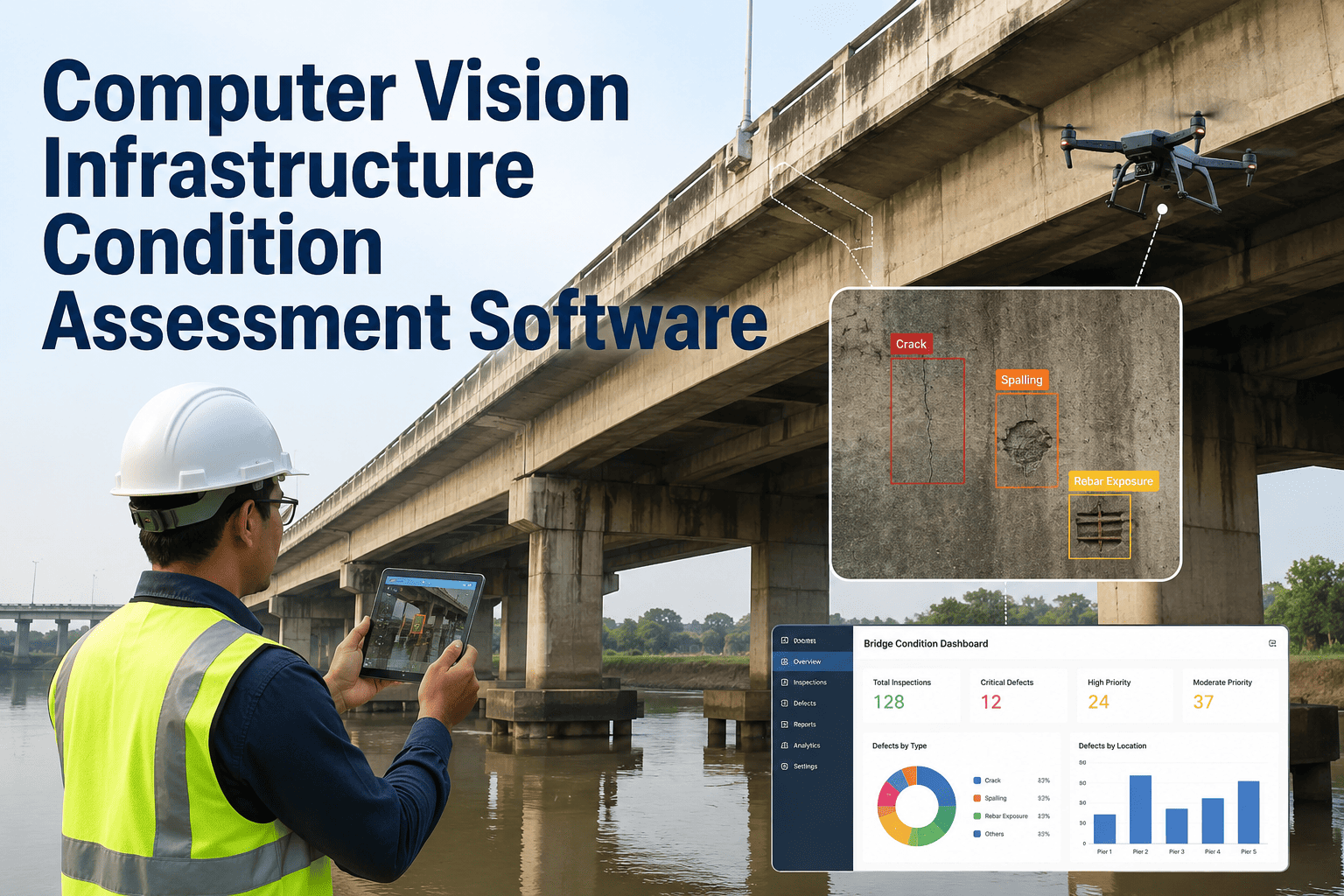
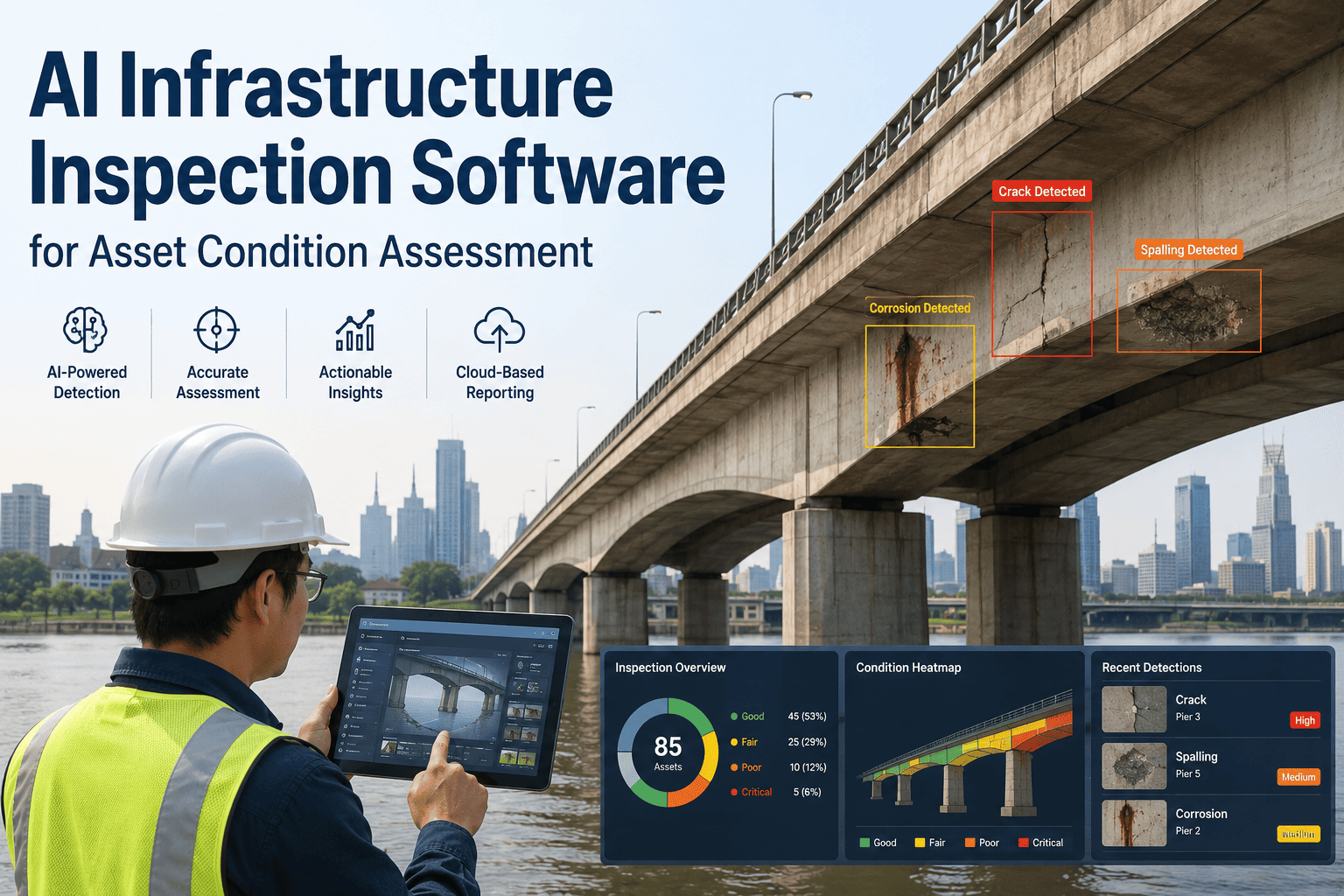
Utilizing existing cameras to monitor for visual signs of structural distress on bridge piers, tunnel walls, and retaining structures. AI algorithms detect color changes (rust), water ingress, or widening cracks that indicate a need for immediate intervention. Agencies often book a demo to integrate this into their bridge management systems.
Implementation Roadmap: Deploying Smart Highway Vision
Scaling computer vision across hundreds of miles of highway requires a structured approach that prioritizes high-risk segments and utilizes existing network infrastructure. Highway agencies that book a demo with iFactory follow this proven deployment framework.
Network Inventory and Camera Audit
Assessment of existing CCTV and traffic management cameras. The AI platform is designed to be hardware-agnostic, integrating with legacy analog feeds via encoders or natively connecting to modern 4K IP cameras to identify usable data streams.
Edge Processing Node Deployment
Deployment of ruggedized edge compute modules at highway gantries or communication hubs. Processing video at the edge minimizes bandwidth consumption and enables the sub-second response times required for Incident Detection (AID).
Custom Algorithm Tuning and Calibration
Tuning the computer vision models to account for site-specific variables: camera height, sun glare, heavy rain, and seasonal changes. We calibrate for different pavement types to ensure pothole detection remains consistent across different asphalt and concrete grades.
Real-Time Alert and TMC Integration
Connecting the AI insights to the Traffic Management Center (TMC) dashboard. Automated alerts for incidents or debris are prioritized, while maintenance data is fed directly into Asset Management Systems for long-term planning.
Continuous Performance Optimization
Autonomous model updates via the cloud ensure that the computer vision system continuously improves its detection accuracy and adapts to new vehicle classifications and roadway changes without manual intervention.
Smart Highway Core Capabilities: AI Vision Features
Computer vision for highways is a multi-dimensional toolset that provides deep operational intelligence. Book a demo to explore these features in a live highway monitoring environment.
Simultaneous tracking of hundreds of vehicles across 8+ lanes of traffic, providing precise lane-level speed and occupancy data for advanced congestion management.
Advanced AI filters that 'see through' heavy rain, snow, and fog, maintaining detection accuracy even when human visibility is significantly hampered.
Every detected pothole or crack is automatically geotagged with sub-meter accuracy, allowing maintenance crews to navigate directly to the defect site without hunting.
Real-time blurring of driver faces to ensure compliance with privacy regulations while maintaining full analytical capability for vehicle and incident tracking.
A hybrid architecture that balances real-time edge alerting with centralized cloud analytics for long-term infrastructure lifecycle and traffic trend reporting.
Analyzing micro-fluctuations in traffic flow to predict and alert on downstream congestion waves before they result in hard braking and rear-end collisions.
ROI and Financial Impact: The Highway Business Case
Implementing computer vision smart highway management delivers a multi-faceted return on investment. Agencies report significant savings in maintenance costs, incident-related delays, and legal liabilities. Book a demo to walk through the ROI metrics from actual state-level highway deployments.
Replacing manual survey vehicles with AI vision on existing fleet vehicles provides continuous, low-cost pavement health assessments across the entire network.
Faster detection leads to faster response and clearance, saving millions in lost productivity and secondary accident costs linked to highway congestion.
Autonomous monitoring ensures that hazards—from lost loads to tire carcasses—are identified and cleared before they cause localized fatal collisions.
Identifying and sealing cracks before they become potholes extends the overall life of the roadway, deferring massive capital repaving expenditures.
Frequently Asked Questions: Smart Highway AI
Does the computer vision system require new specialized cameras?
No. iFactory is designed to work with your existing CCTV and traffic monitoring infrastructure. While 4K IP cameras provide the best results for pavement assessment, our models are optimized to extract incident data from lower-resolution legacy feeds.
How does the system handle night lighting and tunnels?
Our models are trained on IR and night-vision data. In tunnels with fixed artificial lighting, the AI maintains exceptionally high accuracy for incident and smoke detection 24/7/365.
Is the traffic counting data accurate enough for revenue and load planning?
Yes. In third-party validation, iFactory's vehicle classification and counting achieved 99%+ accuracy, rivaling or exceeding the performance of traditional inductive loop and radar-based counters.
Can the system automatically trigger variable speed limit (VSL) signs?
Absolutely. The AI acts as the decision engine. When it detects a density spike or weather hazard, it can automatically push new speed limits or warning messages to your ITS signage infrastructure via secure API integration.
INFRASTRUCTURE INTELLIGENCE UNLOCKED
Transform Your Highway Network Into a Smart Infrastructure Ecosystem.
iFactory's computer vision platform delivers the real-time visibility and predictive insights required for modern highway management. Detect incidents, monitor pavement, and protect travelers with the industry's most advanced smart highway AI.