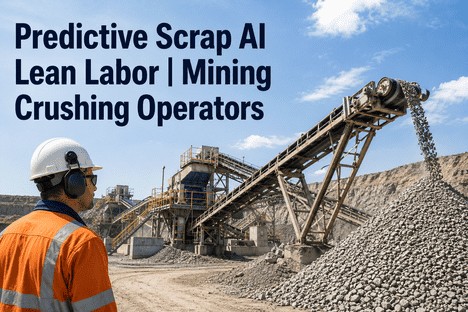
Every shift in a mining crushing operation faces the same silent drain: scrap. Oversized material passes through, downstream mills stall, conveyors carry waste, and operators fight the same variability shift after shift. The traditional response has been more inspections, more manual adjustments, and more overtime. But a growing number of operations are taking a different approach. They are equipping their operators with predictive scrap analytics that forecasts quality deviations before they happen, so the person at the control panel becomes the point of prevention — not the last line of detection.
In a typical crushing circuit, scrap manifests in three primary forms. Oversize material that fails to meet downstream mill feed specifications. Undersize fines that indicate over-crushing and energy waste. And contamination from liner wear or chamber packing event that halts production entirely. Each type has a different root cause signature in the sensor data. A multivariate ML model does not treat all scrap as the same problem. It learns the specific combination of feed rate, power draw, CSS drift, and ore hardness that precedes each scrap type and alerts the operator with the precise correction needed. This is the difference between a general alarm and a specific instruction.
The Real Cost of Scrap Is Not Material. It Is Operator Time.
Crushing operations lose millions annually not just to wasted material but to the labor hours spent managing it. An operator detecting oversized material on a discharge belt has already lost the production window. The corrective action — reducing feed rate, adjusting closed-side setting, or clearing the chamber — is reactive by design. Every intervention costs throughput. Every defect that reaches the downstream mill costs energy and wear. Predictive scrap analytics flips this sequence. The model identifies the combination of feed characteristics, crusher power draw, and wear state that historically precedes a scrap event, and it alerts the operator before the first piece of bad material enters the chamber.
How Predictive Scrap Analytics Works Inside a Crushing Circuit
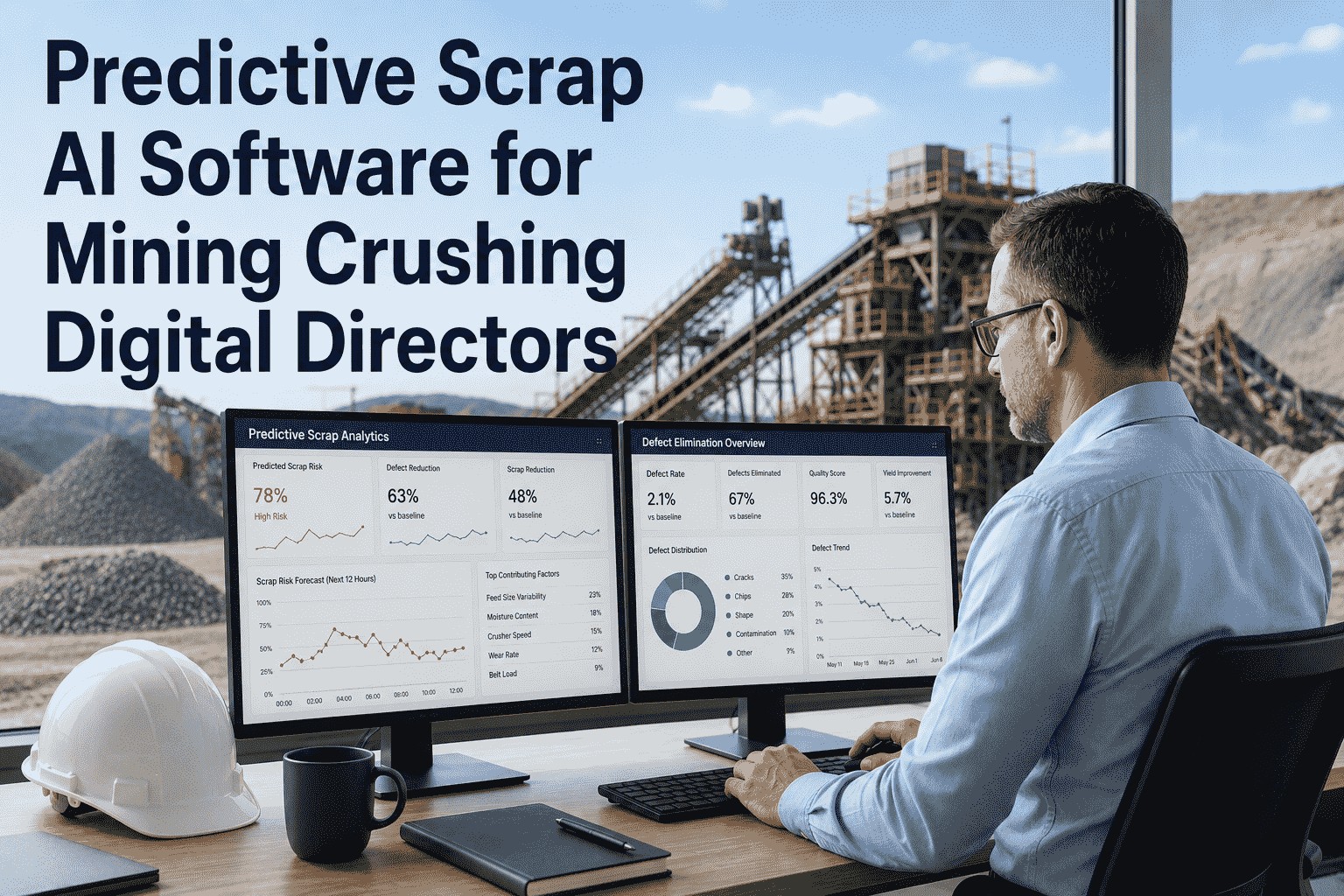
The predictive engine ingests data streams that already exist in most modern crushing plants: crusher power draw, closed-side setting, feed rate, ore hardness indices, moisture content, screen efficiency, and wear liner status. A multivariate machine learning model trained on historical scrap events learns the signature combinations that precede quality failures. When the model detects a pattern resembling a known scrap precursor, it pushes a risk score and recommended action to the operator dashboard. The operator does not need to be a data scientist. The system tells them what to adjust and by how much.
What 20-35% Labor Productivity Looks Like on the Plant Floor
The productivity gain is not theoretical. Operations that deploy predictive scrap analytics consistently report that operators spend less time inspecting, clearing, and documenting defects and more time optimizing throughput. The numbers translate directly to bottom-line impact.
Traditional Quality Control vs. Predictive Scrap Analytics in Crushing
The difference between a reactive and predictive quality program is not about the sophistication of the control room. It is about whether the operator sees the problem before or after it happens. Every minute saved in detection is a minute earned in throughput.
Deployment Timeline: From Data Connection to Productivity Lift in 8 Weeks
Predictive scrap analytics does not require a multi-month infrastructure project. iFactory deploys the model layer on top of your existing crusher sensors and control infrastructure. The timeline from data audit to operator dashboard is measured in weeks, not quarters.
Frequently Asked Questions
The Operator Is Your Most Valuable Quality Sensor. Give Them a Better Signal.
Experienced crushing operators develop an intuition for when the circuit is moving toward a scrap event. They hear the change in the crusher sound. They feel the vibration pattern shift. But intuition cannot be scaled across shifts, documented, or improved systematically. Predictive scrap analytics captures that intuition in a multivariate model and delivers it as a clear, actionable alert on every shift, for every operator, regardless of experience level.
iFactory's predictive scrap analytics deploys on your existing infrastructure, trains on your historical data, and puts a 20-35% labor productivity gain within reach of your operators. The technology exists. The data exists. The only question is whether your operation continues to react to scrap or starts preventing it. Book a Demo to see the operator dashboard configured for your crushing circuit, or Get In Touch to start your 8-week deployment.