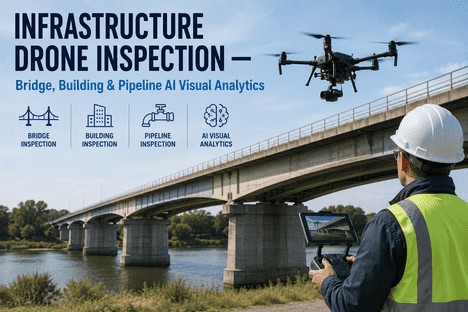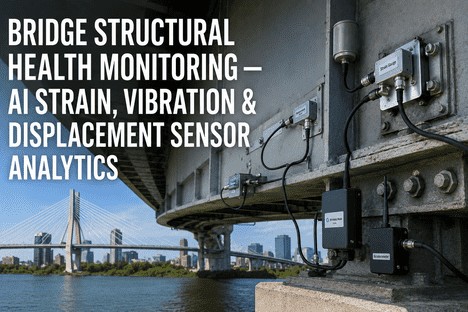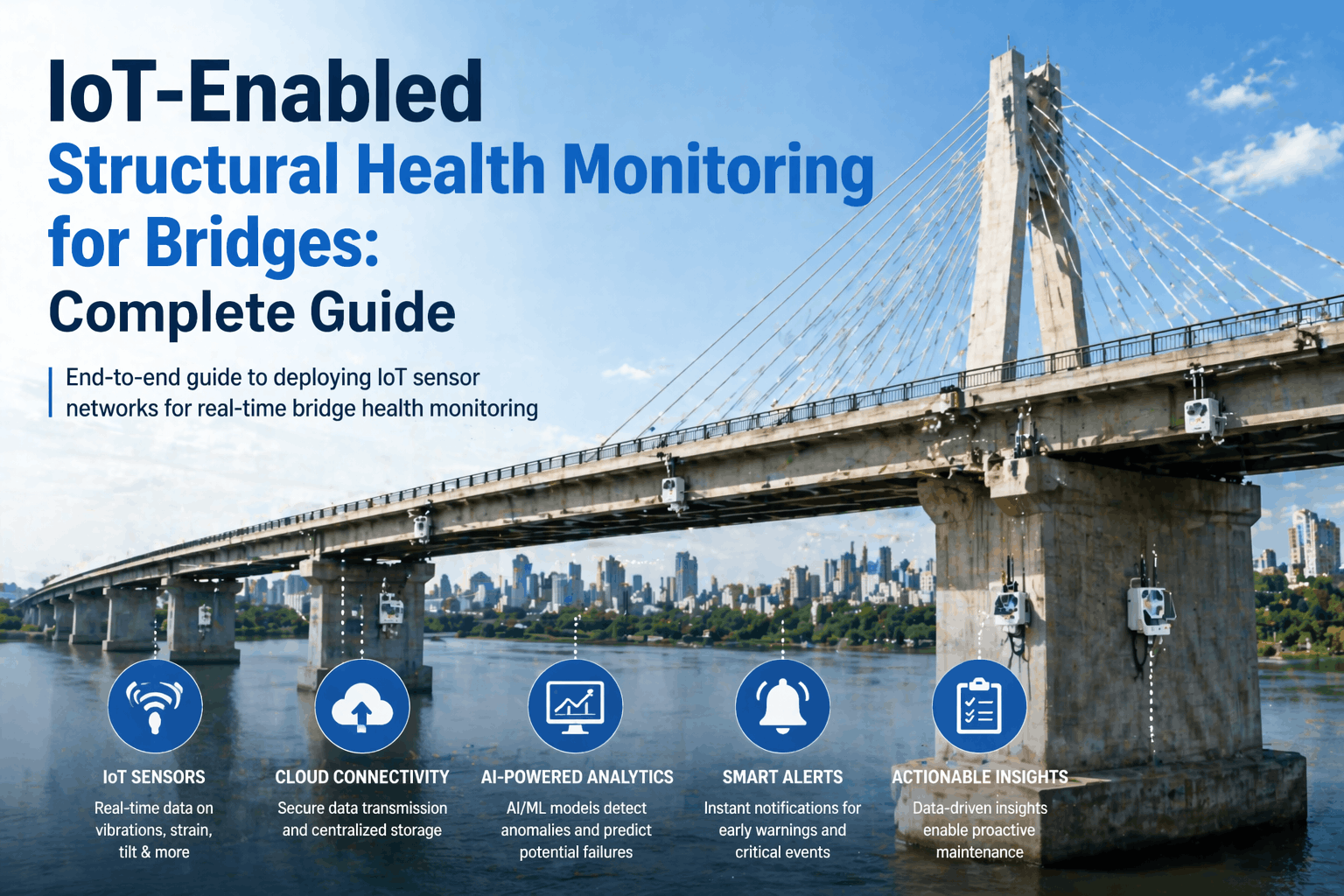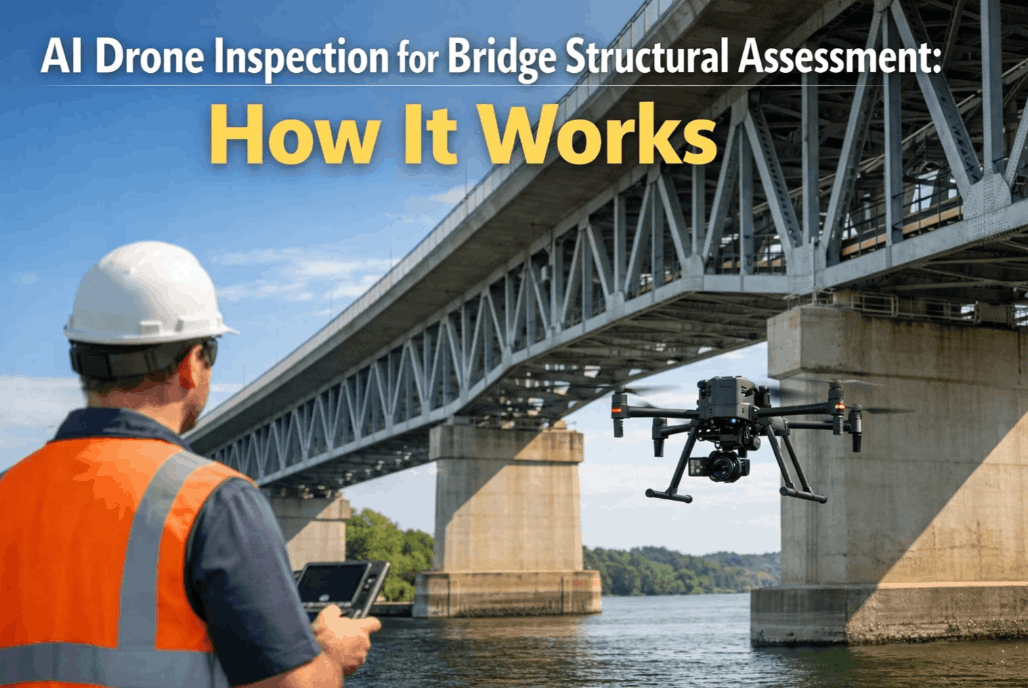
The era of the "snooper truck" and hazardous manual climbing is coming to an end. In 2025, AI-drone inspection for bridge structural assessment has become the gold standard for state DOTs and private infrastructure owners. By combining high-resolution 4K optics with multi-spectral sensors and Edge AI defect classification, iFactory delivers bridge integrity data that is 10x faster and 90% safer than traditional manual methods. Book a demo to see how we close the infrastructure accessibility gap.
Automate Your Bridge Structural Inspections Today
Deploy autonomous drone-mounted computer vision to identify fatigue cracks, spalling, and corrosion at scale — without shutting down traffic.
Why Traditional Bridge Inspections Are No Longer Viable
Manual bridge inspections are plagued by high costs, logistical complexity, and significant safety risks. Traffic closures, expensive heavy machinery, and human error in data logging create a bottleneck that leaves thousands of bridges under-monitored. iFactory's AI-drone platform eliminates these constraints by providing high-fidelity visual data capturing sub-millimeter defects that human inspectors miss. This shift transforms structural health monitoring from a reactive expense into a proactive risk-mitigation strategy. Schedule a survey to audit your asset portfolio.
What AI Drone Vision Does for Structural Integrity
iFactory's Bridge AI Inspection copilot integrates directly with your hardware to deliver high-resolution defect mapping, thermal stress audits, and autonomous flight logging.
Drone AI for Bridges: Real-World Structural Scenarios
The true impact of drone bridge structural analysis is measured by the catastrophic failures it prevents. These scenarios highlight the critical moments where iFactory AI vision protects capital and public safety.
Scenario 1: Post-Earthquake Rapid Survey
Following a 6.2 tremor, 5 critical bridges required immediate clearance. AI drones mapped all structural nodes and provided "Go/No-Go" status in hours, not days, keeping traffic flowing safely.
Scenario 2: High-Elevation Cable Inspection
Suspension cables at 400ft were scanned for wire breakage using ultra-zoom AI vision. Eliminating the need for hazardous rigging saved $450k in insurance and labor overhead for the local municipality.
Scenario 3: Underwater Pilling Health
Tidal bridge pillings were inspected using multi-spectral cameras during low tide. AI identified subsurface erosion patterns and structural cracks that were invisible to standard visual surveys. Book a demo.
Scenario 4: Coastal Corrosion Mapping
AI tracked the "Corrosion Velocity" on a coastal steel bridge. By predicting when loss-of-section would become critical, the owner deferred a $2.5M paint restoration project for 24 safe months.
AI Drone vs Traditional Inspection: The Metrics Matter
For DOT directors and financial controllers, this comparison illustrates the massive performance and safety gap between manual snooper trucks and intelligent drone platforms.
| Inspection Vector | Manual (Snooper Truck) | Standard UAV (No AI) | iFactory AI-Drone |
|---|---|---|---|
| Cost per Span | $15,000 – $25,000 | $5,000 – $8,000 | $2,000 – $3,500 |
| Traffic Disruption | High (Lane closures) | Low (Shoulder only) | Zero (Over-flight) |
| Detection Precision | 5.0mm (Human eye limit) | 2.0mm (Zoom camera) | 0.5mm (AI-enhanced vision) |
| Internal Box Access | Manual entry (Hazardous) | None (No GPS) | Autonomous (GPS-Denied) |
| Data Analysis Time | 2–4 weeks (Manual report) | 1 week (Photo review) | Real-time (Auto-annotated) |
| Regulatory Compliance | Manual logging | Digital photos | Digital Twin audit trail |
How iFactory Bridge Structural AI Platform Is Built
Modern bridge drone AI requires more than just a camera. Our architecture is built to withstand high-altitude winds, electromagnetic interference from steel, and GPS-denied environments.
Hardware-Agnostic AI Ingestion
Compatible with DJI Matrice 350, Skydio X10, and specialized thermal sensors. Ingests raw video, photogrammetry scans, and LiDAR point clouds into a single unified workspace.
Edge-Processing Defect Logic
On-board processing classifies cracks and rust clusters in real-time. Only critical frames are flagged for high-bandwidth upload, saving time on field data transfers.
Physics-Validated Modeling
Our AI models are trained on real structural failure physics. We don't just find "spots"; we identify structural stress patterns and categorize repair priorities based on engineering risk.
Closed-Loop CMMS Integration
High-priority defects auto-populate your SAP PM or Maximo CMMS with annotated photos, geo-location, and failure severity, making repair planning instant. Book a demo.
AI Drone Bridge Structural Assessment: Frequently Asked Questions
Safe. Fast. Millimeter-Precise Discovery.
iFactory's bridge structural AI copilot delivers real-time natural language troubleshooting, automated SOP lookup, and intelligent work order creation — purpose-built for high-speed infrastructure monitoring.