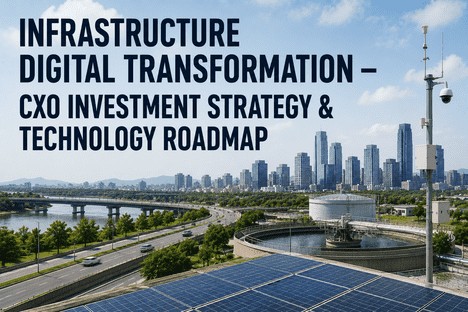
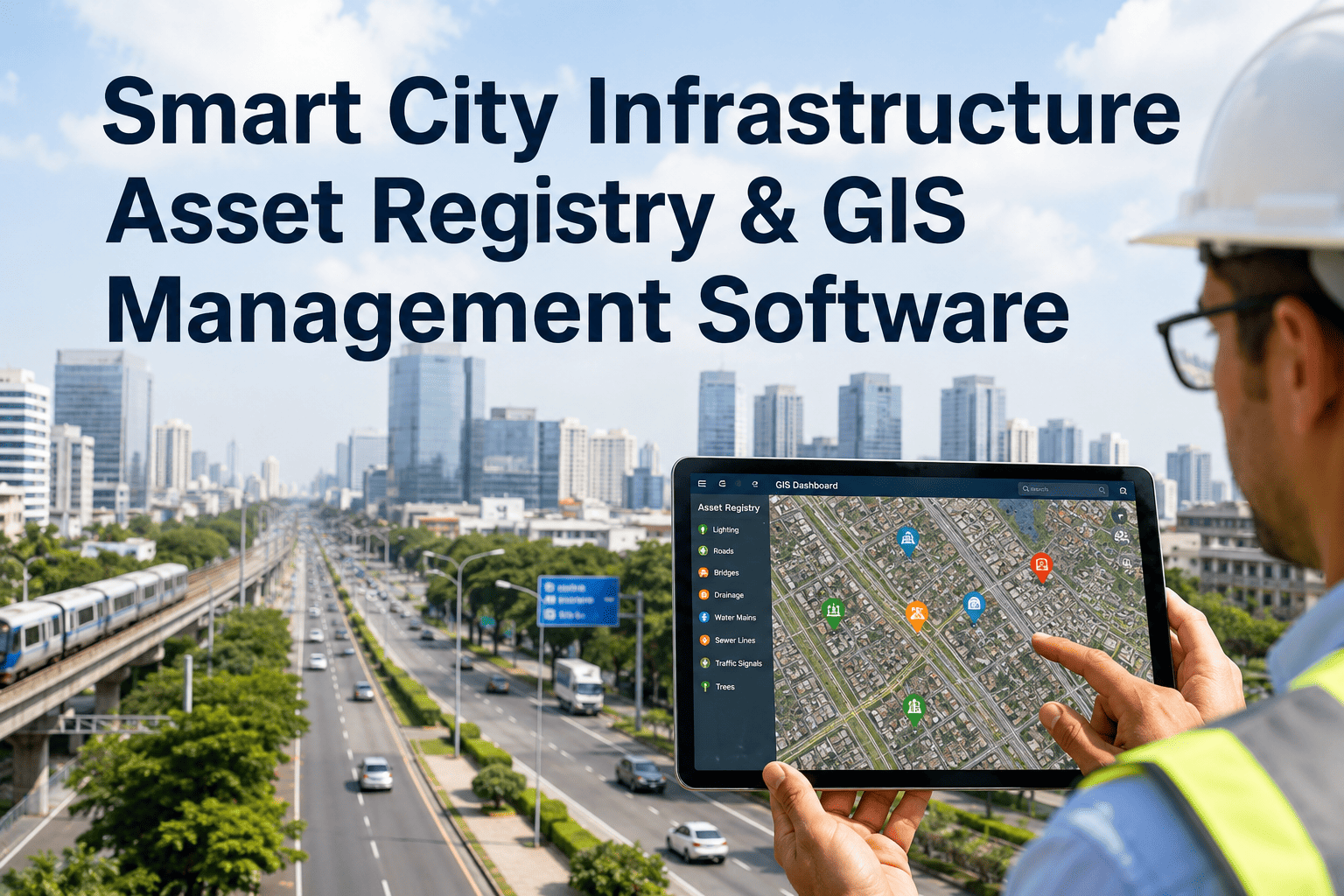
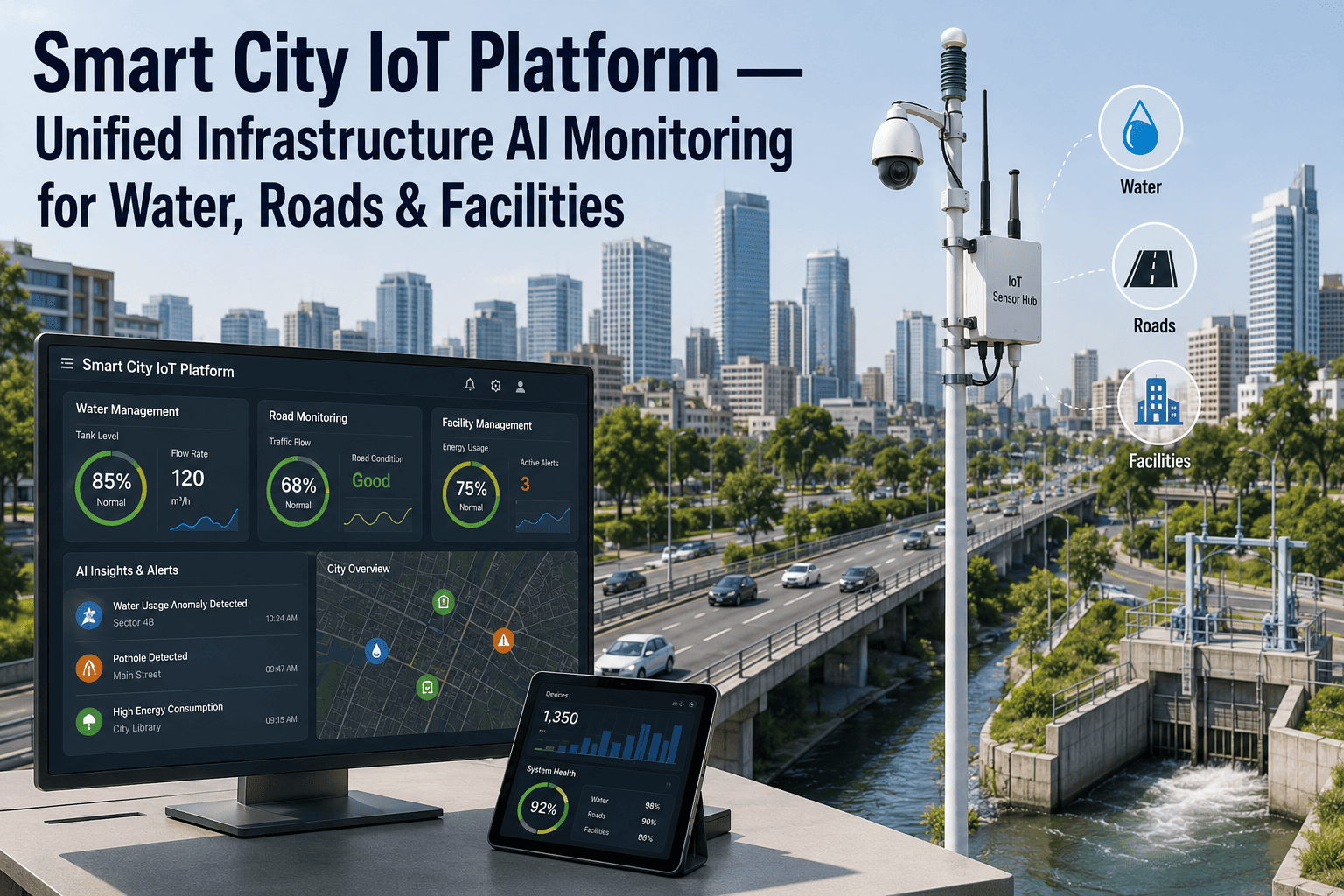
Every VP of Operations managing infrastructure portfolios faces the same pressure in 2025: the board has seen the numbers, the mandate is clear, and the window to act is narrowing. Digital transformation is no longer a future initiative — it is the current competitive divide. The organisations deploying AI analytics and IoT intelligence across their infrastructure now are not running experiments. They are resetting performance baselines that laggards will spend the next decade trying to reach. The strategic question for CxOs is not whether to invest — it is how to sequence the technology roadmap so that every dollar deployed converts into measurable operational outcome, not another stalled pilot.
AI-Powered Infrastructure · Predictive Analytics · IoT Intelligence · Portfolio-Scale Monitoring
Turn Your Infrastructure Data Into Operational Decisions — Without Hiring a Data Science Team to Do It.
iFactory delivers AI condition intelligence, 24/7 remote monitoring, and continuous model optimisation as a fully managed service — live across your asset portfolio in weeks, not months.
$4.6T
Projected global digital transformation investment by 2030 — a 29% annual growth rate that signals the scale of competitive pressure already in motion
10–30x
ROI ratio organisations consistently report within 12–18 months of deploying AI-driven predictive maintenance across infrastructure portfolios
41%
Infrastructure downtime reduction achieved by operators deploying AI condition monitoring — with full ROI recovered within the first year of deployment
95%
Of organisations implementing predictive maintenance report positive returns — 27% recover full investment within 12 months of go-live
Why CxOs Are Putting Digital Transformation at the Top of the Infrastructure Agenda
The pressure on infrastructure leaders to digitalise is not coming from technology vendors — it is coming from the operational data itself. Aging asset portfolios, tightening maintenance budgets, climate resilience mandates, and the compounding cost of unplanned downtime are making the case for AI investment more forceful with each passing quarter. PwC and Oxford Economics estimate a cumulative $151 trillion in global infrastructure investment will be needed through 2050. The organisations capturing the value from that capital will be those that pair physical asset ownership with the digital intelligence layer to manage it efficiently at scale. Those without it will be running on instinct while competitors operate on evidence.
The Cost of Standing Still
Unplanned downtime now costs 50% more than it did in 2019
Inflation, supply chain complexity, and increased production pressures have made equipment failures dramatically more expensive. Every hour of unplanned downtime that a predictive AI system would have flagged two weeks earlier is a compounding cost that traditional maintenance schedules cannot avoid. Fortune 500 companies stand to save an estimated $233 billion annually through full AI maintenance adoption. For mid-market infrastructure operators, the proportional case is equally compelling.
The Regulatory Pressure
Climate compliance and ESG reporting are demanding data granularity no manual system can provide
Net-zero pathways, EU taxonomy obligations, and carbon reporting frameworks require timestamped, attributable evidence of every operational intervention. Infrastructure directors building the compliance case for boards and regulators need AI systems that log decisions automatically — not teams compiling reports from disconnected sources after the fact. The gap between reporting requirements and manual capability is widening fast.
The Competitive Divide
AI-mature organisations already outperform peers by 2.5x on revenue growth
Accenture's 2024 research found that companies with fully modernised, AI-led processes achieved 2.5 times higher revenue growth and 2.4 times greater productivity than peers. In infrastructure, this performance gap is measured in maintenance cost per asset, unplanned downtime frequency, and capital redeployment speed. The organisations widening this gap now are not planning — they have deployed and are compounding returns.
The CxO Technology Roadmap — Four Investment Phases That Define Transformation Maturity
Infrastructure digital transformation is not a single technology deployment — it is a staged capability build. The organisations that achieve measurable outcomes fastest are those that follow a disciplined sequencing of investment phases, where each layer creates the data and operational foundation for the next. The roadmap below defines the four phases that distinguish mature transformation programmes from disconnected pilots.
1
Phase One · Foundation
Data Layer — Connect What You Already Have
Most infrastructure organisations already own the data — sensor feeds, CMMS records, work order histories, SCADA outputs. The first investment phase is unification: connecting these dispersed data sources into a coherent operational layer without requiring system replacement. Asset sensor feeds, CMMS platforms, and operational databases are linked through standard industrial protocols, creating the single-source environment that all subsequent AI layers require to function. Organisations that skip this phase and attempt to deploy AI models on siloed data discover the problem quickly — models trained on incomplete data produce unreliable outputs that erode operational trust within months.
Timeline: 4–8 weeks with managed integration · No system replacement required
2
Phase Two · Intelligence
AI Analytics — Convert Data Into Condition Predictions
With a unified data layer live, AI models can begin learning baseline behaviour patterns for each asset class. Machine learning algorithms identify anomalies in vibration, temperature, pressure, and power consumption data — flagging developing failures weeks before they manifest as operational incidents. Modern systems predict failures 30–90 days in advance with 80–97% accuracy. The critical distinction between effective and ineffective deployments at this phase is model maintenance: AI predictions degrade silently as operational conditions change. Continuous monitoring of model accuracy and automated retraining cycles are not optional add-ons — they are what separates sustainable predictive intelligence from a pilot that works for six months and deteriorates quietly thereafter.
80–97% failure prediction accuracy · 30–90 day advance warning on critical assets
3
Phase Three · Scale
Portfolio Visibility — Aggregate Intelligence Across Every Site
Single-site AI deployments deliver value — but they do not deliver the management leverage that distinguishes transformative from incremental change. Phase three extends the intelligence layer across the full asset portfolio: every site, every asset class, every condition indicator aggregated into a unified network view. Operations directors managing ten or twenty sites gain the ability to rank intervention priorities fleet-wide, identify cross-site patterns in asset behaviour, and allocate maintenance resource to the highest-risk locations rather than the loudest ones. The portfolio view is where the investment case stops being site-specific and becomes a board-level strategic capability.
Fleet-wide risk ranking · Cross-site condition comparison · Director-level overview dashboard
4
Phase Four · Optimisation
Prescriptive AI — From Prediction to Automated Decision
The 2026 frontier for mature infrastructure AI programmes is prescriptive intelligence: systems that not only predict when a failure will occur but recommend the specific intervention, automatically schedule the maintenance window, and trigger the parts order — all before the first symptom is visible to a human operator. Organisations reaching this phase are compounding the ROI gains from the earlier phases through automation of the decision loop itself. The prescriptive layer does not replace operational judgement — it removes the administrative burden of acting on predictive intelligence so that the team's capacity is focused on the decisions that require human expertise rather than the ones that can be systematised.
Automated work order generation · Parts procurement integration · 200–400% ROI within 24 months
Ready to Map Your Transformation Roadmap? iFactory's Team Will Show You Exactly Where Your Portfolio Sits — And What Phase Two Looks Like.
No sales deck. A working session on your asset portfolio, your current data environment, and the fastest path to measurable condition intelligence.
Where the Investment Flows — Infrastructure Technology Priorities for 2025–2030
CxO investment decisions in infrastructure technology are consolidating around four capability domains that research and deployment data consistently identify as the highest-ROI areas. Understanding where the capital is moving — and why — is essential context for building an investment case that aligns with both operational evidence and market direction.
AI-Driven Predictive Maintenance
The single largest ROI domain in infrastructure AI investment. Organisations deploying AI predictive maintenance report 30–50% reductions in unplanned downtime, maintenance cost reductions of 18–40% compared to traditional approaches, and 20–30% extension in asset operating life. The predictive maintenance market is growing from $14 billion in 2025 to nearly $100 billion by 2033 — the fastest-growing segment in industrial AI. For CxOs allocating capital, this is the phase one investment with the fastest, most evidenced return profile.
IoT Sensor Networks and Edge Intelligence
IoT sensor prices have fallen 80–90% over the past decade, making continuous asset monitoring economically viable at portfolio scale for the first time. With 2.5 billion IoT-enabled devices already deployed across smart infrastructure globally, the instrumentation barrier has effectively been removed. Edge AI — inference capability deployed at the point of data generation — enables real-time anomaly detection without cloud round-trips, critical for environments where latency is operationally significant. The AIOps market is projected at 15.2% annual growth through 2030, with edge capabilities leading adoption in high-throughput industrial environments.
Smart City and Connected Infrastructure Platforms
Smart city investments are the largest public-sector AI infrastructure deployment category, with India alone committing $14 billion across 100 cities through the Smart Cities Mission. The most effective programmes share a consistent architecture: a unified data layer across domains, AI analytics on top, and decision workflows connecting operational alerts to executive action. Cities achieving the highest documented ROI are not those with the most sensors — they are those with the most integrated data architectures. The smart city model is increasingly being adopted by private infrastructure operators managing large multi-site portfolios, where the same architecture delivers equivalent management leverage.
Climate Resilience and Energy Optimisation AI
AI-driven energy management tools are projected to improve infrastructure energy efficiency by up to 25% in 2025. For infrastructure operators with sustainability commitments and carbon reporting obligations, this domain converts regulatory pressure into operational ROI — with every AI intervention timestamped, logged, and attributable for compliance purposes. The compounding benefit is significant: predictive maintenance that prevents equipment failures also prevents the energy waste associated with degraded asset operation, creating a sustainability return alongside the maintenance cost reduction.
The Investment Decision Framework — What Separates Transformations That Deliver From Those That Stall
Research on infrastructure AI deployments consistently identifies the same dividing line between programmes that deliver measurable operational outcome and those that stall at pilot. It is not technology selection — the available platforms are sufficiently mature. It is the investment decision framework: how the CxO team structures the build-versus-buy choice, sequences the capability phases, and ensures that the operational model for running AI at scale is as considered as the technology choice itself.
The Five Decision Variables That Determine Transformation ROI
Time to first operational value
The window between investment decision and measurable outcome is the most underestimated variable in CxO planning. Managed AI services deploy in four to eight weeks. In-house builds take 12–24 months. For most boards, the ROI demonstration timeline makes managed deployment the only viable path to maintaining approval through the next budget cycle.
Operational model for 24/7 coverage
AI condition monitoring generates alerts around the clock. The CxO investment plan must account for who responds to the 3 a.m. anomaly — and what capability they need to respond effectively. A platform that delivers raw sensor alerts without context creates on-call burden without operational value. Classified alerts with asset history and recommended action are what convert monitoring into decisions.
Model accuracy over a multi-year horizon
AI models degrade as operational conditions change. Seasonal patterns, fleet additions, process modifications — all of these shift the baseline against which models make predictions. Investment plans that do not account for continuous retraining are planning for a capability that deteriorates silently. Successful deployments treat model accuracy management as an ongoing operational commitment, not a post-deployment assumption.
Scalability across the portfolio
The transition from single-site pilot to full portfolio deployment is where most in-house AI programmes stall. Each new site or asset class requires engineering work proportional to the first deployment. Managed services absorb that complexity within the service scope — new sites and asset classes are onboarded without triggering internal project cycles. The scalability model is what separates portfolio-level transformation from a collection of site-level experiments.
Data sovereignty and security architecture
For multi-jurisdictional infrastructure portfolios, data residency requirements are a non-negotiable constraint that must be designed into the platform architecture from the start. Regional data partitioning, encrypted transit, role-based access, and audit logging are the baseline — compliance documentation for regulated infrastructure sectors is a requirement, not an add-on, and must be included in vendor assessment before any platform decision is finalised.
"
Before deploying iFactory's infrastructure analytics platform, our maintenance team was responding to failures after citizens reported them. Now we predict 80% of critical asset faults two to three weeks before they surface — infrastructure downtime has dropped by 41% in 18 months, and our maintenance budget planning is accurate for the first time in the department's history. Full ROI was achieved within the first year.
— Infrastructure Director, Municipal Operations Portfolio
Build vs. Buy vs. Managed Service — The CxO Decision Matrix
The infrastructure AI delivery model decision is the investment choice that most directly determines whether digital transformation produces measurable portfolio-level outcome or remains a collection of departmental experiments. The three delivery models available to CxOs differ substantially across every dimension that matters to an Operations Vice President.
Infrastructure AI — Delivery Model Comparison for CxO Decision-Making
Dimension
iFactory Managed Service
In-House Build
Software Licence
Deployment speed
4–8 weeks to first live condition intelligence output
12–24 months — pipeline, team hire, model development, deployment
3–6 months — integration and configuration handled internally
Internal headcount
None — operations teams consume outputs, not manage infrastructure
3–8 FTEs minimum across data, ML, and platform operations
1–2 FTEs for integration and internal platform management
Model accuracy management
Continuous — drift detection and retraining within service scope
Degrades silently without dedicated MLOps resource
Operator must purchase and manage retraining workflows internally
Portfolio scalability
New sites and asset classes onboarded within service — no internal project required
Every addition is a new engineering project — cost scales with portfolio
Partial — internal integration work required per addition
24/7 alert coverage
Included — monitoring, alert triage, and escalation management in service
On-call rota required — additional headcount or support cost
Platform runs 24/7 but alert response needs internal coverage
Conclusion
The infrastructure digital transformation investment wave is already underway. The PwC-Oxford Economics Global Infrastructure Outlook projects $151 trillion in global infrastructure investment through 2050. The organisations extracting the most value from that capital will be those with the AI analytics layer to manage it intelligently — predicting failures before they occur, optimising maintenance spend against actual asset condition, and giving CxO-level visibility across portfolio-wide operations in real time.
The technology is no longer the barrier. The operational model for deploying AI at scale — without building a data science team, without managing a data pipeline, and without running a 24/7 alert triage function internally — is what determines whether transformation produces board-level outcome or stalls at departmental pilot. For Operations VPs who need predictive intelligence live across their full asset portfolio within a quarter, not a financial year, the managed service model is not the compromise position. It is the correct architecture for the operational reality most infrastructure organisations face in 2025.
iFactory's AI managed service delivers 24/7 remote monitoring, continuous model optimisation, managed data integration, and fleet-wide condition intelligence — as a service, live in weeks. Book a demo to see how the platform maps to your portfolio's asset types and site count, or talk to an expert about your current monitoring environment and what the transformation roadmap looks like from here.
Your Transformation Roadmap Starts With the Data You Already Have. iFactory Manages the AI That Makes It Actionable.
24/7 monitoring, continuous model optimisation, managed data integration, and portfolio-level condition intelligence — deployed as a fully managed service for Operations leaders who need AI at scale without building the team to run it.
Frequently Asked Questions