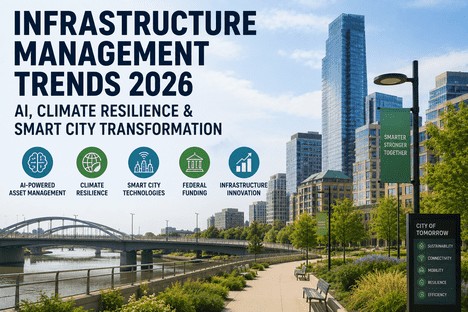
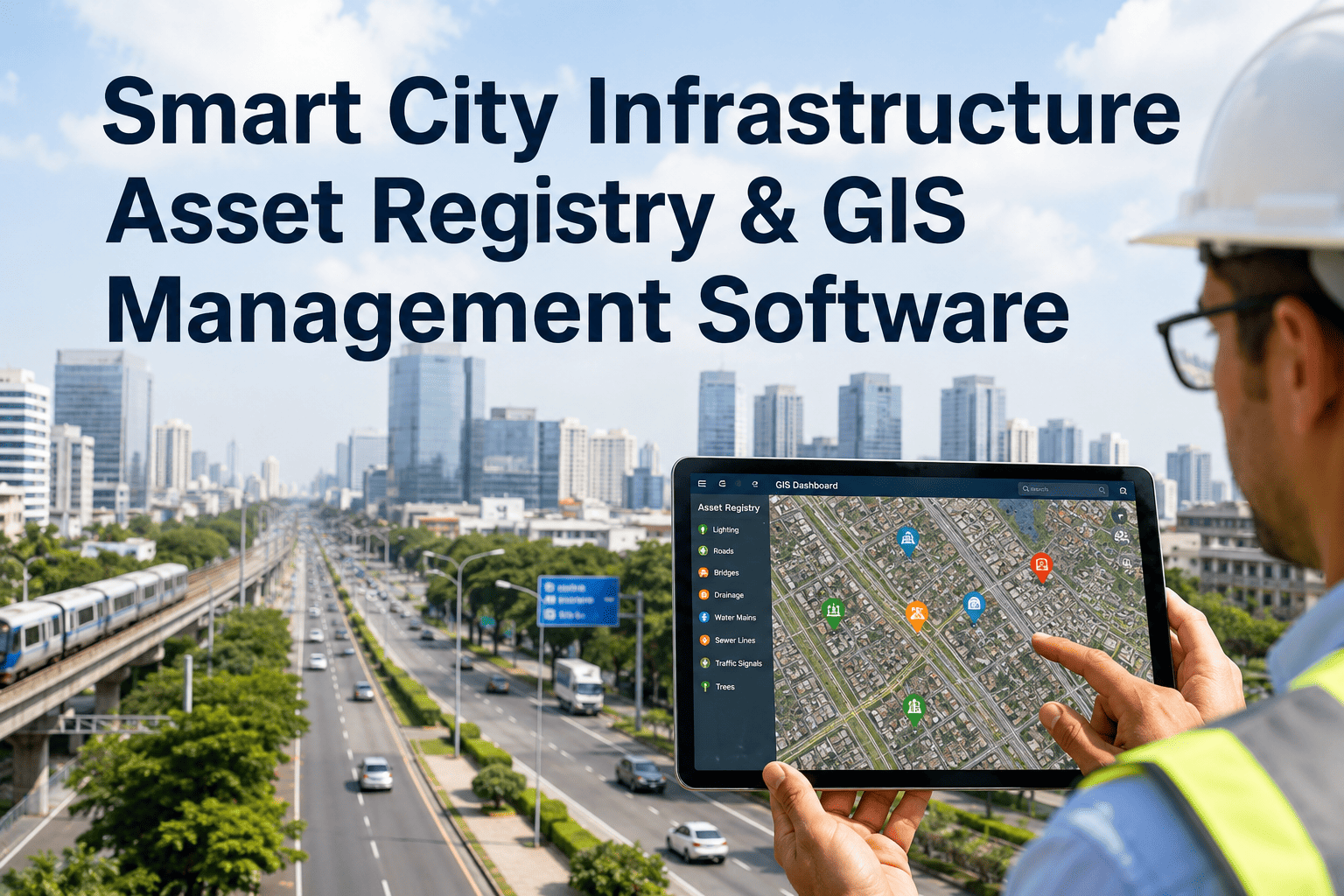
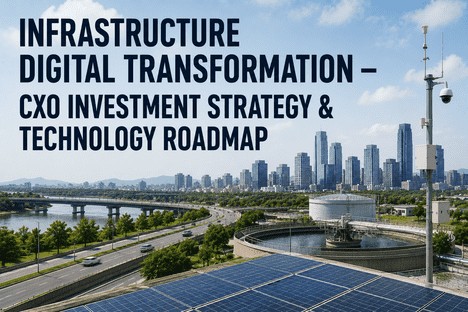
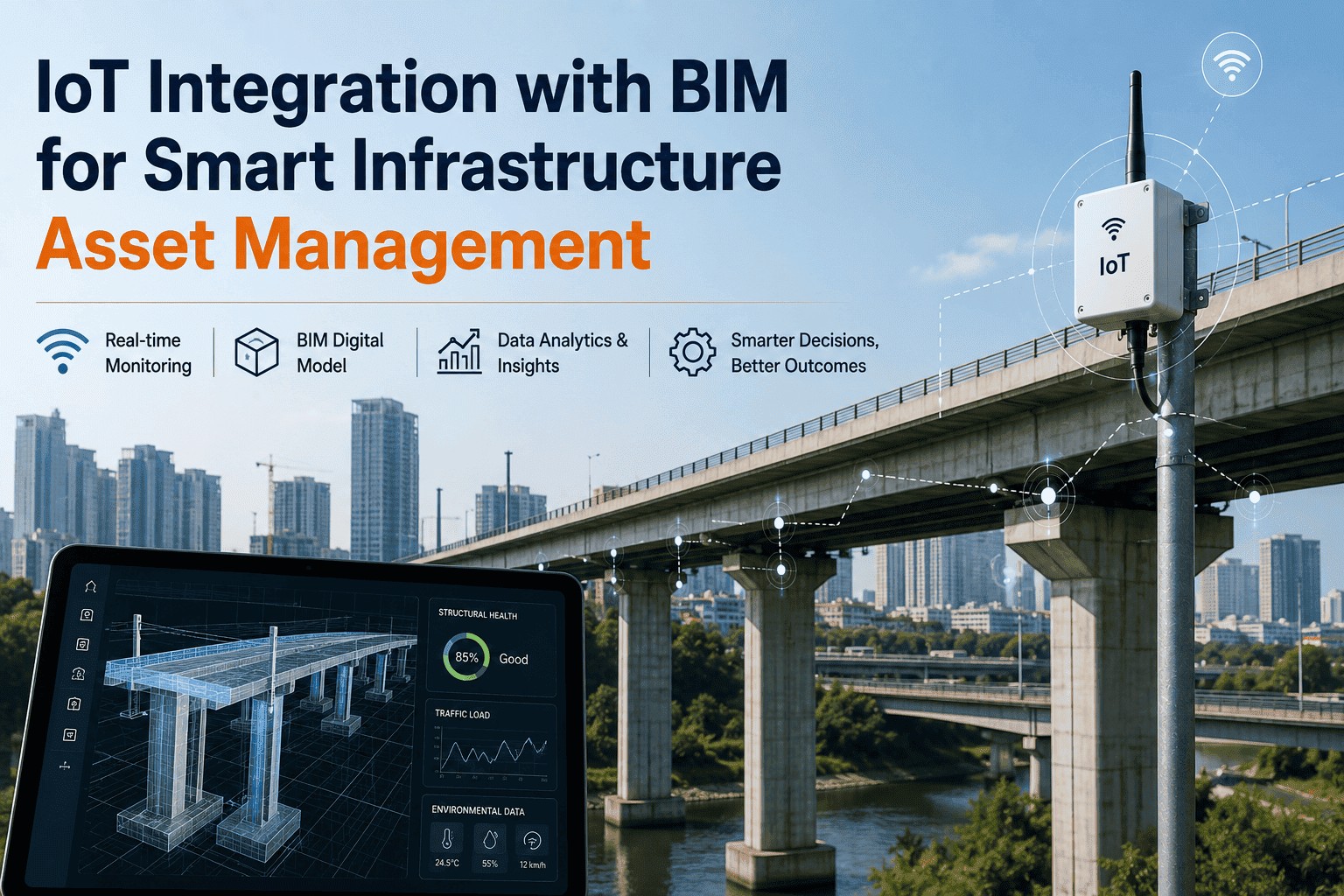
The infrastructure management landscape in 2026 is defined by three converging forces: artificial intelligence moving from experimental pilot to operational necessity, climate resilience shifting from planning exercise to capital project reality, and smart city technology transitioning from proof-of-concept to citywide deployment. For VP-level operations leaders managing portfolios across multiple sites and asset classes, these forces represent both unprecedented complexity and a rare window to build competitive advantage. The decisions made in the next twelve months will determine which infrastructure organisations emerge with lower downtime, lower operating cost, and higher asset utilisation — and which continue fighting fires that their competitors have already learned to predict.
Infrastructure Management 2026 — Key Trends at a Glance
Three Forces Reshaping How Infrastructure Portfolios Are Managed — and Who Operates Them Best
AI-powered predictive maintenance, climate-driven capital planning, and smart city technology adoption are converging to create a new operational standard for infrastructure management. The gap between organisations that deploy these capabilities as managed services and those that attempt in-house builds is widening faster than most operations leaders realise.
The 2026 Infrastructure Management Landscape in Numbers
Before examining each trend in detail, the macro picture clarifies why 2026 is a defining year for infrastructure operations. The data points below represent the market forces, cost realities, and performance benchmarks that operations leaders are using to shape their 2026-2027 strategy.
$19.27B
AI-driven predictive maintenance market projected by 2032, growing at 39.5% CAGR from 2026 as infrastructure operators shift from reactive to intelligence-led asset management
40-65%
Reduction in unplanned downtime reported by operators deploying AI-powered predictive maintenance at portfolio scale across multiple infrastructure sectors
$127B
Climate-related infrastructure losses absorbed across Asia-Pacific in 2025 alone, driving regulatory mandates for climate stress testing on all Class A infrastructure by 2028
25%
Average travel time reduction from AI-optimised traffic systems in smart cities, with emissions cuts of 20% — demonstrating the operational ROI of intelligent infrastructure at city scale
Trend 1: AI-Powered Predictive Maintenance Moves from Edge Innovation to Operational Standard
The most significant shift in infrastructure management across 2026 is the transition of AI-driven predictive maintenance from a pilot project status to the expected operational baseline for asset-intensive organisations. The market data supports this: the AI predictive maintenance sector reached $2.61 billion in 2026 and is forecast to hit $19.27 billion by 2032 at a 39.5% compound annual growth rate. These numbers reflect a structural change in how infrastructure operators think about asset management, not a temporary technology cycle.
What Changed in 2026
AI moved from data science projects into operational workflows
The defining shift is that AI condition monitoring is no longer owned by a separate data science function. In 2026, the leading infrastructure operators have embedded predictive intelligence directly into maintenance workflows — where the AI output is a work order recommendation with a confidence score, not a dashboard that requires a data scientist to interpret. Edge AI devices capable of running inference locally without cloud dependency have accelerated this transition, particularly in sites with limited connectivity.
The Performance Data
40-65% downtime reduction at portfolio scale
Operators deploying AI predictive maintenance across full asset portfolios consistently report 40-65% reductions in unplanned downtime and 20-35% decreases in maintenance spend. The performance gap between organisations with portfolio-scale AI deployment and those still running reactive maintenance has widened to the point where it directly impacts budget allocation and board-level confidence in operations leadership.
The Implementation Reality
In-house builds stall. Managed service deployments scale.
The majority of organisations that attempt to build AI predictive maintenance capability in-house find themselves stalled at the pilot stage — unable to bridge the gap between a model that works in a test environment and a production system that delivers reliable predictions across a diverse asset portfolio. This is where the managed service model has gained its 2026 momentum: operators who need intelligence at portfolio scale are choosing managed delivery over internal build projects that take 12-24 months and rarely reach full deployment.
The Deployment Models That Define 2026 Outcomes
Managed AI service
Live in weeks. Full portfolio coverage. Continuous model optimisation included. No internal data science team required.
In-house AI build
12-24 months to first production model. 3-8 additional FTEs. Ongoing pipeline and drift management costs. High risk of pilot-stage stall.
Software licence only
3-6 months integration. Requires internal team to manage platform, interpret outputs, and maintain model accuracy. Limited 24/7 coverage.
Trend 2: Climate Resilience Moves from Planning to Capital Project Reality
The 2026 infrastructure management agenda is being shaped by climate resilience in a way that would have been difficult to predict even three years ago. The shift is not driven by environmental reporting targets alone — it is driven by the measurable financial impact of climate events on infrastructure assets. The Asia-Pacific region alone absorbed $127 billion in climate-related infrastructure losses during 2025. Regions that invested in resilience upgrades between 2020 and 2024 experienced 35-45% lower per-event losses compared to those that deferred investment. This performance differential is reshaping capital allocation decisions globally.
Climate Resilience Planning
Regulatory mandates accelerating: Japan's revised Basic Plan for National Resilience now requires climate stress testing for all Class A infrastructure by 2028 — a framework being studied by regulators across multiple jurisdictions
Infrastructure planning adopting ecosystem-level approaches that treat transport, water, energy, and digital networks as interconnected systems — recognising that a failure in one domain cascades across all others
Federal funding programmes increasingly conditioning grants on demonstrated climate risk assessment and resilience planning — making resilience capability a prerequisite for capital access rather than an optional upgrade
Infrastructure Resilience in Practice
Jakarta's AI-powered flood forecasting system now predicts risks six hours in advance by integrating rainfall sensors, river gauges, and weather services — shifting response from reactive to preventive
Provence's intelligent water network uses IoT sensors, smart meters, and AI analytics to monitor consumption, detect leaks, and forecast demand across 6,000 km of distribution infrastructure
Community microgrids and virtual power plants emerging as resilience infrastructure, with VPPs delivering 100 MW of backup capacity and microgrids providing 48 hours of carbon-free electricity during outages
Climate Resilience Is No Longer Optional. The Question Is How Fast You Can Deploy It Across Your Portfolio.
Managed AI infrastructure monitoring gives operations leaders the real-time asset condition data needed to build climate risk assessments, prioritise resilience investments, and demonstrate compliance with emerging regulatory frameworks — without building the data pipeline and analytics layer internally.
Trend 3: Smart City Technology Adoption at Infrastructure Portfolio Scale
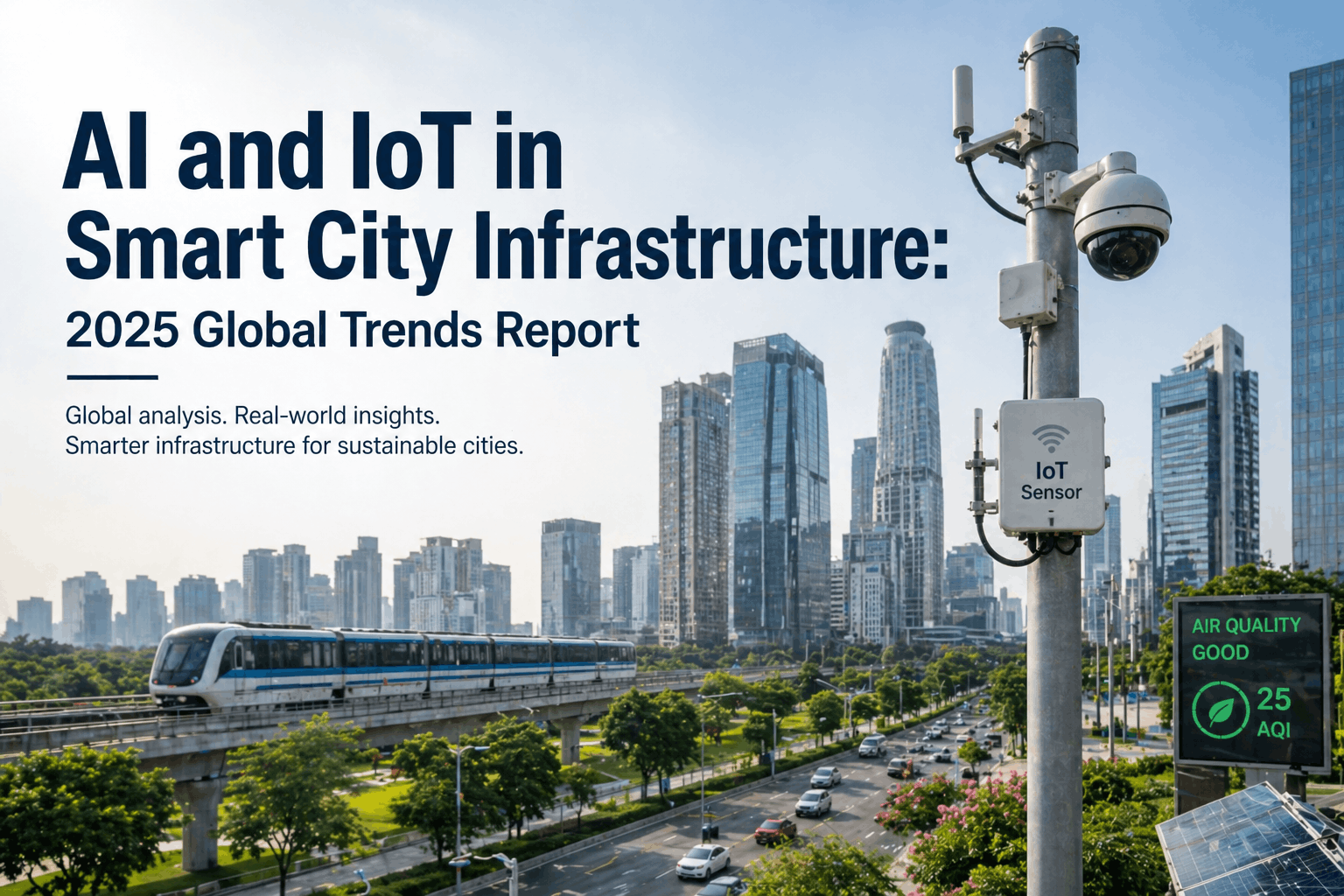
Smart city technology in 2026 has moved decisively beyond the pilot phase. AI traffic optimisation systems are delivering 25% travel time reductions and 20% emission cuts. IoT waste management networks have reduced overflow incidents by 80% and cut waste truck runs by 90%. These are not projected benefits — they are measured outcomes from deployments that have reached citywide scale. For infrastructure operators managing portfolios across urban environments, smart city technology adoption creates both an opportunity and an expectation: the same intelligence capabilities being deployed in public infrastructure are increasingly expected in private and commercial asset portfolios.
Intelligent Mobility
AI traffic systems and MaaS platforms reshaping urban transport infrastructure
AI-optimised traffic management has delivered measurable 25% reductions in travel times and 20% lower emissions across deployed cities. Mobility-as-a-Service platforms have shifted 38% of users away from daily car use, accelerating demand for smart parking, EV charging corridors, and integrated transport data platforms that infrastructure operators must now support across their portfolios.
Smart Utilities
IoT sensor integration converting passive infrastructure into responsive networks
Smart waste bins with IoT compaction sensors reduced overflow by 80% and collection frequency by up to 80%. Smart water networks using AI leak detection have cut non-revenue water losses by 25-35% in deployed systems. For infrastructure operators, the message is clear: assets equipped with intelligent monitoring outperform passive assets across every operational metric that affects the bottom line.
Integrated Platform Governance
The emerging standard is unified infrastructure intelligence across all asset classes
The most advanced operations in 2026 are those that have moved beyond siloed smart systems to integrated infrastructure intelligence platforms. These platforms aggregate condition data across mobility, energy, water, waste, and building systems into a single operational view — enabling cross-system optimisation that individual point solutions cannot deliver. This integrated approach is becoming the benchmark against which portfolio performance is measured.
Trend 4: Federal Funding and Policy Tailwinds Reshaping Infrastructure Investment
Infrastructure investment in 2026 is being shaped by a rare alignment of federal funding programmes, regulatory tailwinds, and private capital flows that together represent the most favourable capital environment for infrastructure modernisation in a generation. The US federal infrastructure package continues releasing funds for projects that meet resilience and digital modernisation criteria. Similar programmes in Europe, Asia-Pacific, and the Middle East are creating a global pipeline of funded infrastructure work that is testing the delivery capacity of the sector.
Key Developments Shaping the Infrastructure Investment Landscape
Federal grants tied to resilience criteria
Infrastructure funding packages increasingly require climate risk assessment and digital monitoring capability as conditions for capital access — making AI condition intelligence a prerequisite for grant eligibility
Private capital flowing into digital infrastructure
ClearBridge Investments and other major fund managers cite AI-driven power demand, decarbonisation, and infrastructure modernisation as the three strongest tailwinds in the infrastructure asset class through 2030
Regulatory mandates accelerating globally
From Japan's climate stress testing requirements to the EU's infrastructure resilience directives, regulatory frameworks are converging around mandatory digital monitoring and climate risk assessment for infrastructure assets
Why 2026 Demands a Different Operational Model for Infrastructure Leaders
For VP-level operations leaders, the convergence of these four trends creates a strategic imperative that cannot be met through incremental improvements to existing operating models. The complexity of deploying AI predictive maintenance across a multi-site portfolio, integrating climate resilience into capital planning, adopting smart city technology standards, and navigating the federal funding landscape simultaneously requires capabilities that most internal operations teams do not have and cannot build quickly enough.
The Built-In-House Trap
Hiring the 3-8 technical FTEs needed for an internal AI build is difficult in a market where 60% of businesses already report AI recruitment difficulty
The 12-24 month timeline for internal builds creates a gap during which portfolio performance continues to degrade relative to competitors already deploying managed AI intelligence
Model drift, pipeline maintenance, and 24/7 alert coverage create ongoing costs that most internal project plans underestimate by 40-60%
The Managed Service Advantage
Live in weeks, not months — iFactory's managed service delivers portfolio-wide condition monitoring within four to six weeks of engagement start
Zero internal data science hiring required — model management, pipeline maintenance, and 24/7 alert triage included within the service scope
Portfolio scalability without engineering projects — new sites and asset classes are onboarded within the service, not as new internal capital requests
We spent fourteen months trying to build our predictive maintenance AI internally. By the time we had a model that worked in the lab, the operational conditions in our portfolio had already shifted. The model we trained on last year's data was already losing accuracy by the time we were ready to deploy. We transitioned to a managed service model and had network-wide condition monitoring live across eleven sites within eight weeks. The capability we had been trying to build for over a year was running before the quarter ended.
— Operations Director, Industrial Infrastructure Group — 22 Years Multi-Site Asset Management
Conclusion: The Infrastructure Operations Model for 2026 and Beyond
The infrastructure management trends of 2026 point in a single direction: the operating model that delivered acceptable performance in 2020 is no longer competitive. AI-powered predictive maintenance is becoming the expected standard, not the competitive differentiator. Climate resilience planning is moving from optional to mandatory. Smart city technology adoption is creating the expectation that all infrastructure assets should generate continuous condition intelligence. And federal funding programmes are making digital monitoring capability a condition of capital access rather than an operational choice.
For VP-level operations leaders, the question is not whether to deploy these capabilities but which delivery model will get them to operational scale fastest. The in-house build path requires talent that is scarce, timelines that conflict with budget cycles, and ongoing operational costs that most project plans underestimate. The managed service path delivers portfolio-wide intelligence in weeks, scales with portfolio growth, and includes the model management, pipeline maintenance, and 24/7 coverage that internal teams struggle to sustain.
iFactory's AI managed service delivers 24/7 remote monitoring, continuous model optimisation, managed data integration, and fleet-wide condition intelligence across infrastructure portfolios — live within weeks, and without requiring a single internal data science or IT infrastructure hire. Book a demo to see how the managed service maps to your portfolio's asset types and site count, or talk to an expert about your current monitoring environment and what a transition to managed AI would look like.
Frequently Asked Questions
Your Infrastructure Portfolio Already Generates the Data. iFactory Manages the AI That Turns It Into Operational Advantage.
24/7 remote monitoring, continuous model optimisation, managed data integration, and portfolio-level condition intelligence — delivered as a fully managed service for operations leaders who need AI at scale without building the team to run it.