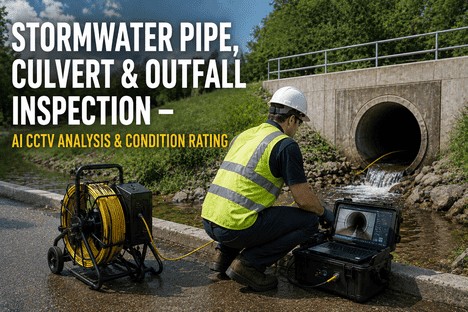
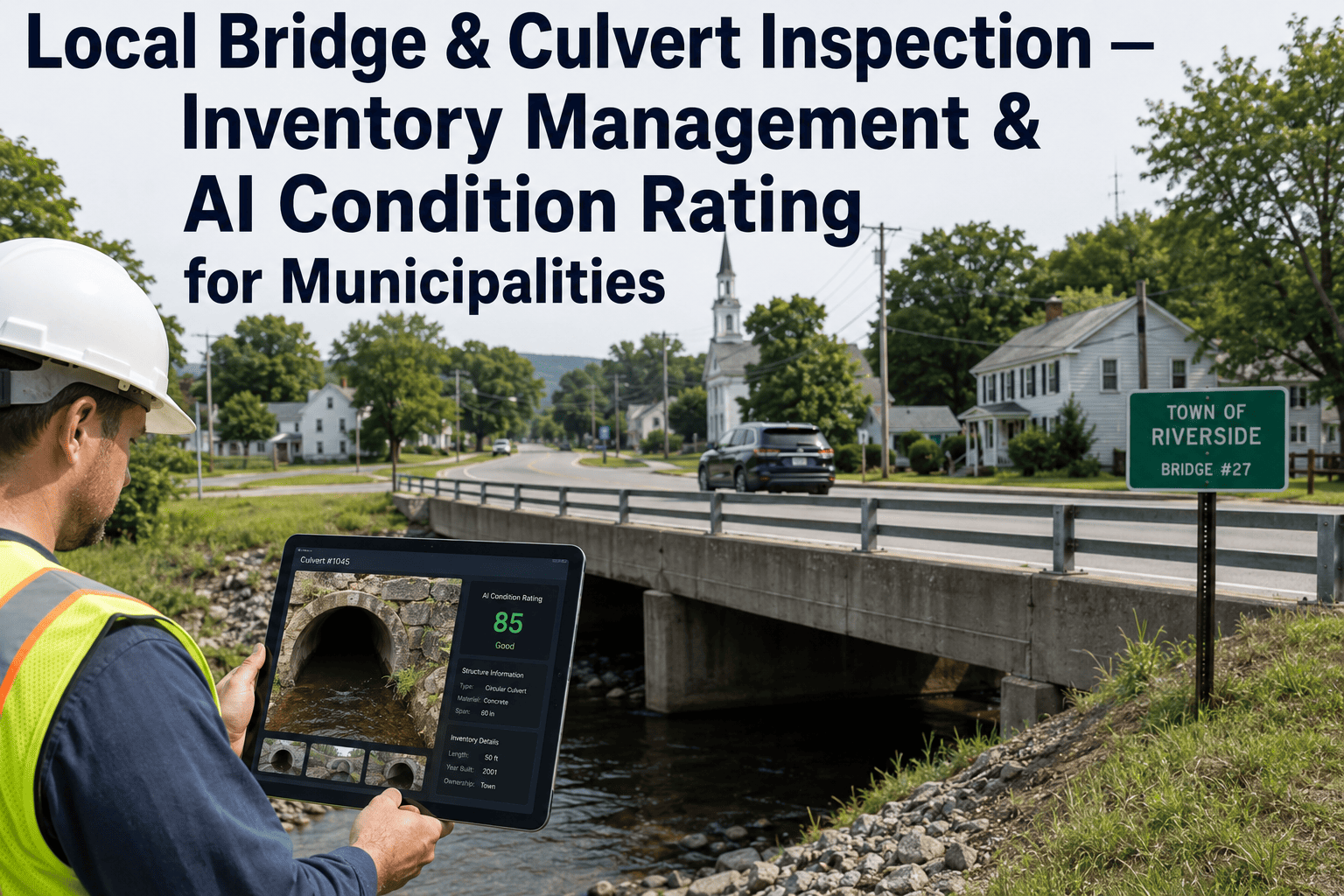
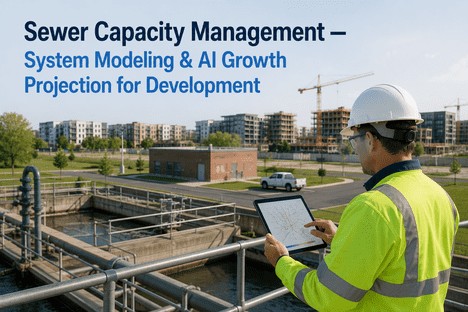
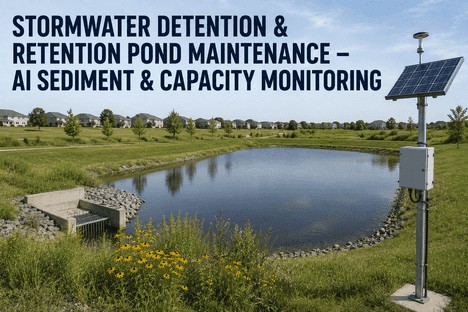
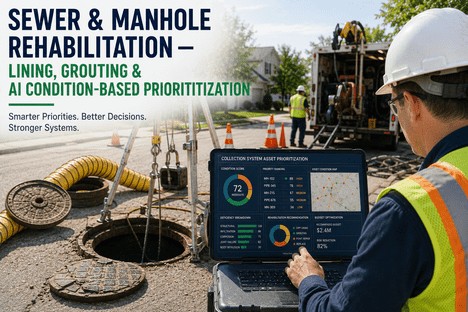
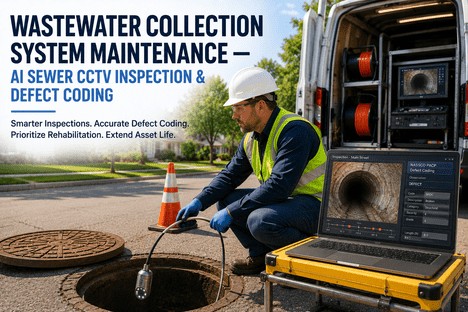
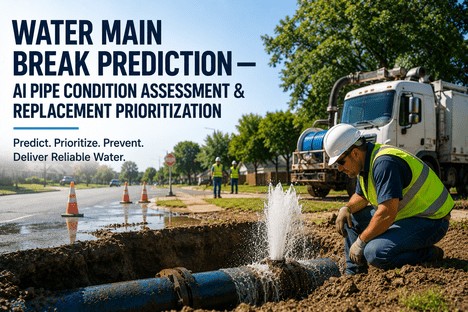
The United States has over 2 million miles of stormwater pipes, culverts, and outfall structures — more than half of which were installed before 1970. The ASCE 2025 Report Card gives stormwater infrastructure a grade well below passing, with an estimated investment gap of over $100 billion. Meanwhile, the frequency of extreme precipitation events has risen sharply, pushing aging drainage systems beyond design capacity and exposing communities to flooding, sinkholes, and environmental damage. For reliability engineers and municipal asset managers, the mandate is clear: you cannot manage what you cannot measure. The gap between the condition data your stormwater system generates and the rehabilitation decisions that data could drive is not a technology problem. It is an inspection throughput and classification problem. CCTV crawlers and pole cameras already capture millions of linear feet of pipe footage every year — but the vast majority of that footage sits on hard drives, reviewed manually at a fraction of the speed it was captured. AI-powered CCTV analysis changes this equation entirely. Automated defect detection, NASSCO PACP-compliant condition grading, and risk-based prioritisation turn raw inspection footage into a decision-ready asset management pipeline. For reliability engineers responsible for stormwater system performance, the question is no longer whether to adopt AI condition assessment. It is how quickly you can deploy it.
AI Sees What Manual Review Misses. iFactory Operationalises What AI Finds.
From CCTV upload to PACP-graded condition report in hours instead of weeks. Deploy AI-powered stormwater pipe inspection across your catchment and prioritise rehabilitation where risk is highest.
Miles of stormwater pipes and culverts across the US — the majority ungraded and unassessed beyond installation records
5-10x
Productivity gain in linear feet inspected per day when AI-assisted CCTV coding replaces full manual review of footage
60%+
Of surveyed stormwater utilities cite aging infrastructure as their most critical operational challenge in 2025
$115B
Estimated 20-year need for MS4 stormwater systems — condition data is the prerequisite for defensible capital allocation
The Inspection Bottleneck — Why Most Stormwater Condition Data Never Reaches a Decision
Reliability engineers managing stormwater networks face a paradox that is common across civil infrastructure: the tools for capturing inspection data have outpaced the tools for turning that data into decisions. A modern CCTV crawler can inspect 2,000 to 3,000 linear feet of storm pipe per day in ideal conditions. A pole-mounted camera at an outfall can capture high-resolution footage of structural condition, obstruction levels, and scour patterns in under thirty minutes. The bottleneck is not capture. It is classification. Each inspection hour generates between 30 and 60 minutes of footage that must be reviewed frame-by-frame by a certified PACP coder. At an industry average of two to four hours of review time per inspection hour, a single year's inspection programme for a mid-sized municipality can generate months of backlogged video — footage that was paid for to inform decisions but never actually delivers them.
01
Manual Coding Cannot Scale
NASSCO PACP coding standards require each defect observation to be classified across a four-level code hierarchy and graded on a 1-to-5 severity scale. A human coder processing eight hours of daily footage must maintain consistent classification accuracy across crack types, joint displacements, infiltration signs, and structural deformations — all while managing fatigue. Studies consistently show coding inconsistency rates above 20% between different coders reviewing the same footage, and intra-coder variance of 10-15% across a single shift. The standard is excellent. Scaling it manually is the problem.
02
Backlog Creates Risk Blind Spots
When inspection footage takes weeks or months to process, the condition data it contains arrives too late for the decision cycle it was meant to inform. A culvert with a grade 4 structural defect identified in June but not reported until September may fail during an August storm event. The gap between capture and classification is not an operational inconvenience — it is a liability exposure. Reliability engineers need condition data in time to adjust maintenance intervals, reallocate inspection budgets, and trigger emergency rehabilitation before failure, not after.
03
Data That Sits on Drives Is Not an Asset
Most municipalities have years of historical CCTV footage stored across hard drives, network folders, and legacy software systems. This footage represents millions of dollars in past inspection investment — but it cannot be queried, trended, or fed into asset management models because it was never coded to a consistent standard. Unprocessed inspection data is a sunk cost with zero decision value. AI reclassification of historical CCTV footage changes this entirely, turning a decade of past inspections into a retrospective condition baseline without re-inspecting a single linear foot.
Before AI — The Manual Workflow
CCTV field capture at 1x speed
↓
Footage transferred to PACP coder (2-4 hrs review per inspection hr)
↓
Manual defect coding with 10-20% inconsistency rate
↓
Report generation at 4-6 week turnaround
↓
Decisions made on stale or incomplete data
After AI — The Automated Workflow
CCTV field capture at 1x speed
↓
AI defect detection at 10x-50x real-time speed
↓
PACP-compliant condition grading with consistent accuracy
↓
GIS-linked asset condition report in 24-48 hours
↓
Risk-based prioritisation and rehabilitation decisions same week
How AI CCTV Analysis Transforms Stormwater Condition Assessment
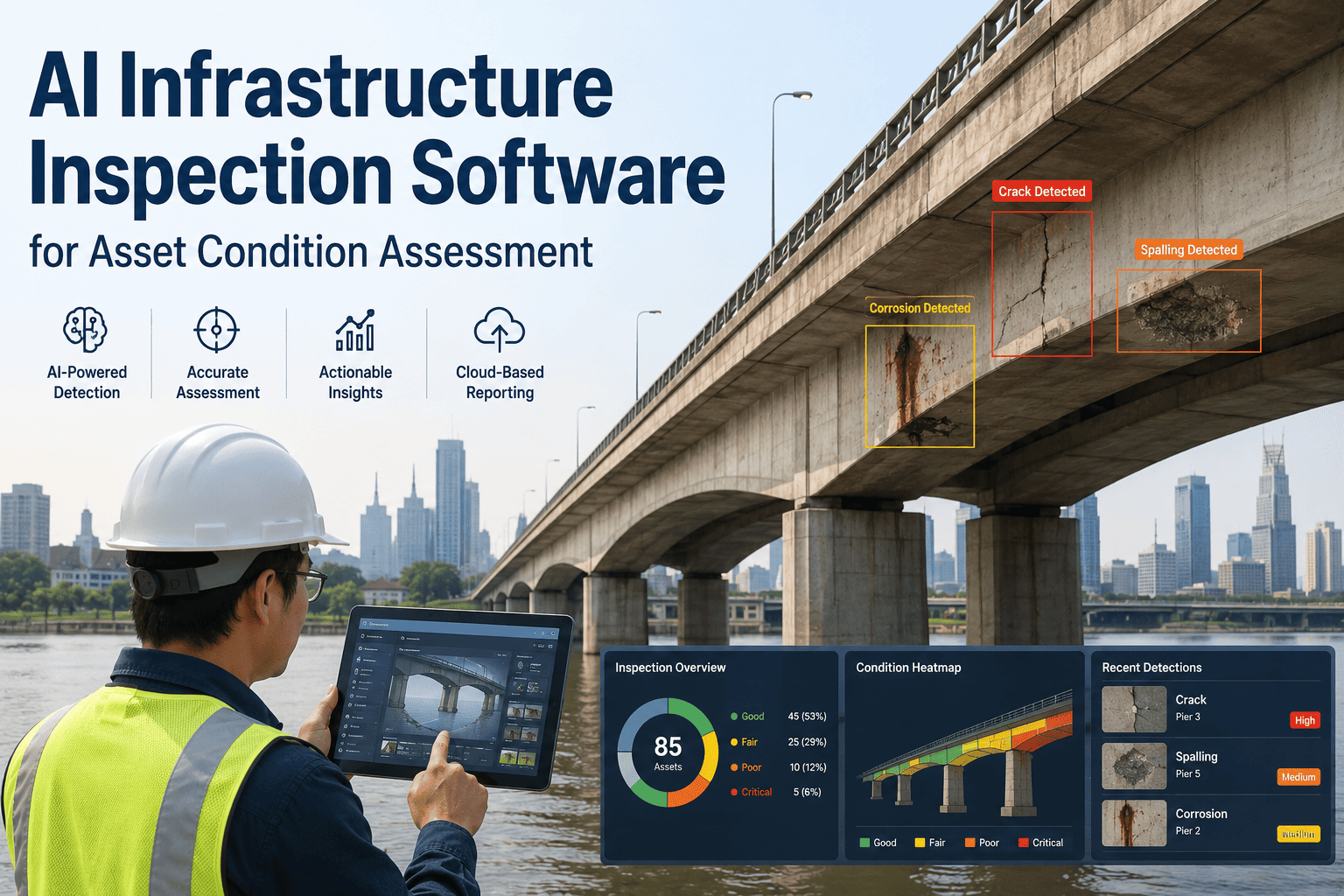
AI-powered pipe inspection systems use deep learning computer vision models trained on hundreds of thousands of labelled CCTV images to automatically detect, classify, and grade defects across stormwater pipes, culverts, and outfalls. The technology has matured rapidly over the past three years, moving from research labs into production deployment at municipal utilities, engineering consultancies, and environmental services contractors across North America, Europe, and Australia. Here is how it works in practice.
01
Upload Footage
Raw CCTV footage from any crawler, pole camera, or push camera is uploaded to the cloud platform. No special field workflow change required.
02
AI Detects Defects
Computer vision models trained on 200,000+ annotated pipe images identify structural defects, O&M issues, and construction features at up to 50x real-time speed.
03
Grades per PACP
Each defect receives a NASSCO PACP condition grade (1-5) for both structural and O&M categories. Quick Rating and Pipe Rating Index calculated automatically.
04
Prioritise & Plan
GIS-tagged results feed directly into asset management systems. Risk scores combine condition grade with consequence of failure to prioritise rehabilitation spend.
NASSCO PACP Condition Grading — What the Grades Mean for Stormwater Assets
Grade
Severity Level
Structural Defect Examples
Recommended Response
1
Minor
Hairline cracks, surface wear, minor deposits less than 15% obstruction
Routine observation. Re-inspect at standard interval.
2
Minor to Moderate
Open cracks, joint displacement under 1/2 inch, root masses under 25%
Monitor trend. Schedule cleaning or spot repair within 12 months.
Engineering assessment. Plan rehabilitation within 12-24 months.
4
Significant
Broken pipe sections, holes, deformation exceeding 10%, severe infiltration
Urgent rehabilitation. High risk of collapse if delayed beyond 6 months.
5
Most Significant
Collapsed pipe, complete loss of structural integrity, active sinkhole above asset
Immediate intervention. Emergency replacement required. Public safety risk.
What AI Condition Assessment Delivers for Stormwater Reliability Engineers
The measurable outcomes of deploying AI-powered CCTV analysis across a stormwater pipe, culvert, and outfall network extend beyond inspection throughput. They change the relationship between condition data and capital planning.
5x
Inspection Throughput
Field teams inspect more linear feet per day because post-processing no longer constrains the capture schedule. One municipality reported inspecting 18 miles of storm sewer in a single month versus 4 miles under the previous manual coding workflow.
90%
Coding Consistency
AI models apply the same classification criteria to every frame of every inspection. The 10-20% inter-coder variance of manual review is eliminated. Condition trend data over time becomes meaningfully comparable because the coding baseline does not shift between inspectors or across shifts.
70%
Faster Rehabilitation Prioritisation
From footage upload to a ranked list of pipe segments sorted by condition grade and consequence of failure, the turnaround drops from 4-6 weeks to 24-48 hours. Reliability engineers can align inspection outputs with capital planning cycles rather than retrospective reporting schedules.
We had 12 years of CCTV footage across 140 miles of stormwater pipe. Some of it was coded to PACP. Most of it was sitting on external drives with handwritten logs. We ran the unprocessed footage through an AI classification model and had a condition baseline for the entire network in three weeks. We identified nine pipe segments at grade 4 that we had been walking past every day. Two of them had active voids forming above the crown. The AI model did not just save us money on re-inspection. It prevented a road collapse that would have shut down a major arterial for weeks.
— Senior Reliability Engineer, Municipal Stormwater Utility — 22 Years Infrastructure Asset Management
Your Stormwater Network Is Aging. Your Inspection Data Does Not Have To.
iFactory enables reliability engineers to upload CCTV footage, receive AI-graded PACP condition reports, and prioritise rehabilitation across stormwater pipes, culverts, and outfalls — all from a single platform. No more backlog. No more blind spots.
Conclusion — The Case for AI Stormwater Inspection Is a Case for Defensible Asset Management
The gap between the inspection data stormwater networks generate and the rehabilitation decisions reliability engineers need to make is not widening because capture technology is insufficient. It is widening because classification throughput has not kept pace with capture capacity. AI-powered CCTV analysis closes that gap — not by replacing the expertise of PACP-certified engineers and coders, but by removing the bottleneck that keeps their expertise focused on manual frame-by-frame review instead of strategic condition assessment and capital planning.
For reliability engineers managing stormwater pipes, culverts, and outfalls, the decision to adopt AI condition assessment is not a technology choice. It is a risk management choice. Every week of inspection footage that waits in a processing backlog is a week that a grade 4 or grade 5 defect remains invisible to the maintenance programme. Every year of historical footage that sits uncoded is a year of trend data that could have shifted a PM interval, adjusted a capital plan, or prevented a failure.
iFactory gives reliability engineers the AI infrastructure to process stormwater CCTV footage at speed, grade defects to NASSCO PACP standards consistently, and connect condition data directly to rehabilitation prioritisation and asset management workflows. The platform makes rapid condition assessment possible. The engineer's decision to act on it makes the network resilient. Book a Demo to see how iFactory's AI CCTV analysis maps to your stormwater network's inspection programme, or talk to an expert about configuring a pilot on your highest-risk catchment area.
Frequently Asked Questions
AI computer vision models for stormwater inspection are trained on footage from circular pipes (6 to 120 inch diameter), box culverts, catch basin laterals, manholes, outfall structures, detention vaults, and open channels. The models detect structural defects (cracks, fractures, deformation, collapse, holes), O&M defects (roots, deposits, infiltration, blockages, silt accumulation), and construction features (joint offsets, lateral connections, protruding taps). Each asset type and defect class is coded to NASSCO PACP standards. The platform supports footage from any CCTV crawler, push camera, pole camera, or drone-based inspection system without requiring proprietary capture hardware. Talk to an expert to discuss your specific asset inventory and inspection workflow.
Current-generation AI models for pipe CCTV analysis achieve defect detection accuracy rates of 85-95% across major defect categories when validated against PACP-certified coder ground truth. The key advantage is consistency — an AI model applies identical classification criteria to every frame, every inspection, every shift. Manual coding studies consistently report 10-20% inter-coder variance, meaning two certified coders reviewing the same footage will disagree on defect classification or severity grade in one of every five to ten observations. For trend analysis and deterioration rate modelling over time, consistent coding is more valuable than marginally higher single-inspection accuracy. Most production deployments use a human-in-the-loop workflow: AI generates the initial coded report, a PACP-certified coder reviews and validates findings, and the combined output delivers both speed and certified accuracy. Book a demo to see accuracy benchmarks on your own footage.
Yes. This is one of the highest-value applications of AI stormwater inspection technology. Most utilities have years of historical CCTV footage that was captured but never coded to PACP standards, or was coded inconsistently across different inspection programmes. AI models can process this archival footage at high speed, applying consistent PACP coding to all of it, and produce a retrospective condition baseline for the entire network without re-inspecting a single foot of pipe. This retrospective baseline enables reliability engineers to calculate deterioration rates across time (comparing historical condition at capture date with current re-inspection data), identify assets that have been at grade 4 for multiple inspection cycles without triggering intervention, and build the trend dataset needed to move from reactive to predictive maintenance planning. Talk to an expert about running a historical footage pilot on your archived inspection data.
Every defect detected and graded by iFactory's AI analysis is geo-tagged with pipe segment coordinates and linked to the asset's GIS record. The platform exports PACP-compliant databases, inspection reports, and defect photographs in formats compatible with major asset management platforms including Info360 Asset, Cityworks, Lucity, and Cartegraph. Each finding includes the NASSCO PACP code, condition grade (1-5), distance from entry point, clock position, photograph, and severity level. Auto-generated work orders can be pushed to your CMMS with map links, upstream and downstream context, and historical condition data for that specific pipe segment. This means maintenance crews see exactly which segment to investigate, what defect type to expect, and what rehabilitation method is indicated — without cross-referencing separate databases. Book a demo to see how iFactory integrates with your existing asset management stack.
Over 2 Million Miles of Stormwater Pipe. Most of It Has Not Been Assessed This Decade. Start with the Catchments That Matter Most.
iFactory gives reliability engineers the AI inspection platform to assess stormwater pipes, culverts, and outfalls at speed — with PACP-graded condition data that connects directly to rehabilitation planning and asset management decisions.