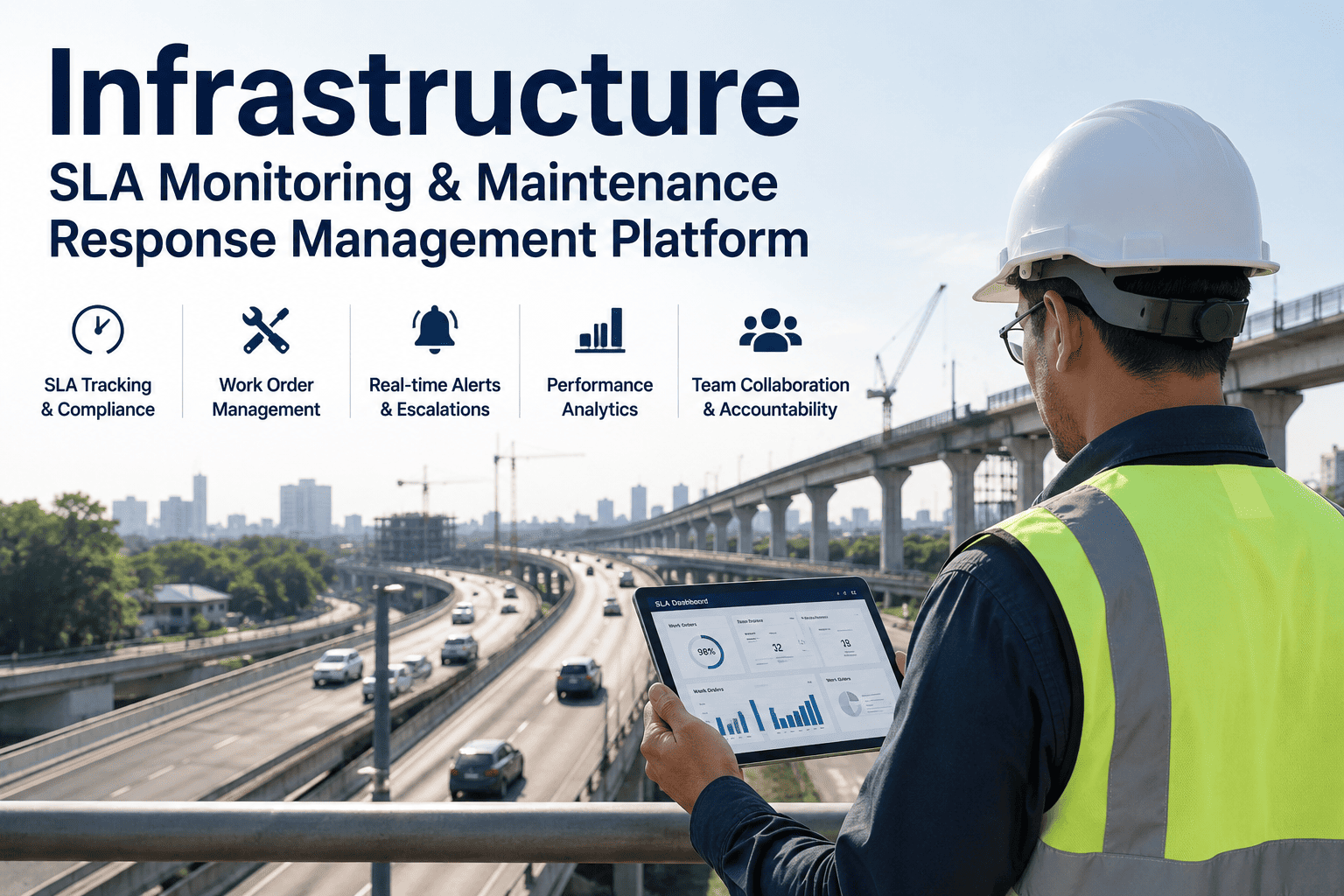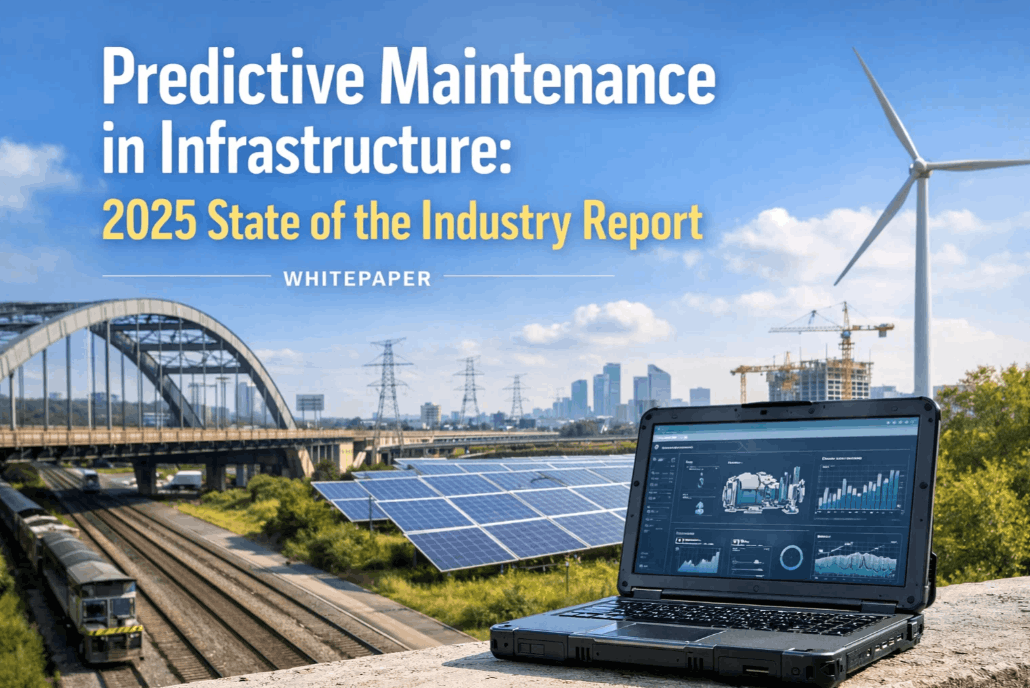
By 2025, the global infrastructure landscape has reached a critical tipping point. Decades-old civil engineering assets — from suspension bridges to municipal water networks — are being retrofitted with high-fidelity IoT arrays, shifting the industry from reactive repair cycles to autonomous, self-healing maintenance ecosystems. This 2025 State of the Industry report analyzes how iFactory’s AI-driven analytics compress infrastructure downtime by up to 60%, delivering a data-backed roadmap for asset managers to preserve capital while ensuring public safety. Book a Demo to see our 2025 infrastructure benchmarks.
Protect Critical Assets with Predictive AI & Digital Twins
Detect structural fatigue, grid instability, and pipeline leaks before they escalate into catastrophic failures — with automated regulatory compliance.
The 2025 Infrastructure Maintenance Landscape: A Shift to Autonomy
In 2025, infrastructure management is no longer a manual discipline. The integration of **Explainable AI (XAI)** and **5G-enabled Digital Twins** has transformed maintenance from a cost-center into a strategic asset. Civil engineers and utility directors are now utilizing prescriptive analytics that not only predict *when* a failure will occur but autonomously recommend the exact corrective action to mitigate risk. Book a Demo to explore the infrastructure AI roadmap.
The primary driver for this shift is the rising cost of unplanned outages. In the energy and water sectors, a single undetected leak or transformer failure can result in millions in lost revenue and regulatory fines. Real-time predictive maintenance software now captures 80–95% of available efficiency gains, reducing the human inspection burden by over 40 hours per month.
Three Critical Infrastructure Failure Vectors in 2025
Modern infrastructure failures follow complex degradation patterns that traditional sensors often miss. iFactory's 2025 AI models focus on three primary failure streams.
Structural Fatigue & Civil Decay
Bridges and tunnels suffer from micro-fractures and corrosive ingress that are invisible to the naked eye. AI-driven acoustic and vibration analysis identifies structural resonance shifts, predicting fatigue failure 3–6 months before visible cracking appears. Book a Demo to see civil health trending.
Grid Instability & Transformer Stress
Electrical grids are under unprecedented stress from decentralized energy sources. AI monitors thermal anomalies and dissolution gas levels in transformers, preventing cascading grid failures and "blue sky" outages that cost utility providers millions in service credits.
Hydraulic Stress & Pipeline Leakage
Water distribution systems lose 20–30% of treated water to micro-leaks. Machine learning identifies anomalous pressure decay patterns across vast pipe networks, pinpointing leaks within 5 meters and allowing for precision excavation without city-wide disruption. Book a Demo to quantify non-revenue water loss.
Infrastructure AI ROI: Valuations of Predictive Adoption
Predictive maintenance ROI in 2025 scales with the criticality of the asset. The table below summarizes validated savings across three infrastructure categories.
| Sector | Primary Risk | Annual Cost at Risk | Prevention Savings | Payback Period | Year-1 ROI |
|---|---|---|---|---|---|
| Civil (Bridges/Roads) | Structural collapse, rapid decay | $500K–$2.5M | $400K–$1.8M | 6–8 weeks | 9.2× |
| Energy & Electrical Grid | Transformer failure, grid outage | $1M–$5M | $850K–$4.2M | 4–6 weeks | 11.4× |
| Water & Wastewater | Non-revenue water, burst pipes | $300K–$1.2M | $250K–$900K | 8–10 weeks | 7.8× |
| Transportation (Rail/Tunnels) | Track misalignment, HVAC failure | $400K–$1.5M | $350K–$1.1M | 5–7 weeks | 8.5× |
In high-criticality energy sectors, AI deployment delivers over 11× first-year ROI. For bridge and civil managers, the cost of a single prevented failure often pays for the entire platform for an entire decade.
Five Key Benchmarks for Infrastructure AI Monitoring
Effective infrastructure analytics requires real-time integration across five critical data streams. Book a Demo to see these metrics in action.
1. Structural Resonance & Vibration (Modal Monitoring)
Continuous seismic and wind-load vibration analysis tracks the "modal signature" of civil assets. Deviations in natural resonance indicate material fatigue or foundation settlement long before visual inspectors can reach the site.
2. Thermal Gradient Analysis (Substations & Motors)
Infrared monitoring integrated into AI models detects hot-spots in electrical contacts and mechanical bearings. Real-time alerting signals maintenance when thermal thresholds exceed 15% of historical norms, preventing catastrophic fire risk.
3. Acoustic Leak Detection (Water/Gas Networks)
IoT acoustic sensors listen for high-frequency "hiss" profiles indicative of pinhole leaks. Machine learning filters out ambient city noise (traffic, construction) to pinpoint leak locations with 98% accuracy.
4. Digital Twin Synchronization Accuracy
In 2025, a Digital Twin is only as good as its data latency. iFactory synchronizes physical asset data with virtual models every 500ms, enabling sub-second simulation of operational stress and predictive "what-if" modeling.
5. Remaining Useful Life (RUL) Prediction
AI algorithms calculate asset RUL based on cumulative stress cycles. This enables infrastructure managers to defer major capital replacements (CapEx) by 2–5 years by identifying assets that are healthy despite their chronological age.
Compliance & Safety: Auditing Infrastructure Health in 2025
Regulatory standards (ISO 55001, ASCE 7-22) now require verifiable digital records of continuous asset monitoring. Manual inspection logs are no longer sufficient for insurance underwriting or federal funding audits. Book a Demo to see automated compliance reporting.
iFactory’s AI platform auto-generates tamper-proof health reports with blockchain-backed timestamps. Every sensor reading, alert response, and maintenance action is captured in a secure audit trail, ensuring that your facility remains 100% compliant with the latest safety mandates without manual data entry burden.
Digital Asset Governance Deliverables
- Automated Structural Logs: Real-time fatigue logs for bridge and civil assets.
- Certified Maintenance Trails: Documented proof of "Condition-Based Maintenance" for insurance.
- Emergency Response Workflows: Automated corrective actions triggered by AI detection.
- Cloud Archiving: Secure storage of 15+ years of infrastructure health telemetry.
By digitizing asset governance, infrastructure managers transform maintenance from a reactive burden into a documented strategic advantage, unlocking lower insurance premiums and higher bond ratings for infrastructure projects.
The Infrastructure AI Maturity Curve
Maturity in 2025 is defined by the depth of AI integration within the operational workflow.
| Maturity Level | Capability | Savings Capture | Typical Facility |
|---|---|---|---|
| Level 1 — Visual Inspections | Manual site visits, paper checklists | 0–5% | Rural roads, small municipal assets |
| Level 2 — SCADA Monitoring | Static pressure/voltage alarms | 10–20% | Legacy utilities, basic grid stations |
| Level 3 — IoT Intelligence | Continuous vibration/thermal sensors, cloud logs | 30–50% | Modern metropolitan water/grid nodes |
| Level 4 — Predictive Analytics | ML failure prediction, RUL modeling, auto-work orders | 60–80% | Smart cities, primary bridge networks |
| Level 5 — Autonomous Operations | Digital Twin closed-loop control, self-healing networks | 85–98% | Industry leaders, high-speed rail, smart grids |
Key Takeaways: Why Infrastructure Report 2025 Matters
The infrastructure gap is widening, but AI is closing it. Book a Demo to build your specific ROI model.
Speed is everything: Payback on infrastructure AI is typically under 8 weeks. Year-one returns exceed 7.8× across all core sectors.
Safety is automated: AI detects structural fatigue and grid stress months before human inspectors, preventing high-liability failure events.
Compliance is a byproduct: Tamper-proof logs meet ISO and ASCE standards automatically, saving directors 40 hours of documentation monthly.
Frequently Asked Questions
Common questions regarding the implementation and ROI of AI-driven infrastructure analytics.
What types of infrastructure assets can iFactory monitor?
We support civil assets (bridges, tunnels), electrical grids (transformers, substations), and water networks (pipelines, pumps) using high-fidelity IoT integration.
How quickly can we expect to see measurable ROI?
Most infrastructure managers see live ROI tracking within 8 weeks, with first-year returns often exceeding 7.8× across core civil and energy sectors.
Is the platform compliant with international asset standards?
Yes, iFactory is fully compliant with ISO 55001 and ASCE 7-22, providing automated, tamper-proof logs for federal safety audits and insurance verification.
Can existing legacy sensors be integrated into the AI?
Our universal IoT gateways connect with existing 4–20 mA, Modbus, and PROFINET sensors, pulling historical and live data into the central AI engine.
Get Your Custom Infrastructure ROI Model Today
See how AI-driven predictive maintenance can preserve your assets and reduce annual operational waste by up to 60%.