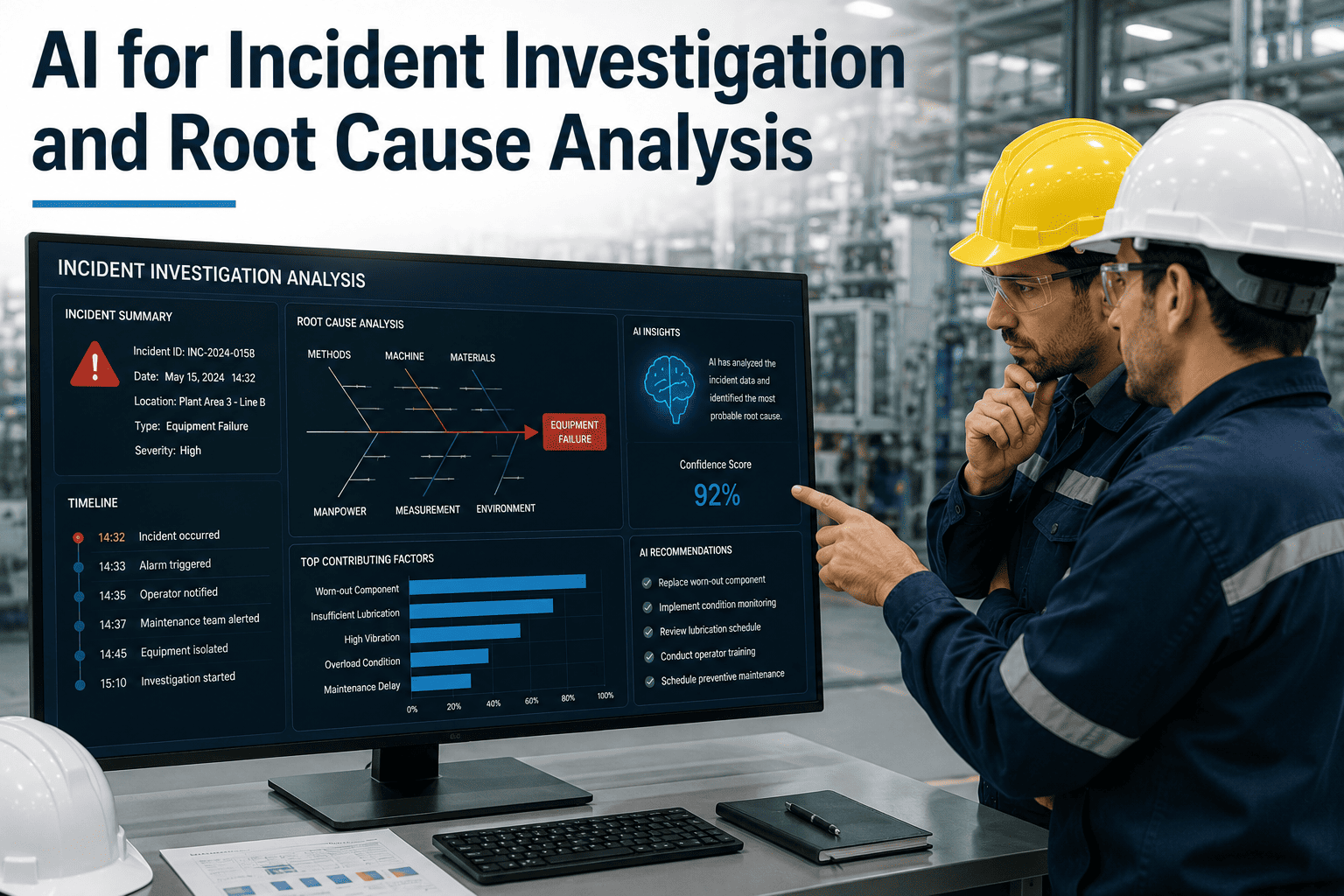
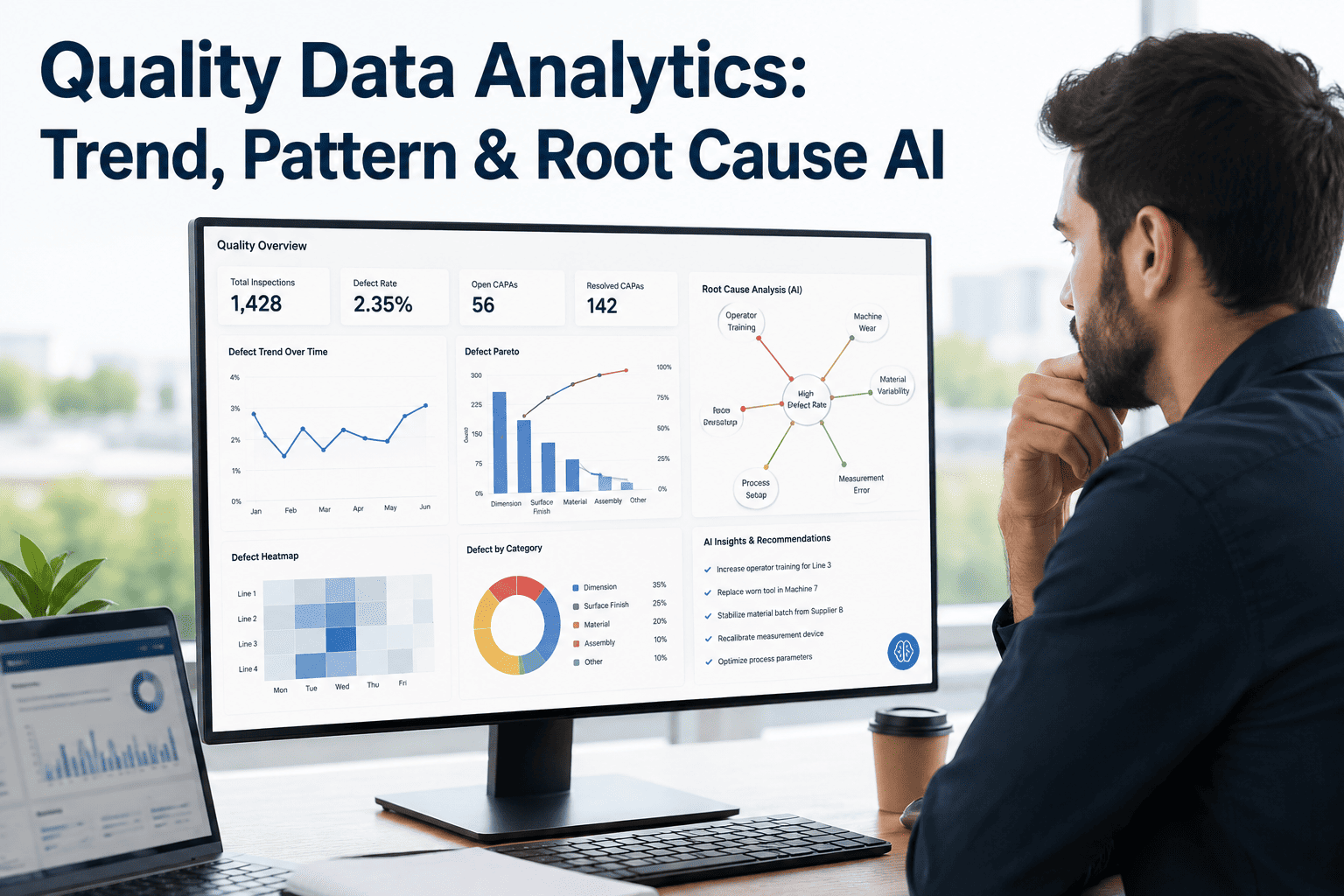
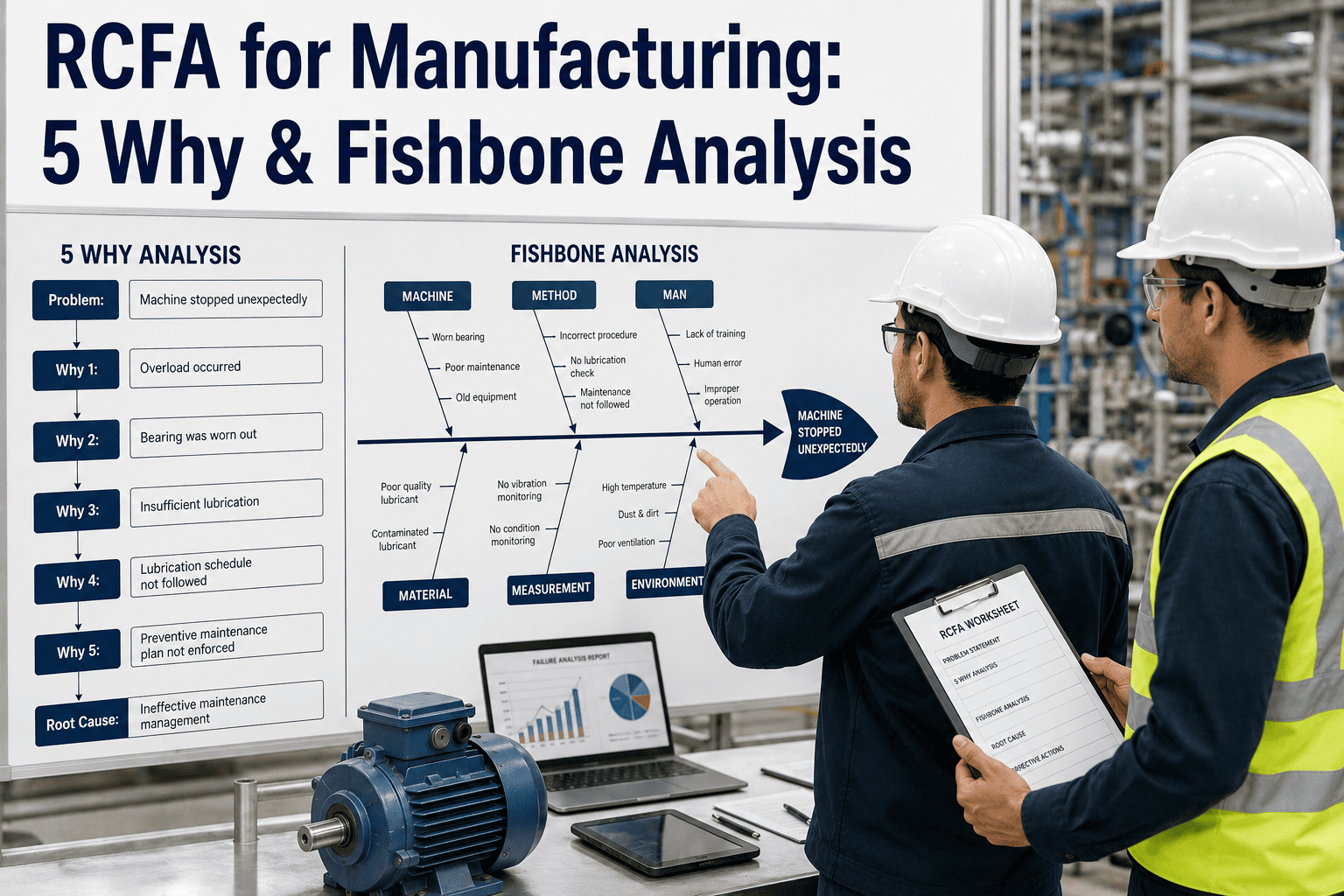
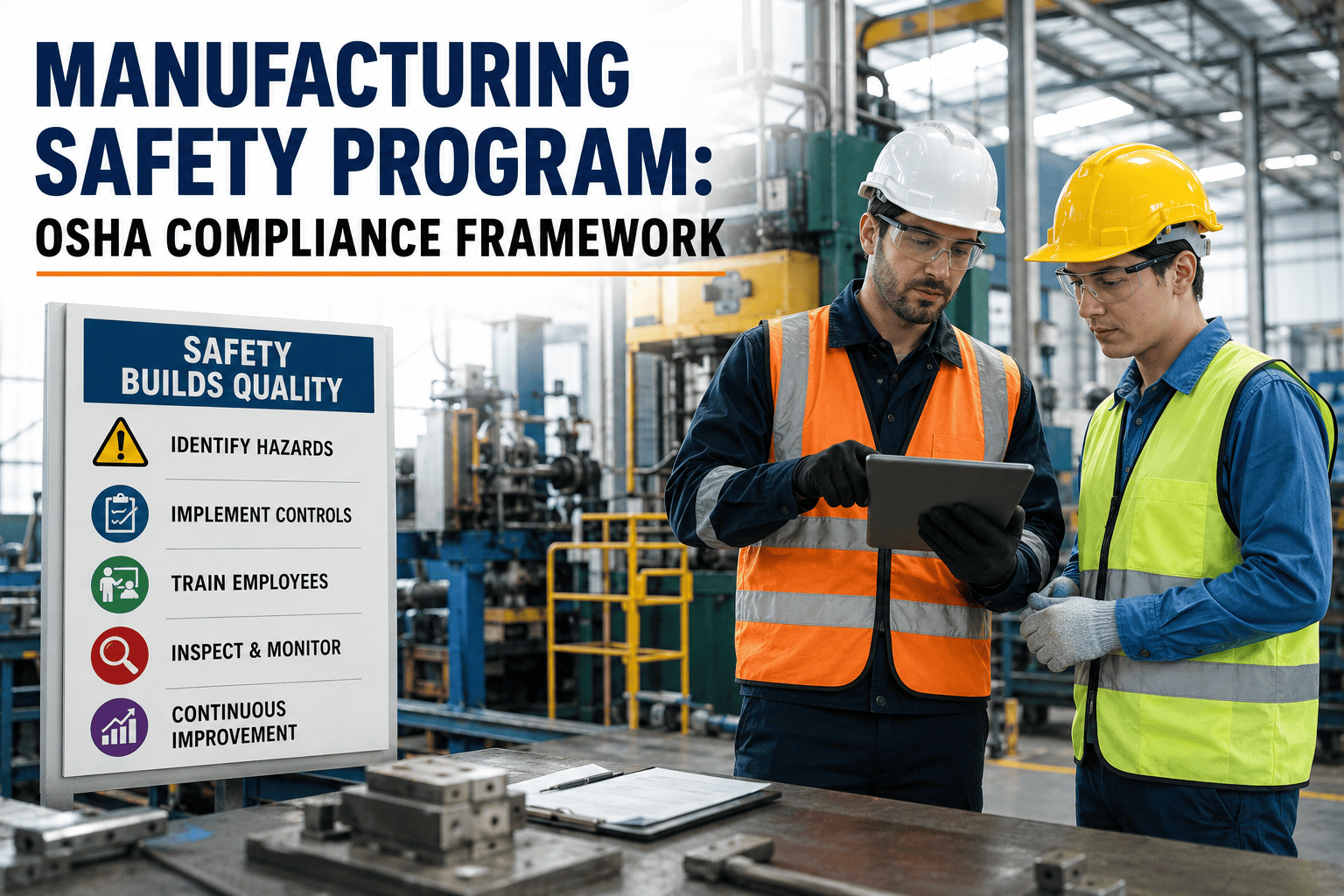
Every incident report your plant files gets read once, discussed in a closeout meeting, and then filed away, whether it lives in a binder or a digital EHS system. What almost never happens is a comparison against the hundreds of other reports sitting in that same archive, the kind of comparison that would reveal a contributing factor showing up across a dozen incidents at three different sites. A single-incident investigation can only look backward at one event, so the same root cause can resurface for years without anyone noticing the pattern connecting it. AI-based incident analysis reads the entire corpus at once instead of one report at a time, and you can book a demo to see it run against your own incident history.
SAFETY & EHS · INCIDENT ANALYTICS · ROOT CAUSE AI
Your Incident Reports Already Contain the Pattern — Nobody Has Read Them All at Once to See It
iFactory's AI reads every incident and near-miss report across your plant's history, clusters them by contributing factor, and surfaces the systemic risks a single-incident investigation was never built to catch.
Years of Incident History Reviewed at Once
Every Site Compared Side by Side
Near-Misses Included, Not Just Reportables
THE INVESTIGATION BLIND SPOT
Why Closing an Investigation Report Doesn't Mean the Underlying Risk Is Closed
Most EHS teams do rigorous work on any single incident. The gap isn't effort, it's reach: nobody is comparing this month's report against every similar report the plant has ever filed. The bars below show how much signal typically goes unexamined.
Investigations Closed After a Single-Incident Review
Incidents Sharing a Root Cause With a Prior Event
Near-Misses Formally Linked to a Later Incident
Corrective Actions That Reference Cross-Site Data
TWO WAYS TO INVESTIGATE
Traditional Root Cause Analysis Was Never Designed to Look Across Reports
Neither approach below is wrong. A single-incident investigation is essential right after an event, but it was never meant to be the only lens a plant uses to understand its risk over time.
NARROW LENS — ONE INVESTIGATION, ONE EVENT
Interviews and evidence gathered only from the people and shift involved in this event
Timeline reconstructed from this incident's logs and this incident's witnesses alone
Corrective action closes with a retraining reminder or a procedure tweak
Report gets filed and is rarely reopened or compared against anything else
WIDE LENS — EVERY REPORT, EVERY SITE, EVERY YEAR
Contributing factors are compared automatically against the full incident archive
Recurring shift, equipment, or procedure links surface without manual cross-referencing
Corrective actions get ranked by how often the same underlying factor reappears
Findings feed forward into the next investigation instead of sitting untouched
WHAT AI SURFACES
Five Patterns a Single Report Was Never Going to Reveal on Its Own
These are the categories of insight that only appear once incident and near-miss language is compared across the full corpus rather than read one report at a time.
Contributing Factor Clusters
Groups of incidents that share an underlying factor such as fatigue, unclear handoff, or a specific procedure step, even when the surface events look unrelated.
Near-Miss Escalation Paths
Chains of smaller near-miss reports that, read in sequence, describe a hazard steadily building toward the incident that eventually occurred.
Shift and Time-of-Day Correlation
Recurring concentration of incidents around specific shift changes, overtime periods, or times of day that a single report would never flag as a pattern.
Equipment-Linked Recurrence
The same asset or asset class appearing across incidents filed by different crews and sites, pointing to a design or maintenance issue rather than operator error.
Language Patterns in Free-Text Narratives
Recurring phrasing in investigator narratives, such as descriptions of confusion during handover, that flags a systemic communication gap rather than an isolated lapse.
Your Archive Already Has the Answer — It Just Hasn't Been Read All at Once
iFactory connects to your existing EHS system, reads every incident and near-miss on file, and surfaces the recurring factors your team has never had time to cross-reference manually. Book a demo to see it run against your own archive.
HOW THE ANALYSIS WORKS
Five Stages That Turn a Filed Report Into an Early Warning System
The process runs continuously in the background, so every new report strengthens the pattern detection instead of sitting alone in an archive waiting to be read again.
→
2
Extract Structured Factors
→
→
→
5
Feed Back Into Prevention
Historical and new incident, near-miss, and audit reports are pulled directly from your existing EHS system without any manual re-entry.
Natural language processing pulls contributing factors, equipment, shift, and location details out of free-text narratives into a consistent structure.
A knowledge graph links reports that share factors, assets, or language patterns across sites and years, regardless of who filed them.
Recurring clusters are ranked by frequency and severity so safety teams see the highest-risk pattern first instead of scanning every report manually.
Findings route into corrective action tracking and future investigations, so the pattern gets addressed once instead of resurfacing repeatedly.
SIDE BY SIDE
Traditional Incident Review vs AI-Powered Corpus Analysis
This comparison covers the operational dimensions that matter most when a safety team is deciding whether to add corpus-level analysis on top of existing investigation practice.
| Dimension |
Traditional Review |
iFactory AI Corpus Analysis |
| Scope of Comparison |
One incident against investigator memory |
Every incident across all years and sites |
| Near-Miss Handling |
Filed separately, rarely cross-referenced |
Linked directly into the same pattern graph |
| Time to Spot a Pattern |
Months or years, if noticed at all |
Surfaced as soon as the pattern threshold is met |
| Cross-Site Visibility |
Limited to what one team happens to share |
Automatic comparison across every connected site |
| Corrective Action Focus |
Addresses the single reported event |
Targets the recurring factor behind many events |
REAL FINDINGS FROM THE FIELD
Four Patterns That Only Became Visible Once the Full Archive Was Compared
These scenarios reflect the kinds of systemic findings safety teams describe once corpus-level analysis is run against reports that had already been filed and closed.
The Same Valve Fault Filed Under Five Different Descriptions
Five incidents across two sites described the same valve failure using different wording, so no single investigator ever connected them as one recurring issue.
Language-pattern clustering grouped all five reports automatically, revealing a design flaw that a single-incident review had missed five separate times.
Near-Misses That Quietly Escalated Over Six Months
A series of minor near-miss reports about a walkway hazard were each closed individually with no one connecting them to a growing risk.
The escalation path was surfaced after the third related report, well before the hazard produced an actual injury.
A Shift-Change Pattern Hiding in Plain Sight
Incidents kept clustering around the same handover window, but each report was investigated as an isolated lapse by the individuals involved.
The time-of-day correlation flagged a structural handover gap, prompting a procedure fix rather than repeated individual retraining.
One Root Cause Repeating Across Three Sister Plants
Three plants each investigated a similar incident independently and each implemented a different local fix, with no visibility into the others' findings.
Cross-site clustering revealed the shared root cause, allowing one corrective action to be rolled out everywhere instead of three partial fixes.
ANSWERING THE HARD QUESTIONS
Four Concerns Safety Managers Raise Before Adding Corpus-Level Analysis
These are the questions that come up most often when a safety team considers layering AI pattern detection on top of an investigation process that already works well on a case-by-case basis.
Will This Be Used to Assign Blame to Workers?
Safety teams worry that surfacing patterns tied to specific shifts or crews could shift focus toward individual blame instead of systemic fixes.
The platform is built to surface factors, not individuals, grouping incidents by contributing cause and asset rather than by who was involved.
Does This Replace the Human Investigator?
There's a concern that AI analysis is meant to sideline the trained investigators who currently lead root cause work on the floor.
The platform hands investigators the cross-referenced pattern context they never had time to compile themselves, informing their judgment rather than replacing it.
What About Inconsistent Report Quality Across Sites?
Some sites write detailed narratives while others file brief, inconsistent notes, raising doubt about whether patterns can be compared fairly.
Natural language processing normalizes varying report styles into the same structured factors, so quality differences don't block valid comparisons.
How Does This Fit With Our Existing EHS System?
Teams don't want another standalone tool competing with the incident management system they've already trained the whole plant to use.
iFactory reads directly from your existing EHS platform and surfaces findings back inside it, adding no new system for investigators to log into.
FREQUENTLY ASKED QUESTIONS
Questions Safety Managers Ask About AI Incident and Root Cause Analysis
Do we need to change how our teams write incident reports for this to work?
No. The platform is designed to read the reports your teams already file in whatever format your current EHS system uses, including free-text narratives, structured fields, and near-miss logs. Natural language processing extracts the contributing factors, equipment, and shift details from existing language rather than requiring a new reporting template. Investigators keep writing reports exactly as they do today.
Contact support to see which of your current EHS fields feed the analysis directly.
How far back does the AI need historical incident data to find meaningful patterns?
Meaningful clustering can often begin with as little as one to two years of incident and near-miss history, though patterns sharpen further as more years and sites are added to the archive. The platform continues learning from new reports as they're filed, so value compounds over time rather than depending entirely on historical depth at launch. Even a modest starting archive is usually enough to surface a first set of recurring factors.
Book a demo to see what patterns your existing history already contains.
Can the platform distinguish a genuine pattern from a coincidence across unrelated incidents?
Every surfaced cluster is ranked by statistical strength, factoring in how many incidents share the link, how specific the shared factor is, and how that compares to the overall incident volume, so isolated coincidences don't get flagged with the same weight as a genuine recurring pattern. Safety teams can review the underlying reports behind any surfaced cluster before acting on it, keeping human judgment in the loop.
Contact support to review how pattern confidence is scored.
Who on our team actually sees the patterns the AI surfaces?
Access is configured by your safety and EHS leadership, typically extending to safety managers, investigators, and site leadership who need visibility into systemic risk trends. Findings are designed to support the investigation and corrective action process your team already runs, appearing as added context inside your existing EHS workflow rather than a separate report only a few people ever open.
Book a demo to see how access and permissions are typically structured.
Does this work across multiple plants and business units, or only a single site?
The platform is built specifically to compare incident data across every connected site, which is where much of its value comes from, since patterns invisible at a single plant often become clear once multiple sites are compared side by side. Sites can be added incrementally, and cross-site findings are attributed clearly so leadership can see exactly where a recurring factor is showing up.
Book a demo to discuss a multi-site rollout for your business unit.
The Next Incident Might Already Be Written Into a Report You Filed Last Year
iFactory's AI reads your full incident and near-miss archive, links the reports that share a root cause, and surfaces the systemic risks a single investigation was never designed to catch. Book a demo to see it run against your own plant's history.