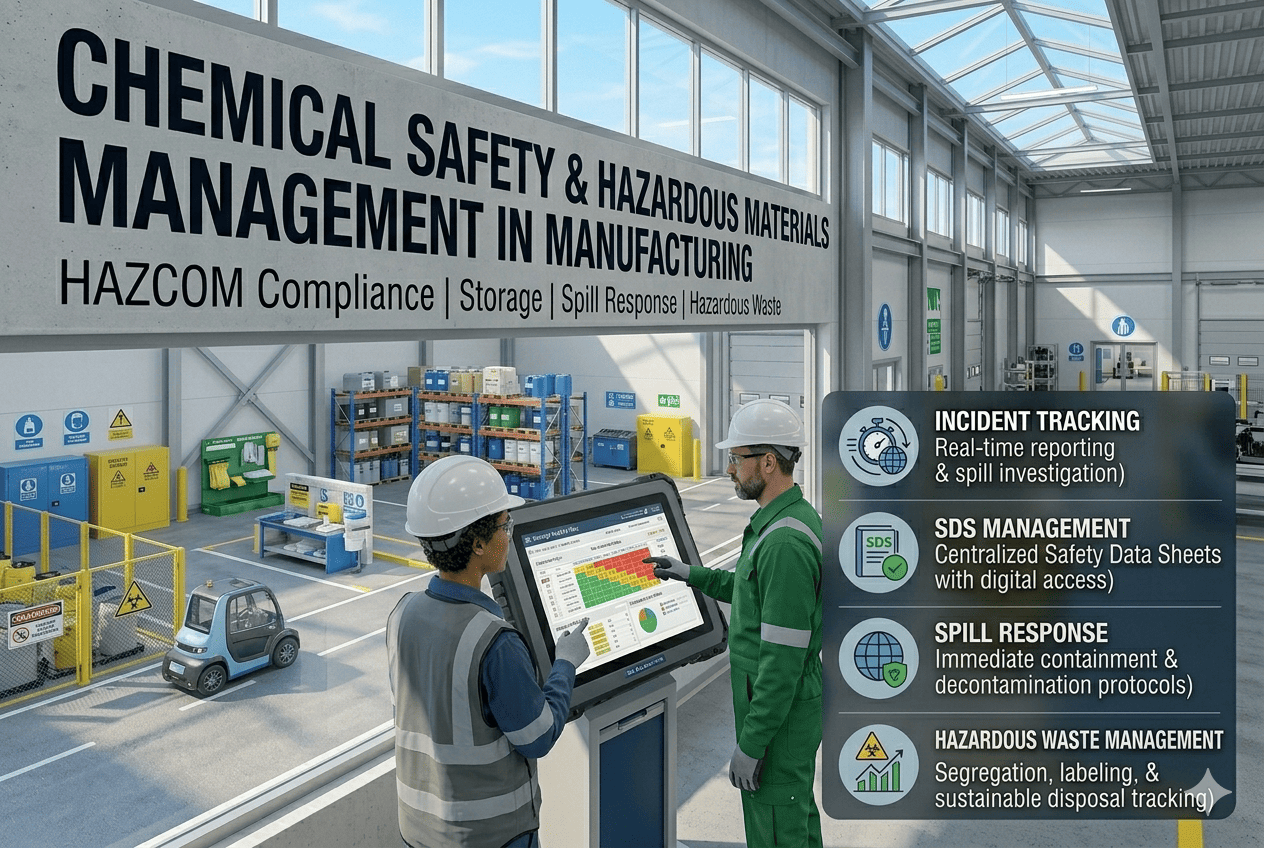
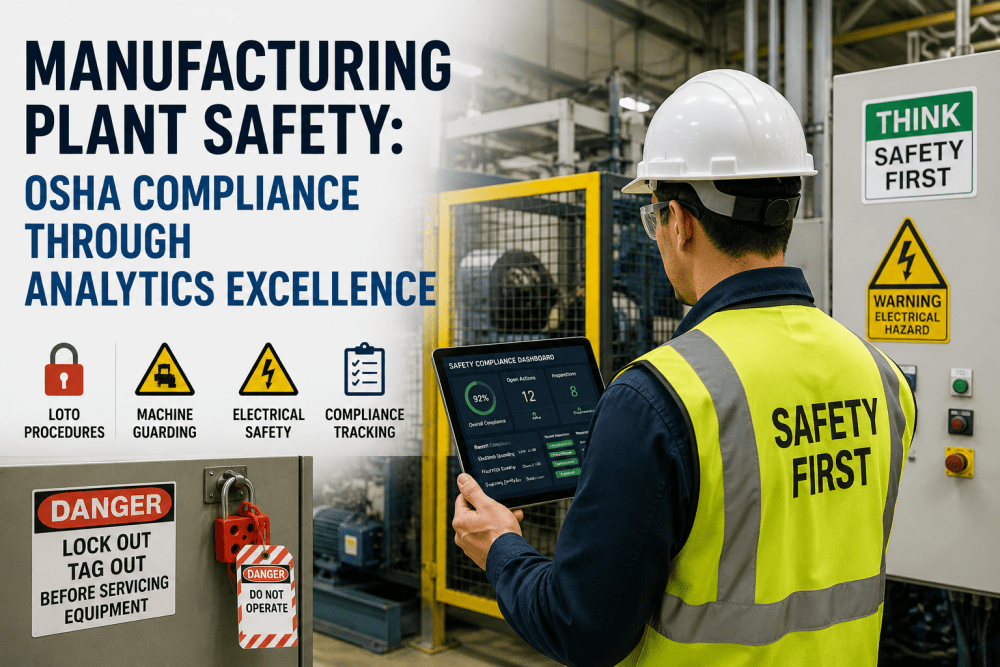
Manufacturing plants handling hazardous materials lose an average of $3.7 million annually to chemical incidents, regulatory violations, and emergency response events that no paper-based SDS binders, manual inspection rounds, or quarterly safety audits can prevent in real time. By the time a chemical spill is discovered, a storage violation is reported during inspection, or an exposure incident triggers emergency response, the damage compounds across operations, workforce safety, and regulatory standing: OSHA citations carrying penalties of $15,000 to $145,000 per violation, production shutdowns lasting days to weeks for remediation, workers requiring medical treatment and lost time injury tracking, community relations damage from reportable releases, and insurance premiums rising 40-60% post-incident. iFactory's AI-powered chemical safety platform changes this entirely, monitoring hazardous material storage conditions, tracking SDS compliance in real time, analyzing chemical compatibility risks, and integrating directly into your existing safety management systems, environmental monitoring equipment, and emergency response protocols without operational disruption. Book a Demo to see how iFactory deploys AI chemical safety management across your manufacturing operations within 8 weeks.
87%
Reduction in chemical safety incidents within first 12 months
$4.2M
Annual cost avoidance from prevented incidents and compliance automation
98%
SDS compliance accuracy vs manual tracking systems
8 wks
Full deployment from integration to live AI chemical safety monitoring
The Complete AI Platform for Manufacturing Operations
iFactory's AI engine monitors chemical storage temperatures, inventory movements, SDS updates, compatibility matrices, and exposure limits across your entire facility. 24/7 hazmat oversight without human oversight gaps or documentation delays. Connects to Your Existing SCADA/PLC Systems for seamless safety integration.
How iFactory AI Solves Chemical Safety Management
Traditional hazardous materials management relies on paper SDS binders, manual inspection checklists, and reactive incident response that only activates after exposures or spills have occurred. iFactory replaces this with continuous AI models that predict chemical risks, detect storage violations, and prevent incidents before they escalate. See a live demo of iFactory detecting chemical safety violations in manufacturing operations.
01
Digital SDS Management System
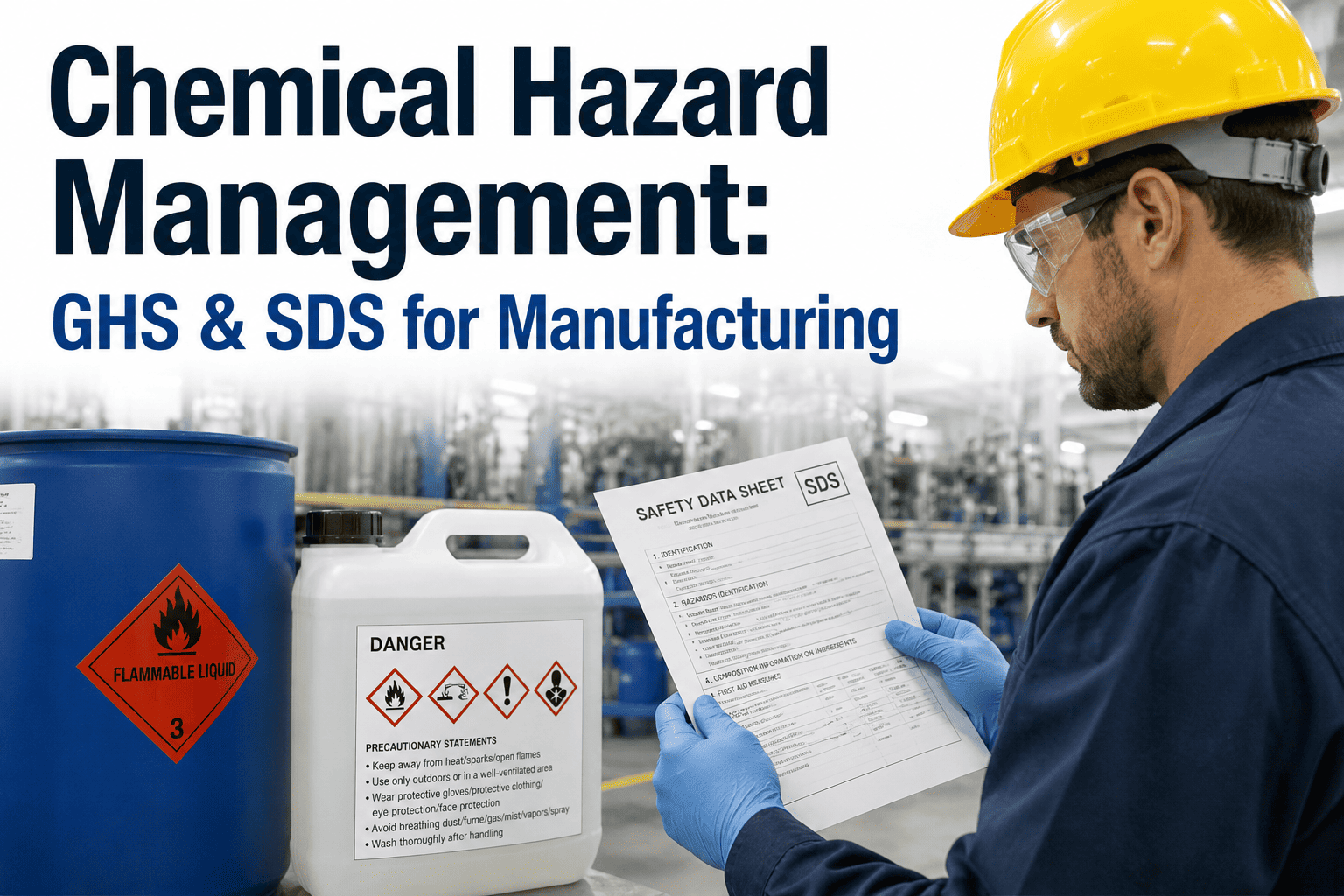
AI-powered Safety Data Sheet library with automatic updates, mobile access, chemical-specific emergency procedures, and multilingual support. System tracks SDS versions, flags expired sheets, and ensures HAZCOM compliance across all storage and use locations.
02
Real-Time Chemical Storage Monitoring
IoT sensors track temperature, humidity, ventilation status, and containment integrity in chemical storage areas. AI identifies conditions deviating from SDS requirements triggering immediate alerts before degradation or reaction risks materialize.
03
Chemical Compatibility Matrix AI
Machine learning analyzes chemical inventories identifying incompatible materials stored in proximity. System recommends segregation changes, flags receiving errors, and prevents reactive storage configurations before incidents occur.
04
Connects to Your Existing SCADA/PLC Systems
iFactory integrates with environmental monitoring equipment, ventilation controls, emergency shutdown systems, and access control via OPC-UA, Modbus, BACnet. Real-time data from gas detection, temperature sensors, and containment monitoring without hardware replacement.
05
Automated Spill Response Planning
Every chemical registered includes AI-generated spill response procedures, required PPE, containment materials, and emergency contact protocols. Mobile access delivers chemical-specific response guidance within 5 seconds of incident report.
06
Eliminate Manual Logs with AI Digital Shift Logbooks
Automated HAZCOM compliance reporting generates chemical inventories, exposure assessments, training records, and regulatory submissions. Audit-ready documentation for OSHA, EPA, DOT, and state chemical safety requirements available instantly.
How iFactory Is Different from Generic Safety Software
Most industrial safety platforms provide basic document storage and incident tracking without predictive capabilities. Built for Manufacturing Plants, Not Generic CMMS, iFactory is engineered specifically for manufacturing environments where chemical complexity, production pressures, and regulatory requirements demand real-time risk prediction. Compare your current chemical safety approach with iFactory manufacturing specialists.
| Capability |
iFactory Platform |
IBM Maximo |
SAP EAM |
Generic Safety Software |
| Predictive Chemical Risk |
AI predicts storage violations and compatibility risks before incidents. 87% incident reduction. |
Reactive incident tracking only. No prediction. |
Reactive incident tracking only. No prediction. |
Basic checklists. No real-time AI prediction. |
| Real-Time Monitoring |
IoT sensors monitor storage conditions 24/7 with AI anomaly detection. |
No environmental monitoring integration. |
No environmental monitoring integration. |
Manual inspections only. No sensors. |
| SDS Automation |
Auto-updated digital SDS library with mobile access and AI search. |
Static document storage only. |
Static document storage only. |
PDF binders. Manual updates required. |
| SCADA Integration |
Native connectors for environmental monitoring and ventilation systems. 2-week integration. |
Limited environmental system integration. |
Limited environmental system integration. |
No SCADA/PLC integration. |
| Manufacturing Fit |
Purpose-built for chemical handling in production environments. |
Generic industrial asset management. |
Generic industrial asset management. |
Generic safety compliance tracking. |
| Deployment Speed |
8-week fixed program. Pilot results week 4. |
6-12 months implementation. |
6-12 months implementation. |
4-8 months. Custom configuration required. |
iFactory AI Implementation Roadmap
iFactory follows a fixed 6-stage deployment methodology designed for manufacturing chemical safety management, delivering pilot results in week 4 and full monitoring by week 8.
01
Chemical Audit
Hazmat inventory assessment and risk baseline
02
System Integration
Environmental monitoring and safety system connection
03
AI Training
Model training on historical incident and compliance data
04
Pilot Validation
Single area deployment with risk prevention tracking
05
Alert Calibration
Risk threshold refinement and safety team training
06
Full Production
Facility-wide AI chemical safety monitoring, 24/7
8-Week Deployment and ROI Plan
Every iFactory engagement follows a structured 8-week program with defined deliverables per week and measurable ROI indicators beginning from week 4. Request the full 8-week deployment scope tailored to your chemical operations.
Weeks 1-2
Infrastructure Setup
Chemical inventory audit identifying high-risk materials, storage gaps, and compliance issues
Environmental monitoring equipment, ventilation controls, and safety system connection via OPC-UA
Historical incident, near-miss, and inspection data ingestion for AI baseline training
Weeks 3-4
Model Training and Pilot
AI model trained on your facility's chemical profiles, storage patterns, and incident history
Pilot safety monitoring activated on highest-risk chemical storage area
First risk predictions generated. ROI evidence begins here
Weeks 5-6
Calibration and Expansion
Alert thresholds refined based on pilot detection accuracy and false positive rate
Coverage expanded to additional storage areas and chemical types
Safety team training completed. Incident response protocols activated
Weeks 7-8
Full Production Go-Live
Full facility AI chemical safety monitoring live across all areas, 24/7
Automated HAZCOM reporting activated for regulatory compliance frameworks
ROI baseline report delivered with incident reduction, cost avoidance, and compliance data
ROI IN 6 WEEKS: MEASURABLE RESULTS FROM WEEK 4
Facilities completing the 8-week program report an average of $890,000 in incident cost avoidance within the first 6 weeks of full chemical safety monitoring with storage violation reductions of 72-87% detected by week 4 pilot validation in high-risk areas.
$890K
Avg. cost avoidance in first 6 weeks
72-87%
Storage violation reduction by week 4
98%
SDS compliance improvement
Predict Failures Before They Stop Production. Live in 8 Weeks.
iFactory's fixed-scope deployment program means no open timelines, no scope creep, and no months of consulting before you see chemical safety results. One Platform for Smart Manufacturing with AI-Powered Maintenance, OEE, and Operations.
Use Cases and KPI Results from Live Deployments
These outcomes are drawn from iFactory deployments at operating manufacturing facilities across three chemical safety categories. Each use case reflects 12-month post-deployment performance data. Request the full case study report for the operation type most relevant to your facility.
A specialty chemicals manufacturer was experiencing 4-6 temperature excursions monthly in refrigerated chemical storage requiring emergency product disposal and regulatory reporting. Manual temperature logs recorded every 4 hours missed deviations occurring between checks. iFactory deployed IoT temperature sensors with AI monitoring across 12 refrigerated storage units. Within 2 months, system predicted cooling system degradation 18-24 hours before temperature excursions preventing 8 potential incidents. Zero product losses occurred in first year versus $340,000 in prior year disposal costs.
8
Temperature excursions prevented in first 2 months of AI deployment
$340K
Product disposal cost avoided vs prior year losses
0
Reportable temperature incidents in first year vs 6 in prior year
An electronics manufacturer managing 340 different chemicals was experiencing quarterly storage violations from incompatible materials stored in proximity during inventory changes. Manual compatibility checking relied on EHS staff cross-referencing SDS documents after materials were already shelved. iFactory deployed AI compatibility matrix analyzing entire chemical inventory against NFPA segregation requirements. System flagged 14 incompatible storage configurations in first week including oxidizers stored near flammables. All violations corrected before inspection cycle. Zero compatibility citations in 18 months post-deployment versus 4 citations averaging $48,000 each in prior period.
14
Incompatible storage configurations identified in first week
$192K
Regulatory penalty avoidance vs prior citation history
0
Storage compatibility citations in 18 months vs 4 in prior period
A food processing facility maintaining paper SDS binders was cited for 12 compliance violations during OSHA inspection including outdated SDS versions, missing chemical inventories, and inadequate employee access to emergency information. Manual SDS updates required EHS coordinator to track manufacturer websites and print updated sheets. iFactory deployed digital SDS management with automatic manufacturer updates and mobile worker access. System identified 47 outdated SDS documents in first scan, auto-updated all sheets, and provided multilingual emergency procedures via smartphone access. OSHA follow-up inspection 9 months later resulted in zero HAZCOM citations versus $84,000 in prior penalties.
47
Outdated SDS documents identified and updated in first scan
98%
SDS compliance accuracy vs 64% with manual paper tracking
$84K
HAZCOM penalty avoidance from perfect compliance
Results Like These Are Standard. Not Exceptional.
Every iFactory deployment is scoped to your specific chemical hazards, storage configuration, and regulatory requirements so you get results calibrated to your risks, not generic benchmarks. Real-Time Visibility Into Every Production Line with integrated chemical safety.
Regional Chemical Safety Compliance Requirements
Chemical safety regulations vary by region. iFactory ensures AI monitoring meets local hazardous materials standards and regulatory frameworks.
| Region |
Key Challenges |
Compliance Requirements |
iFactory Solution |
| USA |
OSHA HAZCOM complexity, EPA reporting thresholds, DOT shipping documentation |
OSHA HCS 2012, EPA EPCRA, RCRA hazardous waste, DOT HazMat |
Automated HAZCOM compliance, Tier II reporting, waste manifests, shipping papers |
| UK |
COSHH assessments, REACH registration, CLP labeling requirements |
COSHH Regulations, REACH, CLP, HSE reporting |
COSHH automation, REACH compliance tracking, GHS labeling, HSE incident reports |
| UAE |
Extreme temperature challenges, multilingual workforce, OSHAD compliance |
UAE Cabinet Decision 26, OSHAD SF, Hamriyah Free Zone regulations |
Heat-adapted monitoring, Arabic/English documentation, OSHAD reporting |
| India |
MSIHC rules complexity, state-level variations, limited digital infrastructure |
MSIHC Rules, Factories Act, Environment Protection Act, state requirements |
Multi-state compliance, MSIHC automation, digital transformation support |
| Europe |
Cross-border chemical movement, SEVESO III thresholds, multi-language requirements |
REACH, CLP, SEVESO III, EU OSH Framework, ADR transport |
Multi-country compliance, SEVESO automation, multilingual SDS, ADR documentation |
What Safety Teams Say About iFactory
The following testimonials are from EHS managers and safety directors at manufacturing facilities currently running iFactory's AI chemical safety platform.
We prevented 8 temperature excursions in refrigerated chemical storage during the first 2 months. iFactory's AI caught cooling degradation 18-24 hours before product loss. Zero disposal costs in year one versus $340,000 the prior year. The ROI was immediate.
EHS Director
Specialty Chemicals Plant, New Jersey USA
The AI compatibility matrix identified 14 storage violations in the first week that our manual process completely missed. All corrected before inspection. We went from 4 citations averaging $48,000 each to zero violations in 18 months.
Safety Manager
Electronics Manufacturing, California USA
Digital SDS management replaced our paper binders and found 47 outdated sheets in the first scan. Mobile access gives workers emergency procedures in seconds. OSHA follow-up inspection resulted in zero HAZCOM citations after $84,000 in prior penalties.
VP Environmental Health & Safety
Food Processing Facility, Texas USA
Integration with our environmental monitoring and ventilation systems took 12 days. The iFactory team understood both chemical safety requirements and manufacturing operations. We had live AI monitoring within 5 weeks of contract signature.
Director of Operations
Chemical Manufacturing Plant, Germany
Frequently Asked Questions
Does iFactory require new sensors or monitoring equipment to be installed across facilities?
In most deployments, iFactory connects to existing temperature sensors, gas detectors, ventilation controls, and environmental monitoring via network integration. Where coverage gaps exist, iFactory recommends targeted IoT additions (typically 8-15 sensors per facility). Integration complete within 2 weeks.
Book Demo
Which environmental monitoring and safety systems does iFactory integrate with?
iFactory integrates with Honeywell, Siemens, Emerson environmental monitoring, MSA, RAE, Detector Electronics gas detection systems via OPC-UA, Modbus, BACnet. Ventilation controls from Johnson Controls, Carrier, Trane supported. Integration scope confirmed during Week 1 chemical audit.
Book Demo
How does iFactory handle different chemical safety requirements across multiple facility locations?
iFactory trains location-specific models accounting for regional regulations, facility-specific chemicals, and local storage configurations. Multi-location operations are fully supported within single deployment. Location-specific parameters configured during Week 3-4 model training.
Book Demo
What chemical safety compliance frameworks does iFactory's reporting support?
iFactory auto-generates reports for OSHA HAZCOM, EPA Tier II, RCRA manifests, DOT shipping papers, COSHH assessments, REACH compliance, and regional chemical safety frameworks. Templates pre-configured for each framework and generated automatically.
Book Demo
How long before the AI model produces reliable chemical risk predictions?
Baseline training on historical incident and inspection data takes 5-7 days using 12-24 months of chemical safety records. First predictions validated during Week 3-4 pilot on highest-risk storage areas. Full calibration achieved within 6 weeks for standard manufacturing operations.
Book Demo
Can iFactory monitor chemical safety across both production areas and warehousing operations?
Yes. iFactory supports production floor chemical handling, warehouse storage, mixing rooms, and waste accumulation areas. System handles diverse storage configurations with unified monitoring. Coverage scope confirmed during Week 1 chemical audit. AI That Turns Downtime Into Planned Maintenance included.
Book Demo
Prevent Chemical Incidents. Deploy AI Safety Management in 8 Weeks.
iFactory gives manufacturing operations real-time AI chemical safety monitoring, predictive risk prevention, intelligent SDS management, automated HAZCOM reporting, and regulatory compliance documentation fully integrated with your existing environmental and safety systems in 8 weeks, with ROI evidence starting in week 4.
87% reduction in chemical safety incidents
Environmental monitoring integration in 2 weeks
98% SDS compliance accuracy
Auto-generated reports for OSHA, EPA, HAZCOM frameworks