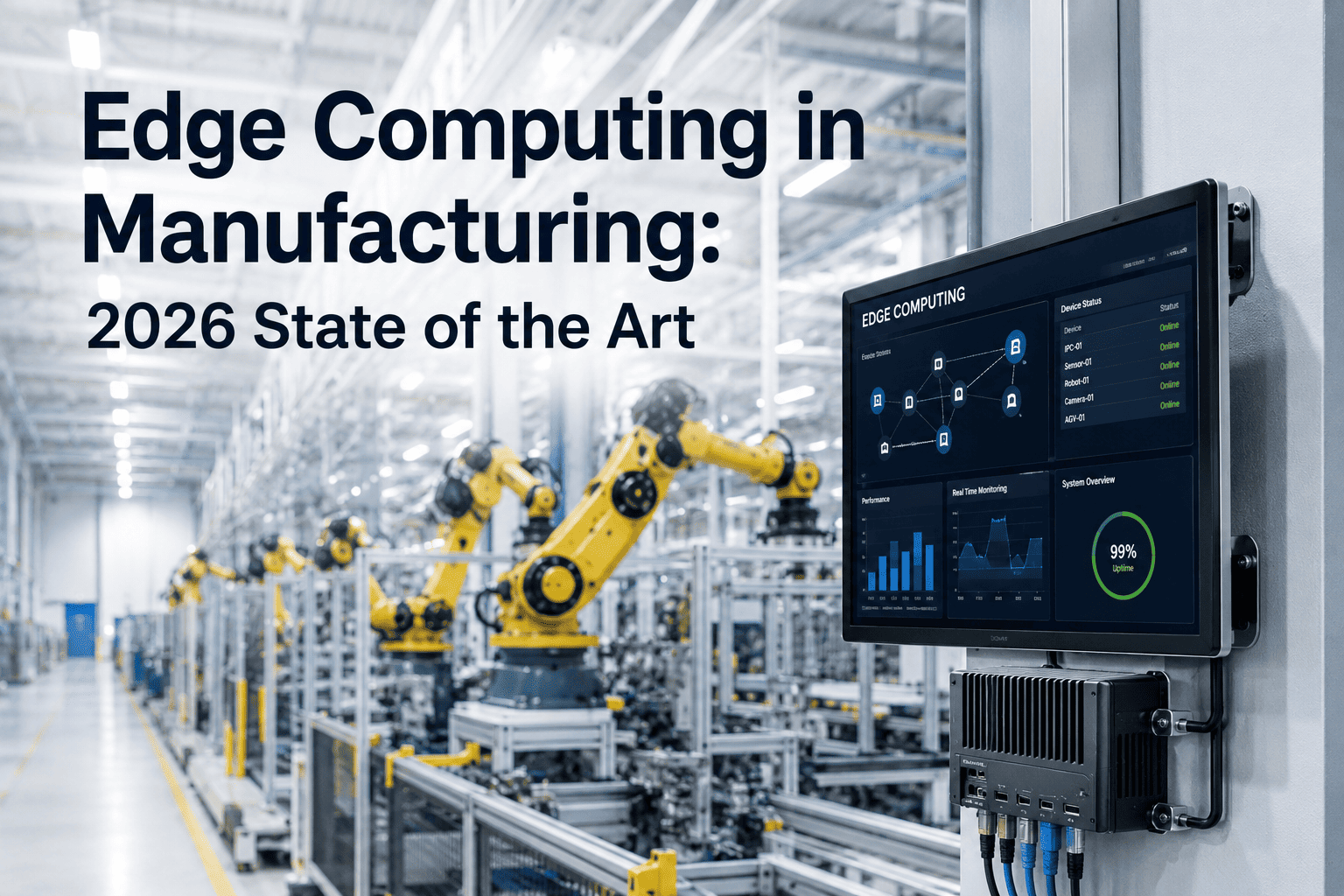
Edge computing in manufacturing has transitioned from a niche experimental technology to a core architectural pillar for Industry 4.0. In 2026, the latency required for real-time control, predictive maintenance, and AI-driven quality inspection has pushed compute resources to the very edge of the factory floor. Unlike the cloud-dependent strategies of the past, modern smart factories demand sub-50ms decision loops that can only be achieved through distributed edge nodes. This state-of-the-art guide provides an in-depth analysis of the edge computing patterns that are winning in manufacturing today. We will explore the technical architecture, deployment strategies, and real-world outcomes that plant managers and CTOs must understand to remain competitive. Whether you are evaluating edge gateways, AI inference at the edge, or hybrid cloud-edge orchestration, this comprehensive resource will equip you with the knowledge to make informed decisions. For a personalized strategy session, Book a Demo with our experts.
Why Edge Computing Defines 2026 Manufacturing
The convergence of IIoT, AI, and real-time analytics has made edge computing the decisive factor for operational excellence. In 2026, manufacturers who deploy edge-first architectures reduce latency, enhance data sovereignty, and achieve unprecedented reliability. This section explains the fundamental shift from cloud-centric to edge-centric thinking.
Ready to Deploy Edge AI in Your Factory?
Discover the fastest path to sub-50ms decision-making. Our team will design a custom edge architecture for your production lines.
The Technical Imperative for Edge Computing
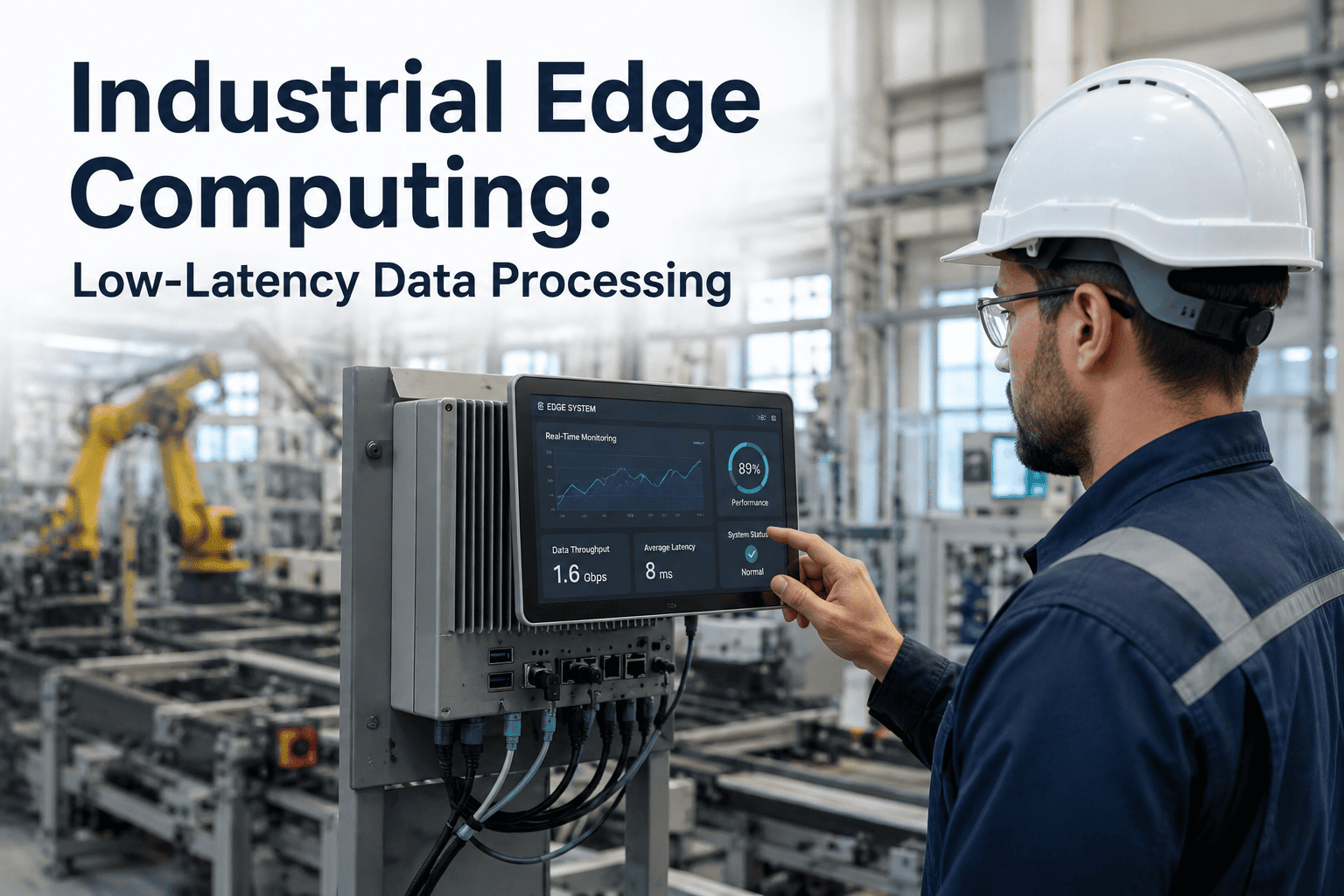
Modern manufacturing processes generate terabytes of data per day from sensors, PLCs, vision systems, and robotic controllers. Sending all this data to the cloud introduces unacceptable latency for closed-loop control. Edge computing processes data locally, within the factory network, enabling real-time analytics and AI inference. This section delves into the technical drivers: deterministic networking, time-sensitive networking (TSN), and the need for local compute for safety-critical applications. We examine how edge nodes reduce bandwidth costs and enhance data privacy by keeping sensitive production data on-premises.
Deterministic Latency
Edge computing guarantees sub-millisecond response times for control loops, essential for precision machining and robotic coordination. Cloud round trips introduce jitter that can degrade quality.
Data Sovereignty
With edge processing, sensitive production data never leaves the factory floor. This complies with GDPR, export controls, and corporate IP protection policies without sacrificing analytics.
Bandwidth Efficiency
Edge AI filters and aggregates data, sending only actionable insights to the cloud. This reduces WAN bandwidth costs by up to 40% and minimizes cloud storage fees.
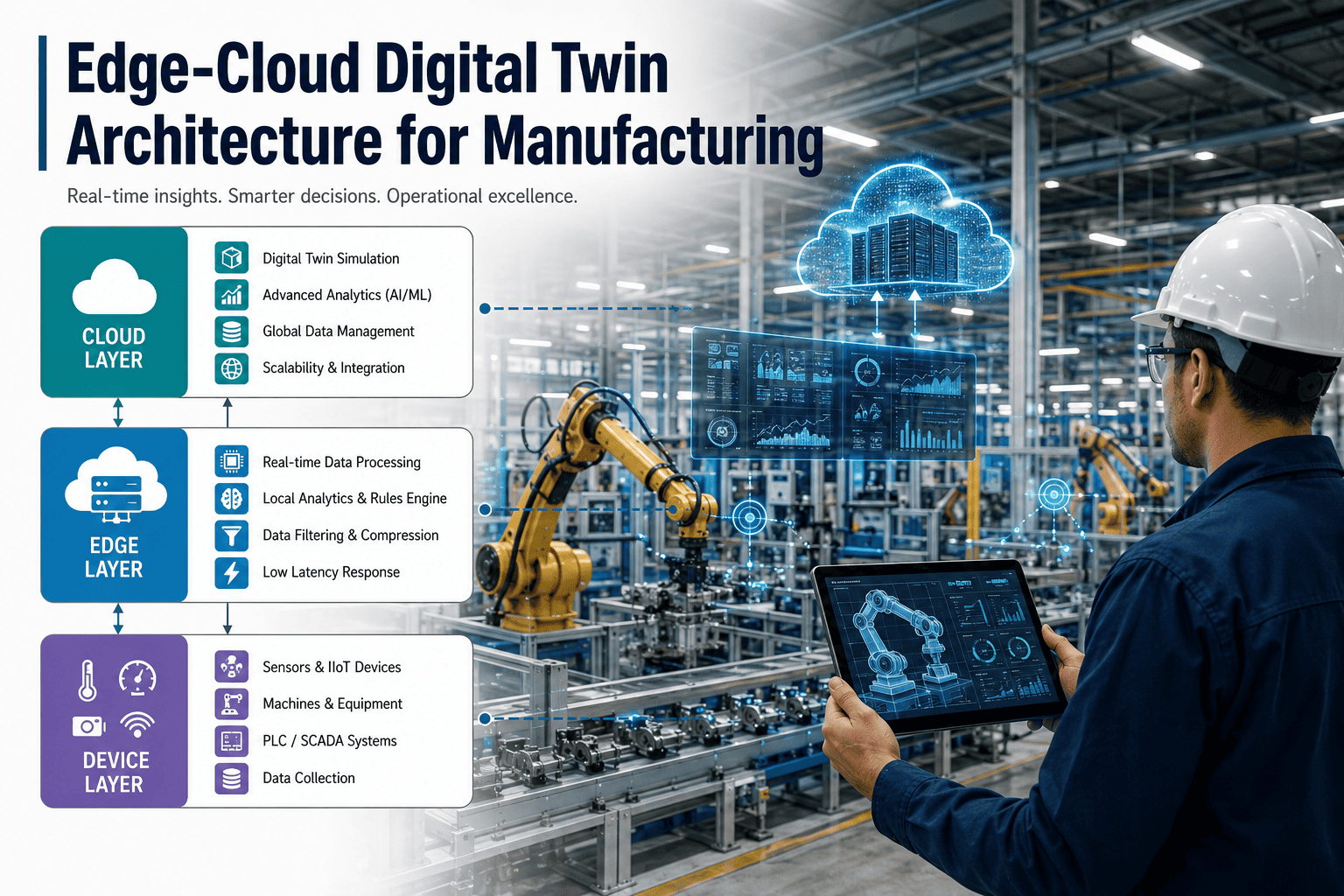
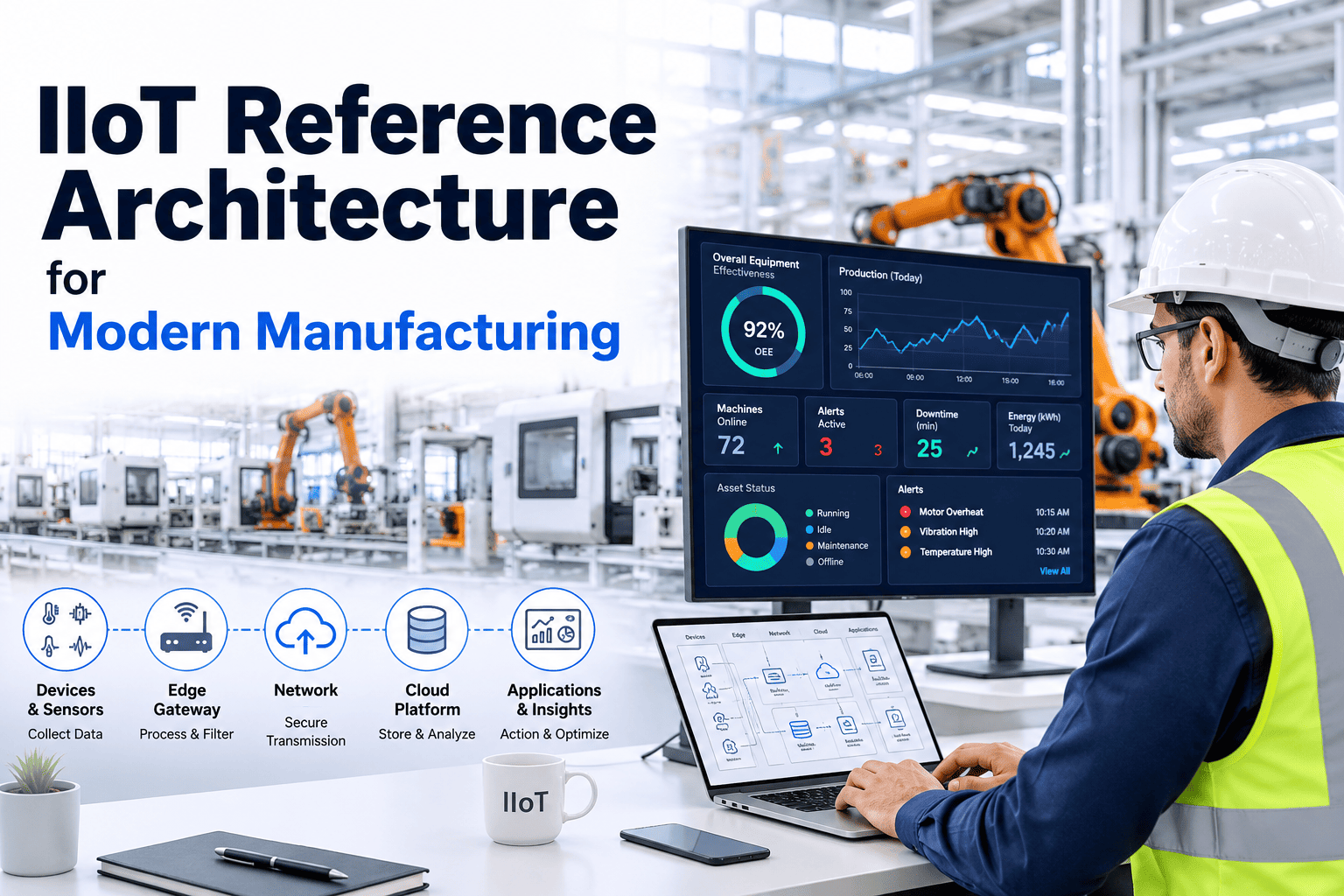
2026 Edge Computing Reference Architecture
Field Layer: Sensors & Actuators
IIoT sensors, smart cameras, and PLCs generate raw data. Edge gateways with TSN support ensure deterministic data ingestion.
Edge Gateway Layer
Industrial PCs or ruggedized edge servers running containerized AI models. They perform real-time inference, data filtering, and protocol translation (OPC UA, MQTT, Modbus).
Edge AI Inference
Optimized neural networks (TinyML, TensorRT) run on GPU or NPU accelerators for defect detection, predictive maintenance, and quality control.
On-Premises Data Lake
Time-series databases (InfluxDB, TimescaleDB) store historical data for model retraining and analytics. Edge nodes synchronize metadata to the cloud.
Cloud Orchestration
Centralized dashboards, fleet management, and model updates are managed through cloud-native platforms (Kubernetes, Azure Arc).
Edge vs. Cloud: Performance Comparison
| Metric | Cloud-Only | Edge + Cloud |
|---|---|---|
| Inference Latency | 200-500 ms | 10-50 ms |
| Data Transfer Cost | High | Reduced by 40% |
| Network Dependency | 100% | Local autonomy |
| Security Surface | Large | Reduced, local |
| Model Update Cycle | Days | Hours |
Deploying Edge AI: Practical Patterns
Successful edge deployments follow proven patterns. The most common is the 'AI-at-the-edge' pattern where a pre-trained model runs on an edge gateway for real-time inference. Another pattern is 'federated learning' where models are trained across multiple edge nodes without centralizing data. This section explores three patterns with real-world examples from automotive and electronics manufacturing.
Pattern 1: Predictive Maintenance on the Edge
Vibration and temperature data from CNC machines are processed locally. An LSTM model predicts bearing failures 48 hours in advance, triggering automated work orders. This pattern reduces unplanned downtime by 60%.
Pattern 2: Visual Quality Inspection
High-resolution cameras feed a CNN model running on an NVIDIA Jetson edge device. Defects are detected in under 30ms, enabling real-time rejection of faulty parts. This pattern cuts scrap rates by 35%.
Optimize Your Edge Stack Today
Our experts will help you select the right hardware, software, and deployment pattern for your factory's unique requirements. Achieve sub-50ms AI inference now.
Hardware Selection for Edge Nodes
Choosing the right edge hardware is critical for performance and longevity. In 2026, the market offers a range from ruggedized industrial PCs to purpose-built AI accelerators. Key considerations include thermal tolerance, IP rating, and compatibility with factory networks (Profinet, EtherCAT). This section provides a comparative analysis of leading edge devices.
Industrial Edge Servers
Fanless, wide-temperature range units with Intel Xeon or AMD EPYC processors. Ideal for heavy AI workloads and multiple containerized applications. Typical cost: $5,000-$15,000.
GPU-Accelerated Edge
NVIDIA Jetson AGX Orin or Intel Movidius for high-throughput vision models. Low power consumption (15-75W) with teraflops of AI performance.
FPGA-Based Edge
Xilinx or Intel FPGAs for ultra-low latency and deterministic processing. Used in high-speed sorting and real-time control loops.
Edge AI Maturity Model
Security and Governance at the Edge
Edge computing introduces new security vectors. Devices must be hardened against physical tampering, and data must be encrypted in transit and at rest. This section covers zero-trust architectures for edge networks, secure boot, and hardware root of trust. We also discuss governance policies for model updates and data retention that comply with ISO 27001 and NIST frameworks.
Frequently Asked Questions
What is the typical ROI for edge computing in manufacturing?
ROI from edge computing in manufacturing is typically realized within 6 to 12 months. Key drivers include reduced downtime (up to 60% decrease), lower cloud data transfer costs (40% savings), and improved product quality (scrap reduction of 35%). For a detailed ROI calculator tailored to your plant, Book a Demo with our team.
How does edge computing integrate with existing PLCs and SCADA?
Edge gateways act as a bridge between OT and IT. They support protocols like OPC UA, Modbus TCP, Profinet, and EtherNet/IP. Data is ingested from PLCs and SCADA systems without disrupting existing control loops. The edge node then processes and enriches the data before sending it to the cloud. For integration support, visit our support page.
Can edge AI models be updated without downtime?
Yes, modern edge platforms support A/B testing and blue-green deployments for AI models. New models are loaded into a shadow mode, validated against live data, and then promoted to active inference. This process ensures zero downtime and continuous improvement. For a live demonstration, Book a Demo.
What are the power and cooling requirements for edge nodes?
Industrial edge nodes are designed for harsh environments. Typical power consumption ranges from 15W (for Jetson-based devices) to 150W (for Xeon servers). They are fanless and rated for operating temperatures from -20°C to 60°C. No special cooling is required. For detailed specs, contact our support team.
How does edge computing handle network outages?
Edge nodes operate autonomously even when disconnected from the cloud. They store data locally in a buffer (using Redis or SQLite) and continue AI inference. Once connectivity is restored, data is synchronized to the cloud. This ensures uninterrupted operations. For a resilience assessment, Book a Demo.
Transform Your Factory with Edge AI
Join the leaders who have achieved 98% uptime and 50ms inference. Our team is ready to deploy a custom edge solution for your production lines.