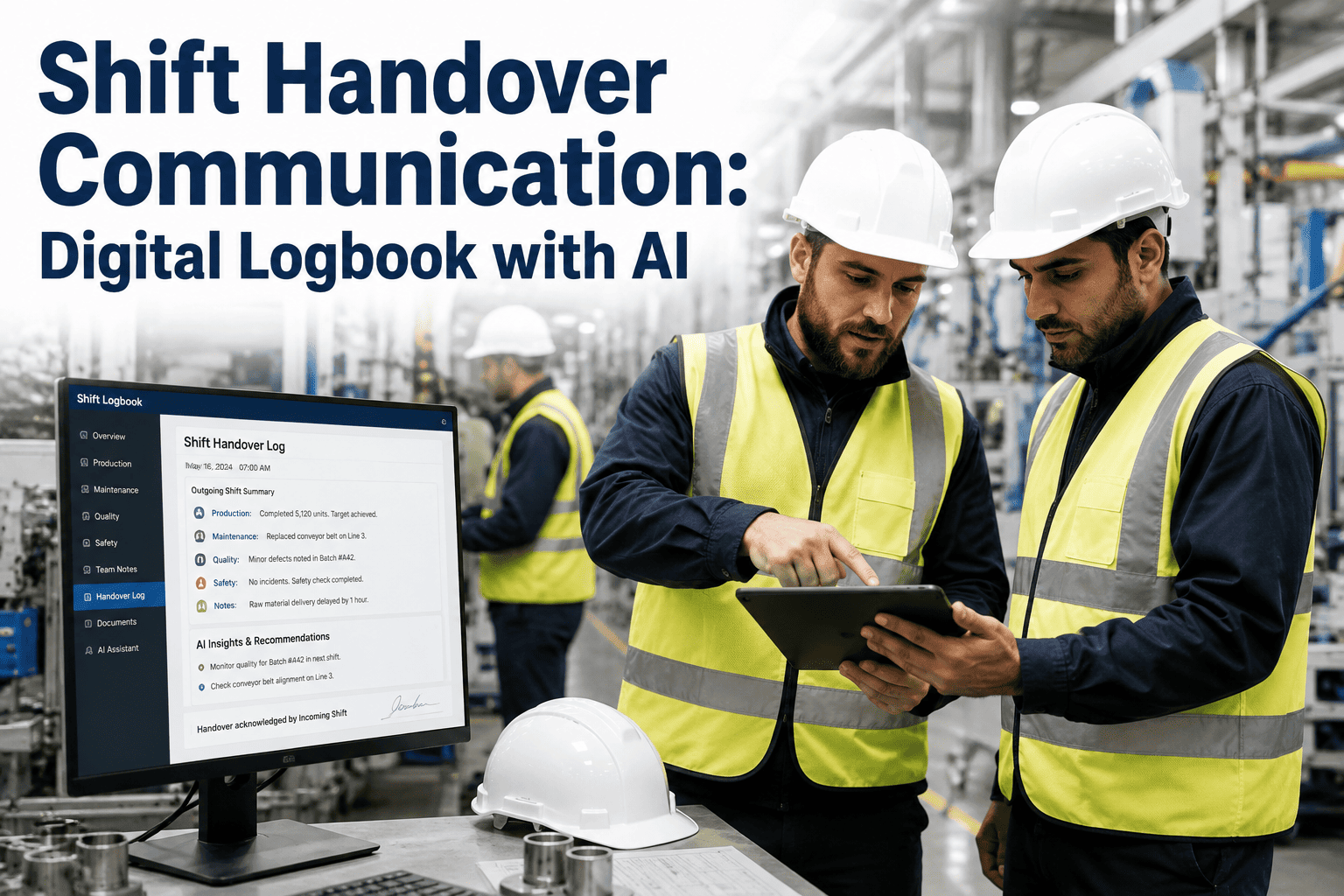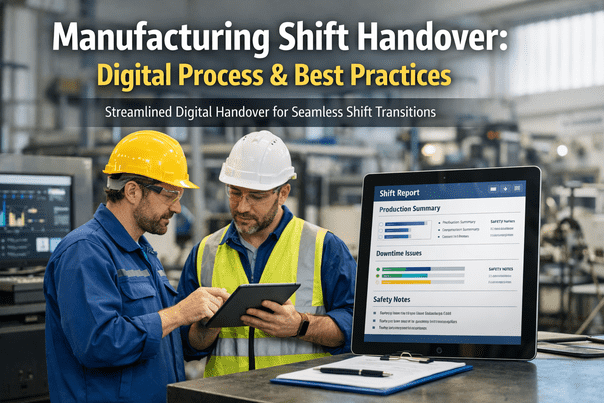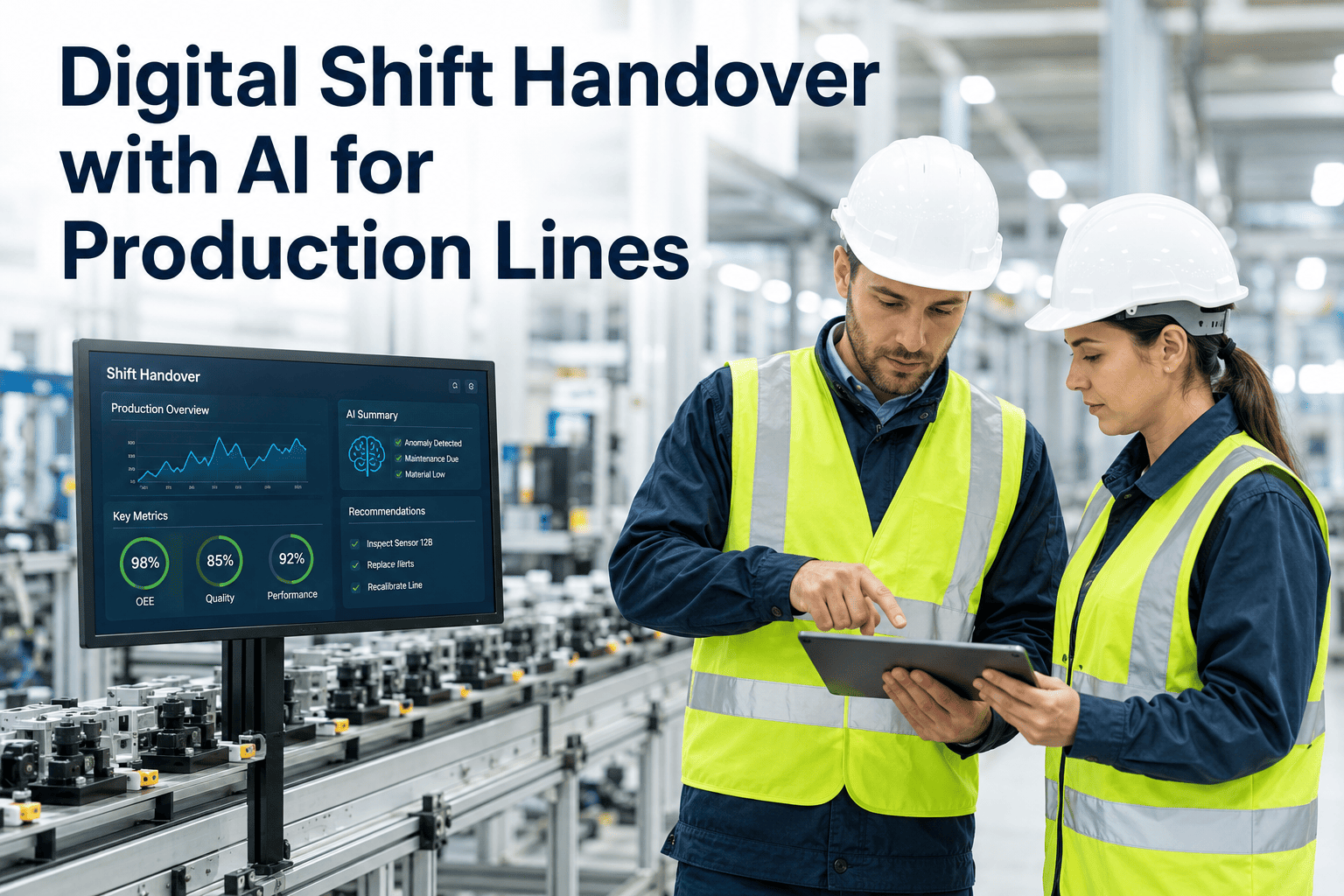
In the high-stakes environment of modern manufacturing, the shift handover process represents a critical vulnerability where operational continuity can be compromised. Research indicates that traditional verbal or paper-based handovers contribute to a 15-20% loss in overall equipment effectiveness (OEE) due to miscommunication, incomplete data transfer, and delayed problem resolution. This gap is not merely a procedural inconvenience; it directly impacts production throughput, quality consistency, and asset longevity. For plant managers, production supervisors, and maintenance directors, the shift change is often where hidden inefficiencies accumulate, leading to unnecessary downtime and increased operational costs. By transitioning to a digital, AI-driven shift handover system, enterprises can preserve critical context, accelerate root cause analysis, and create a seamless flow of actionable intelligence across shifts. This comprehensive guide explores the technical architecture, implementation strategies, and measurable benefits of AI-powered shift handover, providing a roadmap for achieving operational excellence in Industry 4.0 environments. Book a Demo to see how iFactory transforms your shift handover process.
AI-Powered Digital Shift Handover for Production Lines
Eliminate productivity leaks and accelerate problem solving with intelligent context preservation.
The Hidden Cost of Traditional Shift Handovers
Traditional shift handover methods, whether verbal briefings, paper logs, or basic email summaries, are fraught with inefficiencies that silently erode productivity. Studies from the Manufacturing Institute reveal that up to 30% of critical production information is lost during shift changes due to reliance on human memory and informal communication channels. This information decay directly correlates with increased setup times, quality defects, and safety incidents. For example, a machine's subtle vibration anomaly noted by the outgoing shift may be forgotten or miscommunicated, leading to a catastrophic failure hours later. The cost of such failures extends beyond repair expenses to include lost production, overtime labor, and expedited shipping costs. Furthermore, the lack of standardized data capture prevents trend analysis, making it impossible to identify recurring issues or measure improvement initiatives. In regulated industries like pharmaceuticals or aerospace, inadequate handover documentation can result in compliance violations and costly audits. The cumulative effect is a significant drag on OEE, with many plants unknowingly leaving millions in potential savings on the table.
Information Fragmentation
Data scattered across multiple sources—whiteboards, spreadsheets, emails—creates gaps and inconsistencies that hinder decision-making.
Delayed Problem Resolution
Without a structured handover, issues from the previous shift remain unresolved, compounding over time and escalating into major failures.
Lack of Accountability
Verbal handovers leave no audit trail, making it difficult to trace decisions or assign responsibility for unresolved tasks.
Inconsistent Reporting
Each shift supervisor uses a different format, making it impossible to aggregate data for meaningful analysis.
Safety Risks
Critical safety information, such as lockout/tagout status or chemical spills, may be omitted, endangering personnel.
Regulatory Non-Compliance
Inadequate documentation fails to meet industry standards, leading to fines and operational shutdowns.
How AI Transforms Shift Handover into a Strategic Asset
Artificial intelligence fundamentally redefines the shift handover process by moving from passive data recording to active intelligence generation. Instead of simply documenting what happened, AI-powered systems analyze machine data, operator logs, and environmental conditions to identify patterns, predict issues, and recommend actions. For instance, natural language processing (NLP) can parse free-text notes from operators, extracting key entities like machine IDs, fault codes, and timestamps, then linking them to real-time sensor data. This creates a rich, contextual handover that preserves not just what occurred, but why it matters. Machine learning models can also detect anomalies in handover reports—such as an unusually high number of minor stops—and flag them for investigation. Over time, the system learns which information is most relevant for different roles, tailoring the handover summary for the incoming supervisor, maintenance team, or quality manager. This level of automation reduces the cognitive load on operators, allowing them to focus on value-added tasks while ensuring no critical detail is lost. The result is a handover that is not only faster and more accurate but also serves as a continuous improvement tool, feeding data back into the broader analytics ecosystem.
Step-by-Step Implementation of AI Digital Shift Handover
Assessment and Data Audit
Evaluate current handover processes, identify data sources (e.g., MES, SCADA, CMMS), and map information flow.
Integration with Existing Systems
Connect the AI platform to production databases, IoT sensors, and enterprise systems using standard APIs.
Model Training and Customization
Train machine learning models on historical handover data to recognize patterns and predict critical events.
User Interface Deployment
Roll out intuitive dashboards for operators and supervisors, with role-based views and real-time alerts.
Continuous Monitoring and Optimization
Use feedback loops to refine AI models, improve accuracy, and adapt to changing production conditions.
Transform Your Shift Handover Today
Unlock 20% productivity gains with AI-powered context preservation and intelligent automation.
Technical Architecture of AI-Powered Handover
The backbone of an effective digital shift handover system is a robust, scalable architecture that seamlessly integrates with existing plant infrastructure. At the core is a data ingestion layer that collects information from multiple sources: IoT sensors capturing machine parameters (temperature, vibration, pressure), PLCs logging production counts and cycle times, operator inputs via tablets or wearables, and enterprise systems like ERP and CMMS. This raw data is normalized and stored in a time-series database optimized for high-frequency writes. An AI engine, typically using a combination of supervised and unsupervised learning models, processes this data to generate insights. For example, a recurrent neural network (RNN) can analyze sequences of machine states to predict imminent failures, while a clustering algorithm groups similar operator notes to identify common issues. The output is structured into a handover report that includes key performance indicators (KPIs), anomaly alerts, and recommended actions. A RESTful API layer ensures that this report can be accessed via web dashboards, mobile apps, or integrated into third-party tools like Microsoft Teams or Slack. Security is paramount, with role-based access control (RBAC) ensuring that sensitive data is only visible to authorized personnel, and all data is encrypted both in transit and at rest.
Comparison of Handover Methods
| Feature | Verbal Handover | Paper Log | Basic Digital | AI-Powered Digital |
|---|---|---|---|---|
| Data Accuracy | Low | Medium | High | Very High |
| Context Preservation | Poor | Limited | Good | Excellent |
| Trend Analysis | None | Manual | Basic | Advanced |
| Real-time Alerts | None | None | Limited | Yes |
| Integration Capability | None | None | Partial | Full |
| Audit Trail | None | Physical | Digital | Immutable |
Quantifiable Benefits: ROI of AI Shift Handover
Implementing an AI-driven digital shift handover system yields tangible, measurable returns that justify the investment. A typical mid-sized manufacturing plant with 500 employees and 100 production lines can expect an annual savings of $2-5 million through reduced downtime, improved quality, and increased throughput. Specifically, the reduction in shift change time from 30 minutes to 10 minutes per shift saves 2,000 hours of productive labor annually across 3 shifts. The elimination of information loss prevents an average of 20 major breakdowns per year, each costing $50,000 in lost production and repair costs. Quality improvements, driven by better traceability and faster root cause analysis, reduce scrap rates by 15%, saving $300,000 annually. Additionally, the system's ability to provide real-time visibility into shift performance empowers supervisors to make data-driven decisions, further optimizing resource allocation. The payback period for most implementations is less than 12 months, making it a high-priority initiative for any plant focused on operational excellence.
Downtime Reduction
AI predictive alerts reduce unplanned downtime by 30%, saving $1.5M annually for a typical plant.
Quality Improvement
Enhanced traceability reduces defects by 20%, leading to $500K in annual savings.
Labor Efficiency
Faster shift transitions recover 2,000 hours of labor annually, valued at $200K.
Compliance Assurance
Automated audit trails reduce compliance costs by 40%, saving $100K annually.
Overcoming Implementation Challenges
While the benefits are compelling, deploying an AI-powered shift handover system is not without challenges. Common obstacles include data silos, resistance to change from operators, and integration complexity with legacy systems. To overcome data silos, a unified data strategy is essential, leveraging an enterprise data lake that aggregates information from disparate sources. Change management programs, including hands-on training and visible executive sponsorship, can mitigate resistance by demonstrating the system's value in reducing manual paperwork and improving safety. For legacy systems, modern AI platforms offer pre-built connectors and flexible APIs that allow phased integration without disrupting ongoing operations. A pilot implementation on a single production line can validate the approach, build internal confidence, and provide a template for scaling across the entire plant. It is also critical to establish clear KPIs upfront, such as handover completion time, data accuracy rate, and number of unresolved issues, to measure success and drive continuous improvement.
Frequently Asked Questions
How does AI improve shift handover accuracy?
AI improves accuracy by automatically capturing and correlating data from multiple sources, eliminating human error and omissions. Natural language processing extracts key information from operator notes, while machine learning models validate data consistency and flag anomalies. For example, if an operator reports a machine fault, the system cross-references it with sensor data to confirm the issue and suggest probable causes. This ensures that the incoming shift receives a complete, verified picture of the production status, reducing the risk of miscommunication. Additionally, AI can learn from historical handovers to prioritize the most critical information, ensuring that attention is focused on what matters most. Learn more about our AI capabilities.
Can digital shift handover integrate with our existing MES or ERP?
Yes, modern AI-powered shift handover platforms are designed for seamless integration with a wide range of enterprise systems, including MES, SCADA, CMMS, and ERP. They typically offer RESTful APIs, pre-built connectors, and support for industry-standard protocols like OPC UA and MQTT. This allows bidirectional data flow, where handover reports can automatically update work orders in the CMMS or trigger quality alerts in the MES. Integration is usually implemented in phases, starting with critical data sources, and can be customized to match your specific workflows. The goal is to create a unified ecosystem where shift handover becomes a natural part of the overall production management process, not an isolated activity. Book a Demo to see integration in action.
What is the typical timeline for implementing an AI shift handover system?
The implementation timeline varies based on plant complexity and scope, but a typical deployment takes 8-12 weeks. The initial phase (weeks 1-2) involves a thorough audit of existing handover processes and data sources. Weeks 3-5 focus on system integration and AI model training using historical data. User interface customization and testing occur in weeks 6-8, followed by a pilot rollout on one production line in week 9. Weeks 10-12 are dedicated to refining the system based on feedback and planning full-scale deployment. Factors that can accelerate the timeline include the availability of clean, structured data and the use of pre-built integration templates. Our team provides dedicated project management and technical support to ensure a smooth, on-time deployment. Contact support for a detailed timeline.
How does the system handle data privacy and security?
Data privacy and security are foundational to our platform. All data is encrypted at rest using AES-256 and in transit using TLS 1.2 or higher. Role-based access control ensures that only authorized personnel can view or modify handover reports. The system also supports multi-factor authentication and integration with enterprise identity providers (e.g., Active Directory, LDAP). Audit logs capture every action, providing a tamper-proof trail for compliance purposes. For companies with strict data residency requirements, we offer on-premises deployment options or private cloud instances. Regular security audits and penetration testing are conducted to maintain the highest standards. Read our security whitepaper.
What training is required for operators and supervisors?
Training is designed to be minimal and intuitive, typically requiring a 2-hour workshop for operators and a 4-hour session for supervisors. Operators learn to use the mobile app or tablet interface to log issues, view handover summaries, and receive alerts. Supervisors are trained on the dashboard analytics, report generation, and exception management. Our platform features an intuitive user interface with guided workflows and contextual help, reducing the learning curve. Ongoing support is provided through a dedicated helpdesk and online knowledge base. We also offer train-the-trainer programs to build internal expertise. The goal is to ensure that the system enhances, rather than disrupts, daily operations. Book a Demo to explore the user interface.
Ready to Eliminate Productivity Leaks?
Join leading manufacturers who have transformed their shift handover with AI. Achieve 20% productivity gains and faster problem resolution.