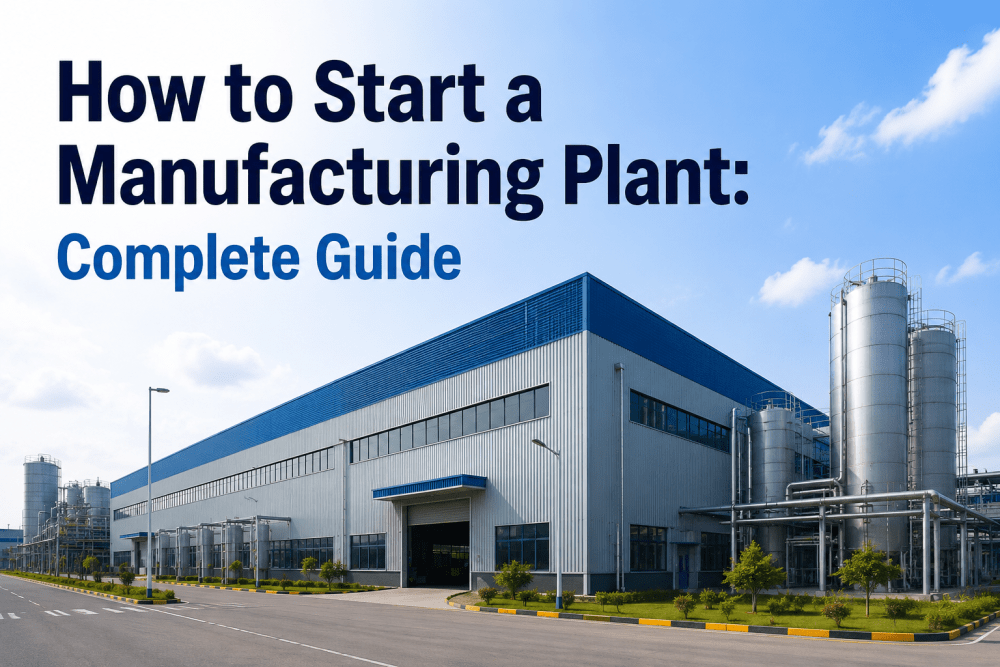
Starting a manufacturing plant is one of the most capital-intensive and operationally complex undertakings in industrial business. Every decision — from site selection to equipment procurement, regulatory licensing to production system deployment — carries cost and schedule implications that compound over the life of the facility. This guide provides a structured, phase-by-phase framework for planning, building, and launching a manufacturing plant, drawing on proven methodologies and modern AI-powered technologies that reduce risk, compress timelines, and improve operational outcomes from day one. iFactory AI's integrated platform — spanning AI Vision, Digital Twin simulation, Robotics AI orchestration, MES, CMMS and predictive analytics — gives plant founders a unified technology backbone that transforms conventional plant startup into a data-driven, simulation-validated process.
How to Start a Manufacturing Plant: Complete Guide from Planning to Production Launch
A phase-by-phase framework for industrial professionals planning, building, and launching a manufacturing plant — covering site selection, equipment procurement, regulatory compliance, technology integration, and workforce deployment with modern AI-powered systems.
Site Selection & Facility Planning — Laying the Foundation for Production Success
Site selection and facility planning are the highest-leverage decisions in any plant startup. A poorly located or inefficiently laid-out facility will incur operating penalties — in logistics cost, material flow friction, energy consumption, and labor accessibility — for the entire life of the plant. The objective of Phase 1 is to produce a validated facility plan that optimizes material flow, regulatory compliance, and operational efficiency before a single foundation is poured.
Evaluate potential sites based on proximity to raw material suppliers, customer distribution centers, highway and rail access, utility availability (three-phase power, natural gas, water, wastewater), and local zoning regulations. Conduct environmental site assessments (Phase I and Phase II ESA) and geotechnical surveys to identify subsurface conditions that affect foundation design and construction costs. Factor in workforce availability, prevailing wage rates, and state-level business incentives including tax abatements, workforce training grants, and expedited permitting programs.
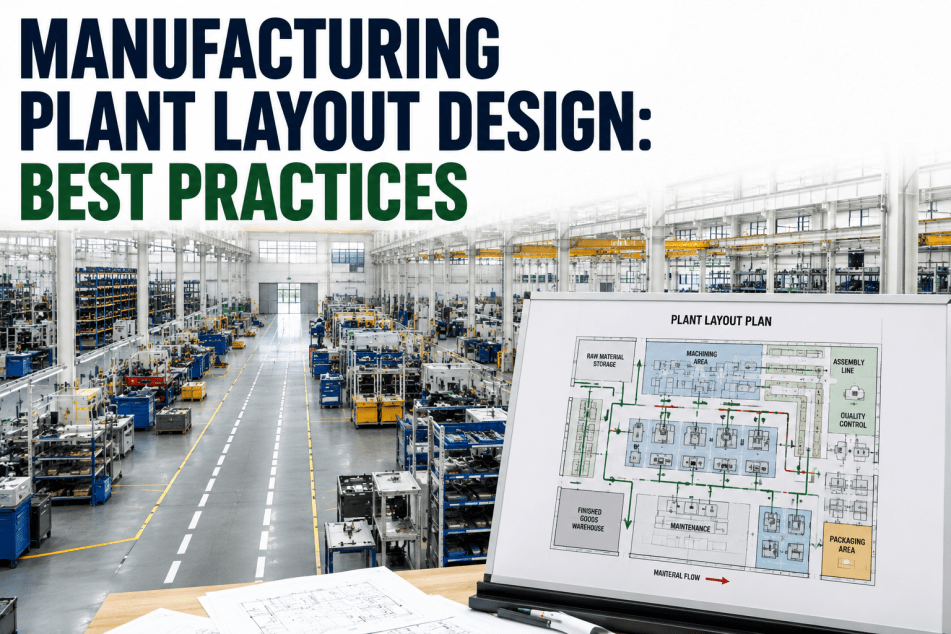
Design the facility layout to optimize material flow from receiving through production to shipping. Apply lean manufacturing principles to minimize transport distance, work-in-process inventory, and operator motion. Define production zones — raw material staging, fabrication, assembly, quality inspection, packaging, and finished goods storage — with clear material flow paths that avoid cross-traffic and backtracking. Plan utility distribution paths for compressed air, electrical, process water, and data network infrastructure that support current production requirements and future expansion.
iFactory's Digital Twin platform enables plant founders to validate facility layout, material flow, and production line configuration in a physics-accurate virtual environment before construction. Simulate weeks of production in minutes to identify bottlenecks, optimize workstation placement, and validate conveyor and robot cell integration. Test layout alternatives without physical rework cost — reducing facility planning time by up to 40% and eliminating layout-related change orders during construction.
Equipment Selection & Procurement — Building a Reliable, Future-Ready Production Line
Equipment selection determines the plant's production capacity, quality capability, and maintenance cost profile for its entire operating life. The procurement process must balance capital cost against total cost of ownership, including installation, commissioning, energy consumption, spare parts availability, and manufacturer support responsiveness. Modern equipment selection also requires evaluating technology readiness for integration with AI vision systems, predictive analytics platforms, and digital twin simulation environments. Book a Demo to discuss equipment integration with iFactory's platform.
| Equipment Category | Selection Criteria | AI Integration Readiness | Typical Lead Time | iFactory Platform Connection |
|---|---|---|---|---|
| CNC & Machining Centers | Spindle power, axis configuration, tool changer capacity, control system compatibility | OPC-UA interface, vibration sensor ports, remote diagnostics capable | 12–24 weeks | Predictive maintenance via vibration and thermal analytics |
| Assembly Lines & Conveyors | Line speed range, station spacing, pallet transfer mechanism, changeover flexibility | PLC integration, vision system mounting points, torque monitoring ports | 16–32 weeks | AI Vision defect detection, OEE tracking, Digital Twin simulation |
| Industrial Robots & Cobots | Payload, reach, repeatability, safety certification, programming environment | ROS 2 native, force-torque sensing, vision guidance interface | 10–20 weeks | Robotics AI orchestration, fleet monitoring, predictive health analytics |
| Material Handling & Storage | Throughput capacity, vertical vs horizontal storage, WMS integration capability | Barcode/RFID scanning, conveyor control interface, AGV docking compatibility | 8–20 weeks | Inventory tracking, AMR integration, automated replenishment triggers |
| Inspection & Quality Systems | Measurement accuracy, cycle time, calibration requirements, data output format | Camera interface, data streaming via MQTT, SPC software compatibility | 8–16 weeks | AI Vision inspection, automated quality data capture, real-time SPC dashboards |
Licensing, Permits & Cost Planning — Navigating Regulatory Requirements and Capital Budgets
Regulatory compliance and cost planning run in parallel throughout the plant startup process. Missing a permit requirement or underestimating a capital cost category can delay the project by months and add hundreds of thousands of dollars in unexpected expense. A structured compliance and cost framework — integrated with the project schedule — keeps the startup on track and within budget.
Required Licenses, Permits & Compliance Filings
Environmental permits (air emissions, wastewater discharge, stormwater, hazardous waste storage), building permits and occupancy certificates, fire department approval and sprinkler system inspection, OSHA compliance plan and process safety management documentation, state manufacturing business license and sales tax registration, EPA and local environmental agency filings for applicable industries, and industry-specific certifications (FDA for food/pharma, DOT for automotive, ATEX for hazardous environments).
Capital Budget Categories for Plant Startup
Land acquisition and site preparation (15–25% of total project cost), facility construction and infrastructure (30–40%), production equipment procurement and installation (25–35%), technology systems including MES, CMMS, AI platform, and network infrastructure (5–10%), workforce recruitment and training (3–5%), contingency reserve (10–15% of total budget). iFactory's platform reduces technology deployment costs by providing an integrated system that replaces multiple standalone software solutions with a unified manufacturing operations platform.
Regulatory compliance delays are the single largest source of schedule risk in plant startup. iFactory's Safety & Compliance module helps document and track every permit requirement, inspection milestone, and regulatory filing — integrated with the project schedule and CMMS for automated compliance reporting. Book a Demo to see how iFactory streamlines compliance management.
Ready to Build Your AI-Ready Manufacturing Plant?
iFactory AI provides the integrated technology platform — AI Vision, Digital Twin, Robotics AI, MES, CMMS, and predictive analytics — that accelerates plant startup and optimizes production from day one. Book a 30-minute demo to see the platform configured for your facility plan.
Production Systems & Technology Integration — The Digital Backbone of the Modern Factory
Every new manufacturing plant must decide which technology systems to deploy, how to integrate them, and what data architecture will support current operations and future scalability. The technology stack deployed during plant startup — MES, CMMS, AI vision, predictive analytics, digital twin, and robotics orchestration — determines the plant's ability to monitor, control, and continuously improve production performance. iFactory's unified platform replaces the complexity of integrating multiple standalone systems with a single AI-native manufacturing operations platform. Book a Demo to discuss your plant's technology architecture.
Manufacturing Execution System
Real-time production tracking, work order management, serial number traceability, and electronic batch recording. iFactory MES connects directly to PLC, SCADA, and operator stations for paperless shop floor execution with full genealogy and lot traceability.
Computerized Maintenance Management
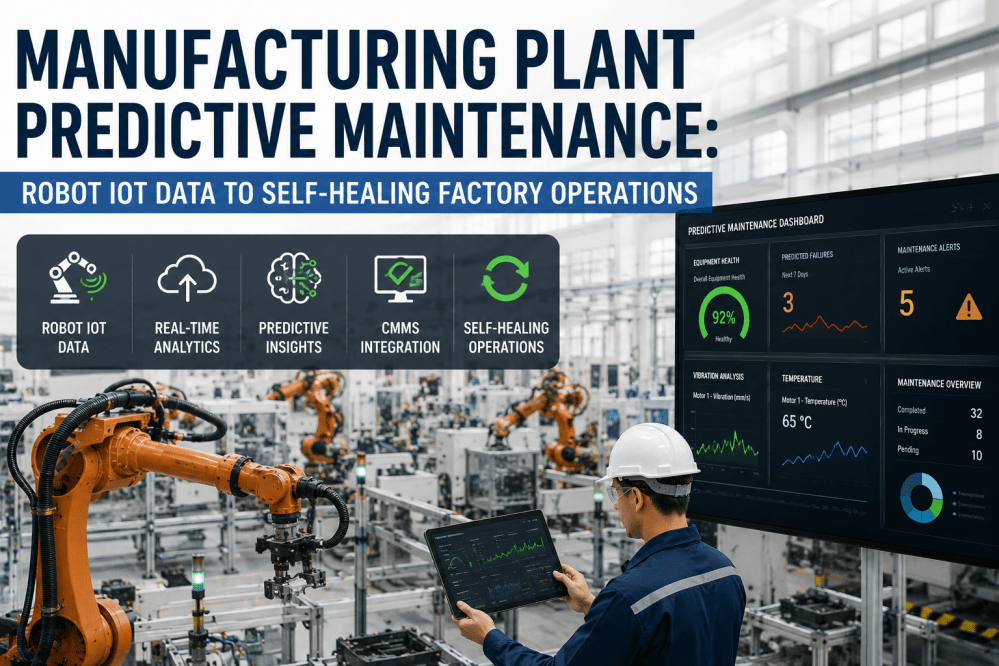
Preventive and predictive maintenance scheduling, spare parts inventory, work order management, and asset history tracking. iFactory CMMS generates PM work orders based on actual equipment usage metrics rather than fixed calendar intervals, reducing unnecessary maintenance by up to 30%.
AI-Powered Visual Inspection
Edge-deployed computer vision for defect detection, assembly verification, dimensional metrology, OCR/barcode reading, and worker safety monitoring. On-premise GPU processing ensures sub-50ms inference latency with no cloud dependency — critical for production-line speed quality inspection.
Physics-Accurate Factory Simulation
Live virtual replica of the entire facility — synchronized with IoT sensor data, production system outputs, and material flow tracking. Simulate layout changes, production schedule adjustments, and what-if scenarios at 1000x speed before deploying changes to the physical floor.
Multi-Robot Fleet Orchestration
Unified intelligence platform for industrial robots, cobots, humanoids, quadrupeds, and AMRs. ROS 2-native orchestration with real-time monitoring, predictive health analytics, and autonomous task allocation across the entire robot fleet — all connected to the MES and CMMS.
Predictive Analytics & OEE Dashboards
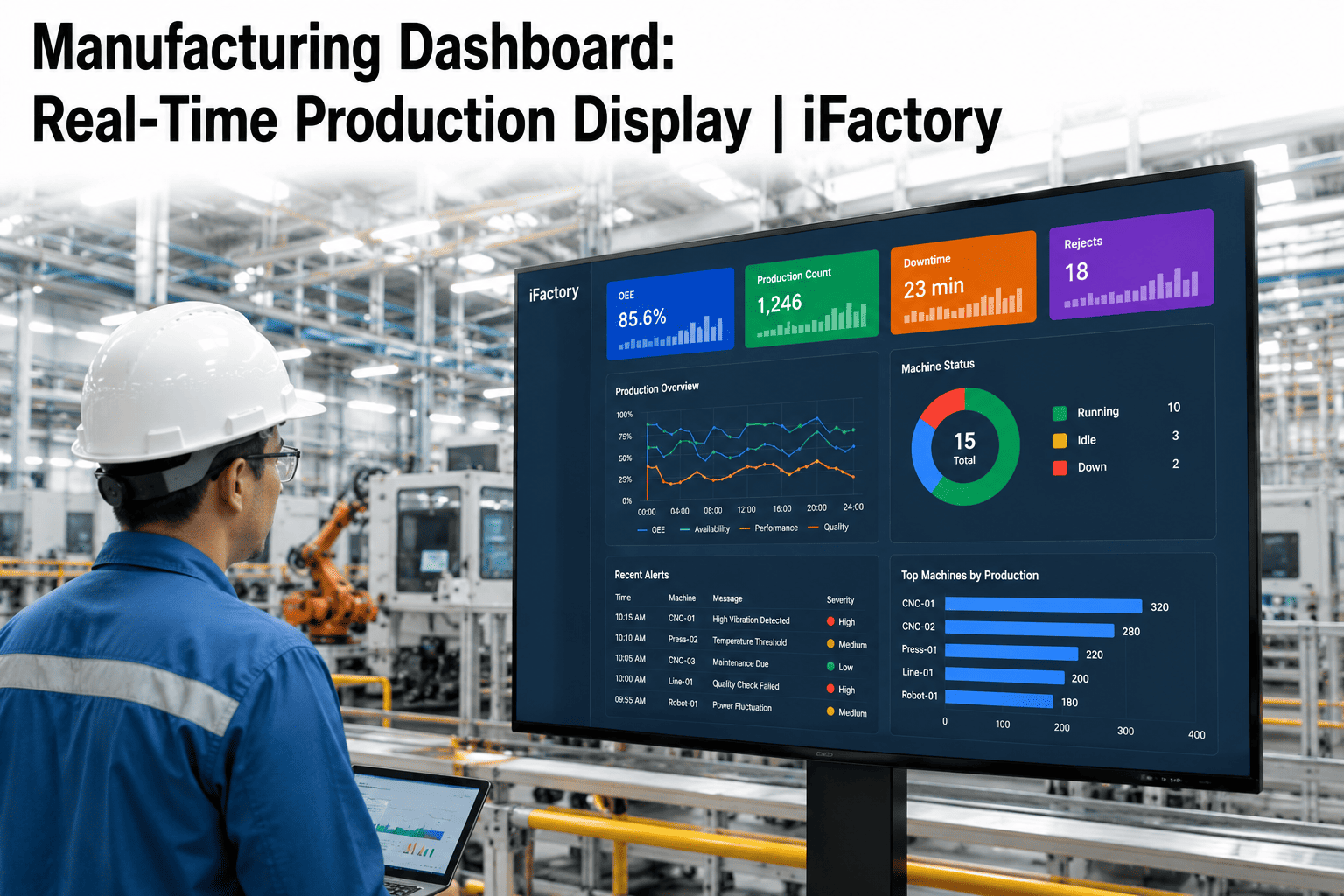
Time-series AI models analyze sensor data to predict equipment failures 7–30 days in advance, detect energy waste, and forecast quality deviations before defects occur. Real-time OEE dashboards show availability, performance, and quality metrics for every line, shift, and product family.
Workforce Planning, Training & Production Launch — Transitioning from Construction to Operations
The final phase of plant startup transitions the facility from construction and commissioning into steady-state production. Workforce recruitment, training, and ramp-up planning are frequently underestimated in both budget and schedule, yet they determine how quickly the plant reaches design capacity and quality targets. A structured launch plan — supported by digital shift management, team coordination, and automated reporting — compresses the ramp-up curve and reduces first-year production losses.
Workforce Planning
Define organizational structure, role requirements, and shift coverage for each production area. Recruit operators, technicians, quality inspectors, and supervisors 8–12 weeks before planned start of production. iFactory Team Management module supports role-based access, skill matrix tracking, and certification management.
Training & Onboarding
Deliver role-specific training on equipment operation, quality procedures, safety protocols, and technology system usage. iFactory's platform reduces training time by providing intuitive operator interfaces, voice-activated AI assistance, and digital work instructions that guide operators through each task without paper documentation.
Ramp-Up & Launch
Execute a structured production ramp-up plan with defined gates at 50%, 75%, and 90% of design capacity. iFactory Shift Logbook and Production Monitoring provide real-time visibility into ramp-up progress, quality metrics, and equipment performance — enabling rapid identification and resolution of launch issues.
Continuous Improvement
Establish daily review cadence using OEE data, quality trend reports, and maintenance history. iFactory Analytics generates automated performance reports by shift, line, and product family — providing the data foundation for continuous improvement initiatives from the first week of production.
What Manufacturing Leaders Say About Modern Plant Startup Practices
Plant Startup Success Depends on Integration Maturity — Start with the Technology Backbone
Starting a manufacturing plant is a complex, capital-intensive process that requires disciplined execution across five interconnected phases: site selection and facility planning, equipment procurement, regulatory compliance and cost planning, technology system deployment, and workforce ramp-up. The facilities that reach design capacity fastest and sustain the highest OEE are those that treat the technology stack — MES, CMMS, AI vision, predictive analytics, digital twin, and robotics integration — as a unified engineered system designed before the first production line is installed.
iFactory AI provides this unified platform — replacing the complexity of integrating multiple standalone software systems with a single AI-native manufacturing operations platform that spans plant startup through steady-state production. From digital twin simulation that validates facility layout before construction to AI vision that inspects every part at line speed, iFactory's platform gives plant founders the technology backbone to launch faster, operate more efficiently, and scale production capacity over time. Book a Demo to see iFactory's platform configured for your plant startup project.
Answers About Starting a Manufacturing Plant
Start Your Manufacturing Plant with the Right Technology Foundation
iFactory AI provides the unified platform — AI Vision, Digital Twin, Robotics AI, MES, CMMS, and predictive analytics — that accelerates plant startup and optimizes production from day one. Schedule a 30-minute demo to discuss your plant startup project and see the platform configured for your facility requirements.