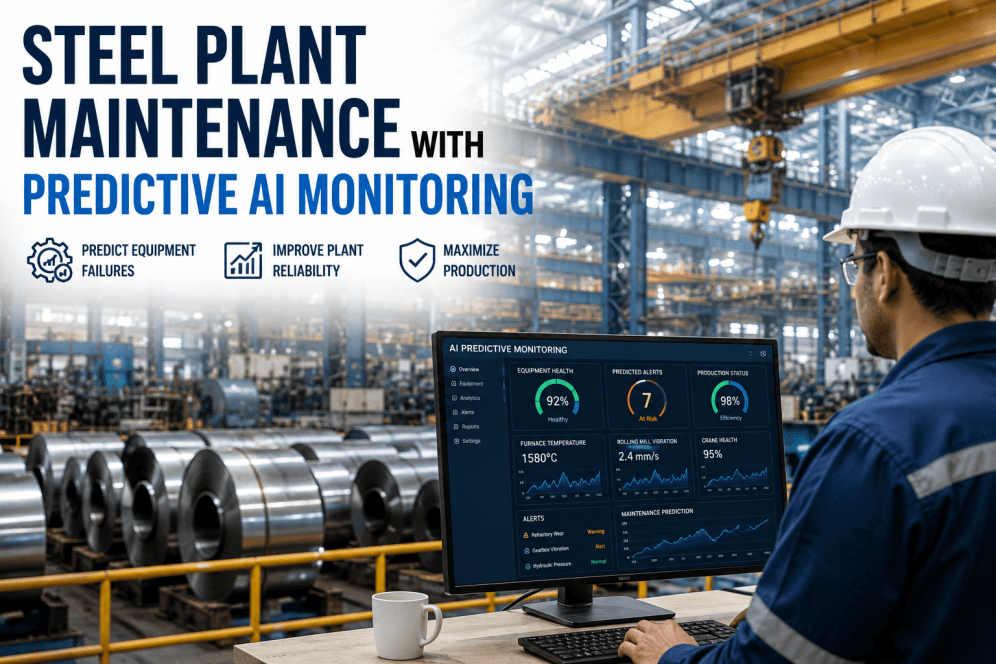
Steel plants are among the most asset-intensive environments in industrial manufacturing — blast furnaces operating at 1,600°C, rolling mills exerting millions of tons of force per cycle, overhead cranes lifting hundreds of tons across live production floors. In this environment, unplanned equipment failure is not just a cost event; it is a safety event, a production continuity event, and often a regulatory event. The shift from time-based and reactive maintenance to predictive AI monitoring is the most consequential operational change available to steel plant engineers and maintenance directors in 2025 and beyond. This guide examines how predictive AI monitoring works across the critical equipment categories in a steel plant — furnaces, rolling mills, cranes, and refractory systems — and how platforms like iFactory AI deliver the reliability, uptime, and cost outcomes that modern steel operations demand.
Predictive Maintenance · Steel Manufacturing · AI Monitoring
Steel Plant Maintenance with Predictive AI Monitoring
Reduce unplanned downtime across furnaces, rolling mills, cranes, and refractory systems with AI-driven condition monitoring and predictive maintenance analytics built for steel manufacturing.
40%
Average unplanned downtime reduction with predictive AI monitoring
72 hr
Typical anomaly detection lead time before critical equipment failure
5+
Critical equipment categories covered by integrated AI monitoring
ROI
18–36 month payback period for full predictive maintenance deployment
Why Reactive Maintenance Fails Steel Plants
Steel production is a continuous-process industry. Unlike discrete manufacturing, where a single machine failure can be isolated without cascading consequences, steel plant equipment is interdependent — a failed cooling pump on a blast furnace affects casting schedules; a worn rolling mill guide causes surface defects that propagate through the entire coil batch; a crane drive anomaly shuts down material flow across an entire bay. The economic cost of an unplanned furnace outage in a U.S. integrated steel facility averages $500,000 to $2 million per day when production loss, restart costs, and downstream delivery penalties are included.
Reactive maintenance — fixing equipment after it fails — and time-based preventive maintenance — replacing components on fixed schedules regardless of actual condition — are both inadequate for this operational context. Reactive maintenance accepts failure as inevitable. Time-based maintenance replaces components that still have useful life and misses failures that develop faster than the schedule predicts. Predictive AI monitoring, by contrast, uses continuous sensor data, machine learning models, and real-time anomaly detection to identify degradation trends before failure, enabling maintenance interventions at the optimal point: after enough degradation has occurred to make intervention worthwhile, but before the equipment fails. This is the core value proposition of platforms like iFactory AI's predictive maintenance module.
$500K–$2M
Daily cost of unplanned furnace outage at integrated U.S. steel facility
25–30%
Of maintenance budget wasted on unnecessary time-based component replacements
70%
Of equipment failures are random — not age-related — making time-based PM ineffective
3–5×
Higher maintenance cost for reactive vs. predictive interventions on the same failure type
Critical Equipment Categories: AI Monitoring Capabilities and Failure Modes
Predictive AI monitoring in a steel plant is not a single system — it is a layered architecture that applies different sensor types, data models, and anomaly detection algorithms to each equipment category based on its specific failure modes and consequence severity. The following breakdown covers the five critical equipment categories where AI monitoring delivers the highest return in steel plant operations.
Primary failure modesRefractory erosion, tuyere blockage, cooling stave failure, gas leakage
Sensor typesThermal imaging, acoustic emissions, gas analyzers, flow meters, pressure sensors
AI monitoring valueContinuous refractory thickness modeling, hot spot detection, campaign life prediction
Consequence severityCritical — unplanned reline costs $15M–$50M
Blast furnace monitoring requires integrating thermal, acoustic, and process data streams into a unified condition model. AI platforms like iFactory AI apply anomaly detection to refractory wall temperature gradients to predict erosion progression weeks before the threshold requiring an unplanned shutdown is reached.
Primary failure modesRoll bearing degradation, chatter, gauge deviation, drive motor overload, roll wear
Sensor typesVibration accelerometers, load cells, motor current analysis, thermal sensors, laser gauges
AI monitoring valueBearing RUL prediction, chatter detection, roll schedule optimization, quality correlation
Consequence severityHigh — strip breakage costs 4–8 hours of production per event
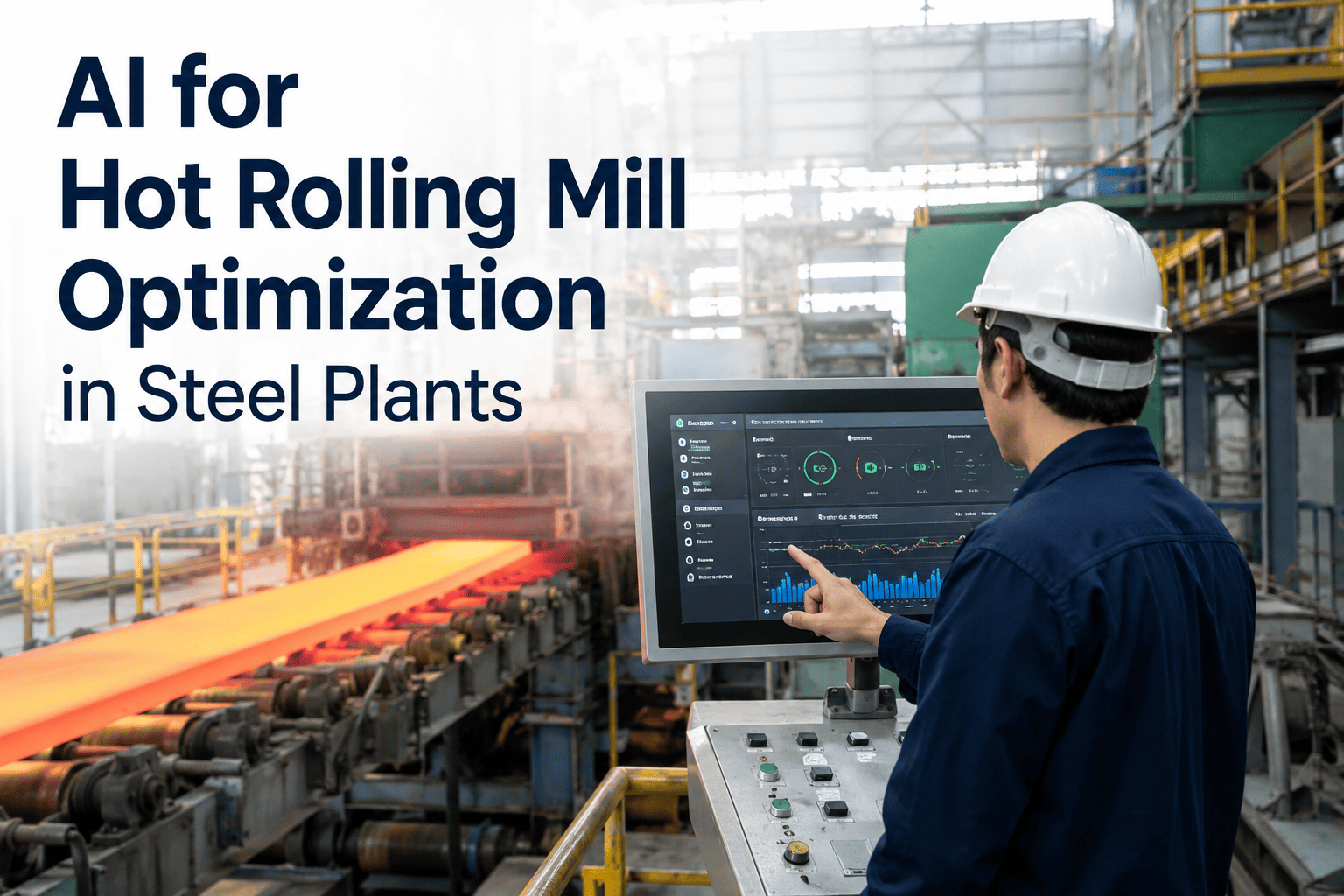
Rolling mill bearing failures account for over 35% of unplanned downtime events in hot strip mill operations. AI-driven vibration analysis using envelope spectrum detection and machine learning classification identifies bearing defect frequencies 2–6 weeks before failure, enabling planned roll change scheduling during scheduled maintenance windows.
Primary failure modesHoist motor degradation, brake wear, rope fatigue, end carriage wheel wear, structural fatigue
Sensor typesLoad monitoring, motor current signature, acoustic sensors, strain gauges, thermal sensors
AI monitoring valueBrake condition assessment, rope inspection scheduling, overload event logging, structural integrity
Consequence severityCritical — safety-critical; regulatory inspection requirements apply
Ladle cranes and scrap-charging cranes are safety-critical assets subject to ASME B30 and OSHA regulation. AI monitoring platforms that integrate with iFactory AI's
inspection management module provide continuous condition data between mandated inspection intervals, documenting deterioration events and enabling risk-based inspection scheduling that satisfies both safety and regulatory requirements.
Primary failure modesThermal shock cracking, chemical erosion, joint failure, spalling, lining thickness loss
Sensor typesInfrared thermography, acoustic emission, thermocouple arrays, laser scanning
AI monitoring valueLining life prediction, hot spot mapping, optimal reline scheduling, cold face temperature trending
Consequence severityCritical — breakthrough risk is a safety and catastrophic loss event
Refractory monitoring is the highest-stakes predictive maintenance application in steel manufacturing. A ladle or converter lining breach is a catastrophic safety event. AI monitoring using continuous thermographic scanning and cold face temperature trending allows operators to extend lining campaigns to near-maximum life while maintaining a statistically validated safety margin — the most economically valuable outcome in steel plant maintenance management.
Primary failure modesMotor insulation degradation, coupling misalignment, pump cavitation, gearbox wear, cooling failure
Sensor typesMotor current signature analysis, vibration, ultrasonic, thermal, flow and pressure
AI monitoring valueMotor health trending, coupling condition, pump efficiency degradation, energy baseline deviation
Consequence severityHigh — support system failures cascade to primary process equipment
Drive and utility systems are often overlooked in asset criticality assessments but account for a disproportionate share of unplanned production interruptions. iFactory AI's
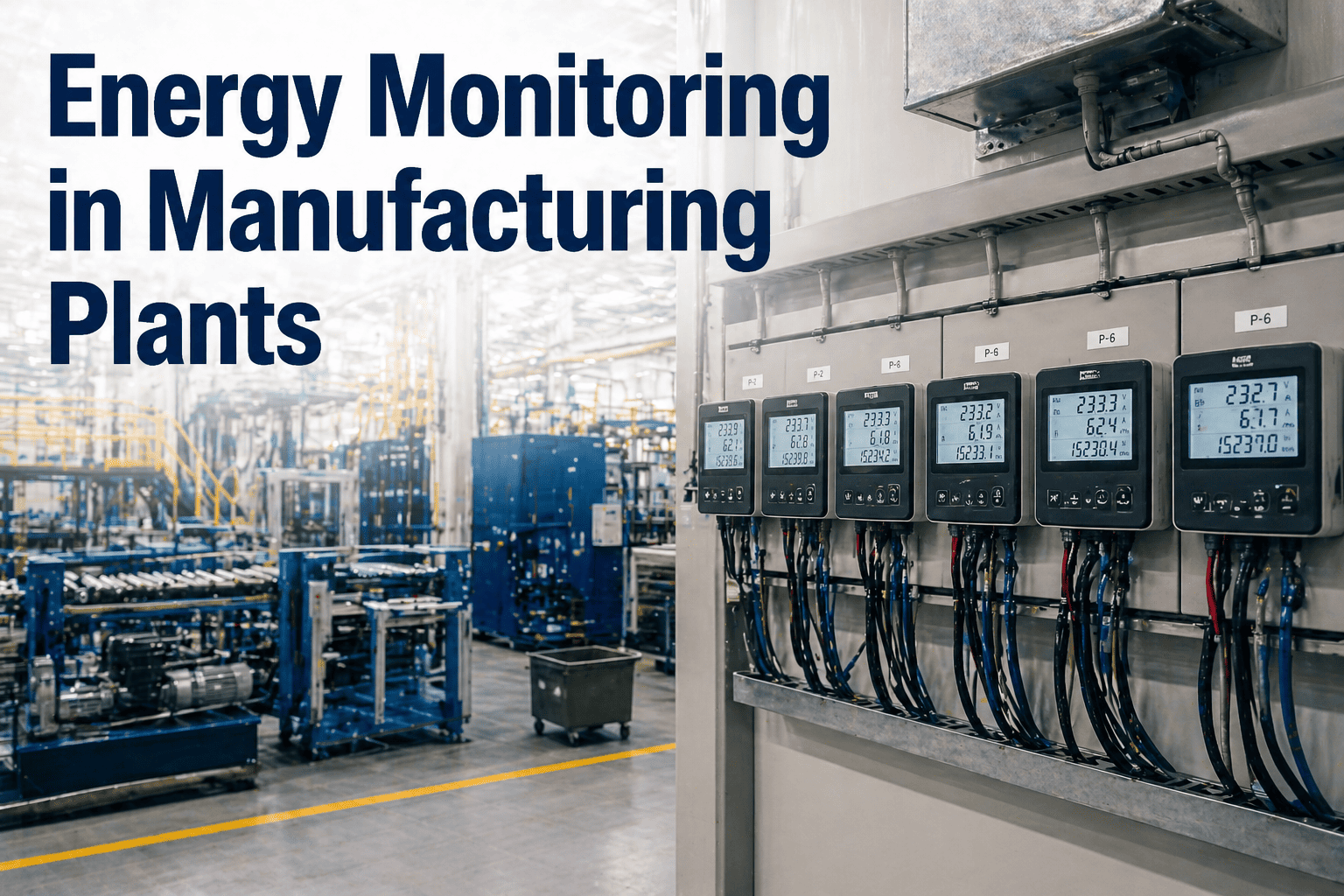
energy monitoring module provides baseline energy consumption models that detect efficiency degradation in motors and pumps before the mechanical failure that causes production loss.
How Predictive AI Monitoring Works in a Steel Plant: The Data Architecture
Understanding the technical architecture behind predictive AI monitoring is essential for procurement teams evaluating platforms and for maintenance directors building the business case for investment. The architecture has four distinct layers, each with its own technology and operational requirements. Platforms like iFactory AI integrate all four layers into a single operational view, eliminating the data silos that characterize point-solution approaches to steel plant monitoring.
01
Sensor & Data Acquisition Layer
Continuous data collection from vibration sensors, thermocouples, current transformers, pressure transmitters, flow meters, and acoustic emission sensors installed on critical assets. Data acquisition rates range from 1 Hz for process parameters to 25.6 kHz for high-frequency vibration analysis. This layer requires industrial-grade hardware rated for the thermal and electromagnetic environment of steel plant operations — standard IoT sensor specifications are inadequate.
OPC-UA / MODBUS
Edge gateways
High-frequency ADC
02
Edge Processing & Feature Extraction
Raw sensor data is processed at the edge — at or near the asset — to extract condition indicators: vibration RMS, kurtosis, crest factor, bearing defect frequencies, thermal gradients, motor current spectral signatures. Edge processing reduces bandwidth requirements by orders of magnitude while enabling sub-second anomaly detection response times for safety-critical applications. iFactory AI's edge processing layer integrates with standard industrial edge computing hardware.
FFT / spectral analysis
Statistical feature extraction
Real-time processing
03
AI Anomaly Detection & Prognostics
Machine learning models trained on historical failure data and normal operating baselines continuously score incoming condition indicator data for anomaly probability. Prognostic models estimate remaining useful life (RUL) for specific failure modes — bearing spall propagation, refractory thickness, motor insulation resistance — providing the maintenance planning horizon needed to schedule interventions without production disruption. Models improve continuously as new failure-mode data is captured from the facility.
Anomaly scoring
RUL estimation
Continuous learning
04
CMMS Integration & Action Management
Anomaly detections automatically generate work orders in iFactory AI's
work order management module with asset history, failure mode classification, recommended action, and priority level attached. Maintenance planners receive actionable alerts — not raw sensor data — within the workflow tools they already use. This layer closes the loop between condition monitoring and maintenance execution, which is where most competing point solutions fail.
Automated work orders
Priority classification
Asset history linkage
See Predictive AI Monitoring for Steel Plants in Action
iFactory AI integrates sensor data, anomaly detection, and work order management into a single platform designed for steel manufacturing operations. Book a demo to see how it works for furnaces, rolling mills, cranes, and refractory systems.
Predictive Monitoring Capability Comparison: Equipment Category Matrix
The matrix below maps the key predictive monitoring capabilities against the five critical equipment categories in a steel plant, scored by monitoring maturity, data availability, and typical ROI impact. This provides maintenance engineers and operations directors with a structured framework for prioritizing where to deploy predictive AI monitoring first.
| Equipment Category |
Vibration Analysis |
Thermal Monitoring |
Motor Current Analysis |
Process Parameter Trending |
RUL Estimation |
ROI Priority |
| Blast Furnace / EAF |
Medium |
Critical |
Medium |
Critical |
High |
Highest |
| Hot / Cold Rolling Mill |
Critical |
High |
High |
High |
High |
Highest |
| Overhead & Ladle Cranes |
High |
Medium |
High |
Medium |
Medium |
High |
| Refractory Lining Systems |
Low |
Critical |
Low |
High |
Critical |
Highest |
| Drive Systems & Utilities |
High |
Medium |
Critical |
Medium |
Medium |
High |
Implementation Roadmap: Deploying Predictive AI Monitoring in a Steel Plant
Deploying predictive AI monitoring in a steel plant is not a plug-and-play exercise. The operational environment, legacy equipment, and criticality hierarchy require a structured implementation approach that minimizes deployment risk while accelerating time-to-value. The four-phase roadmap below reflects best practice for mid-to-large integrated steel facilities deploying iFactory AI's predictive maintenance platform.
Asset Criticality Assessment and Sensor Strategy
Rank all plant assets by failure consequence (production impact, safety risk, regulatory exposure, repair cost) and current condition monitoring coverage. Identify the top 20 assets where predictive monitoring will generate the highest return. Map required sensor types to each asset and assess existing data infrastructure — PLC historians, DCS systems, existing sensor installations. Most steel plants have 40–60% of the sensor data needed already being collected but not analyzed in a predictive context.
Duration: 4–6 weeks
Deliverable: Asset criticality register + sensor deployment plan
Sensor Installation and Data Integration
Install sensors on prioritized assets and establish data pipelines from sensors and existing historians to the iFactory AI platform. Configure OPC-UA, MODBUS, or direct API connections as required. This phase requires coordination between maintenance engineering, electrical, and IT teams. Industrial-grade sensors in furnace and high-temperature environments require specialized mounting and cabling — allow 2–4 weeks per area for installation in live production environments.
Duration: 8–16 weeks
Risk: Medium — requires live plant access coordination
Baseline Establishment and Model Training
Collect 8–12 weeks of normal operation data to establish equipment health baselines and train initial anomaly detection models. This phase also captures any incipient failure events — degradation that was already underway before monitoring began — which accelerates model accuracy. iFactory AI's platform automates baseline calculation and initial model configuration, reducing the data science burden on plant engineering teams. Alert thresholds are configured and validated against the maintenance team's operational knowledge before production use.
Duration: 8–12 weeks
Output: Calibrated anomaly detection models per asset
Full Operational Integration and Continuous Improvement
Anomaly detections drive automated work orders in iFactory AI's work order management system. Maintenance planners receive condition-based maintenance recommendations integrated into their existing scheduling workflow. As failure events and maintenance interventions are documented, models are retrained on facility-specific data, continuously improving detection accuracy and RUL estimation precision. Quarterly ROI reviews document downtime events avoided, maintenance cost reduction, and production impact.
Book a demo to see this workflow in operation for a steel facility comparable to yours.
Duration: Ongoing — quarterly optimization cycles
Output: Measurable downtime and cost reduction, documented ROI
ROI Framework: Quantifying Predictive Maintenance Value in Steel Manufacturing
The ROI case for predictive AI monitoring in steel plants is built on four primary value streams. Each can be quantified independently against your facility's specific cost structure, making the business case construction straightforward for procurement teams and operations directors with access to basic production and maintenance cost data.
Unplanned Downtime Elimination
The primary ROI driver. At $500K–$2M per day for major equipment outages, preventing 2–3 unplanned events per year per major asset typically returns the entire platform investment within the first year of operation. Predictive monitoring achieves this by providing 48–96 hour advance warning of most failure events — sufficient for planned intervention scheduling.
Annual value: $1M–$6M+ per major asset at integrated steel scale
Maintenance Cost Reduction
Eliminating unnecessary time-based component replacements reduces direct parts and labor costs. Studies across comparable process industries document 15–25% maintenance cost reductions after predictive monitoring deployment, with the largest savings in high-cost consumables like rolling mill bearings, furnace cooling elements, and drive couplings that were previously replaced on calendar schedules regardless of actual condition.
Annual savings: 15–25% of direct maintenance budget on monitored assets
Extended Equipment Life
Refractory campaign life extension is the highest single-asset ROI in steel plant predictive maintenance. AI-driven lining monitoring with accurate thickness and hot spot modeling allows campaigns to run 10–20% longer than conservative time-based reline schedules, deferring multi-million-dollar reline capital expenditure without increasing breakthrough risk. Similar life extension value applies to rolling mill rolls, crane wire ropes, and drive motor insulation systems.
Capital deferral: $5M–$50M per furnace reline cycle extended
Safety and Compliance Improvement
Continuous condition monitoring of safety-critical assets — ladle cranes, converter linings, pressure vessels — provides documented evidence of equipment integrity between mandated inspection intervals. This reduces the regulatory exposure associated with inspection gaps and creates an immutable digital maintenance record that supports OSHA compliance documentation, insurance claim defense, and incident investigation. iFactory AI's
safety and compliance module integrates condition monitoring data directly with regulatory documentation workflows.
Risk reduction: Quantified as incident cost avoidance and insurance premium impact
Expert Review: Maintenance Director Perspective on AI Monitoring Deployment
"We had been running time-based PM schedules on our hot strip mill for eleven years. The schedule was built on manufacturer recommendations and incident history — not on actual condition data. When we deployed vibration monitoring on the mill stands and connected the output to iFactory AI, we discovered three bearing sets in progressive failure that our PM schedule would not have triggered replacement on for another four to six months. Two of those would have caused strip breaks. The third would have been a stand outage during a high-priority order run. What changed our internal narrative on predictive monitoring was not those three catches — it was the subsequent eighteen months of operation. We had two unplanned mill outages in the twelve months before deployment. We had zero in the eighteen months after. That difference, at our production volume, is worth more than the entire platform cost several times over. The implementation was harder than we expected — the data integration work took longer than the vendor projected — but the outcome has been unambiguous. My recommendation to peer maintenance directors evaluating this decision: the ROI is real, the technology is mature enough for production deployment, and the biggest risk is underestimating the integration work in months one through three. Plan for it. Staff it appropriately. The payback is on the other side."
Director of Maintenance Engineering
Integrated Flat-Rolled Steel Producer — U.S. Midwest — 3.2 Million Ton Annual Capacity — 19 Years Steel Industry
Ready to Build the Business Case for Predictive AI Monitoring at Your Steel Plant?
iFactory AI provides the predictive maintenance, condition monitoring, inspection management, and work order automation infrastructure that steel plants need to move from reactive to predictive operations. Contact our industrial solutions team or book a demo tailored to your facility's equipment profile.
Conclusion: The Strategic Case for Predictive AI Monitoring in Steel Manufacturing
Predictive AI monitoring is not an emerging technology for steel plants — it is a mature, deployable capability that leading producers have been extracting measurable ROI from for several years. The gap between early adopters and the majority of U.S. steel facilities is narrowing rapidly, driven by the declining cost of industrial sensors, the maturation of cloud and edge AI platforms, and the competitive pressure of production efficiency benchmarking against facilities that have already made the transition.
The implementation decision is no longer whether predictive monitoring delivers value — the data on that is unambiguous. The decision is which platform delivers the tightest integration between condition monitoring and maintenance execution workflow, and which implementation approach minimizes deployment risk at your facility's specific equipment and data infrastructure. iFactory AI is designed to answer both questions for steel manufacturing operations: it connects sensor data, anomaly detection, inspection management, work order execution, and per-asset cost tracking in a single platform built for the operational complexity of continuous process manufacturing. Book a demo to see how iFactory AI's predictive maintenance platform applies to your steel plant's specific equipment categories and maintenance workflow.
Frequently Asked Questions