AI Adoption in National Oil Companies (NOCs): Challenges and Opportunities
By Henry Green on May 27, 2026
National oil companies — Saudi Aramco, Abu Dhabi National Energy Company (TAQA), Petrobras, ONGC, and over 70 other state-owned energy producers — collectively control more than 70 percent of the world's proven oil and gas reserves and account for the majority of global hydrocarbon production. The AI adoption decisions these organizations make in 2025 and beyond will determine whether they remain competitive against private international oil companies (IOCs), which have moved faster on digital transformation despite operating smaller asset bases. AI adoption in national oil companies presents a different challenge profile than AI adoption in private industry: legacy infrastructure constraints that span decades rather than years, procurement and governance structures that add 18 to 36 months to technology deployment timelines, workforce considerations tied to national employment mandates, and data sovereignty requirements that limit access to global cloud infrastructure. Yet the opportunity scale is equally disproportionate — an NOC that successfully deploys AI-driven predictive maintenance, production optimization, and asset health monitoring across a large refinery or upstream operation can recover the equivalent of billions of dollars in deferred production and avoided downtime within three to five years of deployment. Book a Demo to see how iFactory's AI-driven platform is designed for the operational and governance constraints of large industrial operators.
AI-driven · National Oil Companies · Oil & Gas Analytics
AI Adoption in National Oil Companies (NOCs): Challenges and Opportunities in 2025
State-owned energy producers face a unique AI adoption challenge — legacy infrastructure, national workforce mandates, data sovereignty constraints, and multi-year procurement cycles. This article examines the barriers, the opportunities, and the strategic path forward for NOCs pursuing AI-driven operational transformation.
Share of world proven oil and gas reserves controlled by national oil companies — making NOC AI adoption a global energy issue
$2.5B+
Annual AI Investment
Estimated combined annual AI and digital investment by top 10 NOCs in 2024–2025, with Saudi Aramco and Abu Dhabi NOC leading
18–36 mo
Typical Procurement Lag
Average technology procurement timeline at large NOCs — the single most cited barrier to timely AI deployment in state-owned operators
The NOC AI Gap
Why AI Adoption Moves Slower at National Oil Companies — and Why the Gap Is Closing
Most major NOCs have announced AI and digital transformation strategies. The execution gap between strategy announcement and field-level operational impact remains wide — driven by four structural barriers that private operators do not face at the same scale.
Legacy
Infrastructure installed 20 to 40 years ago with no native data connectivity — brownfield AI integration is the dominant challenge, not greenfield deployment
Governance
Multi-layer procurement approval, data sovereignty law compliance, and national security reviews add 18 to 36 months to AI vendor selection and deployment
Workforce
National employment mandates and existing workforce structures create change management complexity that private operators do not face at equivalent scale
Data
Data sovereignty requirements in Saudi Arabia, UAE, Brazil, India, and Malaysia restrict cloud deployment options and limit access to global AI infrastructure platforms
NOC vs. IOC: AI Adoption Landscape Comparison
NOC AI Adoption — Current State
Strategy Announced, Execution Lagging
Most major NOCs have published AI and digital transformation roadmaps. Saudi Aramco's iktva program, Petrobras's digital transformation initiative, ADNOC's AI strategy, and ONGC's technology roadmap all represent genuine organizational commitment to AI adoption. The execution gap is not a lack of strategic intent — it is structural. Procurement timelines measured in years rather than months, fragmented operational data locked in proprietary historian systems, and a workforce that has operated manual processes for decades create friction that strategy documents do not resolve. The NOCs currently leading on AI deployment — Saudi Aramco, ADNOC, and Equinor — share a common characteristic: they built internal digital engineering capability rather than waiting for procurement to deliver external solutions.
Strategy-execution gapLegacy data infrastructure18–36 month procurement cyclesLimited brownfield AI track record
IOC AI Adoption — Reference Benchmark
Faster Deployment, Narrower Asset Base
International oil companies — BP, Shell, ExxonMobil, Chevron, TotalEnergies — have deployed AI in production optimization, predictive maintenance, and reservoir analytics at scale faster than most NOCs, despite managing significantly smaller asset portfolios. The IOC structural advantages are clear: cloud-first infrastructure, faster vendor procurement, and less complex workforce change management. IOC deployments provide the clearest proof-of-value case for AI in oil and gas operations — but they also define the competitive pressure that NOCs face. An NOC whose lifting cost efficiency lags an IOC benchmark by 15 percent due to delayed AI adoption is not a policy problem — it is a capital allocation problem that compounds over time.
Faster vendor procurementCloud-native infrastructureProven AI deployment track recordCompetitive benchmark for NOCs
5 High-Value AI Use Cases
Where AI Creates the Largest Operational Value for National Oil Companies
NOCs that have moved beyond pilot programs to operational AI deployments have concentrated value creation in five specific use cases. Each addresses a high-cost failure mode or production loss category that exists at disproportionate scale in state-owned operations. Book a Demo to see how iFactory's AI platform addresses these use cases for large upstream and downstream operators.
01
Predictive Maintenance for Rotating Equipment
Compressors, pumps, turbines, and separators in NOC upstream operations run continuously under high-load conditions for years between planned maintenance intervals. AI-driven vibration analysis, temperature trending, and cross-parameter anomaly detection identifies bearing degradation, seal failure precursors, and imbalance developing over weeks — converting emergency shutdowns to planned maintenance events. Saudi Aramco's deployment of AI-based predictive maintenance across its Master Gas System compressor fleet is the most cited large-scale NOC example, with reported reductions in unplanned downtime exceeding 30 percent.
Value driver: Unplanned downtime avoidance — $500K–$5M per event
02
Production Optimization and Decline Management
AI models trained on well production history, reservoir pressure data, and injection performance can identify production optimization opportunities — choke settings, injection rates, artificial lift parameters — that manual engineering review misses at large field scale. For an NOC operating hundreds or thousands of wells, AI-driven production optimization across even a 2 to 3 percent production uplift generates value at a scale that individual well-level human optimization cannot match. Equinor's Cormorant AI program and Petrobras's reservoir management AI deployments have both documented production uplift in the 3 to 5 percent range on pilot field applications.
Value driver: Production uplift — 2–5% across large field portfolios
03
Refinery and Downstream Process Optimization
NOC-owned refineries — particularly large integrated complexes operated by Aramco, Kuwait Petroleum, ADNOC Refining, and Hindustan Petroleum — represent high-value AI targets for process optimization. AI models applied to crude distillation unit (CDU) optimization, fluid catalytic cracker (FCC) yield management, and energy intensity reduction have demonstrated operating cost reductions of 3 to 8 percent in comparable large refinery deployments. Energy optimization alone — reducing fuel gas consumption and steam generation costs — produces measurable ROI within 12 to 18 months of deployment in refinery units processing 100,000 barrels per day or more.
Value driver: Operating cost reduction — 3–8% on refinery OPEX
04
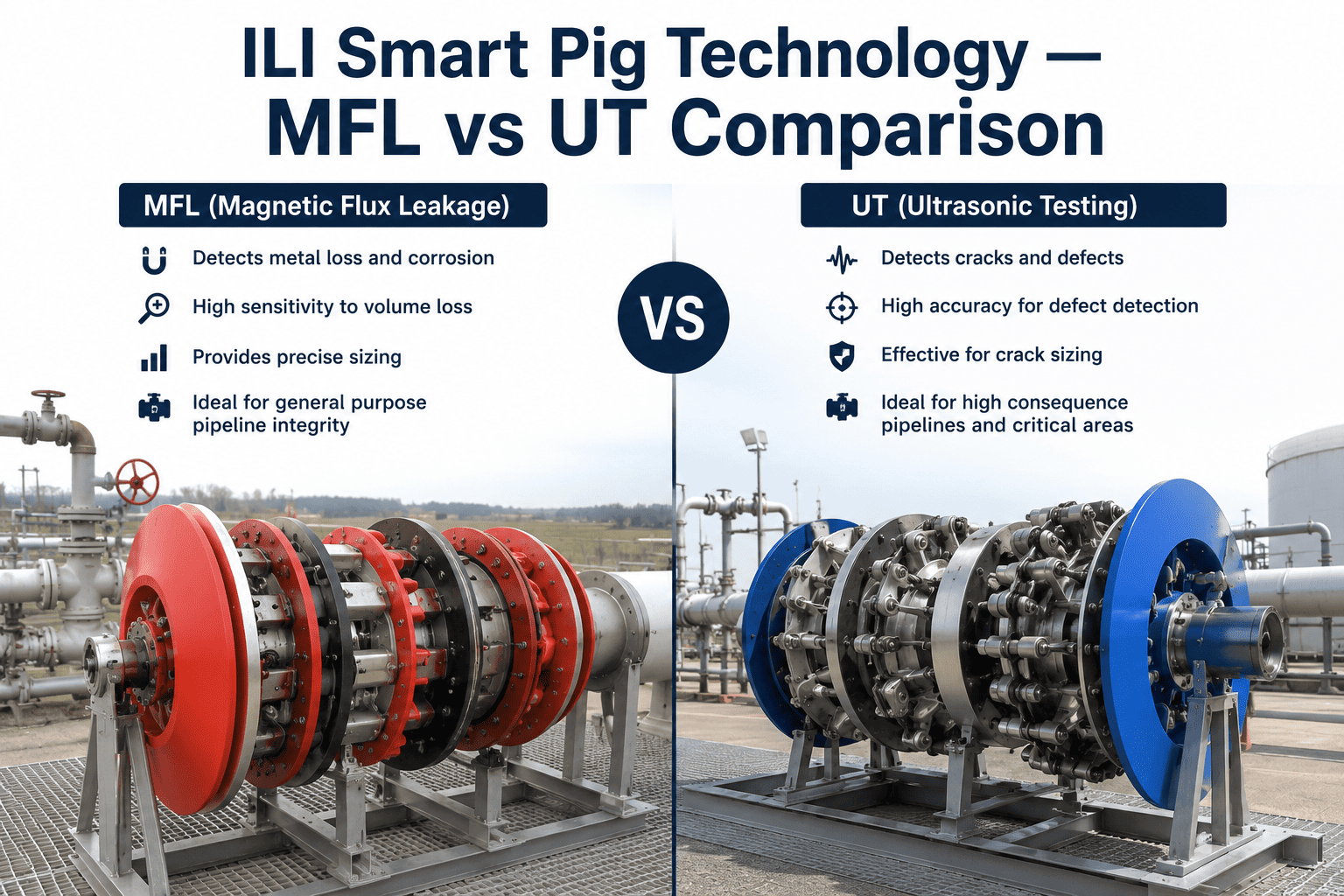
Pipeline Integrity and Leak Detection
NOCs operate extensive pipeline networks — Saudi Aramco's network exceeds 17,000 kilometers; Petrobras operates over 9,000 kilometers of offshore and onshore pipeline. AI-driven pipeline integrity monitoring, using pressure transient analysis and flow model deviation detection, identifies micro-leak precursors and corrosion-driven wall thinning progression before they reach reportable or catastrophic thresholds. The regulatory, environmental, and community relations cost of a major pipeline failure at an NOC operation — where the state is also the regulator in many jurisdictions — makes pipeline integrity AI a particularly high-priority investment in the NOC context.
Value driver: Failure prevention — regulatory, environmental, and reputational cost avoidance
05
Workforce Knowledge Capture and Operational AI Assistants
NOCs face an accelerating knowledge transfer challenge as experienced engineers and field operators retire — a problem amplified in organizations where 30-year careers were the norm. AI-driven knowledge management systems that capture operating procedures, equipment history, and field experience in queryable formats, combined with AI operational assistants that support less experienced operators with real-time guidance, represent a high-value deployment category that addresses NOC workforce transition risk directly. ADNOC and Petronas have both announced programs in this category, with ADNOC's AI Center partnership with G42 explicitly targeting knowledge management applications.
Value driver: Knowledge retention — skills transfer risk reduction at scale
06
Emissions Monitoring and ESG Reporting Automation
As NOCs face increasing international pressure on emissions performance — from sovereign wealth fund investors, international joint venture partners, and sovereign credit rating agencies — AI-driven emissions monitoring and reporting automation has moved from a sustainability initiative to a capital access issue. AI systems that continuously track methane emissions, flaring volumes, and energy intensity metrics across distributed field operations, and that generate TCFD-aligned and GRI-standard reporting automatically, are increasingly part of NOC AI investment portfolios in the Gulf, Norway, and Brazil.
Value driver: ESG compliance — investor access and credit rating impact
The NOC AI Adoption Roadmap: Four Stages From Pilot to Operational Scale
NOCs that have successfully scaled AI from proof-of-concept to operational deployment share a common four-stage progression. The bottlenecks are consistent across geographies — and so are the structural solutions that unlock each transition.
Stage 01
Data Infrastructure Assessment and Connectivity
Before any AI model delivers operational value, the underlying operational data must be accessible in a form AI systems can consume. Most NOC facilities have SCADA and DCS systems with decades of historian data — but that data is typically locked in proprietary formats, inconsistently tagged, and not connected to any common data platform. Stage 1 AI adoption for NOCs is primarily a data infrastructure project: historian data extraction, OPC-UA or API connectivity establishment, data quality assessment, and common data model definition. NOCs that skip this stage and attempt to deploy AI models on uncleaned, disconnected data sources consistently produce pilot results that cannot be replicated at operational scale.
Stage 02
Focused Pilot Deployment on High-Value Assets
Successful NOC AI pilots are defined before launch by two criteria: a specific, measurable outcome (unplanned downtime reduction on a defined compressor fleet; production optimization on a defined well cluster) and a business case calculation anchored to current failure or underperformance cost. Pilots defined by technology demonstration rather than operational outcome consistently fail to secure the internal executive sponsorship needed to move to Stage 3. The 12 to 18 month pilot duration that NOC governance structures often impose is actually an advantage when managed correctly — it allows statistically meaningful baseline comparison and provides the documented performance data needed for cross-divisional budget approval for scaled deployment.
Stage 03
Internal Capability Building and Change Management
The NOCs that have successfully scaled AI — Saudi Aramco's EXPEC AI Center, ADNOC's AI Center with G42, Equinor's internal data science organization, and Petrobras's digital center in Rio de Janeiro — share a common structural investment: dedicated internal AI capability that owns the technology, not just the vendor contract. This internal capability serves two functions simultaneously. It reduces long-term dependency on external vendors (a procurement and data sovereignty benefit that resonates strongly in NOC governance structures), and it creates the change management anchor that drives operational technology adoption by field engineers and operators who would otherwise resist externally-imposed system changes.
Stage 04
Enterprise Scale Deployment and Performance Governance
Stage 4 is where NOC AI programs either compound value rapidly or stall. Enterprise scale requires standardized data integration protocols that work across facilities with different vintages and OEM equipment, a performance governance structure that tracks AI-driven KPI improvements against baseline, and an operating model that integrates AI-generated alerts and work orders into CMMS and maintenance planning workflows — not as a separate system that maintenance teams learn to ignore. NOCs that reach Stage 4 with a functioning performance governance structure report AI program ROI that compounds 30 to 50 percent year-over-year as the models accumulate unit-specific operational history and the organization builds workflow integration around AI-generated insights.
Designed for Large Industrial Operators
See How iFactory's AI Platform Integrates With NOC-Scale Legacy Infrastructure and Delivers Operational Value From Existing Data
iFactory's AI-driven industrial analytics platform is built for the brownfield integration challenge — SCADA historian connectivity, OPC-UA data ingestion, on-premise deployment options for data sovereignty requirements, and CMMS work order integration that delivers AI insights directly into maintenance planning workflows.
NOC AI Adoption by Region: Maturity, Investment, and Strategic Focus
AI adoption maturity among NOCs varies significantly by region. This comparison maps the current status, primary focus areas, and structural enablers or barriers for the five major NOC regions in 2025.
Expert Perspective: What Oil and Gas AI Specialists Say About NOC Adoption Barriers
Practitioners with direct experience in NOC digital transformation programs have consistently identified the same structural barriers — and the same structural unlocks — across different geographies and organizational contexts.
The NOC AI adoption challenge is fundamentally different from what technology vendors typically pitch for. It is not a technology problem — modern AI platforms are mature enough to deliver value in oil and gas operations. It is an integration problem. NOCs have 30 to 50 years of operational data distributed across DCS historians, paper-based maintenance records, and disconnected SCADA systems from five different vendors. Before an AI model can predict a compressor failure or optimize an injection rate, someone has to connect all of that data, clean it, and make it accessible in a consistent format. The NOCs that are succeeding with AI are the ones that treated that data infrastructure work as the first investment — not as an afterthought. The ones that are failing are the ones that signed AI vendor contracts and discovered 18 months later that the data foundation the vendor assumed existed was not actually there. The other consistent factor: every successful large-scale NOC AI deployment I have observed had an internal champion at the engineering VP or CTO level who was willing to absorb three to four years of organizational friction to build the internal capability that sustained the program after the vendor's deployment team went home.
Senior Digital Transformation Advisor, Oil and Gas Sector22 Years Oil and Gas Operations · Former Digital Transformation Lead, Major Gulf NOC · SPE Digital Energy Technical Section · IChemE Member
73%
Of top 25 NOCs have announced formal AI or digital transformation strategies as of 2025
50%
Of NOC AI pilots that achieve operational scale deployment — the majority stall between pilot and enterprise rollout
3–5%
Production uplift documented in NOC AI optimization programs that reached operational scale deployment
80%
Of NOC AI value that comes from predictive maintenance, production optimization, and refinery efficiency — the three highest-priority use cases
Book a Demo to see how iFactory's AI-driven industrial analytics platform addresses the brownfield integration and data connectivity challenges that define NOC AI adoption.
Conclusion
AI Adoption in National Oil Companies Is Not a Technology Question — It Is an Integration and Governance Question
The AI tools capable of delivering measurable operational value in NOC upstream, midstream, and downstream operations exist today. Predictive maintenance platforms that reduce unplanned downtime, production optimization models that identify field-level uplift opportunities, refinery process AI that reduces energy intensity, and emissions monitoring systems that automate ESG reporting are all deployed and generating documented returns at IOCs and at the leading NOCs. The barrier is not technology maturity — it is the structural challenge of connecting AI platforms to the legacy data infrastructure, procurement governance, workforce change management, and data sovereignty requirements that define the NOC operating environment.
The NOCs that will close the AI adoption gap with IOCs over the next three to five years share identifiable characteristics: internal digital capability investment rather than vendor dependency, data infrastructure investment that precedes AI model deployment, executive sponsorship that provides organizational cover for the multi-year change management process, and pilot programs defined by measurable operational outcomes rather than technology demonstration. The opportunity for NOCs that successfully navigate this path is proportional to the scale they operate at — which is to say, enormous. A 3 percent production uplift at an operator producing 3 million barrels per day, at $75 per barrel, is a $2.5 billion per year opportunity. The AI to capture that value is available. Book a Demo to see how iFactory's platform is designed for the integration challenges that determine whether NOC AI programs reach that scale.
AI Adoption in National Oil Companies — Frequently Asked Questions
Which NOCs are the most advanced in AI adoption globally?
Saudi Aramco, ADNOC, and Equinor are consistently ranked as the most advanced NOCs in AI operational deployment, with mature internal digital organizations and documented production and maintenance outcomes. Petronas and CNOOC lead in the Asia-Pacific region.
What is the biggest barrier to AI adoption at national oil companies?
Data infrastructure fragmentation is the most commonly cited technical barrier — disconnected historian systems, inconsistent data tagging, and legacy OT architecture that was not designed for AI connectivity. Procurement timeline length is the most commonly cited organizational barrier.
How do data sovereignty laws affect NOC AI deployment?
Data sovereignty requirements in Saudi Arabia, UAE, Brazil, India, and Malaysia restrict deployment of operational data to foreign-controlled cloud infrastructure, requiring on-premise or national cloud deployment options that many global AI vendors do not natively support.
What ROI have NOCs reported from AI deployments in oil and gas operations?
Documented NOC AI outcomes include 30 percent reductions in unplanned downtime (Saudi Aramco compressor fleet), 3 to 5 percent production uplift (Equinor, Petrobras pilots), and 3 to 8 percent refinery OPEX reductions — all on programs that reached operational rather than pilot-scale deployment.
How long does it typically take an NOC to move from AI pilot to enterprise-scale deployment?
Three to five years is the typical timeline from initial pilot to enterprise operational deployment at large NOCs, with data infrastructure buildout accounting for 12 to 18 months of that period and procurement and governance approval adding 18 to 36 months.
Built for Large Industrial Operators
iFactory's AI Platform Connects NOC-Scale Legacy Infrastructure to Operational AI — Without Requiring Cloud Migration or Multi-Year Data Projects.
Predictive maintenance, production optimization, refinery process analytics, and pipeline integrity monitoring — integrated in a single AI-driven platform with SCADA historian connectivity, on-premise deployment options, and CMMS work order generation that delivers AI insights directly to maintenance planning teams.
-challenges-and-opportunities.png)