The oil and gas industry is undergoing the most consequential technology transformation in its history — and artificial intelligence is at the center of it. What began as isolated pilot programs for seismic interpretation and predictive maintenance has matured, by 2025, into a multi-billion-dollar infrastructure investment spanning upstream exploration, midstream pipeline management, and downstream refining. Global AI investment in oil and gas reached an estimated $7.64 billion in 2025, and leading market forecasts project that figure will nearly double within the next decade. For U.S. manufacturers, industrial technology vendors, and energy sector operators, understanding where that capital is flowing — and why — is no longer optional. The organizations building AI-ready operational infrastructure today are the ones that will control cost structures, asset uptime, and competitive positioning in the decade ahead. This report maps the investment landscape, identifies the highest-ROI application areas, and delivers actionable context for every industrial professional navigating the 2025 energy technology market.
The 2025 AI Investment Landscape: Market Size, Growth Drivers, and Segment Breakdown
The scale of AI investment in oil and gas as of 2025 is no longer speculative — it is measurable and accelerating. Multiple independent market research firms place the global market value between $3.8 billion and $7.6 billion in 2025, with CAGR projections ranging from 7% to 14% through 2031 and beyond. The variance in figures reflects differences in scope and methodology, but the directional signal is unambiguous: capital is flowing into AI-enabled oil and gas operations at an unprecedented rate. Upstream operations currently command the largest share of this investment, accounting for nearly 45–62% of total AI market activity depending on the methodology applied — driven by the enormous volumes of complex data generated by seismic surveys, drilling operations, and reservoir monitoring that require real-time AI analysis to extract value.
The investment surge is being driven by three structural forces that are unlikely to reverse. First, volatile commodity prices are forcing operators to find efficiency gains that cannot be cut away by cost reduction alone. Second, global ESG mandates are requiring measurable emissions monitoring and reporting that only AI-scale data analysis can support. Third, talent constraints in the industry are pushing automation into roles previously dependent on experienced human judgment. Together, these forces are creating a capital allocation environment in which AI investment is treated not as a discretionary technology budget line, but as a core operational expenditure. Industrial AI platform providers like iFactory are positioned precisely at this intersection — delivering the computer vision, digital twin, and predictive analytics capabilities that oil and gas operators are actively procuring. Book a Demo to understand how iFactory's platform maps to active procurement priorities in your sector.
Where AI Investment Is Delivering the Highest ROI: Upstream, Midstream, and Downstream
Not all AI investment in oil and gas is created equal. Certain application areas are delivering measurable, documented financial returns that justify continued and expanded capital deployment. Understanding which applications are winning in the market — and which remain at the pilot stage — is critical for both operators making procurement decisions and vendors positioning their solutions competitively. The following breakdown maps AI investment to the three core operational segments of the oil and gas value chain.
Upstream: Exploration, Drilling, and Reservoir Intelligence
The upstream segment is the dominant recipient of AI investment in 2025, commanding roughly 46% of total market activity. The primary drivers are seismic data interpretation, where AI models are accelerating exploration cycle times from months to days; drilling optimization, where machine learning is being used to reduce non-productive time on rigs; and reservoir modeling, where digital twins are enabling operators to simulate production scenarios with a level of fidelity previously unachievable. AI-enhanced well abandonment planning is also gaining traction, with some systems delivering up to 84% accuracy in cost and risk prediction — a capability with direct EBITDA implications for mature field operators.
Midstream: Pipeline Integrity and Leak Detection
Midstream AI investment in 2025 is heavily concentrated in pipeline integrity management and anomaly detection. In the U.S. alone, pipeline corrosion costs the industry $1.4 billion annually — a figure that AI-based corrosion monitoring is beginning to materially reduce. Machine learning models analyze IoT sensor streams to detect micro-anomalies in pressure, temperature, and flow rates that precede structural failures, enabling operators to schedule targeted repairs rather than reactive emergency responses. Midstream capacity reduction events trigger shipper penalties of $150,000 to $500,000 per event; early-detection AI systems are proving their financial case rapidly in this cost environment.
Downstream: Refinery Optimization and Predictive Maintenance
Downstream AI investment is focused on two primary value drivers: process optimization and predictive maintenance of critical refinery equipment. Fired heaters alone account for approximately 60% of all energy consumed in the refining process — AI optimization of these assets represents one of the highest-leverage applications in the entire oil and gas value chain. Shell's AI-driven predictive maintenance program, powered by C3.ai and Microsoft Azure, delivered a 45% reduction in unplanned downtime and an estimated $400 million in annual maintenance cost savings — a benchmark that is increasingly being used as a procurement justification framework across the industry. Book a Demo to see how iFactory delivers comparable capabilities to your downstream operations.
The AI Technology Stack Attracting Investment in Oil & Gas Operations
Understanding which technology categories are absorbing AI investment in the oil and gas sector helps operators make more informed procurement decisions and helps technology vendors position their platforms more competitively. The 2025 market is not monolithic — specific technology layers are capturing disproportionate investment based on their proven ROI profile and implementation maturity.
| AI Technology Category | Primary Application | Value Chain Segment | Documented ROI Metric | Investment Momentum |
|---|---|---|---|---|
| Machine Learning & Predictive Analytics | Equipment failure prediction, production forecasting | Upstream / Downstream | 72% reduction in unplanned downtime events | Very High |
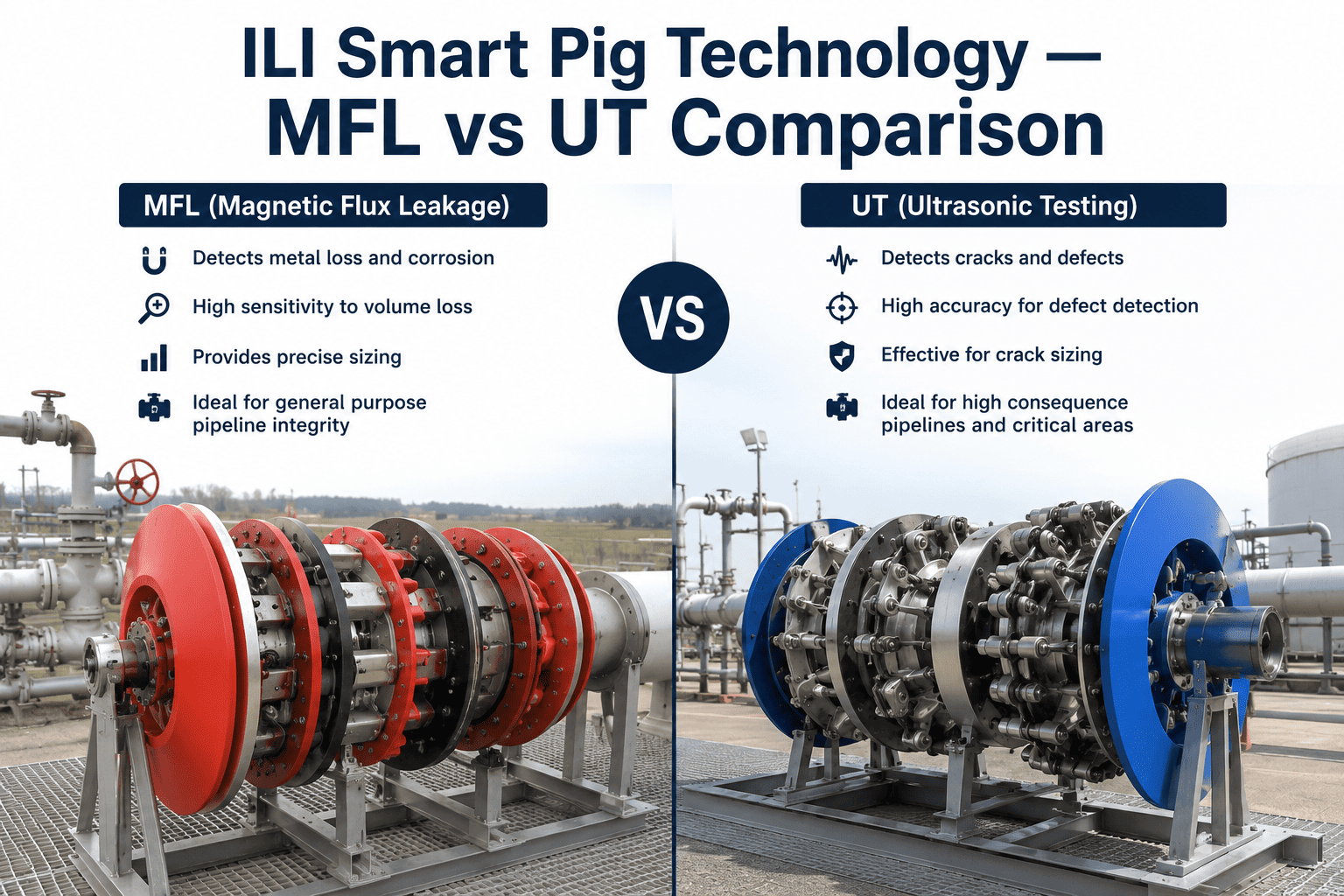
| Computer Vision & AI Inspection | Pipeline defect detection, structural integrity scanning | Midstream / Downstream | 38% reduction in maintenance costs per asset | Very High |
| Digital Twin Modeling | Reservoir simulation, refinery process optimization | All Segments | Up to 84% accuracy in cost & risk forecasting | Very High |
| Deep Learning & Neural Networks | Seismic interpretation, subsurface pattern recognition | Upstream | Exploration cycle time reduced from months to days | High |
| Generative AI & LLMs | Maintenance documentation, operator decision support | All Segments | 70,000+ productivity hours/month at ADNOC | High |
| Edge AI & IoT Integration | Remote rig monitoring, pipeline low-latency alerting | Upstream / Midstream | Work order dispatch in under 3 seconds post-detection | Growing |
Investment Barriers and the Challenges Slowing AI Adoption in Oil & Gas
Despite the strong investment momentum, a significant portion of the global oil and gas industry is not yet capturing the full value of AI deployment. Understanding the structural barriers that slow adoption is as important as understanding the investment drivers — particularly for technology vendors seeking to position their solutions against real procurement obstacles rather than theoretical concerns.
Legacy OT Infrastructure
Much of the global oil and gas asset base runs on operational technology (OT) that predates modern data protocols. Connecting 1980s-era control systems to AI analytics pipelines requires specialized edge integration — a capability that most generic AI platforms do not provide out of the box.
Data Governance and OT Security
Regulatory frameworks in key markets — including the UAE's Federal Decree-Law No. 45 and Saudi Arabia's PDPL — impose strict data governance requirements on AI deployments. Operators in these markets require vendors to demonstrate secure, read-only architectures that cannot interfere with local control systems.
Alarm Fatigue and Change Management
Operators who deploy AI systems without proper threshold calibration often replace one problem — manual monitoring — with another: AI-generated alarm floods that are systematically ignored. Effective AI investment requires intelligent debounce logic and sustained threshold design, not just sensor deployment.
Fragmented Data Ecosystems
Most oil and gas operators run disconnected silos of SCADA data, ERP records, maintenance logs, and quality documentation. Without a unified analytics layer that connects these sources, AI models cannot generate the cross-functional insights that produce genuine operational value.
Closing these barriers requires more than AI software — it requires an industrial-grade platform designed for OT environments, legacy protocol translation, and enterprise system integration. Book a Demo to see how iFactory addresses all four barriers in a single, unified deployment framework.
The 2025–2031 AI Investment Roadmap: What Operators Should Budget For
For U.S. manufacturing professionals and energy sector operators building their technology investment roadmaps, understanding the expected trajectory of AI spending in oil and gas over the next five years is essential for defensible capital planning. The following phased framework reflects current market adoption patterns and the documented deployment timelines of leading operators.
Phase 1 (2025): Foundation — Connectivity and Data Infrastructure
The majority of 2025 AI investment is concentrated in establishing the data infrastructure that makes advanced AI possible: OT-IT integration, edge connectivity, SCADA data pipelines, and asset hierarchy digitization. Without this foundation, predictive analytics and digital twin deployments cannot deliver their projected ROI. This phase typically requires 6–12 months and represents the highest-leverage initial capital deployment.
Phase 2 (2025–2026): Activation — Predictive Maintenance and Condition Monitoring
Once data pipelines are established, the first AI applications to deliver financial returns are predictive maintenance and real-time condition monitoring. Industry data shows an average payback period of 8–14 months for these deployments, with sustained annual savings of $1.2M to $4.8M per facility depending on asset base. This is the phase where AI investment transitions from a cost center to a documented P&L contribution.
Phase 3 (2026–2027): Scale — Digital Twins and Process Optimization
With condition monitoring established and delivering returns, leading operators are expanding their AI investment into digital twin modeling and process optimization. These applications require larger initial data sets to train effectively but deliver exponentially higher value — enabling scenario simulation, production optimization, and capital planning accuracy that cannot be achieved through any other means.
Phase 4 (2027–2029): Intelligence — Autonomous Operations and Generative AI
The frontier of oil and gas AI investment is autonomous operations — the deployment of AI systems capable of making real-time process control decisions without human confirmation. Saudi Aramco's Fadhili Gas Plant represents an early benchmark for this phase. Generative AI applications in maintenance documentation, operator decision support, and regulatory reporting are also entering mainstream adoption in this window.
Phase 5 (2029–2031): Institutionalization — AI as Core Operating Infrastructure
By 2031, the $7.91B market projection assumes that AI has transitioned from a competitive differentiator to a baseline operational requirement. Organizations that have not completed Phases 1–3 by this point will face structural cost disadvantages relative to competitors who have. This phase marks the end of the "early adopter" window and the beginning of table-stakes AI deployment across the global oil and gas industry.
"AI predictive maintenance in oil and gas delivers measurable ROI through three primary value drivers: a 72% reduction in unplanned downtime events, a 38% reduction in maintenance costs, and a 25% extension of equipment lifespan. Operators who implement condition-based replacements rather than calendar-based changes are reporting average payback periods of 8 to 14 months — with sustained annual savings of $1.2 to $4.8 million per facility. The shift from reactive to predictive maintenance is not an emerging opportunity. It is a present-tense financial imperative."
— iFactory Industrial AI Platform, Predictive Maintenance ROI Analysis, Q1 2025
Conclusion: The AI Investment Window in Oil & Gas Is Open — but Not Indefinitely
The 2025 AI investment landscape in oil and gas presents a well-defined and time-sensitive opportunity for operators and industrial technology vendors alike. The market is large, growing at double-digit rates, and producing documented financial returns across upstream, midstream, and downstream applications. The organizations capturing those returns today — Shell, ADNOC, Aramco, and a growing cohort of mid-market operators — are building AI-enabled cost structures and asset reliability profiles that will be very difficult to close for those who delay investment.
For U.S. manufacturing professionals and energy sector operators, the actionable takeaway from this report is straightforward: the highest-ROI AI applications in 2025 are not experimental. Predictive maintenance, condition monitoring, digital twin modeling, and SCADA-integrated work order automation are all deployable today, with documented financial returns and established implementation frameworks. iFactory's platform delivers exactly this capability set — purpose-built for OT environments, legacy-compatible, and enterprise-integrated. Book a Demo to map iFactory's AI investment roadmap directly to your facility's operational priorities and cost structure.
Frequently Asked Questions: AI Investment in Oil & Gas 2025
How large is the global AI investment in oil and gas in 2025?
The global AI in oil and gas market reached an estimated $7.64 billion in 2025, growing from $6.69 billion in 2024, with projections indicating continued double-digit CAGR through 2031.
Which segment of oil and gas is receiving the most AI investment?
The upstream segment holds the largest share — approximately 46–62% depending on methodology — driven by the massive data volumes generated by seismic surveys, drilling operations, and reservoir monitoring.
What is the typical ROI timeline for AI predictive maintenance in oil and gas?
Industry data shows an average payback period of 8–14 months, with documented annual savings of $1.2M to $4.8M per facility and a 72% reduction in unplanned downtime events.
What is the biggest barrier to AI adoption in oil and gas operations?
Legacy OT infrastructure and fragmented data ecosystems are the primary barriers — most AI platforms cannot connect to aging PLCs and SCADA systems without specialized edge integration capabilities.
How does iFactory's platform support AI investment in oil and gas?
iFactory provides OT-native predictive maintenance, SCADA integration, digital twin modeling, and computer vision inspection — covering all four high-ROI AI application areas in a single unified platform.