How AI Detects Cyber Threats to Oil & Gas SCADA Systems

By Henry Green on May 27, 2026

how-ai-detects-cyber-threats-to-oil-&-gas-scada-systems

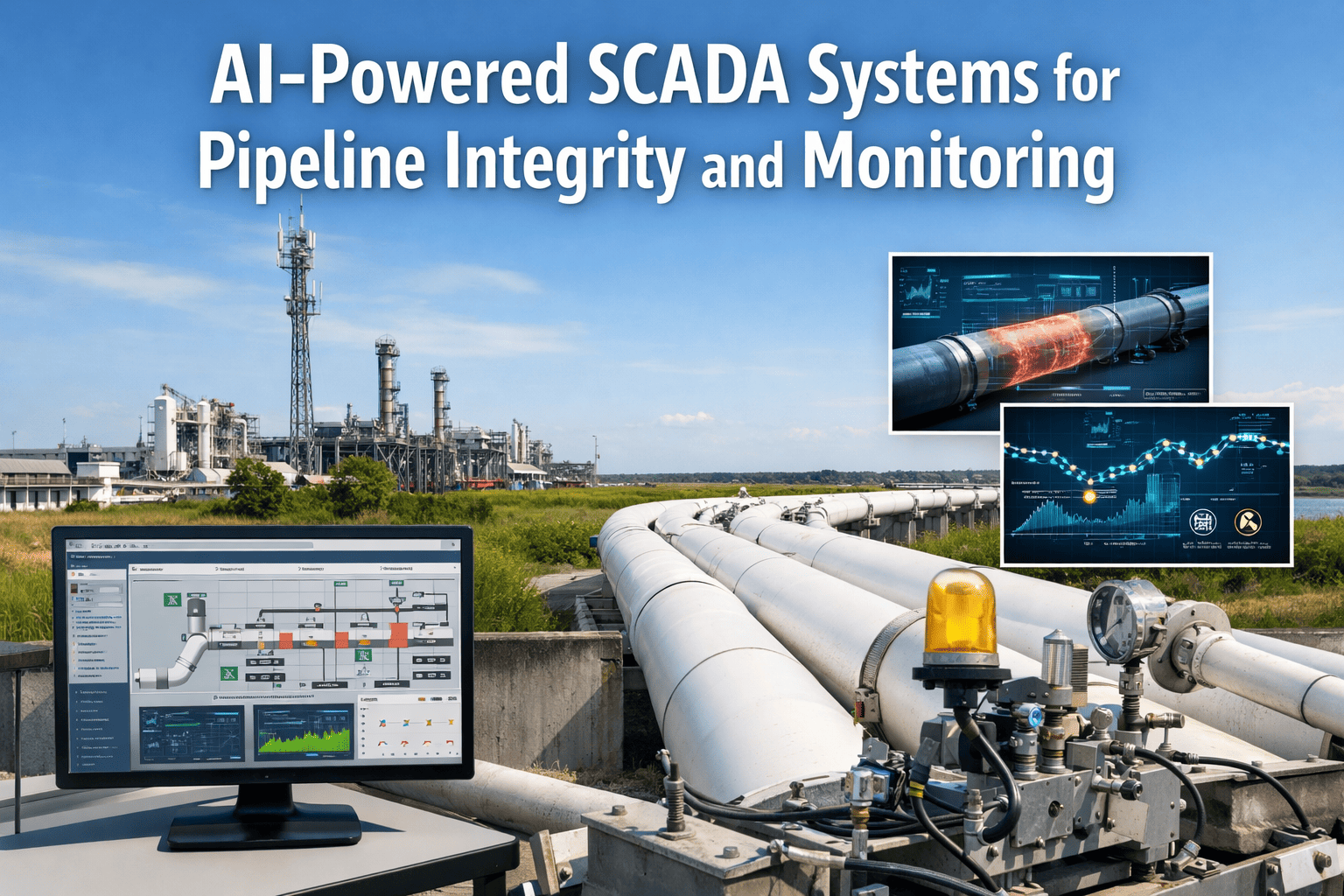
Oil and gas SCADA systems are among the most targeted industrial control environments in the world — and the threat landscape is accelerating. From the 2021 Colonial Pipeline ransomware attack to coordinated intrusions at offshore drilling platforms, adversaries have demonstrated both the capability and intent to compromise operational technology networks that control pipelines, refineries, and wellhead equipment. AI cyber threats SCADA oil gas is no longer a niche security discussion — it is a board-level operational risk issue for every upstream, midstream, and downstream operator running connected industrial infrastructure. What has changed in 2025 is not just the frequency of attacks, but the sophistication: AI-powered adversarial tools now automate reconnaissance, adapt to network defenses in real time, and exploit OT protocol vulnerabilities faster than human security teams can respond. Defending against AI-driven threats requires AI-driven detection — and understanding how that detection works is the starting point for every O&G cybersecurity strategy.

Want to see how AI-powered OT security works in practice for oil and gas operations? Book a Demo with iFactory's industrial cybersecurity team.

Why SCADA Systems in Oil & Gas Are High-Value Targets

SCADA systems in oil and gas environments were engineered for uptime and determinism — not cybersecurity. Legacy protocols like Modbus, DNP3, and proprietary RTU communication standards were designed for closed-loop operational control in isolated network environments. The IT/OT convergence that has driven efficiency gains across the sector — remote monitoring, cloud-based analytics, predictive maintenance platforms — has simultaneously opened attack surfaces that these legacy architectures were never designed to defend.

The consequences of a successful SCADA intrusion in oil and gas are qualitatively different from a corporate IT breach. Adversaries who gain control of pipeline pressure regulation logic, compressor station sequencing, or separator valve control do not just steal data — they can trigger physical events: overpressure incidents, unplanned shutdowns, environmental releases, and equipment destruction. The Triton/TRISIS malware attack on a Middle Eastern petrochemical facility targeted Safety Instrumented Systems directly — demonstrating that nation-state actors are specifically targeting the last layer of protection between a cyber intrusion and a physical catastrophe.

Nation-State Intrusions
Advanced persistent threats from state-sponsored actors targeting pipeline infrastructure, LNG terminals, and refinery control systems for espionage and sabotage.
HIGH RISK
Ransomware on OT Networks
Ransomware that traverses from corporate IT to SCADA historian servers, encrypting process data and forcing operational shutdowns to extract payment under production pressure.
HIGH RISK
Supply Chain Compromise
Malicious code injected through vendor software updates to SCADA platforms, historian software, or HMI applications — following the SolarWinds attack pattern at industrial scale.
HIGH RISK
IT-to-OT Lateral Movement
Adversaries gaining corporate network access then traversing through inadequate segmentation into SCADA environments — the documented attack path in the Colonial Pipeline incident.
MEDIUM RISK
Protocol Exploitation
Exploitation of unauthenticated Modbus and DNP3 commands to manipulate field device setpoints, disable alarms, or falsify sensor readings without triggering traditional IT security alerts.
MEDIUM RISK
Insider Threats
Privileged OT users with SCADA access intentionally or negligently introducing malware, misconfiguring safety systems, or exfiltrating operational data to competitors or state actors.
MANAGED RISK
68%
Of oil & gas OT security incidents involve lateral movement from IT networks
$4.7M
Average cost of a cyberattack on oil & gas OT infrastructure (2024)
43%
Of SCADA systems in active use globally are running unpatched legacy firmware

How AI Detects Cyber Threats in SCADA Environments

Traditional IT security tools — signature-based antivirus, firewall rule sets, and SIEM platforms built for IP traffic — are functionally blind to many OT-specific attack techniques. A Modbus command injection that falsifies a pressure sensor reading generates no Windows event log entry. A DNP3 replay attack that re-sends historical commands to open a pipeline valve produces no signature match in a conventional IDS. AI-driven threat detection addresses this gap by learning the behavioral baseline of OT networks and identifying deviations that indicate compromise — regardless of whether those deviations match a known attack signature.

01
Continuous OT Traffic Baseline Learning
AI models ingest raw OT network traffic — Modbus function codes, DNP3 object groups, OPC-UA node reads, historian polling intervals — and establish a statistical baseline of normal communication patterns between every device pair in the SCADA network. This baseline captures not just what devices communicate, but when, at what frequency, and with what data payload structure. Any deviation from established communication norms triggers anomaly scoring.
02
Protocol-Level Anomaly Detection
Deep packet inspection engines trained on OT protocol semantics identify command sequences that are syntactically valid but operationally anomalous — a Modbus write function from a device that has never previously issued write commands, a DNP3 time synchronization message from an unexpected source, or an OPC-UA browse operation that traverses the address space in a pattern consistent with automated reconnaissance rather than normal historian polling.
03
Cross-Layer Correlation: OT Behavior vs. IT Events
AI platforms correlate anomalies in OT protocol traffic with events in the IT layer — VPN access logs, Active Directory authentication events, remote access sessions — to identify IT-to-OT lateral movement in progress. A new remote access session to a jump server followed within minutes by unusual historian queries from that server produces a composite risk score that neither event alone would trigger.
04
Physical Process Integrity Monitoring
AI models trained on normal process physics — pressure curves, flow rate relationships, temperature gradients across heat exchangers — detect when sensor readings are inconsistent with physical reality. This catches both sensor spoofing (where an attacker falsifies readings to mask physical manipulation) and process manipulation (where setpoint changes produce process behavior that violates expected operational relationships).
05
Automated Alert Triage and Response Playbook Execution
When AI detection identifies a confirmed threat pattern, automated response capabilities isolate affected network segments, terminate anomalous sessions, and trigger pre-defined incident response playbooks — all within seconds of detection, faster than any human analyst can evaluate and respond. Human analysts receive pre-triaged, high-confidence alerts with full attack chain context rather than thousands of raw log events requiring manual correlation.

For oil and gas operators evaluating AI-driven OT security platforms, iFactory's industrial cybersecurity capabilities are designed for SCADA environments with legacy protocol support, on-premise deployment options, and full integration with existing historian and DCS infrastructure. Book a Demo to see detection capabilities in a live OT environment.

AI vs. Traditional SCADA Security: Architecture Comparison

The performance gap between AI-driven OT security and traditional signature-based approaches is most visible in detection of novel threats and low-and-slow intrusions — the attack patterns most commonly used against high-value industrial targets. The following comparison maps the capability differences across the attack scenarios most relevant to oil and gas SCADA environments.

Capability Traditional OT Security AI-Driven OT Security Why It Matters for O&G SCADA
Unknown Threat Detection Signature match only — blind to novel malware and zero-day exploits Behavioral anomaly detection identifies unknown threats by deviation from baseline Nation-state actors use custom malware (Triton, Industroyer) with no existing signatures
OT Protocol Visibility Limited — most SIEM tools cannot parse Modbus, DNP3, or IEC 61850 Deep packet inspection with OT protocol semantics and function code analysis 75% of SCADA attacks exploit OT protocols that IT security tools cannot inspect
Detection Speed Alert generation after rule threshold breach — typically minutes to hours Sub-second anomaly scoring with automated response playbook execution Pipeline and compressor station attacks can cause physical damage within minutes of intrusion
False Positive Rate High — rule-based systems generate alert fatigue; critical alerts missed Low — AI models distinguish planned maintenance from anomalous activity Alert fatigue causes security teams to deprioritize genuine OT threats
IT/OT Correlation Manual correlation between IT SIEM and OT historian — slow and incomplete Automated cross-layer correlation identifies lateral movement in progress Colonial Pipeline attack traversed IT-to-OT; cross-layer correlation would have detected it
Sensor Spoofing Detection No capability — cannot distinguish genuine vs. manipulated sensor values Physics-based process integrity analysis identifies sensor values inconsistent with plant reality Triton/TRISIS specifically targeted safety sensor data to mask physical manipulation

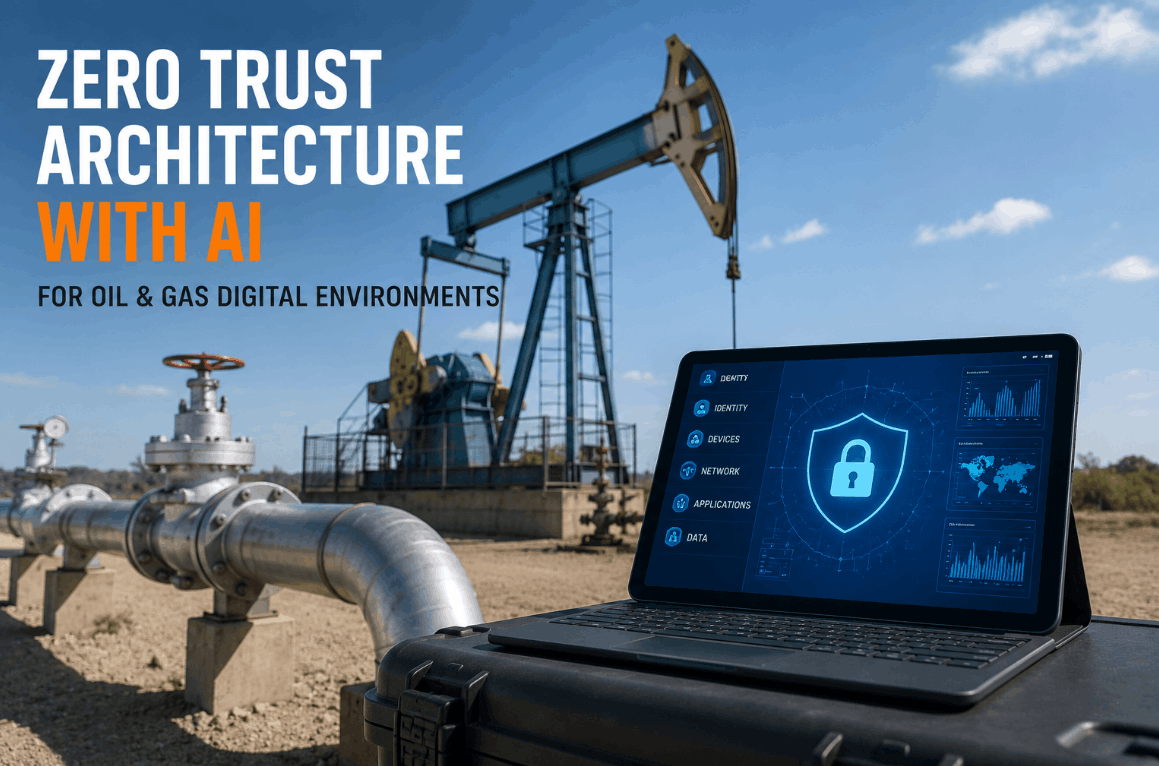
Zero Trust Architecture for Oil & Gas OT Networks

Zero trust principles — never trust, always verify, least privilege access — are increasingly being applied to OT network architecture in oil and gas, driven by the demonstrated failure of perimeter-only defenses and the documented threat of insider and supply chain attacks. AI plays a central role in zero trust OT implementations by providing the continuous verification and behavioral monitoring that traditional access controls cannot deliver.

Zero Trust OT Security Framework for SCADA Environments
Microsegmentation: OT networks divided into functional zones — pipeline control, compressor stations, safety systems — with AI-monitored inter-zone traffic and automated blocking of unauthorized cross-zone communication.
Continuous Identity Verification: AI-powered behavioral biometrics validate that OT operator sessions match established usage patterns — detecting account takeover even when credentials are valid.
Device Trust Scoring: AI models assign dynamic trust scores to every OT device based on firmware version, communication behavior, and patch status — flagging devices that deviate from their established profile.
Vendor Remote Access Control: Third-party access to SCADA systems governed by just-in-time access provisioning, session recording, and AI behavioral monitoring — no persistent VPN channels for external vendors.
Data Flow Enforcement: AI-monitored unidirectional data flows from OT historian to analytics platforms — preventing the bidirectional network paths that enable lateral movement from analytics software into control systems.
Incident Response Automation: AI-triggered automated containment isolates compromised segments within seconds of detection, preserving operational continuity in unaffected areas while containing the intrusion.

Regulatory Compliance: TSA Directives and CISA Guidelines for OT Security

U.S. oil and gas operators face an expanding regulatory environment specifically targeting OT cybersecurity. TSA Security Directives issued following the Colonial Pipeline attack require pipeline operators to implement specific cybersecurity measures including network segmentation, access controls, and continuous monitoring — requirements that AI-driven OT security platforms are architecturally positioned to satisfy in ways that traditional rule-based tools cannot. Understanding the compliance implications of AI security deployment is as important as understanding the technical detection capabilities.

TSA SD-02D
Pipeline Cybersecurity
Requires owner-operators to implement network segmentation controls, access management, continuous monitoring, and patching — directly addressed by AI-driven OT security architectures.
NERC CIP
Critical Infrastructure Protection
For O&G operators with bulk electric system interconnections, NERC CIP Electronic Security Perimeter requirements govern analytics and monitoring platform connectivity to OT historian systems.
IEC 62443
Industrial Automation Security
The international standard for industrial automation and control system security provides the zone-and-conduit architecture model that AI-driven OT security platforms operationalize through continuous monitoring.
CISA CPG
Cross-Sector Performance Goals
CISA's Cross-Sector Cybersecurity Performance Goals for OT environments include MFA, log collection, and network monitoring requirements that AI security platforms address as core capabilities.

iFactory's OT security platform is designed to generate compliance evidence artifacts for TSA, NERC CIP, and IEC 62443 audits as a standard deployment deliverable — reducing compliance documentation burden while improving actual security posture. Book a Demo to review compliance architecture for your facility.

Expert Review: What O&G Cybersecurity Teams Get Wrong About AI Detection

The most persistent misconception I encounter at oil and gas operators is treating AI-driven OT security as a smarter version of their existing SIEM — a tool that generates alerts for human analysts to investigate. That framing misses the fundamental value proposition. The point of AI in OT security is not faster alert generation; it is the ability to detect attack patterns that produce no alerts at all in traditional tools. A nation-state actor using valid OPC-UA credentials to conduct low-and-slow reconnaissance of a SCADA network will never trigger a signature-based IDS rule. It will absolutely deviate from the behavioral baseline that an AI model has established for that device's normal communication pattern. Security teams that have deployed AI detection and are still evaluating it by alert volume are measuring the wrong thing.
ICS/OT Cybersecurity Principal
Oil & Gas Critical Infrastructure Practice, 19 Years — GICSP, CISSP Certified
Pipeline operators and refinery security teams consistently underestimate the value of physics-based process integrity monitoring as a security control. They focus on network anomaly detection — which is correct and necessary — but miss the detection layer that specifically catches what Triton-style attacks are designed to exploit: manipulation of safety sensor data. When an AI model knows that at this flow rate and this inlet temperature, the separator outlet pressure should be within this range, and it sees a reading outside that range with no corresponding process change, that is a security alert, not just a process anomaly. That detection capability requires AI. No human analyst reviewing raw process data catches that in real time.
OT Security Architecture Lead
Upstream and Midstream Oil & Gas Security, 15 Years — CISM, IEC 62443 Practitioner
Deploy AI-Driven OT Security for Your SCADA Environment
iFactory's industrial cybersecurity platform delivers behavioral anomaly detection, OT protocol-level visibility, and physics-based process integrity monitoring for oil and gas SCADA environments — deployable on-premise with no OT data leaving the facility perimeter.

Frequently Asked Questions

Yes — AI-driven OT detection operates passively on network traffic copies (SPAN ports or network taps), with zero impact on SCADA communication latency or process control determinism.
Yes — purpose-built OT AI security platforms include deep packet inspection engines for Modbus, DNP3, IEC 61850, and other legacy industrial protocols without requiring any changes to existing field devices.
Most AI OT security platforms establish a meaningful behavioral baseline within 2–4 weeks of passive monitoring, capturing normal shift-change patterns, scheduled maintenance windows, and seasonal process variations.
AI-driven OT platforms directly address TSA SD-02D continuous monitoring, network segmentation validation, and access anomaly detection requirements, generating audit-ready compliance documentation as standard output.
Yes — behavioral baseline anomaly detection identifies unauthorized activity even when attackers use valid credentials, because the timing, sequence, and context of commands deviate from established operator patterns.

Conclusion: AI Is Not Optional for Oil & Gas SCADA Security in 2025

The threat environment facing oil and gas SCADA systems has outpaced the detection capabilities of traditional OT security tools. Adversaries using AI-powered attack automation, novel malware with no existing signatures, and low-and-slow intrusion techniques designed to avoid rule-based detection cannot be reliably identified by the perimeter firewalls and signature-matching IDS platforms that most operators currently rely on. The documented incidents at Colonial Pipeline, the Ukrainian power grid, and Middle Eastern petrochemical facilities are not edge cases — they are the validated playbook for attacks against high-value industrial infrastructure.

AI-driven detection addresses this gap not by layering more rules onto inadequate architectures, but by fundamentally changing the detection model: from signature matching to behavioral baseline monitoring, from IT-layer visibility to OT protocol-level inspection, from reactive alert response to predictive threat identification. For oil and gas operators with SCADA systems controlling pipeline, refinery, and production infrastructure, deploying AI-driven OT security is not a future roadmap item. It is the current minimum viable defense against threats that are already active and evolving. The operators who act on that assessment now avoid the recovery costs — operational, financial, and reputational — that define the aftermath of a successful SCADA intrusion.


AI-Powered SCADA Security for Oil & Gas — Full OT Visibility, Zero Operational Disruption
iFactory's industrial cybersecurity platform delivers behavioral anomaly detection, OT protocol inspection, and physics-based process integrity monitoring for oil and gas SCADA environments — on-premise, compliance-ready, and deployable without modifying existing field infrastructure.
On-Premise Deployment
OT Protocol Visibility
Zero Operational Impact
TSA & NERC CIP Ready
Physics-Based Detection

Share This Story, Choose Your Platform!