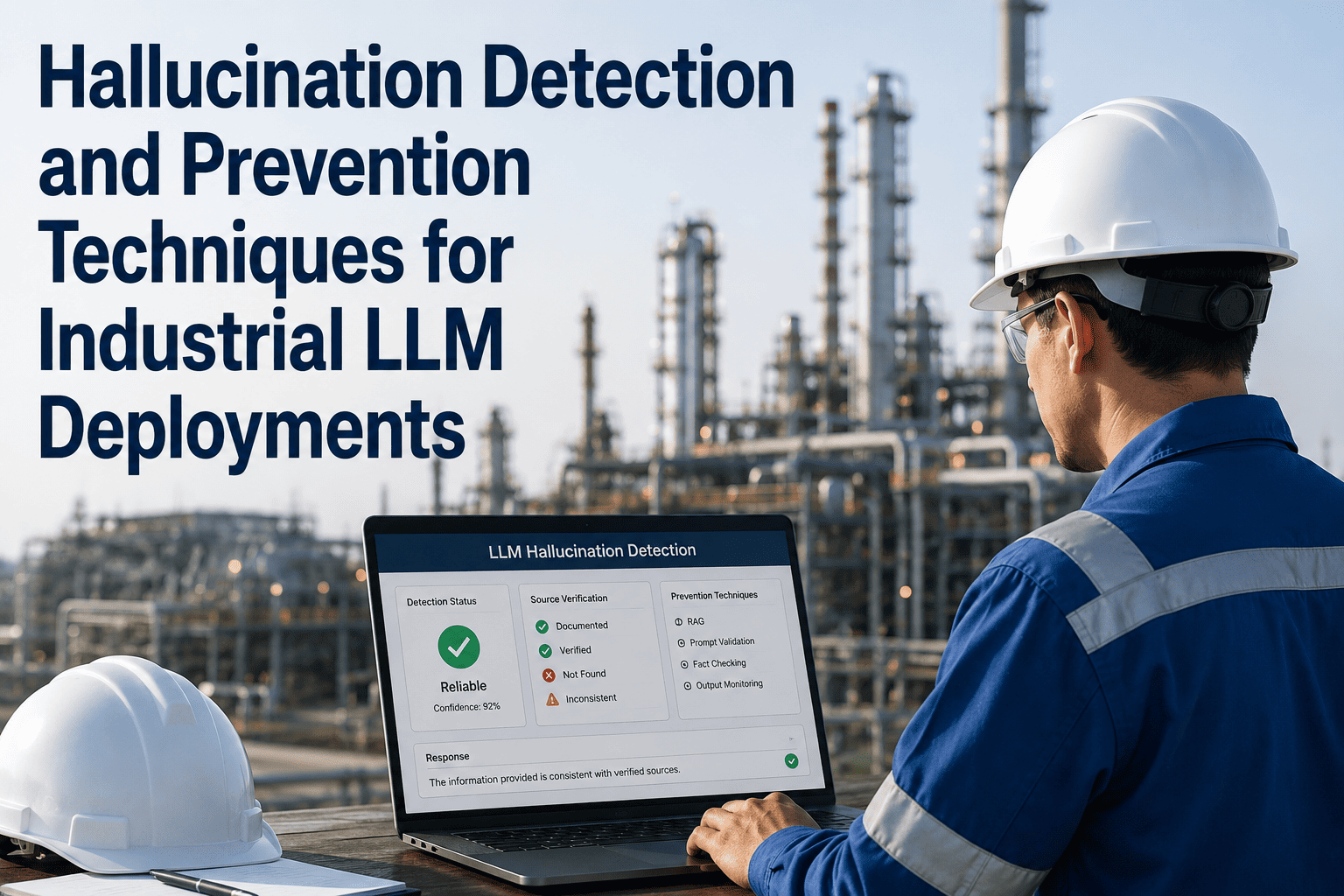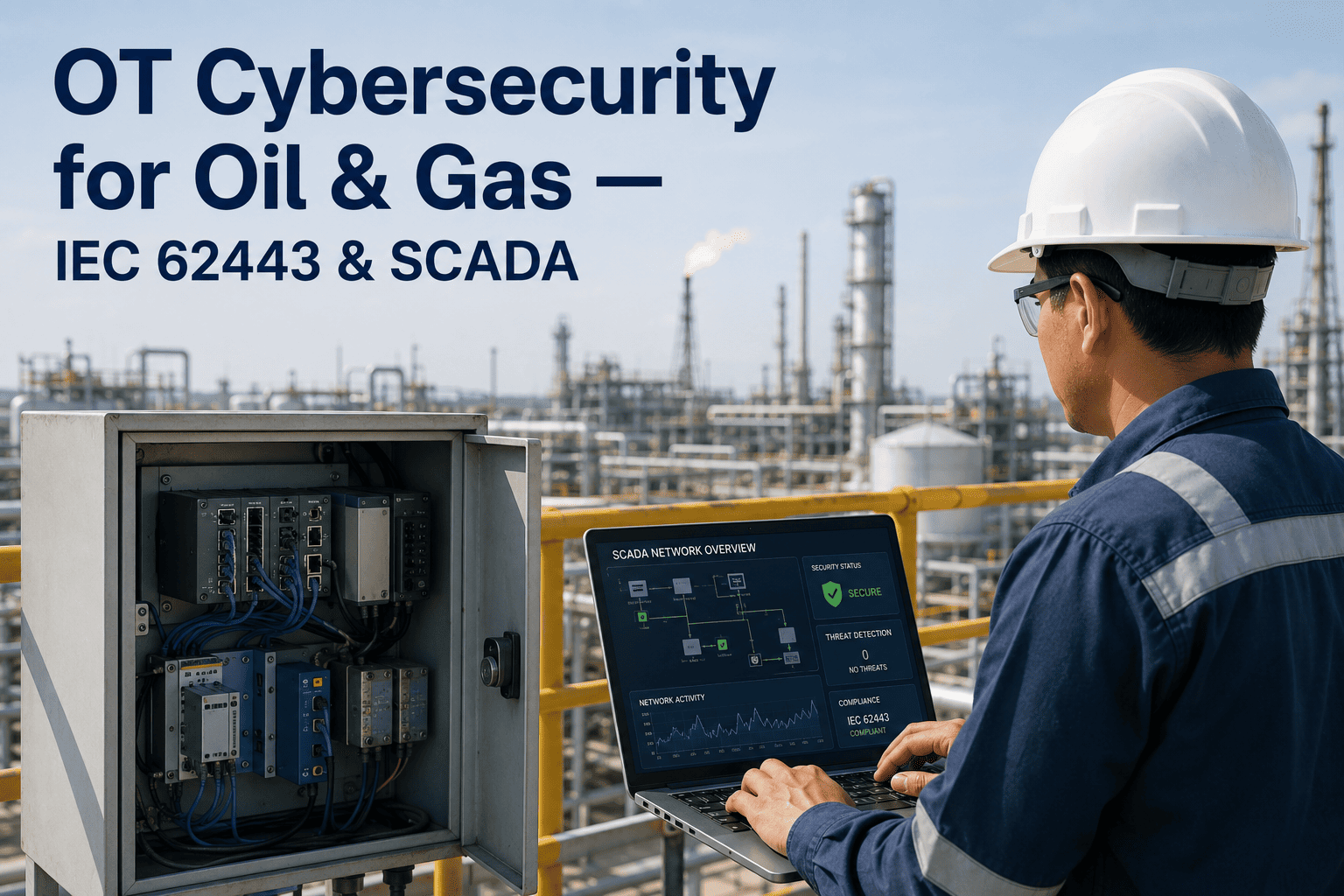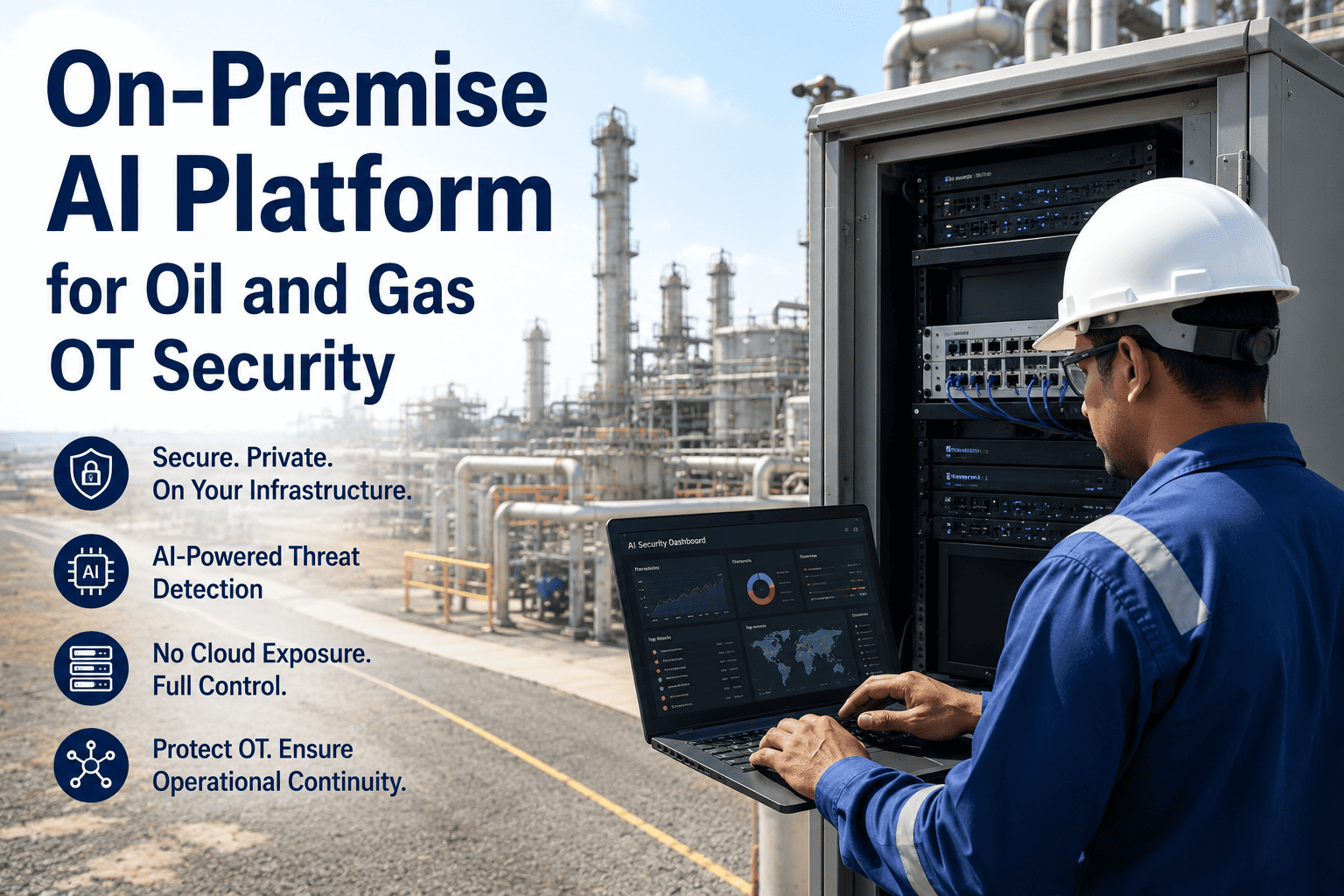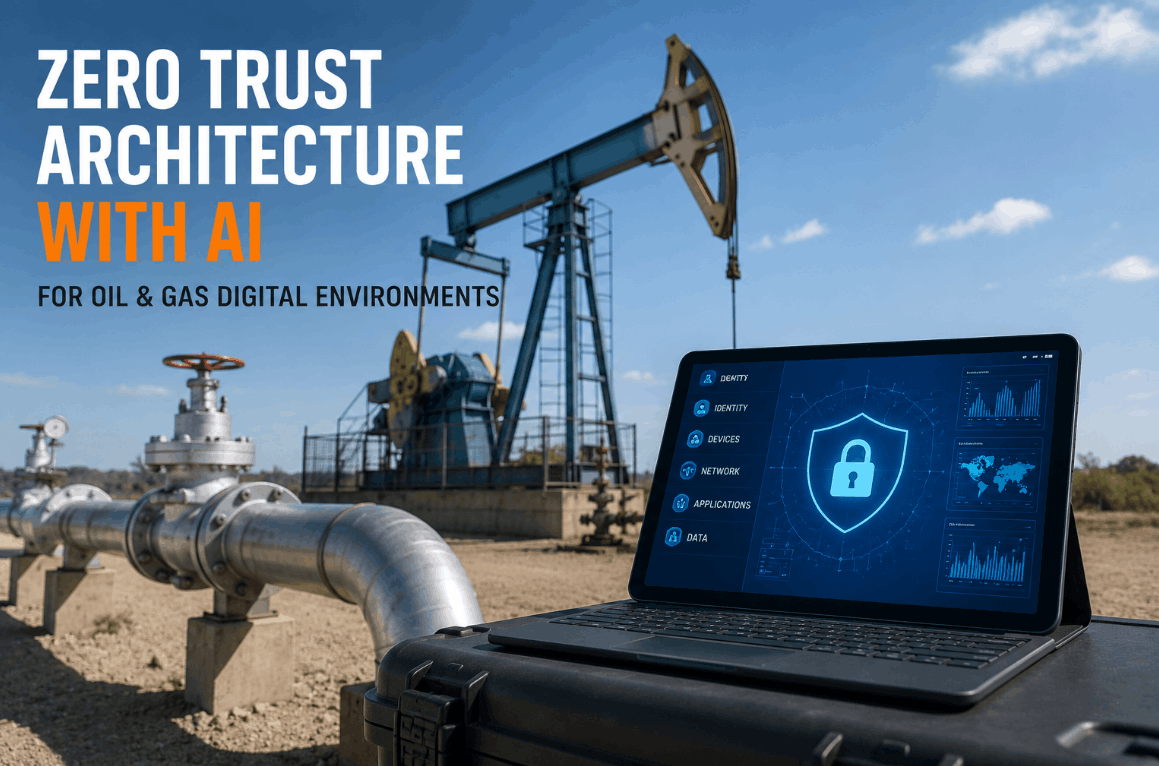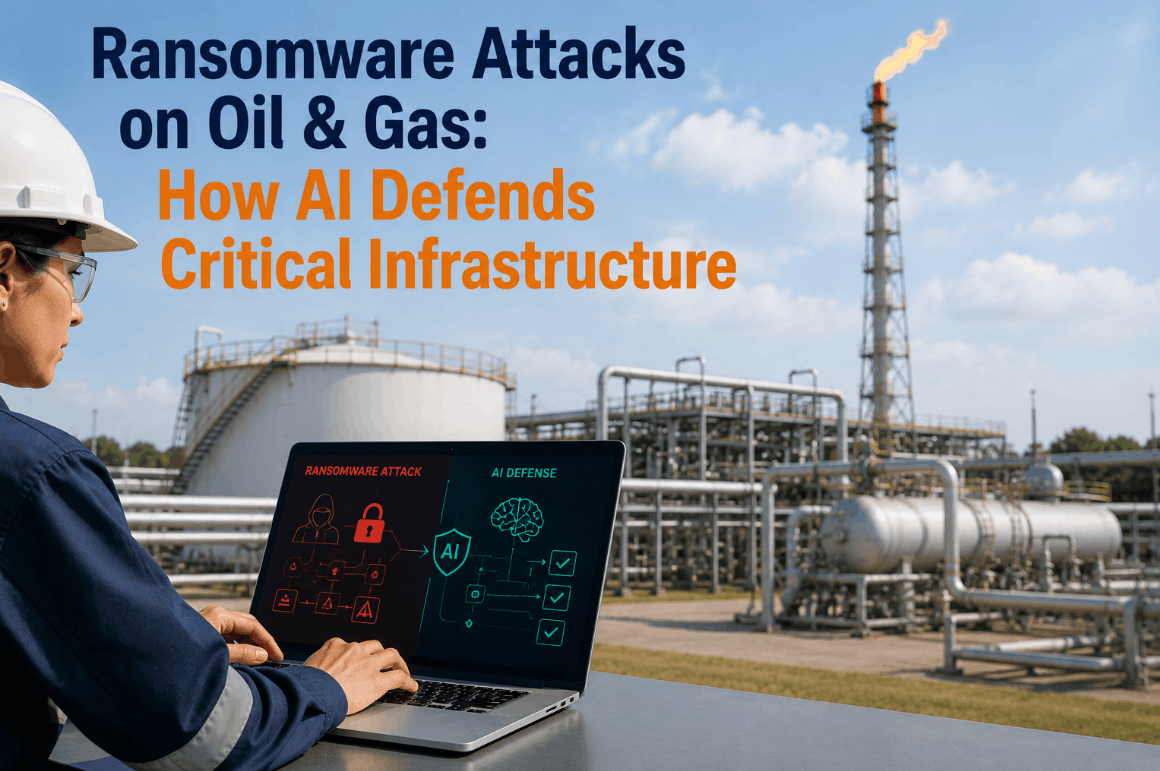
Ransomware attacks on oil and gas infrastructure have escalated from an IT inconvenience into a direct threat to national energy security, operational continuity, and physical safety systems. The 2021 Colonial Pipeline shutdown — which halted 45% of the U.S. East Coast fuel supply for six days and triggered a federal emergency declaration — was not an isolated event. It was a preview of a threat category that has since expanded in frequency, sophistication, and destructive potential across upstream production platforms, midstream pipeline networks, and downstream refinery control systems. Ransomware groups with OT-specific capabilities now routinely target industrial control systems alongside IT infrastructure, understanding that operational shutdown pressure dramatically increases the probability of payment. What distinguishes the most damaging oil and gas ransomware campaigns from conventional IT ransomware is their deliberate targeting of SCADA systems, DCS historian databases, and safety instrumented system interfaces — creating physical consequences that no backup or recovery plan can quickly reverse. Defending against this threat level in 2025 requires AI-driven detection architectures that identify ransomware propagation patterns before encryption events occur, not incident response capabilities that activate after production has already stopped. Book a Demo with iFactory's industrial cybersecurity team to see how AI-powered ransomware defense deploys across oil and gas OT environments.
Is Your Oil & Gas Infrastructure Protected Against Ransomware?
iFactory's AI-driven OT security platform detects ransomware propagation in SCADA and ICS environments before encryption events occur — on-premise, zero operational impact, compliance-ready.
Ransomware & AI Defense: Protecting Oil & Gas Critical Infrastructure
A technical and strategic framework for deploying AI-driven detection to stop ransomware propagation across SCADA systems, DCS networks, and pipeline control infrastructure before operational shutdown occurs.
How Ransomware Attacks Target Oil & Gas Differently Than Other Industries
Oil and gas ransomware campaigns are architecturally distinct from enterprise IT attacks. Adversaries specifically target the convergence points between IT and OT networks — historian servers, engineering workstations, remote access channels — because disrupting operational technology creates physical shutdown pressure that forces payment decisions measured in hours, not weeks. The six primary attack vectors define where AI detection must be deployed. Book a Demo to see how iFactory maps these vectors against your facility's network topology.
IT-to-OT Lateral Movement
Ransomware enters through corporate IT — phishing, VPN exploitation, supply chain compromise — then traverses inadequate IT/OT segmentation to reach historian servers and SCADA workstations. AI cross-layer correlation detects this movement in progress before OT systems are reached.
SCADA Historian Encryption
Ransomware variants targeting PI Historian and OSIsoft databases encrypt years of operational data and disable real-time monitoring dashboards — forcing operators blind and creating immediate shutdown pressure without touching a single control system directly.
Engineering Workstation Compromise
EWS with direct PLC and DCS download access are high-value ransomware targets. Encryption of controller configuration files and logic programs prevents recovery without vendor re-engineering — extending shutdown timelines from days to weeks.
Remote Access Channel Exploitation
Vendor VPN channels for DCS and SCADA maintenance represent persistent attack surfaces. Ransomware delivered through compromised vendor credentials bypasses perimeter defenses and lands directly in the OT environment with trusted access rights.
Double Extortion: Data Exfiltration
Modern oil and gas ransomware exfiltrates operational data — pipeline configurations, refinery process parameters, protection relay settings — before encryption, threatening public release to add regulatory and reputational pressure alongside operational disruption.
Safety System Targeting
The most advanced campaigns specifically target Safety Instrumented Systems — disabling emergency shutdown logic to create physical consequence leverage. This attack category, demonstrated by Triton/TRISIS, represents the highest-consequence ransomware variant in industrial environments.
Ransomware Impact: Oil & Gas vs. Other Critical Infrastructure
Oil and gas ransomware attacks produce consequences that are categorically different from enterprise IT incidents — measured in operational shutdown, physical risk, and regulatory exposure, not just data loss and recovery cost.
How AI Detects and Stops Ransomware Before Encryption in OT Environments
Traditional ransomware defenses — endpoint antivirus, signature-based IDS, backup recovery — are designed for IT environments and fail against OT-targeting ransomware at every critical stage. AI-driven detection operates at the behavioral and protocol level, identifying ransomware propagation patterns days before encryption events occur. Here is how iFactory's platform addresses each stage of the ransomware kill chain in oil and gas OT environments. Book a Demo to see this detection chain mapped against your SCADA architecture.
Initial Access Detection
AI behavioral models identify anomalous authentication patterns, unusual VPN session characteristics, and credential misuse on IT-layer systems that precede OT lateral movement. Detection occurs at the IT entry stage — before the threat reaches the OT network boundary.
Lateral Movement Interception
Cross-layer AI correlation detects IT-to-OT traversal in progress — historian server queries from unexpected sources, jump server sessions with anomalous command sequences, and SMB file access patterns consistent with ransomware reconnaissance — triggering automated segment isolation.
OT Reconnaissance Detection
OT-aware deep packet inspection identifies network scanning, OPC-UA address space enumeration, and Modbus device polling sequences that indicate an attacker mapping the ICS environment in preparation for targeted encryption. This low-and-slow activity is invisible to signature-based tools.
Encryption Attempt Blocking
AI models detect the specific file access patterns, process creation sequences, and volume shadow copy deletion behaviors that immediately precede ransomware encryption — triggering automated network isolation, session termination, and incident response playbook execution within seconds.
AI vs. Traditional Ransomware Defense: Oil & Gas OT Comparison
The capability gap between AI-driven OT ransomware defense and legacy security tools is most visible in the attack stages that matter most — lateral movement detection, OT protocol-level visibility, and pre-encryption behavioral identification.
| Defense Capability | Traditional Tools | iFactory AI Platform | Oil & Gas Impact |
|---|---|---|---|
| Pre-Encryption Detection | Detects only after encryption begins — historian and EWS data already locked | Behavioral anomaly detection identifies ransomware propagation 24–72 hours before encryption event | Eliminates the shutdown pressure that forces ransom payment decisions |
| OT Protocol Visibility | Blind to Modbus, DNP3, OPC-UA anomalies — misses ICS-layer reconnaissance | Protocol-aware DPI identifies scanning, enumeration, and anomalous command sequences at ICS level | 75% of OT ransomware preparation uses legitimate ICS protocol commands |
| IT/OT Lateral Movement | No cross-layer correlation — IT SIEM and OT tools operate in isolation | Automated cross-layer correlation detects IT-to-OT traversal in progress before ICS reached | Colonial Pipeline attack would have been detected mid-chain before OT impact |
| Novel Ransomware Variants | Signature-only — new OT-targeting variants with no signatures are invisible | Behavioral baseline deviation detects novel ransomware through propagation behavior, not signatures | Nation-state ransomware uses custom tooling specifically to evade signature detection |
| Automated Response Speed | Manual analyst investigation — minutes to hours before containment action | Sub-second automated isolation and playbook execution on confirmed ransomware detection | OT ransomware can encrypt a historian database in under 4 minutes once triggered |
TSA, CISA, and NERC CIP: Regulatory Compliance for Oil & Gas Ransomware Defense
Following the Colonial Pipeline attack, U.S. regulators accelerated mandatory cybersecurity requirements for oil and gas operators. AI-driven ransomware defense platforms that satisfy these requirements do so through architectural capabilities, not compliance checkbox exercises. Understanding the regulatory framework is essential for operators evaluating defensive investments. The iFactory platform generates compliance documentation artifacts as a standard deployment deliverable — operators can Book a Demo to review how iFactory's architecture satisfies each directive's specific technical requirements.
TSA Security Directive SD-02D
Requires pipeline operators to implement network segmentation, continuous OT monitoring, access controls, and cybersecurity incident response plans. AI behavioral monitoring directly satisfies the continuous monitoring and anomalous activity detection requirements with audit-ready documentation output.
CISA Cross-Sector Performance Goals
OT-specific performance goals covering log collection, network monitoring, MFA for OT access, and incident response capabilities. iFactory's platform delivers all four capability areas within the on-premise deployment architecture, generating CISA CPG evidence documentation automatically.
NERC CIP for O&G BES Assets
Oil and gas operators with bulk electric system interconnections face NERC CIP Electronic Security Perimeter requirements for any software with OT historian access. iFactory's on-premise deployment architecture is designed for CIP-005, CIP-007, CIP-010, and CIP-013 compliance from the ground up.
IEC 62443 for Industrial OT Security
The international standard for industrial automation security defines zone-and-conduit architecture, security level assignments, and continuous monitoring requirements — all operationalized through iFactory's AI behavioral monitoring and automated anomaly detection capabilities.
"Before deploying AI-driven OT monitoring, our security team's visibility into what was actually happening on the SCADA network stopped at the firewall. We could see what entered and left the OT segment, but we had no behavioral baseline for what normal looked like inside it. When we ran the first retrospective analysis after iFactory deployed, we found three anomalous communication patterns we couldn't explain — one of which turned out to be a dormant remote access tool that had been on an engineering workstation for an unknown period. That discovery changed how our entire leadership team thinks about ransomware risk. The threat isn't at the perimeter. It's already inside, waiting."
Conclusion: Ransomware Defense in Oil & Gas Requires AI at the OT Layer
The Colonial Pipeline attack demonstrated that ransomware targeting oil and gas operational infrastructure is not a theoretical risk — it is an active, documented threat that has already produced national-scale consequences. The ransomware groups responsible have since refined their techniques, developed OT-specific variants, and expanded their targeting to include upstream production platforms, LNG terminals, and refinery control systems across North America and Europe. Perimeter firewalls, endpoint antivirus, and backup recovery strategies that were adequate for IT ransomware defense are structurally insufficient against attacks that specifically target the OT layer, exploit legitimate protocol commands, and operate inside OT networks for weeks before triggering encryption events.
AI-driven detection at the OT behavioral layer — identifying anomalous communication patterns, lateral movement across IT/OT boundaries, ICS protocol-level reconnaissance, and pre-encryption file access behaviors — is the only detection architecture that closes the gap between when ransomware enters an oil and gas OT environment and when it causes operational shutdown. For operators with SCADA systems controlling pipeline, refinery, or production infrastructure, that detection capability is the difference between a contained security incident and a six-day national emergency. Book a Demo with iFactory to begin your OT ransomware defense assessment today.
Frequently Asked Questions
AI-Powered Ransomware Defense for Oil & Gas — Full OT Visibility, Zero Operational Disruption
iFactory's OT security platform detects ransomware propagation across SCADA, DCS, and pipeline control environments before encryption events occur — on-premise, TSA and NERC CIP compliant, deployable without modifying existing ICS infrastructure.