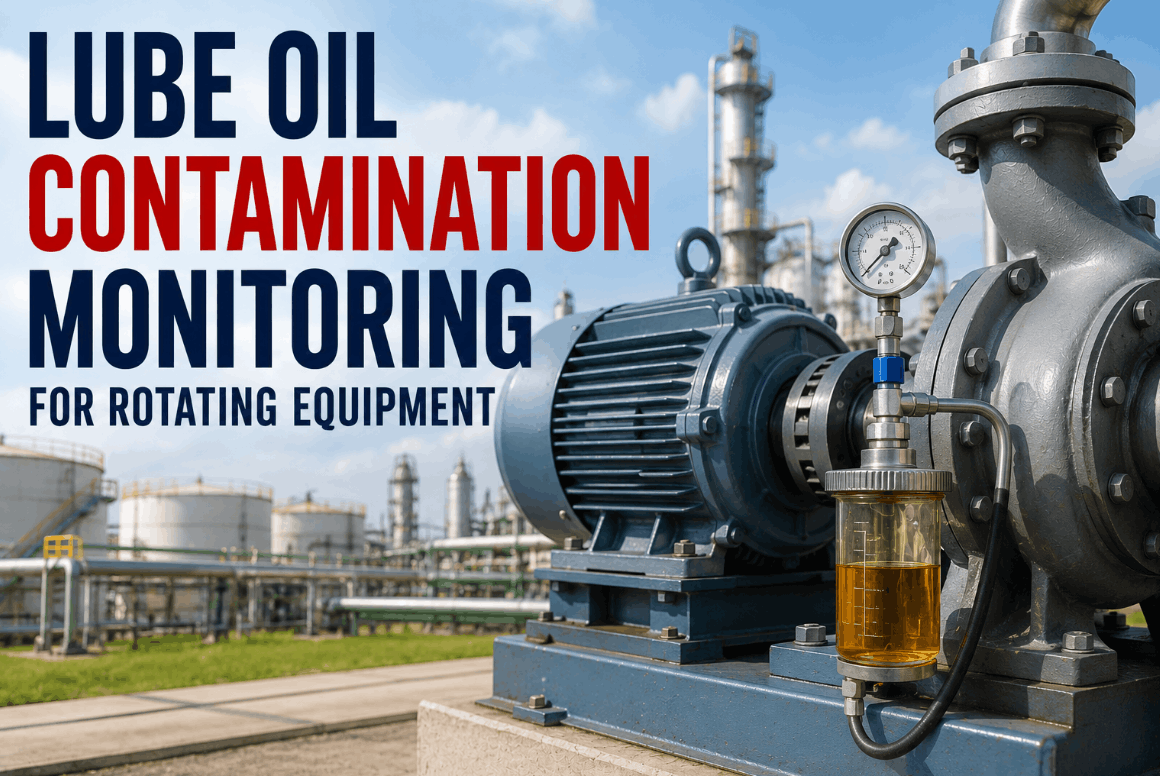
Lube oil contamination is the single most preventable cause of rotating equipment failure in industrial plants, yet most reliability programs still rely on quarterly oil sampling and reactive maintenance. In a typical refinery or steel mill, particle ingress, water saturation, and thermal degradation silently accelerate bearing wear and rotor imbalance weeks before any alarm is triggered. If your lubrication program does not track real-time particle counts per ISO 4406, water content in parts per million, and total acid number (TAN) trends, you are not managing oil health—you are waiting for a mechanical failure at your most critical rotating asset.
The ISO 4406 Cleanliness Standard: What Every Reliability Engineer Must Know
How Particle Counts, Water Content, and TAN Define Your Rotating Asset Life
ISO 4406 is the international standard for reporting fluid cleanliness in lubrication and hydraulic systems. The code uses three numbers representing particle counts at 4 µm, 6 µm, and 14 µm per milliliter of fluid. For critical rotating equipment such as centrifugal compressors, steam turbines, and high-speed gearboxes, a target cleanliness of ISO 16/14/11 or better is required to achieve design bearing life. Unfortunately, many plants are operating at ISO 20/18/15 or worse and wondering why their mean-time-between-failures continues to decline. Particles act as abrasive lapping compounds that accelerate wear on journal bearings, thrust bearings, and gear teeth. When particle counts go unmonitored between quarterly samples, weeks of undetected contamination can reduce bearing life by more than 50%. The table below outlines the ISO 4406 cleanliness targets and their corresponding application suitability for rotating equipment. Book a Demo to see how iFactory's real-time particle counting closes the gap between quarterly samples.
| ISO 4406 Code | Particles at 4 µm/mL | Particles at 6 µm/mL | Particles at 14 µm/mL | Application Suitability |
|---|---|---|---|---|
| 16/14/11 | 320 - 640 | 80 - 160 | 10 - 20 | Critical: Turbines, Centrifugal Compressors |
| 18/16/13 | 1,300 - 2,500 | 320 - 640 | 40 - 80 | Standard: Gearboxes, Process Pumps |
| 20/18/15 | 5,000 - 10,000 | 1,300 - 2,500 | 160 - 320 | Marginal: Accelerated wear risk, frequent changes needed |
| 22/20/17 | 20,000 - 40,000 | 5,000 - 10,000 | 640 - 1,300 | Critical Failure Risk: Immediate remediation required |
5 Root Causes of Lube Oil Contamination in Rotating Equipment
Why Scheduled Sampling Alone Cannot Protect Your Critical Assets
Traditional Oil Analysis vs. Real-Time Contamination Monitoring
The Cost of Waiting for Lab Results While Bearings Wear Out
Quarterly or monthly oil sampling provides a static snapshot that is often weeks or months out of date by the time lab results return. In contrast, real-time contamination monitoring tracks ISO 4406 particle counts, water content, and TAN continuously at 10-second intervals, allowing reliability teams to detect contamination events the moment they occur rather than weeks later. For a high-speed turbine or centrifugal compressor, the difference is the gap between a planned bearing replacement and an emergency rotor rewind. Book a Demo to compare your current program against real-time monitoring benchmarks.
| Parameter | Traditional Oil Analysis | iFactory Real-Time Monitoring |
|---|---|---|
| Sampling Frequency | Quarterly or monthly | Continuous at 10-second intervals |
| Particle Count (ISO 4406) | Lab result in 5 to 10 days | Real-time dashboard with instant updates |
| Water Content (ppm) | Spot check during scheduled sample | Continuous trend line with alarms |
| Total Acid Number (TAN) | Annual or semi-annual lab test | Continuous online monitoring |
| Varnish Potential | Not measured in routine programs | MPC-based real-time alerting |
| Alarm Response Time | Weeks after contamination event | Immediate notification and escalation |
| Annual Cost per Asset | $4,000 to $8,000 (lab + labor) | $2,000 to $3,500 (sensors + platform) |
The 4-Step Framework for Predictive Oil Health Management
Building an Oil Analysis Program That Prevents Rotor and Bearing Failures
Transitioning from reactive oil changes to predictive oil health requires a structured approach that integrates real-time sensor data with maintenance workflows. iFactory's Oil Health platform is built around this framework, enabling reliability teams to move from scheduled lubrication to condition-based oil management. Book a Demo to see the platform applied to your rotating equipment fleet.
Frequently Asked Questions
What is ISO 4406 and why does it matter for rotating equipment?
ISO 4406 is the international standard for reporting particle contamination levels in oil using a three-number code for particle counts at 4, 6, and 14 microns. It directly correlates with bearing wear rates and is the most reliable early indicator of lubricant health in turbines, compressors, and gearboxes.
How often should lube oil be sampled for accurate contamination analysis?
Quarterly sampling is the industry minimum, but continuous real-time monitoring is recommended for critical assets. Daily particle count tracking detects contamination events between scheduled samples and enables immediate corrective action.
What water content level is considered dangerous in lube oil systems?
Free water above 200 ppm significantly accelerates bearing fatigue and reduces oil film strength. Any sustained upward trend in water content, even below 200 ppm, warrants immediate investigation to identify the ingression source.
Can real-time oil monitoring prevent unplanned bearing and rotor failures?
Yes. Continuous particle count and water content monitoring detects contamination events weeks before bearing vibration or temperature alarms trigger, allowing planned interventions and preventing emergency repairs and catastrophic rotor damage.
How does iFactory integrate with existing lubrication systems and CMMS platforms?
iFactory connects to existing oil return lines, filter housings, and reservoir ports using inline sensors with no modification to your lubrication skid. Data streams automatically into your existing CMMS, historian, or SCADA system for unified asset management.
Conclusion
Close the Gap Between Oil Sampling Cycles and Real-Time Asset Protection
The gap between scheduled oil samples is where bearing failures are born. Particle ingress, water ingression, and thermal degradation do not wait for quarterly lab results. When a single unplanned compressor outage can cost $180,000 to $520,000 in lost production and repair costs, the investment in continuous oil health monitoring becomes a financial necessity rather than a maintenance upgrade. iFactory's real-time contamination monitoring platform delivers the continuous visibility needed to protect your most critical rotating assets, extend oil life, and eliminate the hidden costs of undetected lubrication failures.