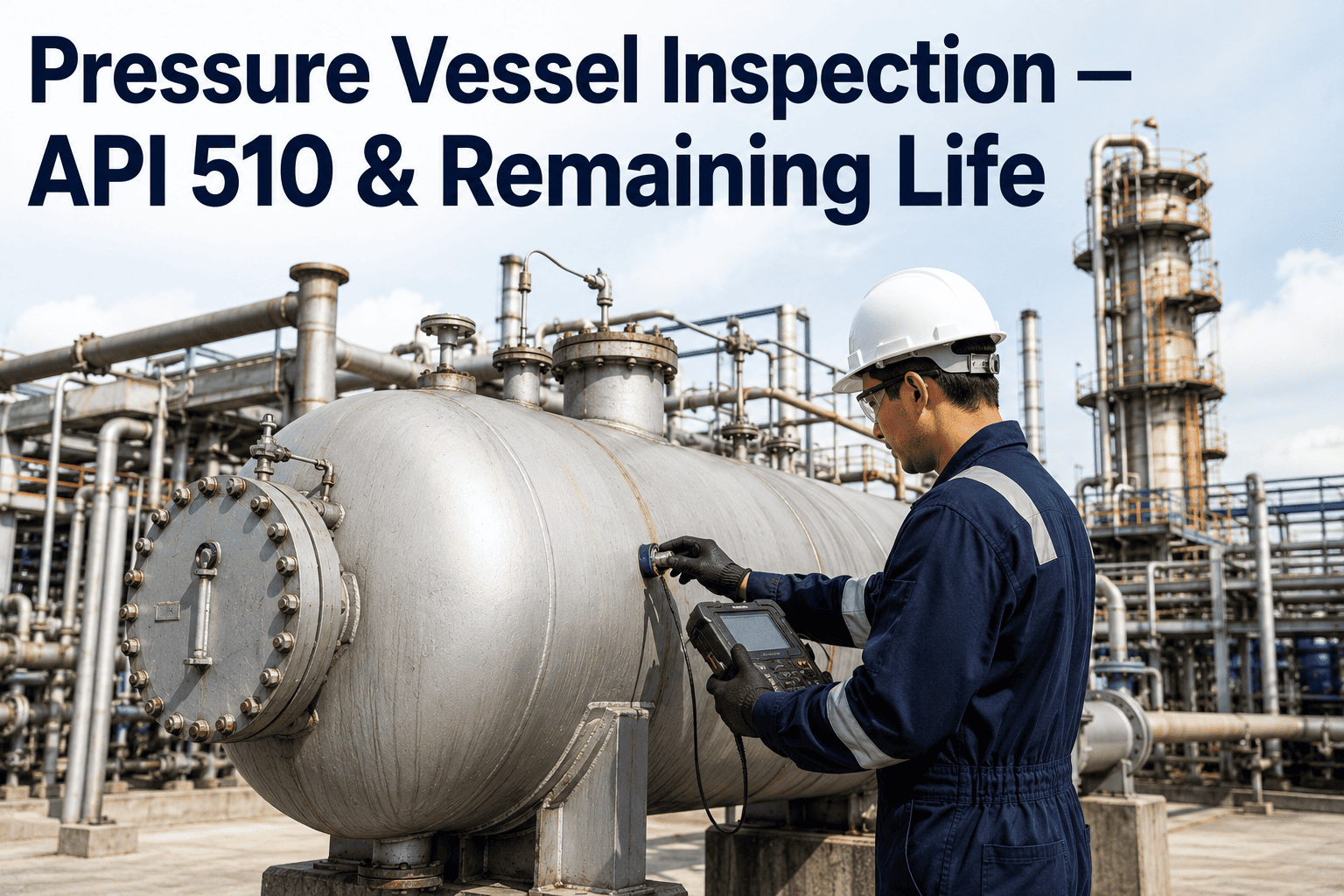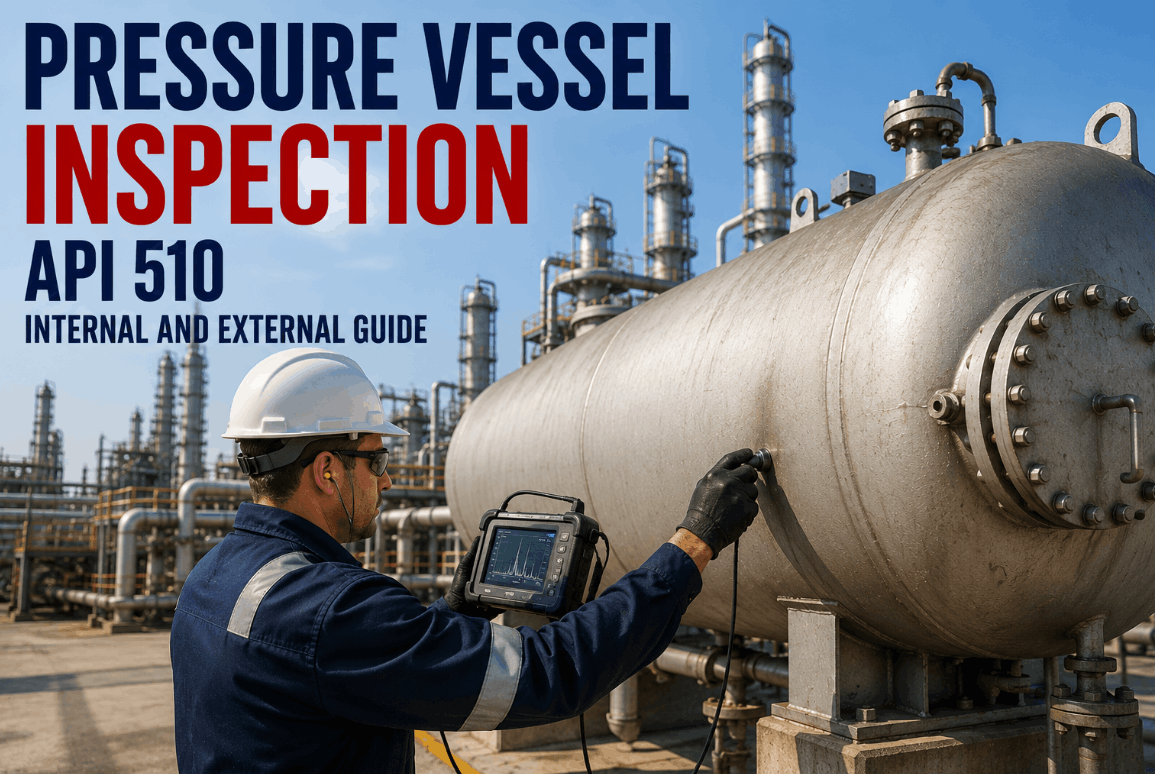
Pressure vessels are the backbone of every refinery, chemical plant, and industrial processing facility — and their catastrophic failure is the single event that most mechanical integrity programs are designed to prevent. API 510, the Pressure Vessel Inspection Code, establishes the governing framework for in-service inspection, rating, repair, and alteration of pressure vessels operating above 15 psig. Yet thousands of vessels across U.S. refining and chemical assets operate on inspection intervals that were set years ago and have not been re-evaluated against current damage mechanism assessments, corrosion rate data, or jurisdictional requirements. When an internal inspection window is missed because turnaround schedules shifted and no on-stream alternative was planned, the compliance gap becomes a liability exposure that no documentation backlog can retroactively close.
API 510 Compliance and Inspection Interval Management for In-Service Pressure Vessels
iFactory's mechanical integrity platform tracks inspection intervals, corrosion rates, and damage mechanism assessments across your entire pressure vessel fleet — ensuring every vessel stays within its API 510 compliance window.
API 510 Inspection Intervals and Jurisdiction Requirements
API 510 specifies three distinct types of inspection for in-service pressure vessels: external visual inspection, internal or on-stream inspection, and thickness measurement inspection. Each type has its own interval requirement, documentation standard, and compliance pathway. The external inspection interval must not exceed the lesser of five years or the interval required for the internal/on-stream inspection. The internal and on-stream inspection interval must not exceed the lesser of one-half of the remaining corrosion life or ten years. Thickness measurement inspections are conducted at intervals that ensure corrosion rates are accurately established, typically at mid-interval points between internal inspections. Jurisdictional requirements may impose additional constraints — some state and local regulations require more frequent inspection for specific services such as anhydrous ammonia, chlorine, or hydrogen service. Book a Demo for a fleet-level API 510 interval compliance review.
| Inspection Type | API 510 Interval Requirement | RBI Extension Possible | Typical NDE Methods | Jurisdiction Override |
|---|---|---|---|---|
| External Visual Inspection | 5 years maximum, or coincident with internal/on-stream interval | Yes — per API 580 | Visual (VT), UT thickness at CMLs, hammer test | Common for high-hazard services |
| Internal Inspection | Lesser of 10 years or one-half remaining life | Yes — per API 580 | Visual (VT), UT, MT, PT, RT as needed | Varies by state and service |
| On-Stream Inspection | Same as internal interval requirement | Yes — per API 580 | UT thickness, guided wave, AE, IR | Limited; some jurisdictions require entry |
| Thickness Measurement | Mid-interval between internal/on-stream inspections | N/A | UT spot grid, CML scanning, UT-C | Per jurisdictional requirements |
| Pressure Relief Device | Per API 510 and API RP 576 | Limited | Bench test, pop test, visual | Common for jurisdiction-accepted PRDs |
5 Damage Mechanisms That Drive In-Service Vessel Inspection Frequency
API RP 571 describes the damage mechanisms that affect fixed equipment in the refining and petrochemical industry. Each mechanism has a characteristic progression rate, detection method, and impact on remaining life calculation. Understanding which mechanisms are credible for each vessel is the foundation of an effective API 510 inspection plan. Book a Demo for a damage mechanism review.
On-Stream UT vs. Internal Entry: Inspection Method Comparison
API 510 permits on-stream inspection as an alternative to internal entry when the vessel's design and service conditions allow the inspector to achieve equivalent coverage of damage mechanisms without entering the confined space. The decision between on-stream UT and internal entry is driven by damage mechanism type, accessibility of critical locations, and jurisdictional acceptance. On-stream inspection offers significant advantages in production continuity but requires thorough pre-qualification of the techniques and locations to ensure no credible damage mechanism is left unexamined. Book a Demo to see how iFactory manages inspection method selection.
| Comparison Factor | On-Stream UT Inspection | Internal Entry Inspection |
|---|---|---|
| Vessel Outage Required | No — vessel remains in service | Yes — vessel must be shut down, purged, and prepared |
| Inspection Coverage | Limited to accessible external surfaces and UT CML grid | Full internal surface access including welds, trays, and internals |
| Damage Mechanism Detection | Internal corrosion (UT), CUI (external), SCC (if accessible) | All damage mechanisms including SCC, HIC, blistering, internal pitting |
| Typical Cost per Vessel | $8,000 to $18,000 | $25,000 to $60,000 plus production loss |
| Jurisdiction Acceptance | Limited in some states for specific services | Universally accepted |
| Remaining Life Accuracy | Good for general corrosion; limited for localized damage | Excellent — direct measurement and visual assessment |
Building a Compliant API 510 Inspection Program
An API 510-compliant inspection program requires more than scheduling inspections at the correct intervals. It demands a systematic approach to damage mechanism identification, CML placement and justification, corrosion rate calculation, remaining life determination, and interval establishment — all documented in an auditable inspection data management system. iFactory's mechanical integrity platform provides the digital infrastructure to manage this lifecycle at scale. Book a Demo to see the platform configured for your vessel fleet.
Our mechanical integrity program was managing over 1,200 pressure vessels across two refineries using spreadsheets, paper CML sketches, and an inspection data system that had not been updated since 2008. We knew we had vessels approaching their internal inspection intervals, but we had no systematic way to prioritize which ones needed turnaround scheduling versus which could be converted to on-stream inspection. When a jurisdiction inspector requested the interval documentation for a hydrotreater reactor vessel during an unannounced visit, it took our team five hours to locate the current interval basis and remaining life calculation. The inspector noted the documentation delay in his report. That administrative citation was the catalyst for our digital mechanical integrity transformation with iFactory. Within six months, every vessel in our fleet had a digitized CML map, a current remaining life calculation, and an interval basis document accessible from a single dashboard. When the same jurisdiction inspector returned the following year, we produced the reactor vessel's complete inspection history, interval justification, and RBI assessment in under thirty seconds. He told us it was the most organized mechanical integrity program he had inspected in fifteen years.
Frequently Asked Questions
API 510 specifies that the internal or on-stream inspection interval must not exceed the lesser of one-half of the remaining corrosion life or 10 years. An RBI assessment per API 580 may extend this interval with documented risk justification.
On-stream inspection may replace internal entry when the vessel design and service allow equivalent damage mechanism coverage, all credible damage mechanisms are detectable from external surfaces, and the jurisdiction accepts on-stream inspection as equivalent to internal entry for the specific service.
The external visual inspection interval must not exceed either five years or the internal/on-stream inspection interval, whichever is less. It covers external surfaces, supports, grounding, insulation condition, CUI-susceptible areas, and pressure relief device verification.
Remaining life is calculated by dividing the available corrosion allowance by the corrosion rate at each CML. API 510 requires the more conservative of the long-term average and short-term corrosion rates to be used for the remaining life assessment and interval calculation.
API 510 inspections must be performed or directly supervised by an API-certified Pressure Vessel Inspector who has passed the API 510 examination and meets the experience and education requirements defined in API 510 Annex A. Recertification is required every three years.
Conclusion: The Gap Between Inspection Interval Compliance and Mechanical Integrity Management
API 510 provides the regulatory framework for pressure vessel mechanical integrity, but compliance with interval requirements alone does not guarantee that every damage mechanism is being detected at its earliest treatable stage. A vessel that is inspected on schedule but without accurate CML placement, current corrosion rate data, or a thorough damage mechanism review can still fail catastrophically between inspection cycles. The difference between compliance and integrity is the quality of the data that drives the inspection plan — and the digital infrastructure that maintains that data across a fleet of hundreds of vessels, dozens of damage mechanisms, and evolving jurisdictional requirements. iFactory's mechanical integrity platform provides the inspection data management, corrosion trending, interval tracking, and documentation generation capabilities that transform a compliance program into a genuine integrity management system.
Your Pressure Vessel Inspection Intervals Are Only as Good as the Data Behind Them
iFactory's mechanical integrity platform digitizes your API 510 inspection program — from damage mechanism reviews and CML mapping through corrosion rate trending, remaining life calculation, and jurisdiction-ready interval documentation. Deployed in 65+ refining and chemical facilities worldwide.