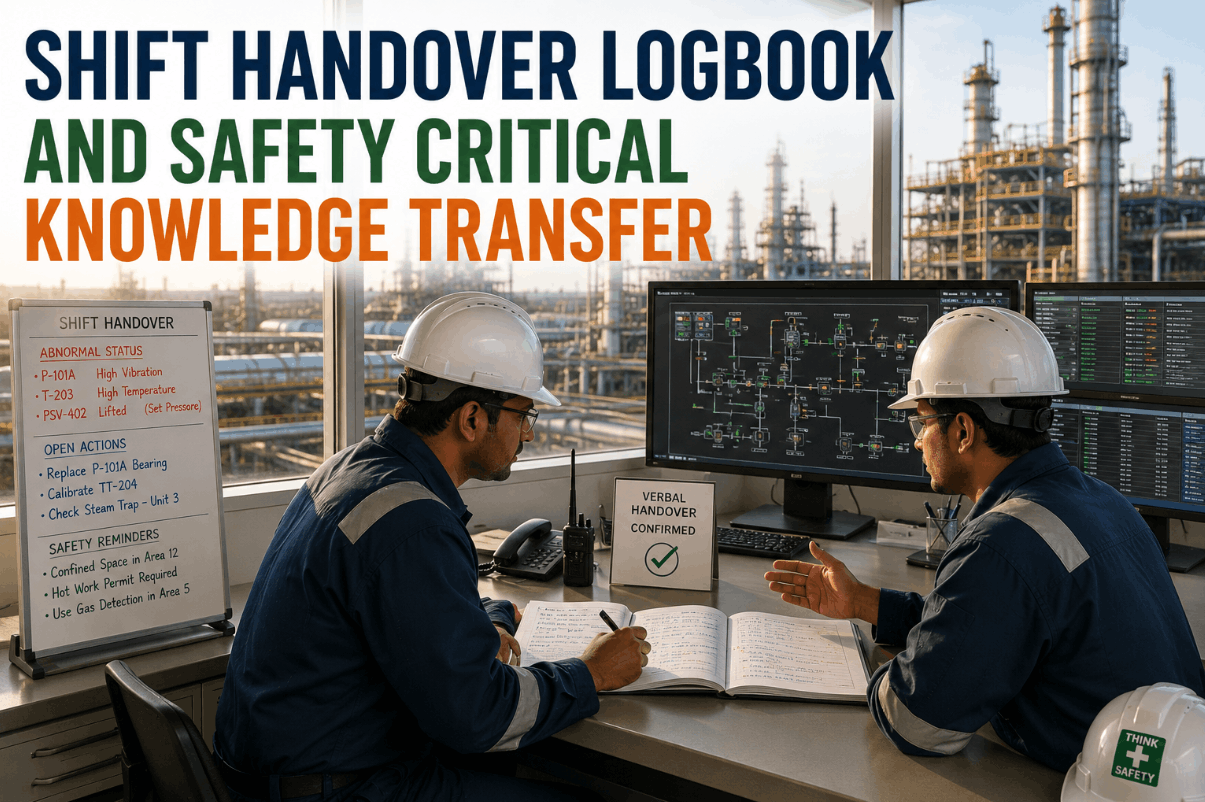
A control room supervisor who has sat through a rushed shift change already knows how thin the line is between a routine handover and a missed catastrophe: the outgoing operator has a matter of minutes to compress twelve hours of alarms, permits, and abnormal readings into a verbal briefing, and whatever doesn't make it into that conversation effectively didn't happen for the incoming crew. Investigations into some of the industry's most studied incidents, including the 2005 Texas City refinery explosion and the Piper Alpha disaster, each identified critical information that was known to the outgoing shift and never reached the incoming one. A logbook that only records the plant's status at the moment of handover, and says nothing about what happened during the shift itself, carries the same blind spot today that it did decades ago. iFactory's AI-generated shift summaries close that gap automatically, and you can request a shift handover demo to see one built from a real day's alarm and work order data.
Twelve Hours of Alarms, Permits, and Abnormal Readings Compressed Into a Fifteen-Minute Briefing Is How Details Get Lost
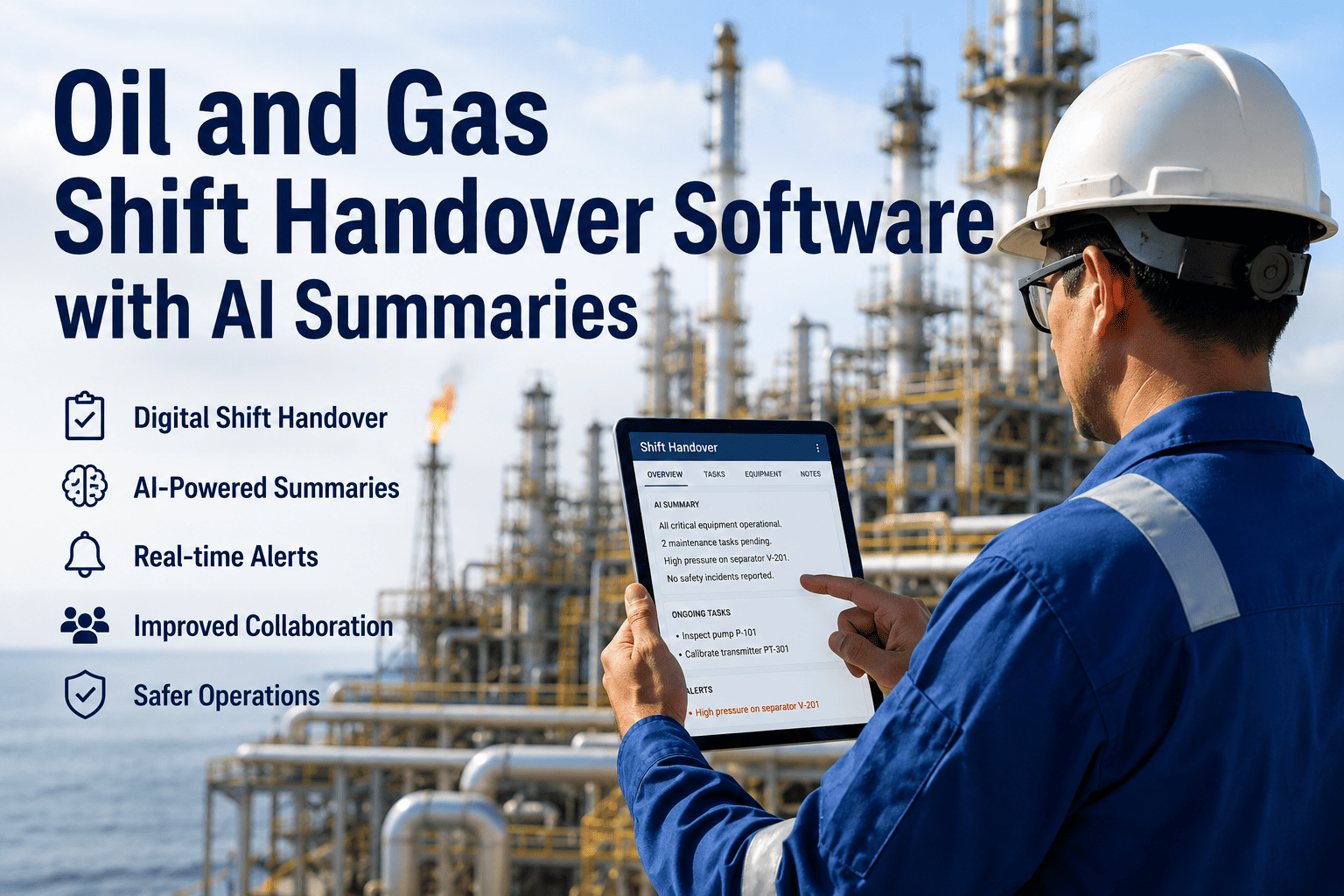
iFactory automatically generates a structured shift handover summary from your alarms, work orders, safety observations, and production events, so the incoming crew inherits a complete picture instead of whatever the outgoing operator remembered to mention under time pressure.
Why Handover Keeps Showing Up in Incident Investigations
Shift handover has been identified as a contributing factor across decades of major industrial incident investigations, from Piper Alpha, where the incoming crew wasn't fully aware of a closed valve's implications, to the 2005 Texas City refinery explosion, where investigators found no structured handover procedure had been followed at all and outgoing information about plant conditions simply never reached the next crew. The common thread isn't a single dramatic failure, it's the ordinary limits of a verbal briefing: a supervisor working a long rotation, a fifteen-minute window, and a logbook that captures where the plant stands at that exact moment but nothing about what happened in the hours before it. Regulators have paid close attention to this pattern for exactly that reason. Human factors reviews following major refinery incidents repeatedly cite the same combination of causes: worker fatigue that wasn't accounted for in scheduling, outdated or unclear operating procedures, and communication between shifts that depended entirely on what one person remembered to say out loud. None of those require a mechanical failure to cause a loss of containment, they only require a detail to go unmentioned at the worst possible moment.
Six Things Every Handover Has to Carry — Or the Next Shift Starts Blind
Safety guidance from process safety bodies is consistent on what a complete handover needs to include. Missing any one of these is how a manageable situation on one shift becomes a surprise on the next, and the incoming supervisor is expected to verify each item directly rather than simply accept a verbal assurance that everything is in order.
From Scattered Shift Data to One Structured Briefing
An outgoing operator today is effectively assembling a handover from memory, pulling details out of an alarm history, a CMMS, and their own notes under time pressure. iFactory does that assembly automatically, before the conversation even starts, so the fifteen minutes that used to go toward reconstructing the shift can go toward the actual briefing and any questions the incoming operator has.
What Actually Changes When the Summary Writes Itself
The difference isn't just speed, it's completeness. A verbal handover is bounded by what one person can recall under time pressure, while an automatically generated summary is bounded only by what actually happened during the shift.
| Handover Element | Verbal / Logbook Handover | iFactory AI Summary |
|---|---|---|
| Shift-long events | Captured only if the outgoing operator remembers to mention them | Compiled automatically from the full shift's alarm and event history |
| Permit & isolation status | Recalled from memory or a separate paper board | Cross-checked automatically against the live permit and isolation register |
| Time under pressure | Compressed into whatever time is left before end of shift | Generated in advance so the briefing conversation can focus on questions |
| Audit record | A handwritten logbook entry, hard to search after the fact | A structured, timestamped, searchable record of every handover |
What Doesn't Make It Into the Handover Conversation Didn't Happen for the Next Shift
iFactory generates the summary automatically, so nothing depends on what the outgoing operator remembers to say.
Five Categories, Pulled Together Automatically Every Shift
Each category maps to a different way a detail typically gets lost in a rushed verbal handover, from an alarm that scrolled past hours earlier to a near miss that got logged separately from the shift record. Bringing all five together into one summary is what keeps any single one of them from falling through the gap between shifts.
Alarms & Abnormal Conditions
Every significant alarm and abnormal reading from the shift, ranked by significance rather than buried in a raw alarm history log.
Work Orders & Deferred Maintenance
Newly opened, in-progress, and deferred work orders, so the incoming crew knows exactly what maintenance is still pending on their unit.
Safety Observations & Near Misses
Every safety observation and near miss logged during the shift, carried forward instead of ending up as a separate report nobody connects to the handover.
Production Events & Rate Changes
Rate changes, upsets, and production events summarized with context, so the incoming operator understands why current conditions look the way they do.
Unresolved Risks & Watch Items
A clear, standalone list of what's still unresolved and needs continued attention, so nothing depends on the incoming crew asking the right question.
What Changes for a Control Room After Going Live
The value shows up as fewer surprises during the first hour of a shift, when an incoming operator is normally still piecing together what happened before they arrived. Instead of spending that hour asking around or scrolling back through the alarm history, they walk in with a complete written account of the last twelve hours already in hand.
Questions Operations Teams Ask About AI Shift Handover Summaries
Give Every Incoming Shift the Full Picture, Not Just What Made It Into a Rushed Briefing
iFactory turns alarms, work orders, safety observations, and production events into one structured handover summary, automatically, every shift.