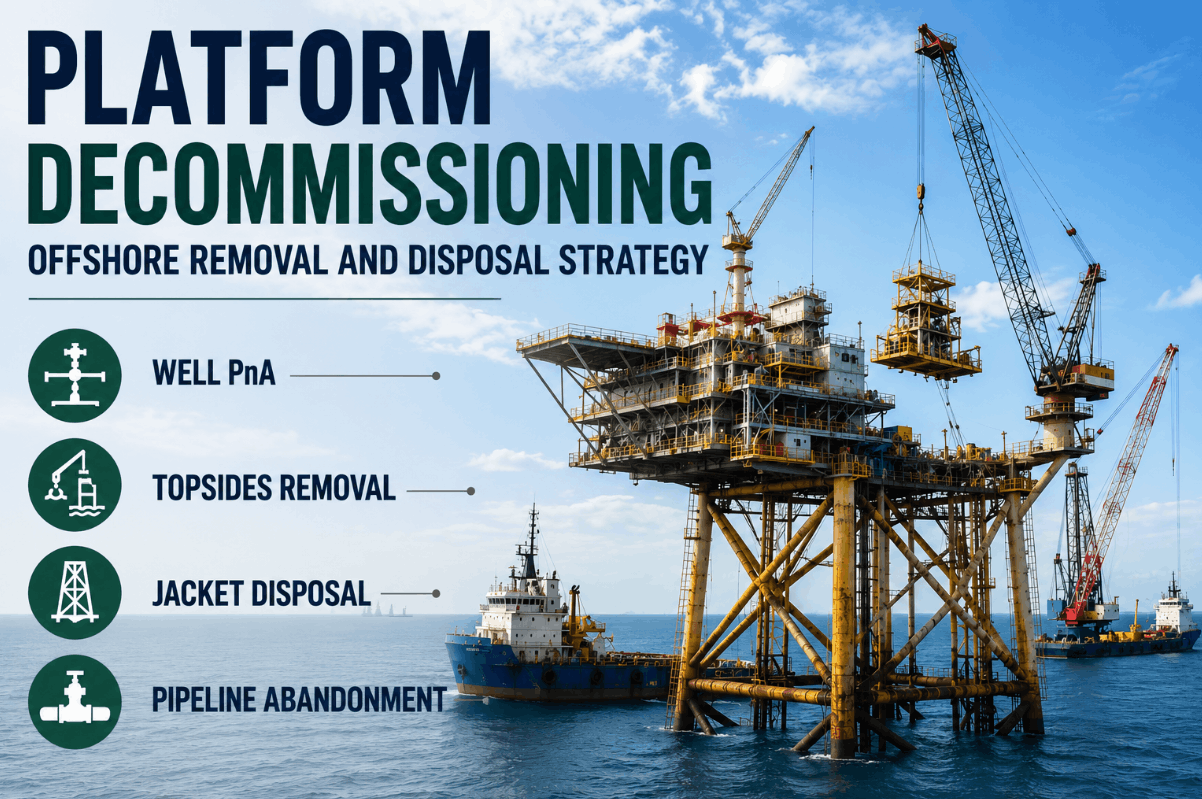
Offshore platform decommissioning is one of the most capital-intensive, operationally complex, and regulatory-sensitive undertakings in the energy sector. With an estimated $40 to $70 billion in total decommissioning liability sitting on the U.S. Outer Continental Shelf alone — and approximately 75% of the 1,430 existing OCS platforms now more than 25 years old — the question for most operators is no longer whether decommissioning will happen, but how to plan and execute it at a cost, schedule, and compliance standard that protects both the balance sheet and the regulatory relationship. Costs range from a few million dollars for shallow-water fixed platforms to well over $500 million for deepwater facilities, and individual project overruns are endemic when planning data is fragmented across engineering systems, well records, and contractor estimates that were never built to talk to each other. Platform decommissioning — from well plug and abandonment through topsides removal, jacket disposal, and pipeline abandonment — demands a digital planning and execution layer that gives project teams, regulators, and financial stakeholders a single, accurate view of scope, cost, and compliance status in real time.
The Regulatory Architecture: BSEE, OSPAR, and What Each Actually Requires
The regulatory framework governing offshore decommissioning differs significantly between jurisdictions — and operating in multiple basins simultaneously without a structured compliance tracking system is how cost overruns and citation events happen. The two dominant frameworks that U.S. and international operators encounter are BSEE's authority under 30 CFR Part 250, Subpart Q, governing all OCS decommissioning in U.S. federal waters, and OSPAR Decision 98/3, the binding North Sea convention that governs disposal of disused offshore installations across the Northeast Atlantic. These frameworks are not compatible in their requirements, and the strategic difference between them shapes everything from jacket disposal decisions to pipeline abandonment method selection. Book a Demo to see how iFactory AI maps multi-jurisdictional decommissioning obligations against your asset inventory.
- Decommissioning application due at least two years before projected cessation of production
- Wells must be permanently plugged within one year of lease expiration under standard deadlines
- Jacket substructure severed a minimum of 15 feet below the mudline before removal
- "Idle Iron" policy (NTL 2018-G03) requires removal of infrastructure idle on active leases within defined periods
- Rigs-to-Reefs program allows platform conversion to artificial reef as alternative to complete removal with BSEE approval
- Operators must now submit actual decommissioning expenditure summaries under the BSEE Decommissioning Costs Reporting Rule
- Dumping and leaving offshore installations wholly or partly in place is categorically prohibited
- Full removal required for all steel jackets — derogation only available for structures exceeding 10,000 tonnes or concrete installations meeting specific criteria
- Derogation proposals require OSPAR Contracting Party consultation before national authority issues any permit
- 2024 OSPAR Agreement updates reinforce the objective of reducing derogations and accelerating full removal
- Pipelines are NOT covered by OSPAR Decision 98/3 — pipeline abandonment decided on a case-by-case basis through national regulatory assessment
- Comparative assessment documenting environmental, safety, and practical factors must accompany any derogation application
Decommissioning Execution Sequence: From Well PnA Through Seabed Clearance
Every offshore decommissioning project follows a phased execution sequence, but the sequence is not linear — stages overlap, campaigns run concurrently across multiple assets, and regulatory submissions at one stage gate the next. Without an integrated project tracking system that links well PnA status to topsides campaign scheduling, and topsides removal milestones to jacket disposal permitting, operators routinely carry idle marine spread days caused by document or permit gaps that should have been closed weeks earlier. iFactory AI's decommissioning management module maps the full execution sequence against actual completion data, flags critical path dependencies in real time, and generates the compliance record at each stage that regulatory submissions require.
Jacket Disposal and Pipeline Abandonment: The Decision Framework
The two most consequential disposal decisions in any offshore decommissioning project are what to do with the jacket substructure and how to handle the pipeline network. Both decisions involve a structured regulatory assessment process, both carry long-term environmental and financial liability implications, and both are increasingly scrutinized by regulators who have seen too many projects where the operator's preferred option was chosen for cost reasons rather than documented technical and environmental justification. iFactory AI structures the comparative assessment process for both decisions, generating the documentation package that BSEE and OSPAR-jurisdiction regulators require before approving any departure from full removal.
Decommissioning Cost Drivers and Where Digital Planning Changes the Economics
BSEE cost data from deepwater Gulf of Mexico fixed platforms shows decommissioning costs ranging from $5.1 million per structure in shallow deepwater to $59 million per compliant tower in deeper formations — with platform-specific costs scaling steeply with water depth and structural complexity. Decommissioning costs represent 10 to 25% of the total lifecycle cost of an offshore field, and cost overruns against original estimates are nearly universal when planning data is incomplete. The most consistent drivers of budget overrun are undisclosed well condition complexity, NORM contamination discovered during topsides strip-out that was not captured in pre-decommissioning surveys, marine spread idle days from permit delays and weather window mismatches, and waste characterization surprises at onshore dismantling yards. Every one of these overrun drivers is, in principle, addressable through better pre-decommissioning data collection and integration. Book a Demo to model how iFactory AI reduces scope uncertainty for your decommissioning program.
| Cost Driver | Water Depth Range | BSEE Benchmark Cost | Primary Overrun Risk | iFactory AI Mitigation |
|---|---|---|---|---|
| Fixed Platform — Shallow Deepwater | 122–200 m | $5.1M per structure (P50) | Well condition complexity, lift point integrity failures | Well inventory status linked to PnA scope; NDT records in asset system |
| Fixed Platform — Mid Deepwater | 200–500 m | $10M–$80M per structure | Sectional jacket removal complexity, vessel availability windows | Marine spread schedule integration; removal sequence tracking |
| Compliant Tower | 300 m (Lena example) | $45M–$59M estimated | Topple-in-place vs. full removal decision timeline; reef program eligibility | Comparative assessment documentation; reef program permit tracking |
| Pipeline Decommissioning | Any (per segment) | $1.35M–$1.6M per segment | Hydrocarbon residue characterization; burial vs. removal scope uncertainty | Pipeline condition and abandonment decision register; cleaning records |
| Topsides Hazardous Material | Any platform age 25+ yrs | Variable — asbestos, NORM, chemical residue | Undisclosed NORM extent; asbestos scope changes at dismantling yard | Pre-decommissioning survey results tracked per module; waste manifest integration |
Expert Perspective: Where Decommissioning Projects Lose Control
The decommissioning projects I have seen go over budget by 30% or more are almost never over budget because the work was harder than expected at the jacket or the topsides. They are over budget because the project team went offshore without a complete picture of what was actually in the wells, what hazardous materials were actually in the topsides modules, and what the pipeline inventory actually looked like versus what the as-built drawings said. You spend $40 million mobilizing a heavy-lift vessel and a rig to location, and then you discover that three wells have casing integrity issues that require advanced abandonment work the rig was not contracted or equipped to perform, or that a production module contains significantly more asbestos than the survey had shown — and suddenly your campaign extends by four weeks at $1.5 million per day of heavy-lift vessel time. The technology to close that data gap before the vessel sails has existed for years. The discipline to actually integrate it into a decommissioning project control system is what most operators are still missing. What iFactory brings is the integration discipline — a single place where all of that pre-decommissioning survey data, well condition data, and regulatory obligation data lives and is visible to the project team before any critical decision gets made.
Frequently Asked Questions: Platform Decommissioning Strategy
BSEE's Idle Iron policy (NTL 2018-G03) requires operators to dismantle and remove offshore infrastructure that has been idle on active leases beyond defined periods, preventing inactive platforms from accumulating environmental and safety risk indefinitely. Under BSEE's one-year post-lease-expiration deadline, more than 40% of end-of-lease wells and 50% of platforms in the Gulf have missed decommissioning deadlines — creating the backlog of over 2,700 overdue wells and 500 overdue platforms documented by the GAO in 2024.
Under BSEE regulations governing OCS decommissioning, jacket substructures must be severed a minimum of 15 feet below the mudline before removal — ensuring the seabed is returned to a navigable and environmentally acceptable condition. Cutting methods include abrasive water jets, mechanical cutters, and ROV-operated tools; in shallower water, diver-assisted cutting with explosives, torches, or abrasives is also used.
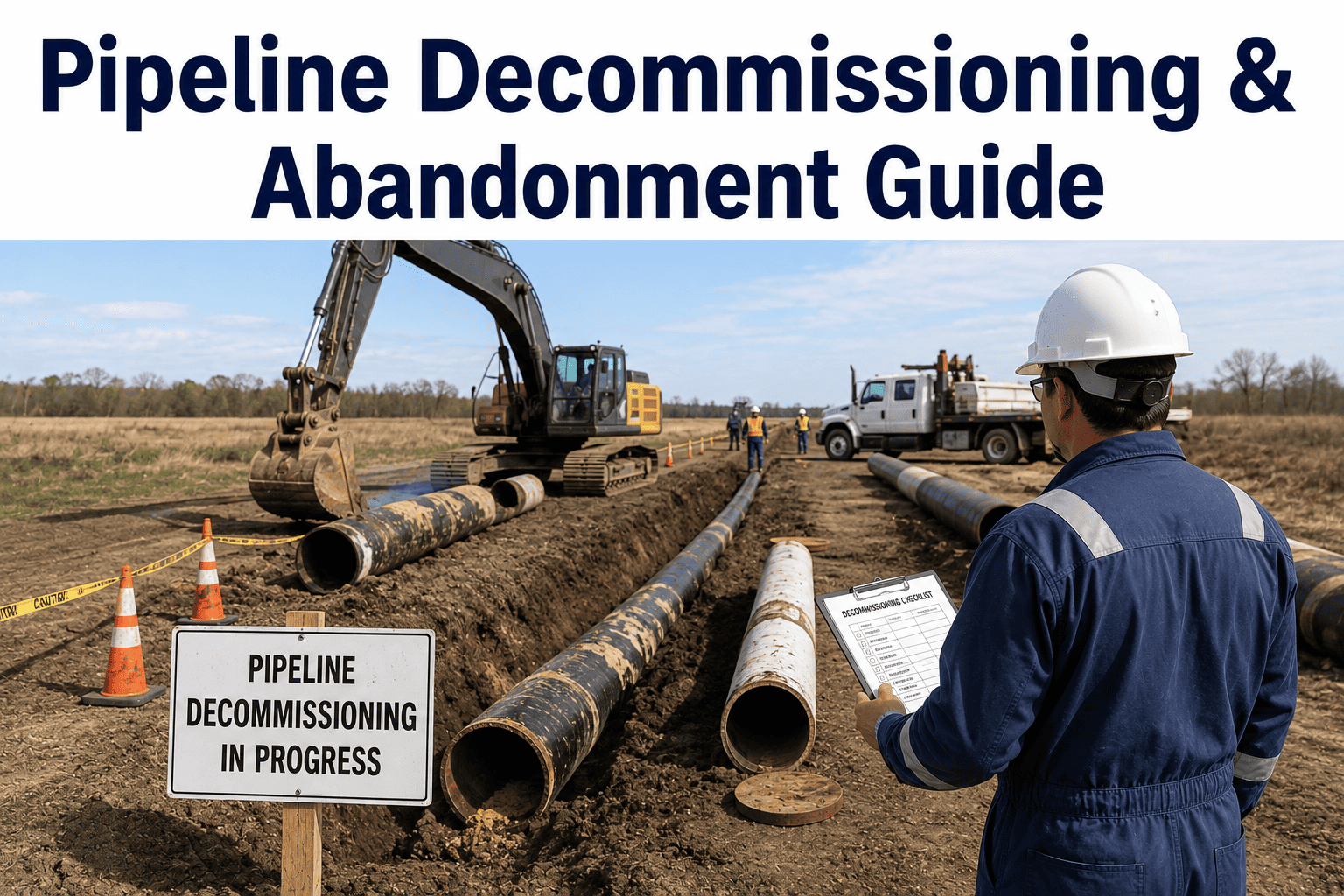
In the U.S., pipelines that BSEE determines do not pose an environmental hazard or navigation obstruction may be decommissioned in place — cleaned, isolated, plugged, and buried 3 feet below the seafloor where required. In North Sea jurisdictions, pipeline abandonment decisions are made on a case-by-case basis through national regulatory review, with full removal increasingly preferred; OSPAR Decision 98/3 does not directly govern pipelines but regulators apply comparable environmental assessment standards.
iFactory AI integrates with existing well data management systems, asset integrity records, regulatory permit databases, and cost management platforms — ingesting the well inventory, structural survey data, environmental assessment records, and contractor work order data that decommissioning project teams already hold. A data readiness assessment is available at no cost to determine the specific project management scope your current data infrastructure can support before any platform commitment.
The BSEE Decommissioning Costs Reporting Rule requires lessees and operating rights owners to submit actual expenditure summaries for wells, platforms, and pipeline decommissioning activities. iFactory AI tracks cost actuals against work order completion at each decommissioning stage, generating the expenditure summary reports in the format required by BSEE for OCS lease compliance — eliminating the manual cost reconciliation that makes this reporting burdensome for multi-asset decommissioning programs.
Conclusion: Decommissioning Is a Data Problem Before It Is an Engineering Problem
The offshore decommissioning liability facing the U.S. Gulf of Mexico, the North Sea, and emerging decommissioning markets across Asia Pacific is not primarily a financial problem — BOEM, BSEE, and host governments are tightening the bonding and enforcement frameworks that will force execution regardless of operator preference. The fundamental challenge is execution quality: completing well PnA, topsides removal, jacket disposal, and pipeline abandonment at a cost and schedule that reflects actual pre-decommissioning conditions, not the optimistic assumptions that fill the gap when data is incomplete.
iFactory AI's decommissioning management platform closes that data gap by connecting well integrity records, structural survey data, environmental assessment documentation, regulatory submission status, and cost tracking into a single project intelligence layer that the decommissioning team, the regulator, and the financial stakeholders can all see in real time. The platforms are aging. The regulatory deadlines are firm. The data infrastructure to plan and execute decommissioning with confidence is the variable that most operators still have not addressed. Book a Demo to see iFactory AI's decommissioning project control platform applied to your asset inventory.