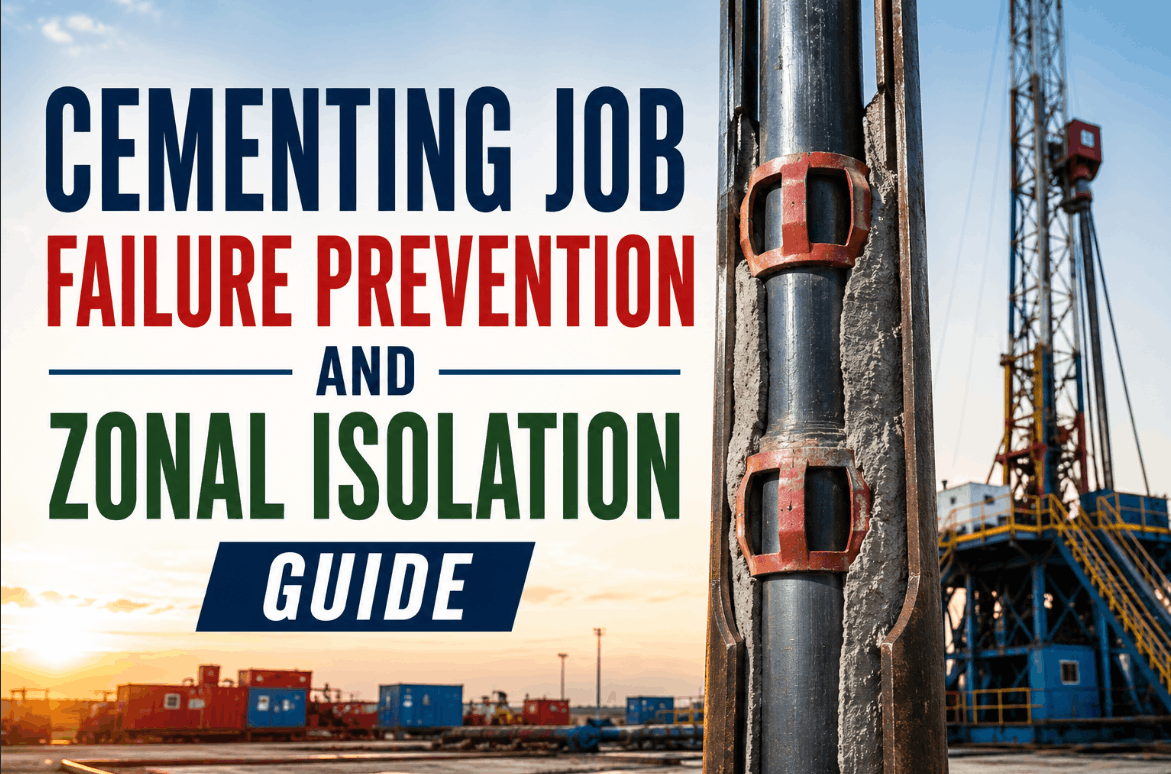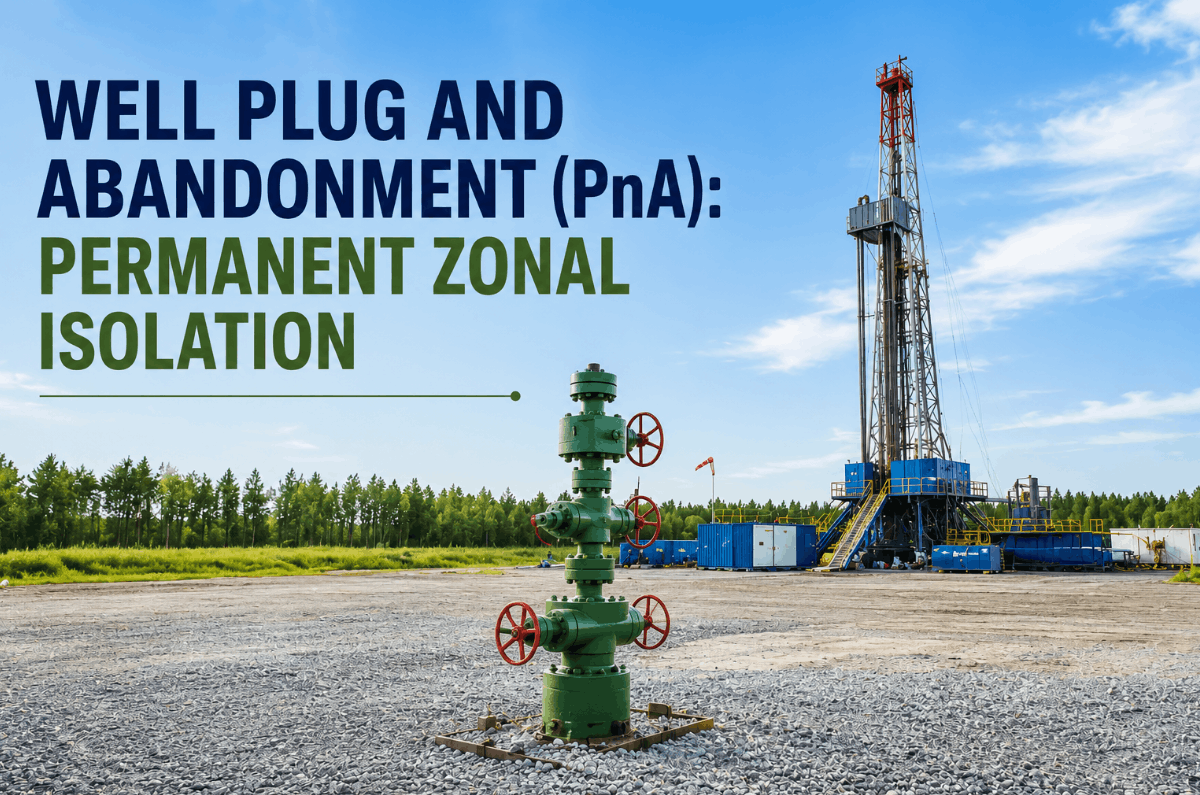
Well plug and abandonment (P&A) is among the most consequential engineering decisions in the lifecycle of an oil and gas asset — not because it is technically complex in the same way that drilling a directional well is complex, but because the consequences of doing it wrong persist for decades, invisibly, until a methane plume reaches a water table or a casing vent flow becomes a regulatory enforcement action. An improperly abandoned well does not announce its failure immediately. It leaks slowly, through channels in a cement plug that looked acceptable on the bond log the day it was placed, through an annular barrier that was never adequately pressure-tested, through casing that corroded below the surface plug before anyone thought to check. The EPA has estimated methane emissions from over two million inactive, unplugged or inadequately plugged wells across the United States. For operators managing active P&A programs, the engineering challenge is not simply sealing the wellbore — it is designing permanent zonal isolation that remains effective over geological timeframes, verified at the time of placement, and documented against the regulatory standard that governs the asset's jurisdiction. Operations teams building structured P&A programs frequently Book a Demo with iFactory to see how AI-driven well integrity monitoring and plug verification workflows integrate with their existing abandonment programs.
Why Permanent Zonal Isolation Fails — and Why It Fails Silently
The Root Causes of P&A Barrier Failure That Regulators and Operators Both Undercount
The failure modes that undermine permanent zonal isolation in abandoned wells are well-characterized in the literature — and the most damaging ones are also the hardest to detect at the time of abandonment. Ordinary Portland Cement (OPC), which has been the primary barrier material in P&A operations for decades, is brittle. It does not self-heal when micro-cracked. In deep wells with high thermal gradients, cement undergoes volumetric changes during curing that create micro-annuli between the cement and the casing or formation — pathways thin enough to pass bond log acceptance criteria but sufficient to allow sustained gas migration over years. Geological stressors, seismic shifts, and long-term chemical attack from formation brines further degrade the barrier envelope in ways that no initial evaluation tool can predict with certainty.
This is the fundamental challenge of P&A design: the verification window is narrow, the regulatory acceptance criteria are point-in-time, and the performance requirement is permanent. Building a P&A program that genuinely achieves long-term zonal isolation requires treating cement plug design, placement verification, and barrier testing as a continuous engineering discipline — not a final administrative step before regulatory sign-off. Operators managing multi-well decommissioning campaigns who Book a Demo with iFactory are finding that structured barrier verification workflows and real-time placement analytics materially reduce the risk of post-abandonment leakage claims and regulatory re-entry orders.
Cement Plug Placement Design: The Engineering Decisions That Determine P&A Permanence
From Slurry Formulation to Placement Verification — What High-Quality P&A Design Requires
The design of a permanent cement plug is not a single decision — it is a sequence of interrelated engineering choices, each of which affects the integrity of the barrier envelope across its intended operational life. iFactory supports operators in applying a structured plug design methodology that addresses all six critical design variables across every plug in the P&A program, linked to formation data and wellbore condition assessments that make the design well-specific rather than generic.
| Design Variable | Engineering Requirement | Common Failure Mode When Inadequate | iFactory Verification Approach |
|---|---|---|---|
| Cement Slurry Formulation | Matched to downhole T/P, formation chemistry, and expected exposure to corrosive gases | Chemical degradation in CO2/H2S environments; brittleness under thermal cycling | Slurry design review against formation data; HTHP test result integration |
| Plug Length and Placement Depth | Bridges all permeable intervals with margin above and below; depth-controlled to ±5m | Plug misses permeable zone top or base; cross-flow develops above or below plug | Cement top verification via CBL/USIT; depth control tracking against wellbore survey |
| Wellbore Conditioning | Mud displacement and spacer program ensures clean cement-to-formation contact | Residual mud cake creates channeling pathways; slurry contamination reduces compressive strength | Pre-job fluid displacement simulation; post-job contamination index tracking |
| Annular Barrier Verification | Primary cement behind casing confirmed competent or remediated before plug is credited | Formation fluid bypasses internal plug through uncemented casing annulus | CBL/VDL evaluation; perf-and-squeeze remediation workflow tracking |
| Pressure Test Criteria | Test pressure referenced to maximum anticipated formation differential, not regulatory minimum | Plug passes test but fails under actual formation pressure load post-abandonment | Formation-pressure-referenced test criteria applied to every plug; test result logging |
| Dual Barrier Placement | Two independent tested barriers isolating every hydrocarbon-bearing or overpressured zone | Single barrier failure leaves formation directly exposed to wellbore pathway to surface | Barrier redundancy matrix tracked per zone; certification issued only on dual-barrier compliance |
Formation Barrier Verification: The Step Most P&A Programs Underinvest In
Cement Bond Evaluation, Pressure Testing, and What the Data Actually Tells You
Barrier verification is the point at which P&A programs most frequently accept risk they have not fully quantified. A cement bond log (CBL) run immediately after a plug is set provides useful information about cement coverage and acoustic impedance — but it does not directly measure the hydraulic sealing capacity of the barrier, which is what the plug is actually required to provide. A plug with good CBL response can still leak if it has micro-channels below the resolution of the acoustic tool. A plug with a marginal CBL response in a low-permeability formation may still provide adequate sealing capacity for its regulatory life. The data requires interpretation, not just acceptance-criteria matching.
iFactory's barrier verification module consolidates the full suite of evaluation data — CBL/USIT logs, radial bond logs, pressure test records, and wellbore temperature surveys — into a structured barrier certification record for each zone. The record documents not just whether the barrier passed its acceptance test, but what the test demonstrated and what it did not demonstrate — providing operators with the technical basis to defend their P&A closure to regulators and to identify barriers that may warrant additional evaluation. For operators managing multi-well programs where consistent documentation standards are a compliance requirement, this structured approach to verification data is as valuable as the engineering itself. Teams building out their barrier documentation protocols often Book a Demo to see how iFactory integrates with their existing well data management environments.
Surface Restoration and Regulatory Closure: Completing the P&A Record
From Wellhead Removal to Final Documentation — What a Complete P&A Closure Requires
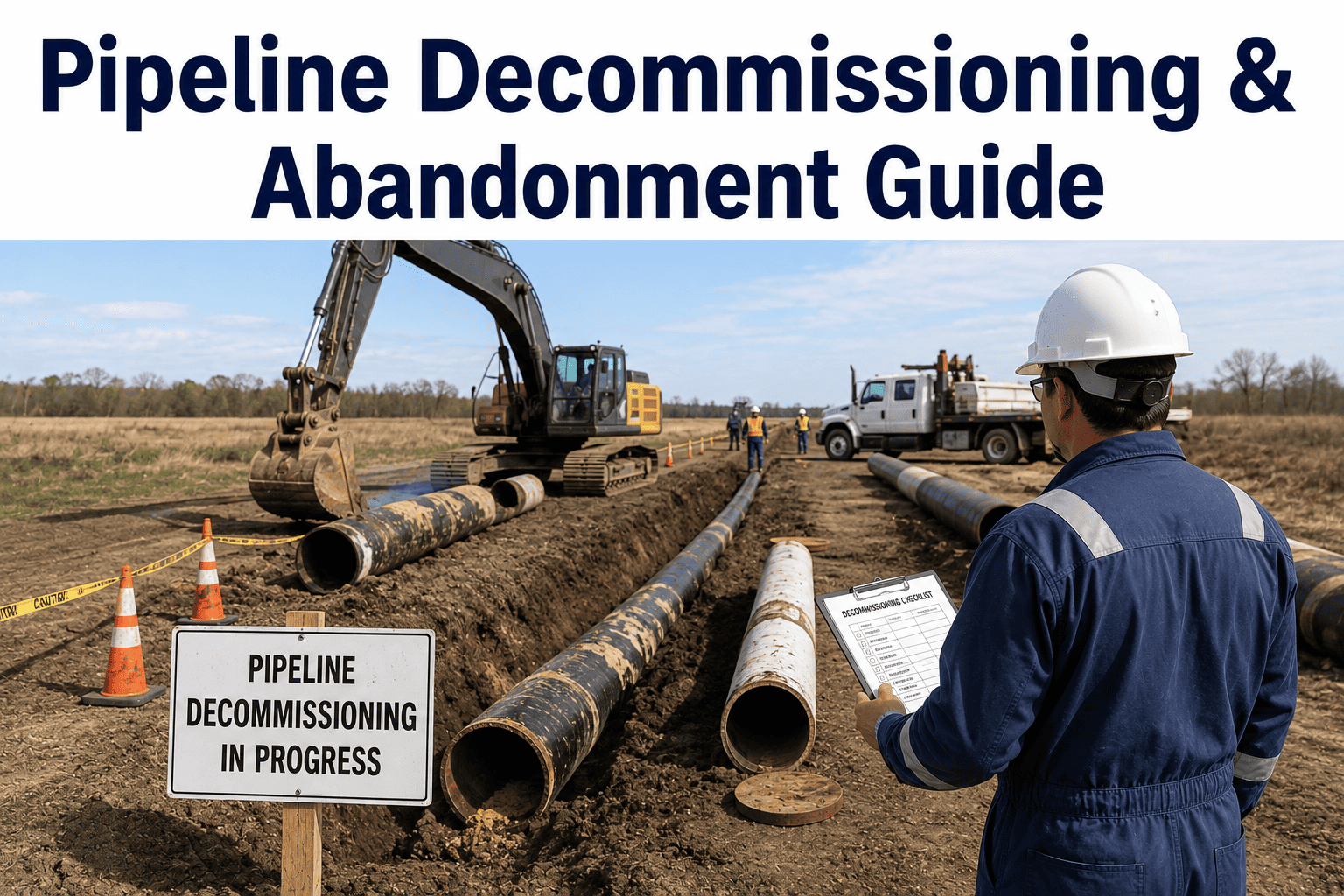
A well is not abandoned when the last cement plug is set. It is abandoned when the surface has been restored to its pre-drilling condition — or to the condition required by the applicable regulatory authority — and when the complete P&A documentation package has been submitted, reviewed, and accepted. For onshore operations, this includes wellhead and conductor removal to the required depth below grade, surface pit reclamation, soil sampling where required, and the filing of a final abandonment report that documents every barrier placement, test result, and depth control measurement taken during the P&A operation. For offshore operations, it additionally includes subsea wellhead removal, seafloor clearance verification, and debris removal documentation.
The documentation burden of a well-executed P&A program is significant — and in operators managing portfolios of tens or hundreds of wells simultaneously, maintaining consistent documentation standards across wells, crews, and regulatory jurisdictions is a persistent operational challenge. iFactory's P&A program management module enforces documentation consistency by capturing structured data at each step of the abandonment workflow, generating regulatory submission packages automatically from the field data, and flagging wells whose documentation is incomplete before the regulatory clock starts. For operators with regulatory commitments on well counts and timelines, this visibility is operationally essential.
- Cement records, pressure test results, and CBL logs stored in separate systems with no unified barrier record
- Regulatory submission assembled manually from field reports — inconsistent across well programs
- Surface restoration status tracked through field inspection reports filed days or weeks after completion
- Dual-barrier compliance verified by engineer review of individual documents — no automated compliance check
- Post-abandonment leakage detected only through surface observation or community complaint
- Unified barrier record per well consolidates placement data, log evaluation, and pressure test results in one structured document
- Regulatory submission package generated automatically from structured field data — jurisdiction-specific formatting
- Surface restoration checklist tracked in real time with photo documentation linked to well record
- Automated dual-barrier compliance check per zone before well closure certification is issued
- Post-abandonment monitoring flag integrated with iFactory well integrity platform for ongoing surveillance
We had a portfolio of 47 wells in our P&A commitment to the regulator — committed to a three-year timeline. Before iFactory, our biggest operational problem wasn't the cementing or the rig work. It was documentation. We had wells that were physically abandoned but couldn't be submitted for regulatory closure because the barrier verification records were incomplete or not in the format the agency required. iFactory's structured workflow meant we were generating the closure package as we worked — not retroactively assembling it from field notes three months later. We hit our regulatory deadline with six weeks to spare, and not a single well required a data remediation request from the agency.
Frequently Asked Questions: Well Plug and Abandonment
What is the difference between temporary abandonment and permanent plug and abandonment?
Temporary abandonment (TA) suspends a well with retrievable barriers intended for future re-entry; permanent P&A installs non-retrievable cement barriers designed to isolate all hydrocarbon and overpressured zones for the life of the formation. Regulatory documentation requirements, barrier performance standards, and surface restoration obligations are all more stringent for permanent abandonment.
How does iFactory verify that cement plug placement meets API RP 65-3 requirements?
iFactory's barrier verification module integrates CBL/USIT log data, depth control records, and pressure test results against a structured API RP 65-3 compliance checklist for each plug, generating a well-specific barrier record that documents both the evaluation performed and the acceptance criteria applied at every critical zone.
What is a dual-barrier requirement and which zones does it apply to?
The dual-barrier requirement mandates two independent, tested barriers isolating every hydrocarbon-bearing, overpressured, or water-bearing interval from the surface. Under API RP 65-3 and NORSOK D-010, the lower barrier is typically a foundation plug or bridge plug topped with cement; the upper barrier is an additional cement plug providing redundant isolation above the primary barrier.
Can iFactory support multi-well P&A portfolio management across different regulatory jurisdictions?
Yes — iFactory's P&A program management module supports configurable regulatory frameworks per jurisdiction, enabling operators to manage simultaneous abandonment campaigns under BSEE, state oil and gas commission requirements, and international standards without maintaining separate documentation systems for each.
What does iFactory's surface restoration tracking cover for onshore P&A operations?
iFactory tracks wellhead and conductor removal depth records, pit reclamation completion status, and soil sampling results against the applicable state or agency restoration requirements — with photo documentation linked to the well record and automated flagging of wells where restoration steps are outstanding before the regulatory closure submission is generated.