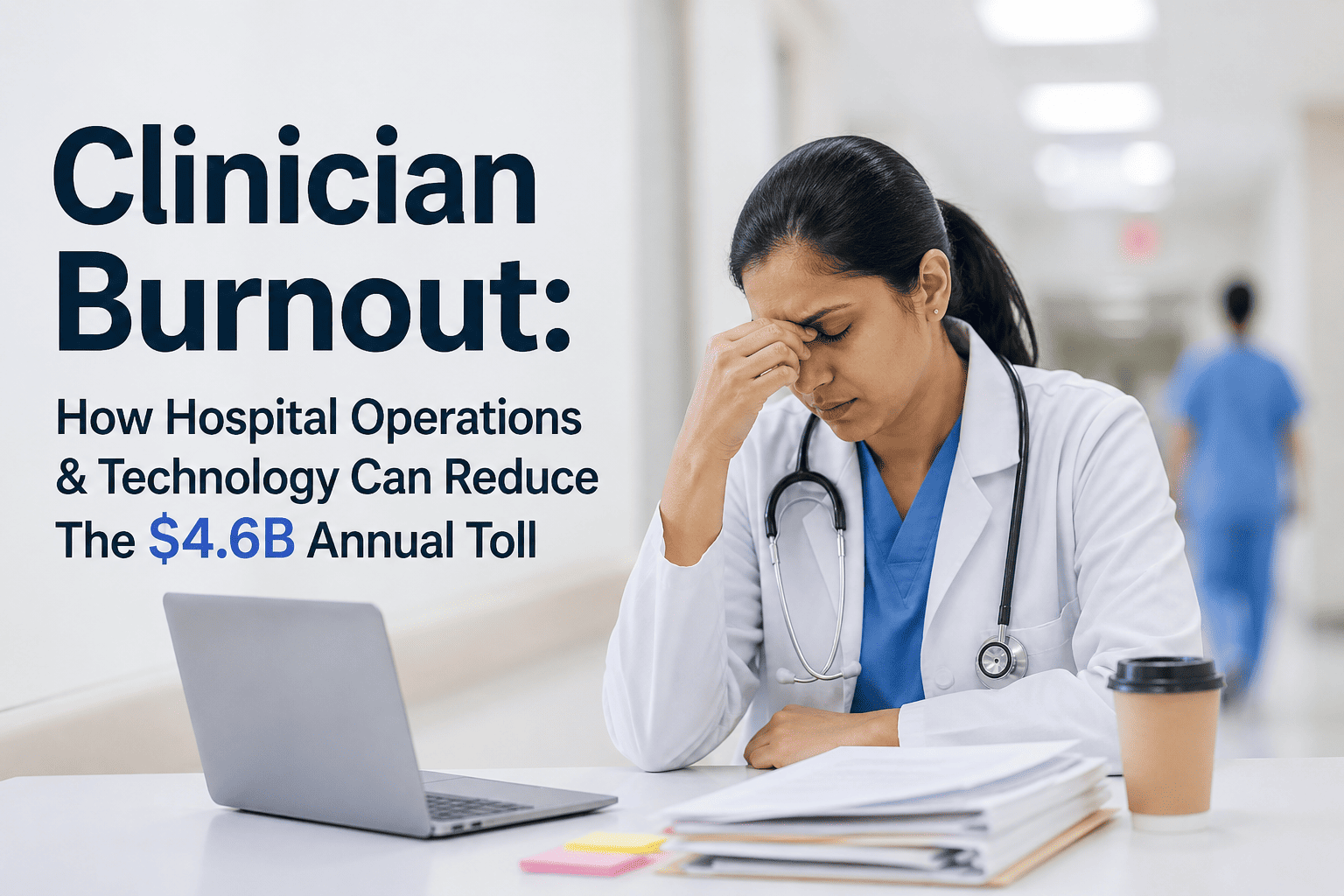
Clinician burnout is not a wellness problem — it is a $4.6 billion annual revenue hemorrhage threatening hospital financial viability, patient safety, and workforce sustainability. Every burned-out physician costs a health system an estimated $500,000 to replace. Every overwhelmed nurse who resigns takes 18 months of institutional knowledge with her. The cost of inaction is not theoretical — it is already appearing on your balance sheet.
Is Burnout Silently Draining Your Hospital's Revenue?
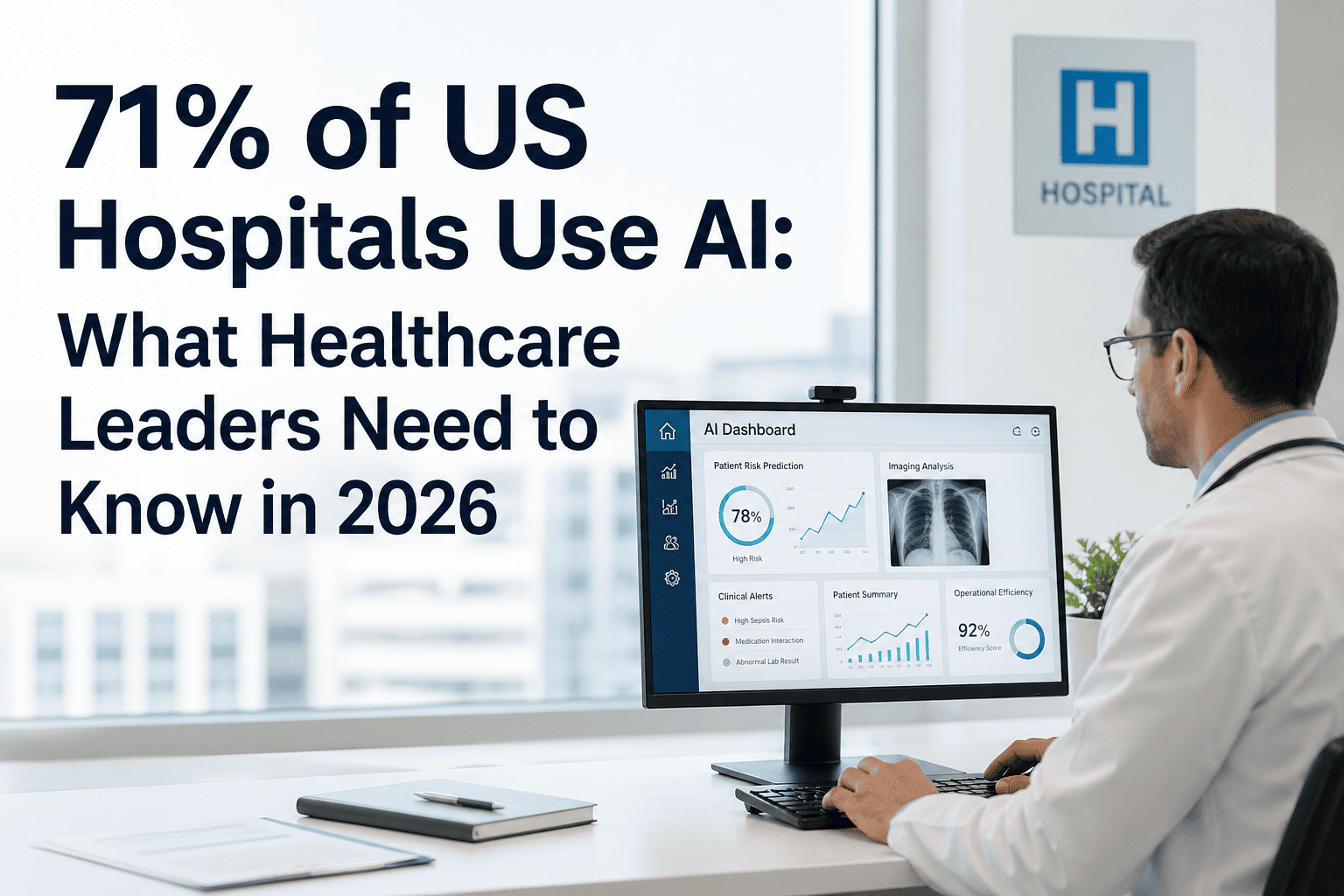
iFactory's AI Dashboard identifies operational friction points causing clinician fatigue — and delivers a measurable path to recovery, retention, and throughput optimization.
The True Financial Cost of Clinician Burnout
Burnout-driven turnover, medical errors, and reduced productivity represent the largest hidden liability on a hospital's balance sheet. CFOs and CMOs who address this operationally — not just culturally — unlock compounding ROI across staffing, quality, and reimbursement.
$500K+ Per Physician Turnover
Recruitment, onboarding, credentialing, and lost productivity per departing physician. Multiply by attrition rate to calculate true annual liability.
54% of Clinicians Report Burnout
More than half of U.S. physicians and nurses are experiencing burnout symptoms — directly correlated with increased medical error rates and adverse patient outcomes.
28% Productivity Loss
Burned-out clinicians deliver measurably lower patient throughput, generate more documentation errors, and require more supervisory oversight per shift.
3.1 Hours Daily on Admin
The average physician spends over three hours per day on non-clinical administrative tasks — time that could be redirected to patient care and revenue-generating encounters.
Operational Drivers Behind the Burnout Crisis
Burnout is a symptom. The disease is operational dysfunction — fragmented workflows, legacy EHR friction, and administrative burden that was never designed for clinical environments. Addressing the symptom without fixing the system produces temporary relief and permanent regret.
Clinicians spend 2–3x more time documenting than interacting with patients. Poorly configured EHR workflows are the single largest driver of administrative fatigue in U.S. hospitals.
Physicians receive an average of 63 alert interruptions per shift. Clinically irrelevant notifications erode focus, increase cognitive load, and directly contribute to dangerous decision fatigue.
Disconnected care teams rely on phone calls, paging, and manual handoffs — creating communication gaps, duplicated effort, and significant frustration among nursing and physician staff.
Inadequate nurse-to-patient ratios force clinicians to absorb excessive workloads. Without real-time staffing intelligence, charge nurses cannot redistribute load before burnout escalates.
Paper-based or spreadsheet-driven scheduling creates inequitable shift distributions, limits flexibility, and leaves clinical managers reacting to staffing crises rather than preventing them.
Hospital leaders cannot address what they cannot measure. Without a unified operational dashboard, burnout warning signals — rising overtime, declining satisfaction scores — surface too late to prevent attrition.
Legacy Friction vs. iFactory Optimized Excellence
The operational gap between fragmented legacy systems and an integrated AI dashboard is measurable in dollars, patient outcomes, and clinician retention rates. The table below quantifies what your organization is currently paying for inaction.
| Operational Area | Legacy Friction State | iFactory Optimized Excellence | Measurable Impact |
|---|---|---|---|
| Documentation | Manual EHR entry, 3+ hrs/day | Ambient AI documentation, auto-generated notes | 70% Time Reduction |
| Alert Management | 63+ unfiltered alerts per shift | AI-prioritized, clinically validated notifications | 55% Alert Reduction |
| Staffing Intelligence | Reactive, spreadsheet-based scheduling | Predictive AI staffing optimization in real-time | 40% Overtime Savings |
| Care Coordination | Phone/pager-based handoffs | Unified care team communication platform | 30% Faster Handoffs |
| Operational Visibility | Lagging reports, siloed dashboards | Real-time unified AI Dashboard across all units | 360° Live Insight |
| Clinician Retention | High voluntary attrition, reactive HR | Burnout prediction scores, proactive interventions | $2M+ Annual Savings |
How iFactory AI Dashboard Solves Burnout at the Operational Level
iFactory's AI Dashboard functions as a unified intelligence layer — eliminating the fragmentation that drives administrative overload, communication failures, and workforce instability across your hospital system.
Ambient AI Documentation
- Auto-generates clinical notes from physician-patient conversations
- Integrates directly into EHR workflows without added steps
- Reduces documentation time by up to 70% per encounter
- Eliminates after-hours charting that erodes work-life balance
Predictive Staffing Intelligence
- Forecasts patient census 72 hours in advance with AI modeling
- Automatically optimizes nurse-to-patient ratios by unit and shift
- Flags individual clinician burnout risk before resignation occurs
- Reduces agency staffing costs through proactive scheduling
Unified Care Coordination
- Single platform for physician, nurse, and ancillary team communication
- Structured digital handoffs eliminate verbal miscommunications
- AI-filtered alerts deliver only clinically significant notifications
- Real-time patient status visible across all care team members
Five Steps to Eliminating Operational Burnout Drivers
Sustainable burnout reduction requires structured operational transformation — not perks programs. This phased roadmap delivers measurable ROI at each stage while building toward full workforce intelligence maturity.
Operational Gap Audit
Quantify your current burnout cost — documentation hours, alert volume, overtime spend, and voluntary attrition rate. Establish a baseline ROI model before any technology investment.
AI Dashboard Deployment
Deploy iFactory's unified AI Dashboard across priority units. Connect EHR, scheduling, and communication systems into a single operational intelligence layer within 30 days.
Ambient Documentation Activation
Enable AI-powered ambient documentation for physician and nursing staff. Monitor adoption metrics and documentation time reduction weekly across all activated units.
Predictive Staffing Integration
Activate AI staffing forecasting and burnout risk scoring. Enable charge nurses and clinical managers to act on early warning signals before workforce crises escalate.
Continuous Optimization & Scaling
Use aggregate dashboard analytics to continuously refine workflows, identify emerging friction points, and scale the platform across additional service lines and facilities system-wide.
Stop the Revenue Hemorrhage. Start with an Operational Gap Audit.
iFactory's AI Dashboard gives hospital leadership the real-time operational intelligence to eliminate burnout drivers, recover clinician capacity, and protect patient safety — before the next resignation letter arrives.
Clinician Burnout & iFactory AI Dashboard — Frequently Asked Questions
How does the iFactory AI Dashboard directly reduce clinician burnout?
The platform eliminates the three primary operational burnout drivers: documentation overload via ambient AI, alert fatigue via intelligent filtering, and staffing inequity via predictive scheduling. Each is measurable and quantifiable from day one of deployment.
Does the platform integrate with existing EHR systems like Epic or Cerner?
Yes. iFactory uses HL7 FHIR-compliant APIs to integrate bidirectionally with all major EHR platforms. No replacement or migration is required — the AI Dashboard layers over your existing clinical infrastructure. Book a Demo to review your specific EHR environment.
What is the typical ROI timeline for a hospital deploying this platform?
Most health systems see measurable documentation time reduction within 30 days of activation. Full ROI — inclusive of retention savings, overtime reduction, and avoided agency staffing costs — is typically realized within 9–12 months of system-wide deployment.
How does the burnout risk prediction model work?
The AI monitors real-time signals including shift length, overtime frequency, patient load, and documentation volume to generate individual clinician burnout risk scores. Nurse managers receive proactive alerts before a at-risk clinician reaches a crisis point or submits a resignation.
Is the platform compliant with HIPAA and healthcare data security requirements?
Absolutely. iFactory is built on a HIPAA-compliant cloud architecture with AES-256 encryption, role-based access controls, and a complete immutable audit trail for all AI-generated actions and clinical data interactions. Book a Demo to review our security framework.
Transform Burnout Risk Into Operational Resilience
Join the health systems already reducing clinician administrative burden, improving retention rates, and protecting patient safety with iFactory's unified AI Dashboard.