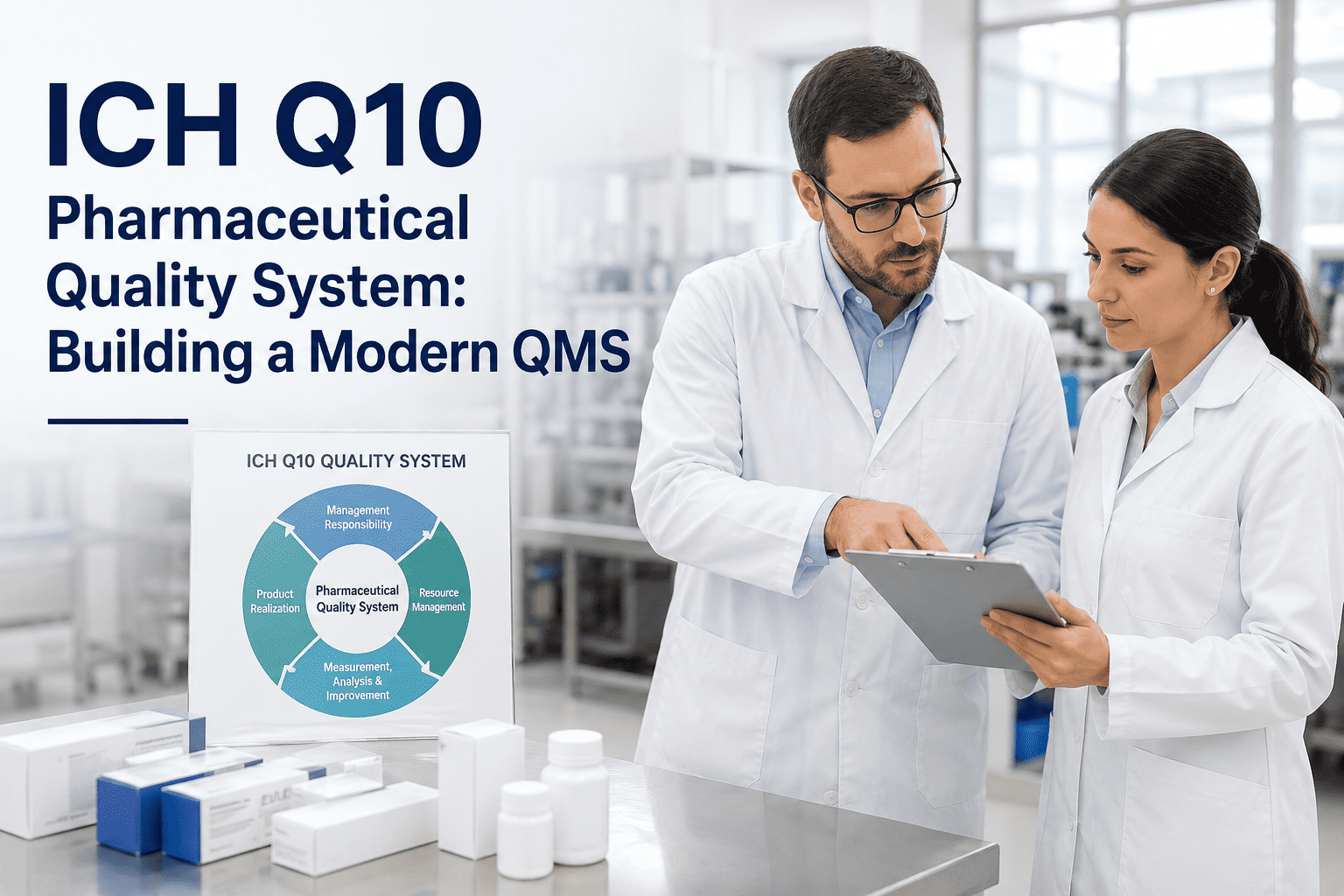
Every year, pharmaceutical manufacturers lose millions to preventable non-conformances, failed audits, and recall-driven reputational damage — not because quality teams lack effort, but because legacy QMS frameworks were never architected for the complexity of modern drug development. ICH Q10 exists to close that gap. Yet most organizations treat it as a compliance checkbox rather than the strategic operating model it was designed to be. The cost of that misalignment is not theoretical: it is delayed product launches, 483 observations, and patient safety incidents that erode market trust and invite regulatory action. This guide translates ICH Q10 into a deployable, ROI-positive quality management architecture — backed by iFactory's Integrated QMS Platform.
Is Your QMS Engineered for ICH Q10 — or Just Compliant on Paper?
iFactory's Integrated QMS Platform aligns your product lifecycle, CAPA workflows, and management review cycles with ICH Q10 — turning compliance into a competitive advantage.
What ICH Q10 Actually Demands from Your Organization
ICH Q10 is not a documentation framework — it is a pharmaceutical quality system (PQS) standard that mandates four foundational elements across the entire product lifecycle. Organizations that fail to operationalize each element in an integrated platform expose themselves to systemic quality failures.
Process Performance & Product Quality Monitoring
Continuous, data-driven oversight of manufacturing processes and product quality attributes — not periodic, manual reporting.
CAPA System
Corrective and Preventive Action workflows that close deviations at root cause — not symptomatic — level, with full traceability.
Change Management
Formal evaluation, approval, and documentation of all changes to processes, equipment, materials, and specifications.
Management Review
Structured, periodic review by senior leadership using KPI dashboards that drive strategic quality decisions.
The Financial & Clinical Stakes of a Non-Integrated QMS
Disconnected quality systems do not merely inconvenience quality teams — they generate measurable financial exposure and patient risk. Below is the operational gap most organizations carry silently.
| Quality Dimension | Legacy Friction | iFactory Optimized Excellence | Financial Impact | Risk Level |
|---|---|---|---|---|
| CAPA Closure Rate | Manual tracking, missed deadlines | Automated escalation & closure workflows | Reduces repeat deviations by up to 60% | Critical |
| Management Review | Quarterly slide decks assembled manually | Real-time KPI dashboards, automated reports | Saves 40+ executive hours per quarter | Critical |
| Change Control | Paper-based, siloed approval chains | Digital workflow with full audit trail | Eliminates uncontrolled change exposure | Critical |
| Product Lifecycle Monitoring | Retrospective batch reviews | Continuous process performance analytics | Early OOS detection cuts rework costs 35% | High |
| Regulatory Audit Readiness | Weeks of preparation per inspection | Always-on compliance documentation | Reduces inspection prep time by 70% | High |
| SOP & Document Control | Version conflicts, manual distribution | Centralized, version-locked document hub | Eliminates document-driven 483s | Moderate |
Building an ICH Q10-Aligned PQS: The iFactory Five-Stage Model
A compliant, scalable PQS is not deployed overnight — it is engineered through a structured implementation sequence that minimizes operational disruption while maximizing regulatory defensibility from day one.
Quality System Baseline Assessment
- Map all existing SOPs, CAPA records, and change control logs against ICH Q10 element requirements
- Identify documentation gaps, process owners without accountability, and systems operating outside the PQS boundary
- Establish measurable quality KPIs aligned to ICH Q10 Section 4 management review obligations
Integrated Platform Deployment
- Deploy iFactory's Integrated QMS Platform as the single system of record for all quality events, documents, and workflows
- Configure role-based access aligned to ICH Q10's emphasis on clearly defined responsibilities at each lifecycle stage
- Activate electronic signature and audit trail modules to meet 21 CFR Part 11 and Annex 11 requirements simultaneously
CAPA & Deviation Workflow Automation
- Build CAPA workflows with automated root-cause analysis prompts, effectiveness check scheduling, and escalation triggers
- Link every deviation record to the relevant batch, product, and process parameter for cross-functional traceability
- Enable real-time CAPA aging dashboards visible to quality management and executive stakeholders
Lifecycle Monitoring & Annual Product Review Automation
- Integrate manufacturing execution data to enable continuous process performance and product quality monitoring (PPQ)
- Automate Annual Product Review (APR) compilation — pulling batch data, OOS trends, and stability results into a structured template
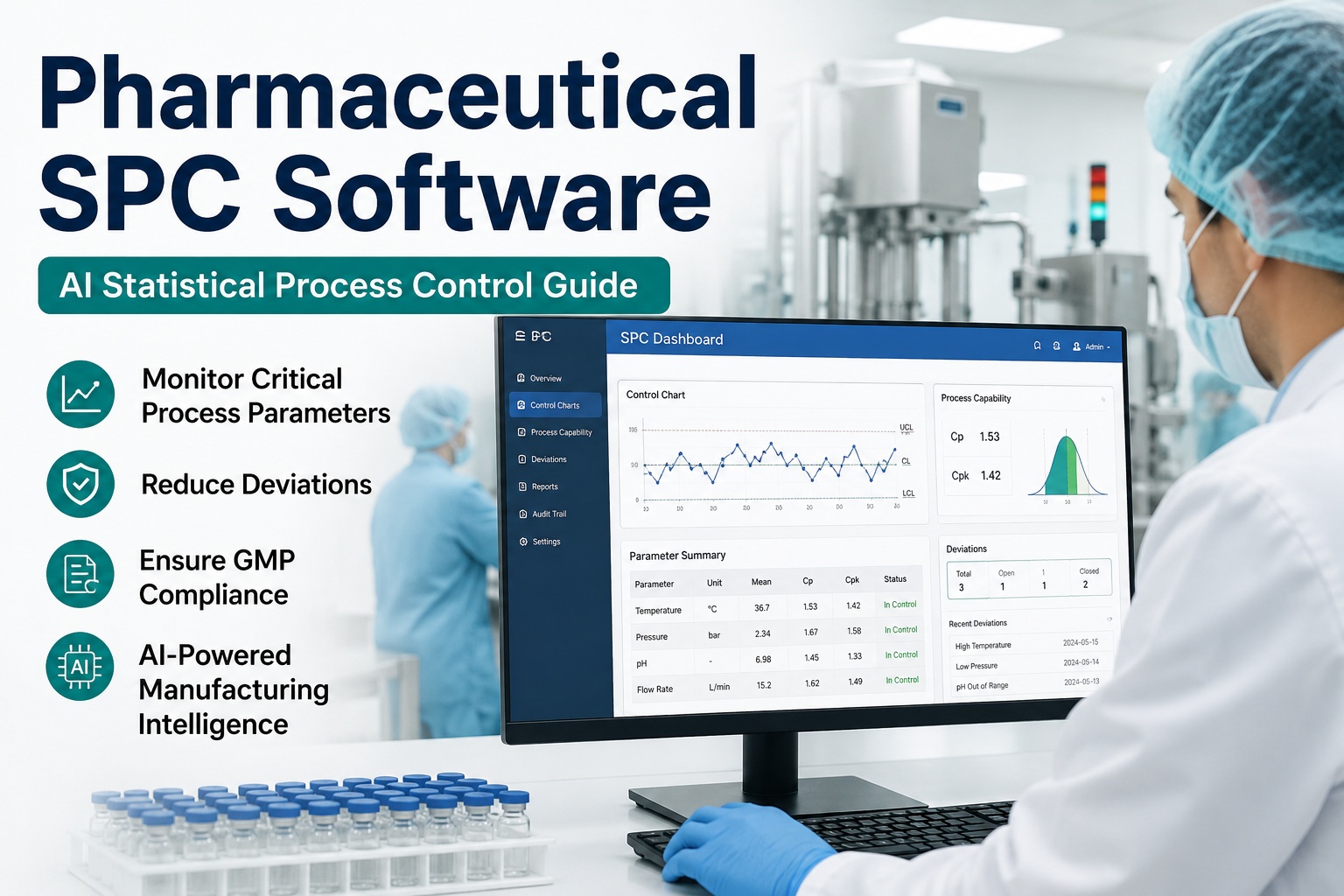
- Configure statistical process control (SPC) alerts that trigger quality investigations before batches reach OOS thresholds
Management Review & Continual Improvement Engine
- Deploy executive-facing quality dashboards that consolidate CAPA status, deviation trends, audit findings, and change control backlogs
- Schedule automated management review agenda generation with pre-populated KPI data from the prior review period
- Create a continual improvement loop — where management decisions feed back into updated quality objectives within the platform
How an Integrated PQS Resolves Staff Burnout & Patient Risk Simultaneously
Quality management failures have both a human and clinical cost. An ICH Q10-aligned platform addresses these simultaneously by eliminating the manual burden that drives burnout while strengthening the quality barriers that protect patients.
Patient Safety Outcomes
- Proactive OOS detection reduces probability of substandard product reaching distribution
- Automated CAPA closure eliminates recurring deviations that represent systemic product risk
- Continuous stability monitoring flags shelf-life concerns before they become field alerts
- Complete change control traceability prevents unauthorized process changes that alter critical quality attributes
Staff Efficiency & Retention
- Eliminates manual data aggregation for APR, audit preparation, and management review — freeing 15–20 hours per quality professional weekly
- Automated training assignment and compliance tracking removes administrative burden from QA supervisors
- Mobile-accessible workflows allow floor-level staff to close quality events in real time — reducing paperwork backlogs
- Clear escalation logic removes ambiguity from deviation ownership, reducing cross-team conflict
Throughput & Revenue Protection
- Faster CAPA closure accelerates return-to-production timelines following investigations
- Inspection-ready documentation reduces the probability of Warning Letters and import alerts
- Streamlined change control shortens the lead time for post-approval changes — compressing time-to-market for product improvements
- Predictive quality analytics support capacity planning and reduce unplanned downtime from batch failures
Six ICH Q10 Implementation Gaps That Trigger Regulatory Action
Most ICH Q10 deficiencies cited in FDA Warning Letters and EMA GMP non-compliance reports are not caused by a lack of quality intent — they result from systemic platform gaps that prevent the PQS from functioning as designed.
CAPA records not linked to the originating deviation, complaint, or audit finding — preventing root cause verification and enabling repeat failures.
Management reviews conducted without documented inputs or outputs — unable to demonstrate ICH Q10 Section 4 compliance to regulators.
A single QMS process applied uniformly across pharmaceutical development, technology transfer, and commercial manufacturing — in violation of ICH Q10's stage-specific requirements.
Quality objectives set annually but never updated based on KPI performance data — demonstrating a static, not adaptive, quality system to inspectors.
QMS software deployed without formal computer system validation (CSV) — rendering electronic CAPA and change control records legally indefensible.
External manufacturers and critical suppliers managed through informal communication rather than formal quality agreements integrated into the platform.
Build a Pharmaceutical Quality System That Survives the Next Inspection
iFactory's Integrated QMS Platform operationalizes ICH Q10 across your full product lifecycle — from development through commercial manufacturing — with validated electronic workflows, real-time KPI dashboards, and audit-ready documentation.
Pharmaceutical Quality System — Frequently Asked Questions
How does ICH Q10 differ from cGMP requirements?
ICH Q10 is designed to complement — not replace — regional GMP regulations. It provides an overarching quality system model that, when implemented, is intended to enhance GMP compliance. The key addition is the explicit requirement for a lifecycle approach and a formal continual improvement mechanism that most cGMP frameworks imply but do not mandate structurally.
Can iFactory's platform support ICH Q10 across multiple manufacturing sites?
Yes. The platform is architected for multi-site deployment with centralized quality governance and site-level configuration. Quality events, CAPA records, and management review data flow into a unified dashboard — enabling corporate QA oversight while preserving site-specific workflow requirements. Book a Demo to see our multi-site architecture.
What is the typical timeline for an ICH Q10-aligned QMS implementation?
A phased deployment for a single commercial manufacturing site typically spans 12 to 20 weeks, depending on the volume of legacy documentation requiring migration and the complexity of existing deviation and CAPA workflows. iFactory's implementation team conducts a pre-deployment gap assessment to produce a site-specific timeline before any contract is signed.
Does iFactory's platform meet 21 CFR Part 11 and EU Annex 11 requirements?
The platform is fully validated to meet both 21 CFR Part 11 and EU Annex 11 requirements, including audit trail integrity, electronic signature controls, and access management. Full validation documentation — including IQ, OQ, and PQ protocols — is provided as part of the deployment package. Book a Demo to review our CSV package.
How does the platform handle ICH Q10's knowledge management requirements?
iFactory's platform includes a structured knowledge management module that captures process understanding, historical batch performance data, and change control rationale in a searchable, version-controlled repository — directly addressing ICH Q10's enabler requirement for organizational knowledge management across the product lifecycle.
Launch Your ICH Q10 Quality System Transformation Today
Join pharmaceutical manufacturers already operating ICH Q10-aligned quality systems with iFactory — and convert compliance into measurable clinical and financial outcomes.



.png)