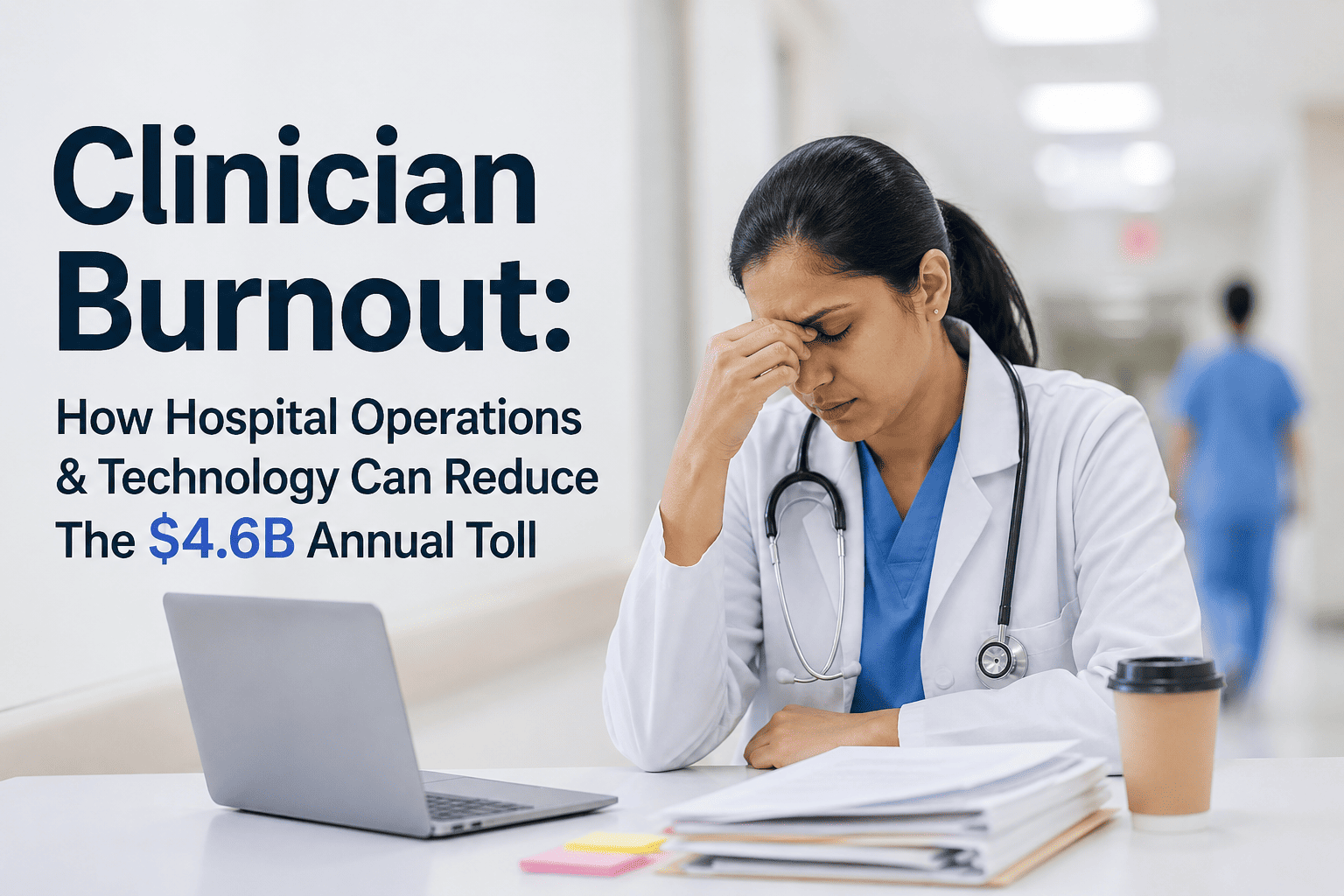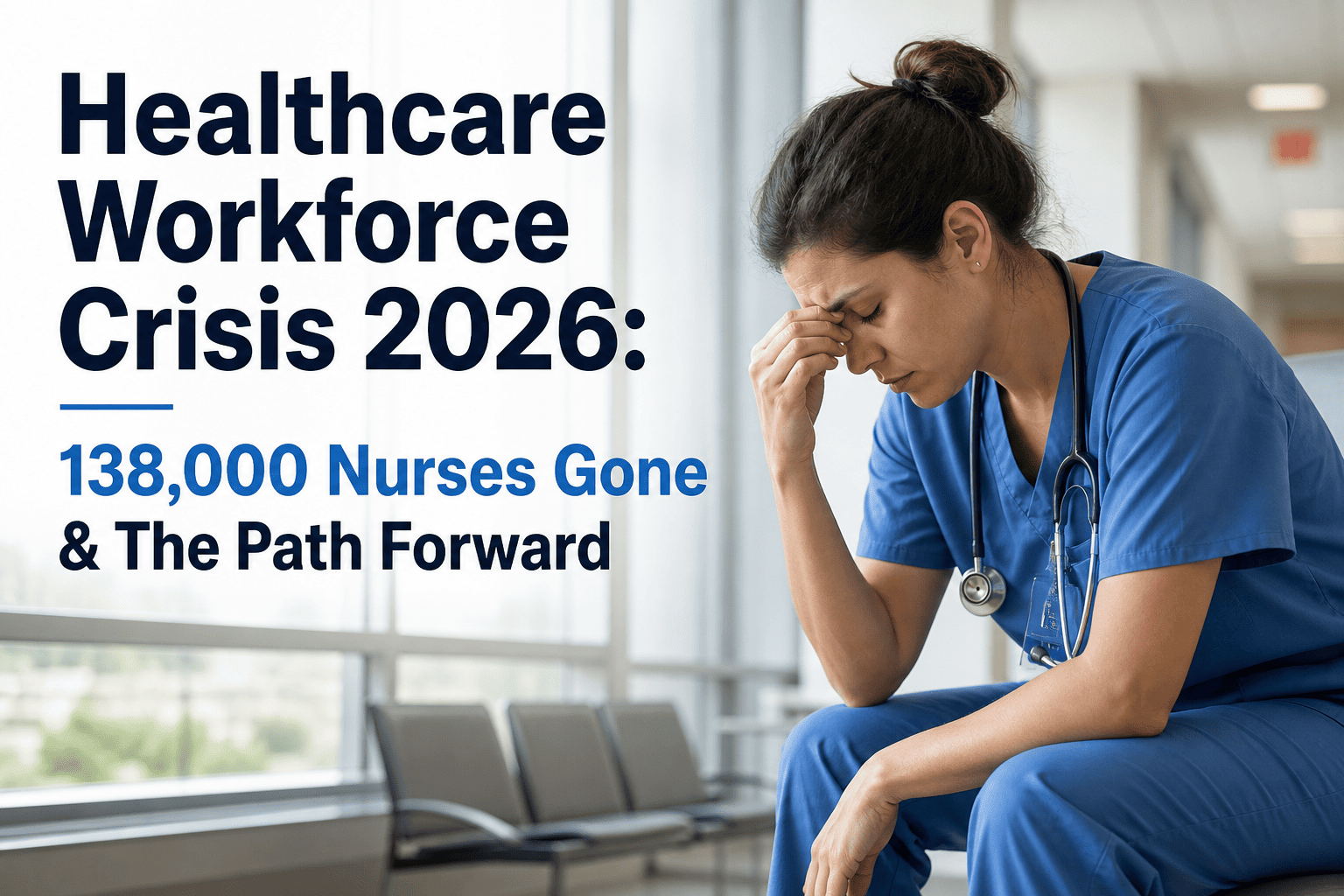
Every 90 seconds, a U.S. hospital loses a nurse — not to retirement, but to burnout, broken systems, and a workforce crisis that has cost healthcare organizations over $9 billion in turnover expenses since 2022. With 138,000+ nurses already gone and 40% of remaining clinicians signaling their exit within five years, the question is no longer whether your organization will be impacted — it is whether you will act before the hemorrhage becomes irreversible.
Is Your Organization Hemorrhaging Its Best Clinicians?
iFactory's Team Management platform delivers retention intelligence, workload analytics, and burnout prediction — before your next resignation lands on your desk.
The 2026 Nursing Shortage: By the Numbers
The workforce crisis is not a projection — it is a present-tense operational emergency affecting patient safety, hospital margins, and regulatory compliance simultaneously.
Why Clinicians Are Leaving — And Why Staffing Agencies Are Not the Answer
Travel nurse dependency has become a $22B band-aid over a structural wound. Understanding the true drivers is the first step toward sustainable resolution.
Nurses spend up to 35% of their shift on documentation and non-clinical tasks — time stolen directly from patients and personal recovery.
Chronic understaffing forces nurses to manage 7–10 patients simultaneously, creating moral injury and direct patient safety liability.
Rigid, top-down scheduling with no preference visibility signals institutional indifference — the single largest predictor of voluntary turnover.
High-performing nurses receive no differentiated recognition. Career growth pathways are opaque, accelerating disengagement in your best talent.
Organizations detect burnout only after resignation. Without predictive workload analytics, leadership is always reacting — never preventing.
Travel nurse rates averaging 2–3× permanent staff cost drain operating margins while permanently depressing team cohesion and institutional knowledge.
Legacy Friction vs. iFactory Optimized Excellence
The operational gap between reactive workforce management and an intelligent, data-driven retention system translates directly into financial performance and patient outcomes.
| Workforce Dimension | Legacy Friction | iFactory Optimized Excellence | Financial Impact |
|---|---|---|---|
| Scheduling | Manual, static rotation with no preference data | AI-driven scheduling with clinician preference matching | ↓ 28% Turnover |
| Burnout Detection | Identified post-resignation via exit interview | Predictive workload heatmaps with 90-day early warning | ↓ $65K Per Save |
| Staffing Visibility | Siloed shift data across disconnected systems | Unified real-time census and acuity-to-staffing dashboard | ↑ Patient Safety Score |
| Agency Dependency | Reactive travel nurse procurement at 2–3× cost | Internal float pool optimization before agency escalation | ↓ $1.2M Avg. Savings |
| Performance Recognition | Annual review cycle; no real-time visibility | Continuous performance tracking with manager nudges | ↑ Engagement 34% |
| Compliance Reporting | Manual audit trail; retrospective and error-prone | Automated regulatory documentation with immutable logs | Zero Audit Risk |
Three Pillars of Workforce Transformation
Retain Your Workforce
- Burnout prediction 90 days before resignation signal
- Preference-matched scheduling reducing friction by 40%
- Real-time workload equity scoring across units
- Manager early-warning alerts for at-risk clinicians
- Internal mobility pathways visible to every nurse
Optimize Patient Throughput
- Acuity-adjusted staffing matched to real-time census
- Skill-to-patient assignment engine reducing adverse events
- Float pool deployment before agency escalation triggers
- Shift gap prediction with 72-hour advance visibility
- Unified cross-department capacity dashboard
Protect Operating Margin
- Agency spend reduction through internal optimization
- Overtime cost modeling with proactive reallocation
- Turnover cost tracking per unit and per manager
- ROI dashboard for CFO and CNO reporting cadence
- Automated compliance reducing audit labor by 60%
The Five-Step Path from Crisis to Competitive Advantage
Operational Gap Audit
Baseline your current turnover rate, agency spend, and scheduling friction against industry benchmarks to quantify the exact cost of inaction at your organization.
Data Unification
Consolidate HRIS, scheduling, and EHR workforce data into a single intelligence layer — eliminating the silos that blind leadership to retention risk signals.
Predictive Model Activation
Deploy burnout prediction and workload equity models calibrated to your unit mix, acuity levels, and historical turnover patterns.
Manager Enablement
Equip charge nurses and unit directors with real-time dashboards and automated intervention prompts — making retention a proactive daily practice, not a quarterly review.
Continuous Optimization
Leverage aggregate outcome data to refine staffing models, reduce agency dependency quarter-over-quarter, and build a defensible retention culture tied to measurable ROI.
Healthcare Workforce Crisis — Executive Questions Answered
How quickly can iFactory integrate with our existing EHR and HRIS systems?
iFactory's API-first architecture connects with Epic, Cerner, Workday, and 40+ healthcare systems. Most organizations achieve full data unification within 30–45 days of deployment, with no disruption to existing clinical workflows.
What is the measurable ROI timeline for workforce management implementation?
Organizations typically see a 15–20% reduction in agency spend within the first 90 days through internal float pool optimization. Full turnover cost savings — averaging $1.2M annually — are realized within 12–18 months of platform maturity.
How does the platform handle HIPAA and workforce data compliance requirements?
All workforce analytics operate on HIPAA-compliant infrastructure with AES-256 encryption, role-based access controls, and immutable audit logs that satisfy CMS and Joint Commission documentation standards. Book a Demo to review our compliance framework.
Can small and mid-size health systems benefit, or is this built for large IDNs?
iFactory scales from 50-bed community hospitals to 10,000-employee integrated delivery networks. The platform's modular design allows phased deployment aligned to your budget cycle and organizational readiness.
Stop Reacting to Resignations. Start Preventing Them.
Every week without a retention strategy costs your organization another $65,000 in avoidable turnover. iFactory's Team Management platform gives your leadership team the intelligence to act before talent walks out the door.