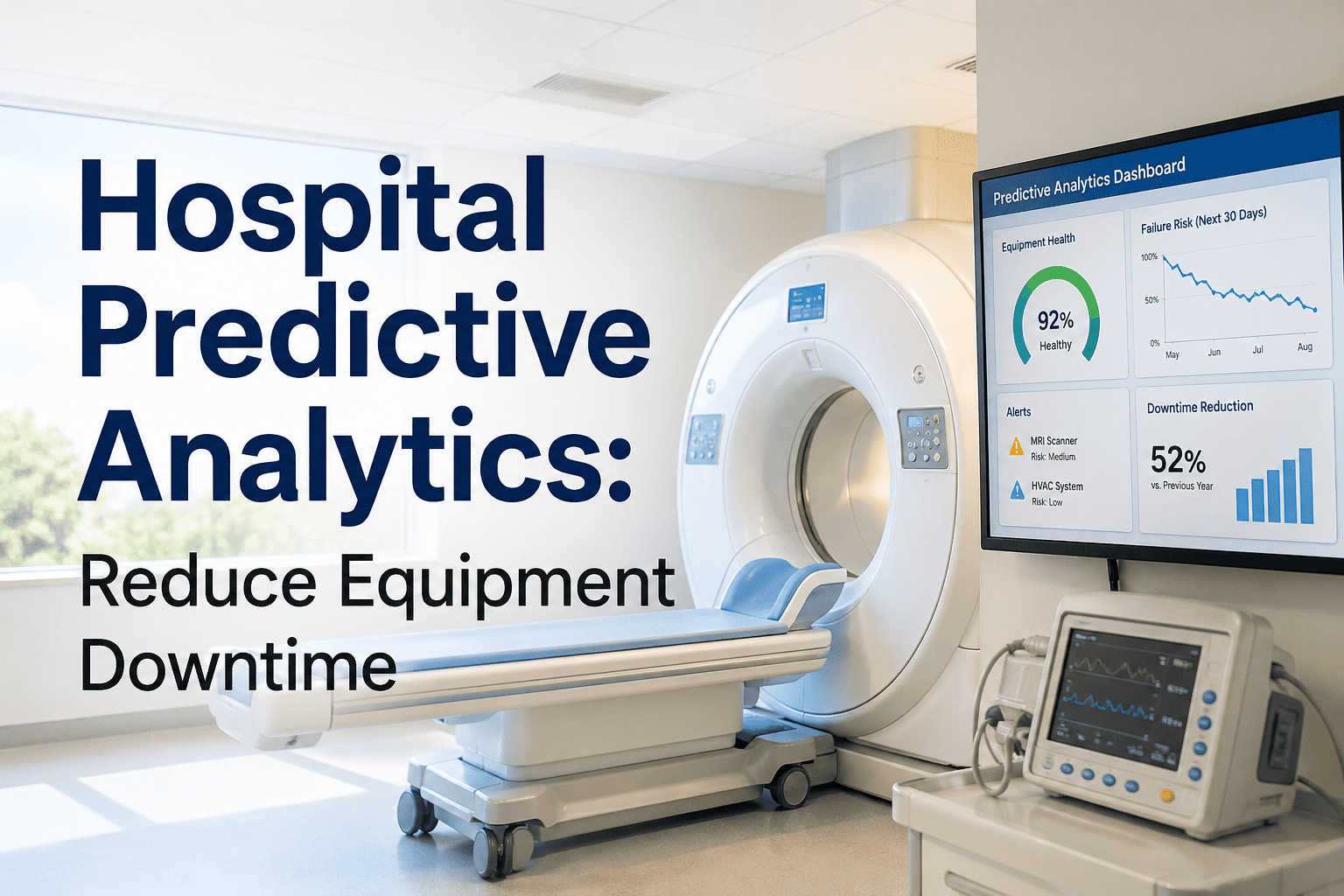
Every 60 seconds a hospital does not adopt integrated AI asset intelligence, it bleeds an estimated $11,400 in preventable inefficiencies — Joint Commission violations, misplaced medical equipment, and unplanned downtime that drain operating margins and put patient safety at risk. The question is no longer whether to act, but how much your health system can afford to lose before it does.
Is Your Hospital's Operational Data Working Against You?
iFactory transforms fragmented clinical workflows into a unified AI intelligence layer — reducing revenue leakage, eliminating compliance risk, and restoring capacity across your entire health system.
Translating Clinical Complexity into Financial Outcomes
Hospital AI platforms are judged by one standard at the executive level: measurable return on invested capital. iFactory's healthcare intelligence suite delivers against three financial imperatives — revenue protection through Joint Commission compliance, asset utilization optimization that eliminates capital hemorrhage, and predictive staffing analytics that reduce agency labor spend. Each module is designed to produce defensible ROI within the first fiscal quarter of deployment, giving healthcare VPs the evidence required for board-level reporting.
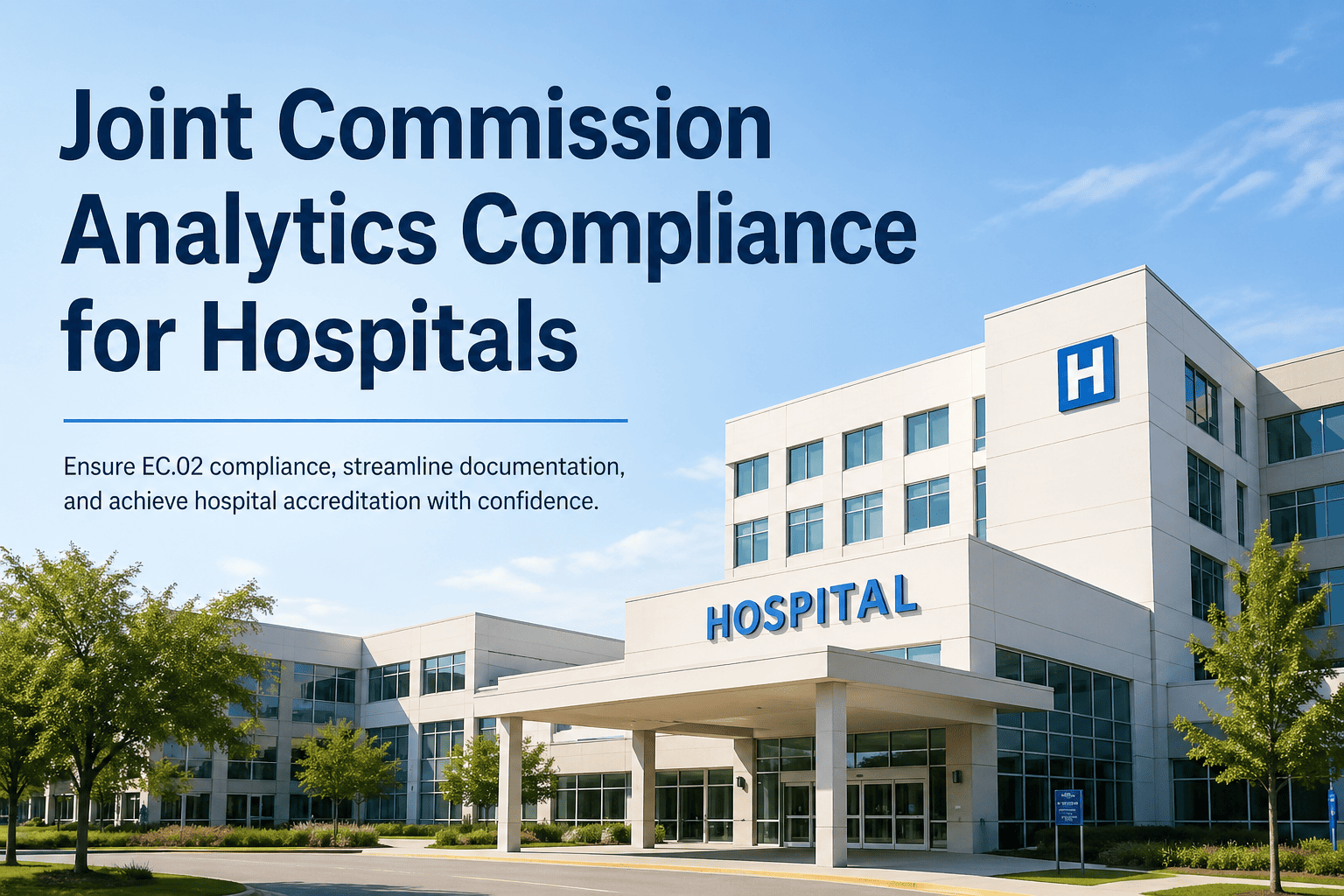
Joint Commission AI
Continuous automated compliance monitoring mapped directly to Joint Commission standards. Real-time alerts surface deficiencies weeks before survey windows, eliminating last-minute remediation costs and citation risk.
Medical Equipment Tracking
RTLS-integrated AI that eliminates equipment search time — the single largest driver of clinical staff burnout. Instantly locates infusion pumps, ventilators, and mobile diagnostics across all campuses.
Healthcare Analytics
Predictive demand modeling that aligns staffing levels with patient census in real time. Reduces per-diem and agency labor costs while sustaining optimal nurse-to-patient ratios across all units.
Unified AI Dashboard
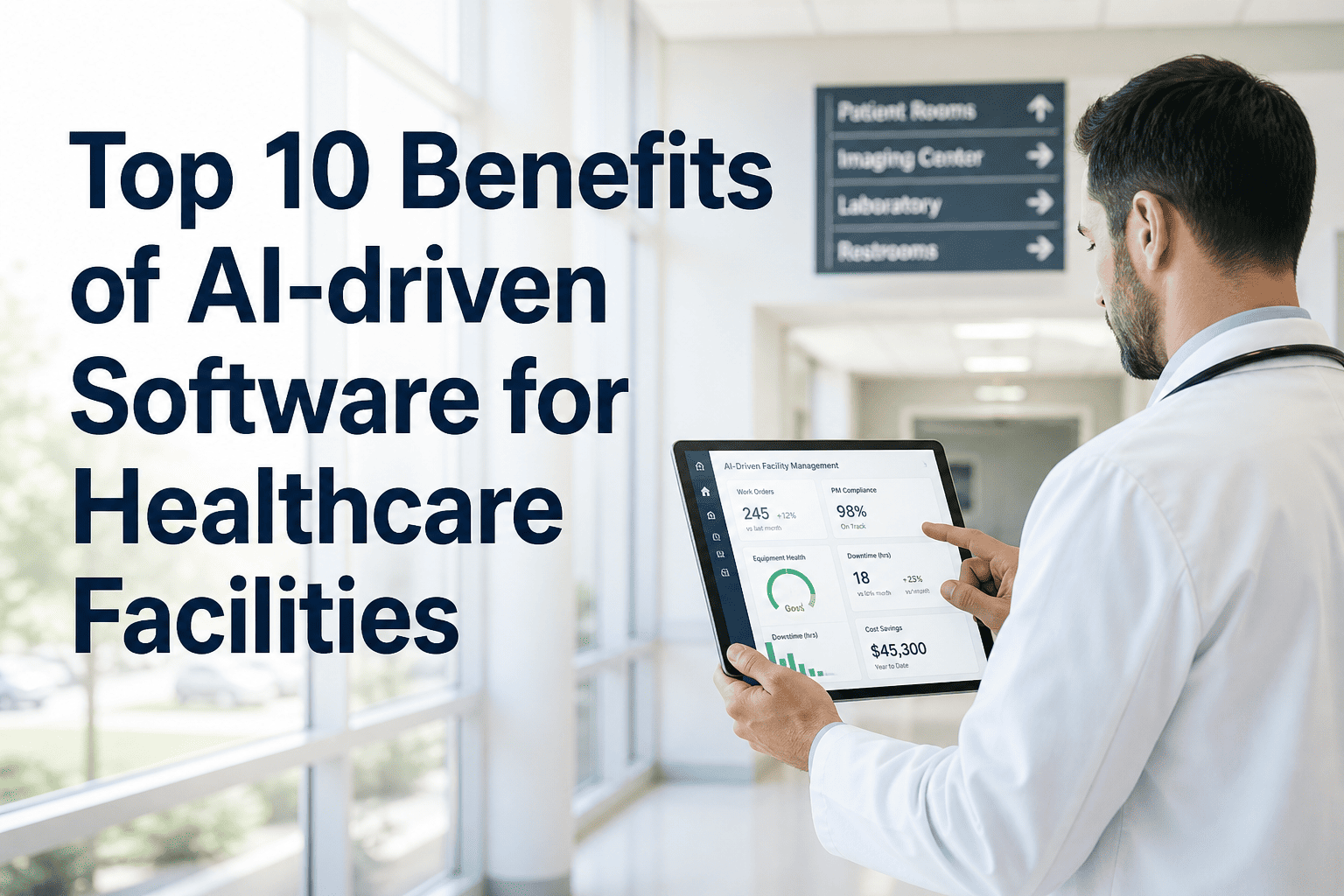
A single pane of glass consolidating compliance posture, asset utilization, clinical throughput, and financial performance — purpose-built for the operational cadence of C-suite and VP-level review.
Legacy Friction vs. iFactory Optimized Excellence
The operational gap between fragmented legacy systems and a unified AI intelligence platform is not incremental — it is structural. The table below quantifies the compounding cost of inaction across the dimensions that matter most to healthcare executives: compliance exposure, capital efficiency, clinical capacity, and labor economics.
| Operational Dimension | Legacy Friction | iFactory Optimized Excellence | Financial Impact | Priority |
|---|---|---|---|---|
| Joint Commission Compliance | Manual audit cycles, reactive citations | Continuous AI monitoring, proactive remediation | Eliminate $250K+ citation penalties | Critical |
| Medical Equipment Utilization | 18–25 min avg. search time per nurse shift | Sub-30-second RTLS-AI asset location | Recover 2.1 clinical hours per nurse/day | Critical |
| Staffing & Labor Cost | Static scheduling, agency labor overuse | Predictive census-matched staffing models | 15–22% agency labor spend reduction | Critical |
| Patient Throughput | Manual discharge coordination, bed holds | AI-driven discharge prediction and bed management | Increase daily throughput by 8–12% | High |
| Capital Equipment Planning | Reactive replacement, unbudgeted CapEx | Predictive lifecycle modeling and procurement alerts | Extend asset life, reduce unplanned spend | High |
| Executive Reporting | Siloed dashboards, delayed data synthesis | Real-time unified KPI command center | Board-ready insight in minutes not days | Foundational |
How iFactory Resolves the Three Silent Crises in Your Health System
Behind every operational metric is a human cost. Staff burnout, patient safety events, and capacity constraints are not isolated clinical problems — they are compounding financial liabilities. iFactory's AI platform addresses the root cause of each, converting systemic friction into measurable institutional performance gains.
Nurses spend up to 30% of each shift on non-clinical tasks — equipment searches, manual documentation, and compliance paperwork. iFactory AI automates these workflows entirely, returning clinicians to bedside care and reducing 90-day turnover rates by an average of 18%.
Discharge delays and bed-hold inefficiencies block revenue-generating admissions. iFactory's predictive bed management AI coordinates discharge planning 6–8 hours earlier per case, opening capacity without adding a single bed or FTE to your roster.
Joint Commission citations and CMS condition-level deficiencies represent both financial penalties and reputational risk that no executive can afford. iFactory maintains a live compliance posture score, surfacing actionable remediation items before they become reportable events.
Enterprise-Grade Scalability Built for Health System Growth
iFactory is architected for the operational reality of multi-campus health systems — not single-facility pilots. The platform scales across IDNs, regional networks, and ambulatory portfolios from a single administrative instance. Data sovereignty is maintained through GovCloud-equivalent HIPAA-compliant infrastructure, and every integration point carries a documented implementation SLA to protect your go-live timeline.
Operational Gap Audit
Our clinical solutions architects map your current workflow against iFactory benchmarks across compliance, asset utilization, and staffing — delivering a quantified gap report with projected 12-month ROI before any commercial commitment.
Phased Platform Integration
Begin with your highest-ROI module — typically Joint Commission compliance or equipment tracking — and expand systematically. Each phase delivers standalone value while building toward a fully unified intelligence layer.
EHR & CMMS Integration
Native HL7 FHIR connectors ensure iFactory syncs bidirectionally with Epic, Cerner, and Meditech environments. No rip-and-replace. No shadow IT. Full interoperability with your existing technology investment.
AI Model Validation & Go-Live
All predictive models are validated against your facility's historical data before activation. Clinical informatics leads and your CMO receive a documented model accuracy report — giving executive leadership full transparency into AI-driven recommendations.
Continuous Optimization & Board Reporting
Monthly executive performance reviews tied to your organization's KPIs. Quarterly benchmarking against iFactory's national healthcare network surfaces new optimization opportunities before they appear in your financial statements.
The Cost of Inaction Is Compounding. Schedule Your Operational Gap Audit Today.
Healthcare executives who delay AI integration do not maintain the status quo — they fall further behind on safety, compliance, and margin performance. Take 30 minutes now to quantify exactly what your health system is leaving on the table.
Questions Healthcare VPs Ask Before Committing to AI Integration
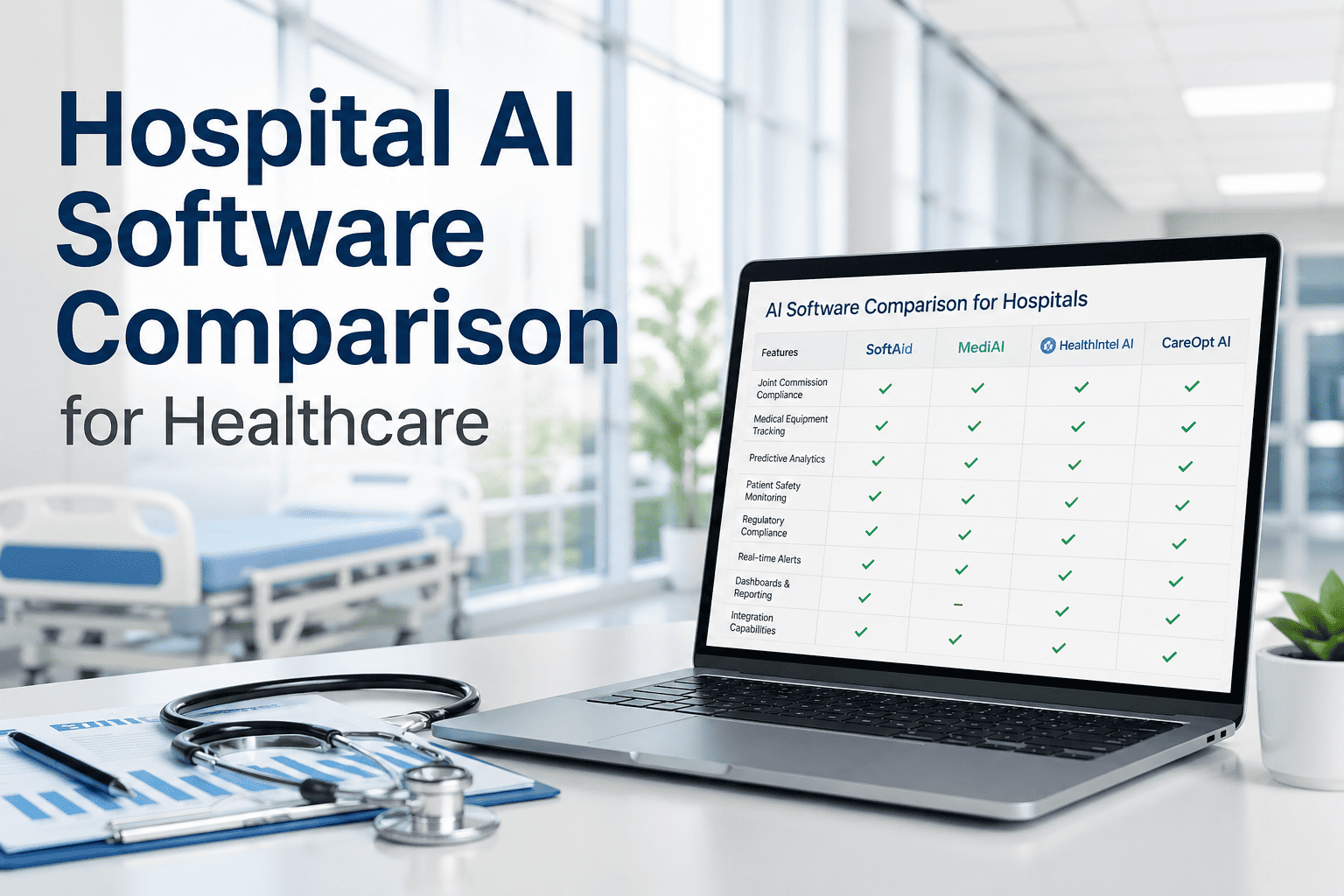
How does iFactory compare to other hospital AI software platforms on Joint Commission features?
iFactory is the only platform that maps AI compliance monitoring directly to the Joint Commission's official standards taxonomy, enabling real-time posture scoring against each accreditation chapter. Competing platforms offer general quality dashboards — iFactory delivers citation-specific remediation workflows.
What is the typical implementation timeline for a multi-campus health system?
A single-campus deployment activates in 6–8 weeks. Multi-campus IDN rollouts follow a phased 90-day schedule that preserves clinical workflow continuity. Our implementation architects own the integration timeline, not your internal IT team. Book a demo to review the detailed project plan.
How does iFactory's medical equipment tracking AI reduce capital expenditure?
By eliminating ghost assets and optimizing utilization rates, most health systems discover 12–18% of their tracked equipment inventory was either redundant or underutilized. iFactory's AI surfaces these opportunities, directly deferring capital replacement budgets. Book a Demo to run an asset utilization diagnostic on your current inventory data.
Can iFactory integrate with our existing Epic or Cerner EHR environment?
Yes. iFactory carries certified HL7 FHIR R4 integrations for Epic, Cerner, Meditech, and Allscripts. Data flows bidirectionally so clinical AI insights surface inside the workflows your staff already use — no parallel system logins required.
What is the projected ROI for healthcare AI software in a 500-bed hospital?
A 500-bed facility typically realizes $3.2M–$5.8M in combined savings across agency labor reduction, equipment capital deferral, and compliance penalty avoidance within the first 12 months of full platform deployment. Book a Demo to access the facility-specific ROI model for your bed count and service lines.
Book Your 30-Minute Strategic Workflow Audit Now
Your peers are already deploying integrated hospital AI. Every quarter without a unified intelligence platform is a quarter of compounding operational disadvantage. Secure your audit slot today.
.png)
.png)